
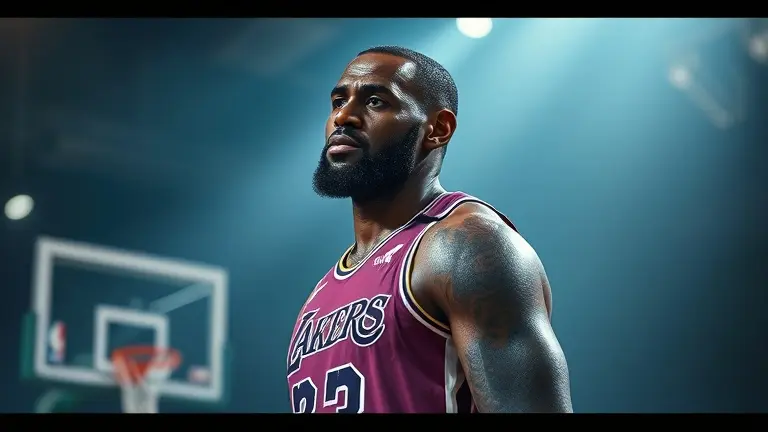
At 41 years old and following his 23rd NBA campaign, LeBron James finds himself at a career-defining crossroads after the Lakers’ early playoff exit. The ambiguity surrounding his potential retirement—a strategic ‘soft launch’ that has dominated the sports news cycle—is no longer just about whether he can still compete, but how he chooses to curate his final act. Amidst the swirling rumors of free agency and the unexpected noise of a high-profile feud with Drake, the conversation has reached a fever pitch. Fans and analysts are moving past the superficial ‘will he or won’t he’ questions to examine the cold, hard reality of his performance metrics and the complex puzzle of a legacy nearing its completion.
Yet, to view James simply through the lens of recent playoff frustration is to miss the broader achievement: he is operating at a physical tier rarely seen in the history of professional sports. His ability to sustain elite-level output while defying the conventional aging curve has become the ultimate case study in longevity. Understanding the mechanisms behind this endurance isn’t just for sports historians; it provides a blueprint for anyone questioning how to maintain peak vitality and metabolic resilience long after their supposed prime.
The Crossroads of Year 23: Evaluating LeBron James’ Post-Elimination Reality

The Los Angeles Lakers’ early playoff exit at the hands of the Oklahoma City Thunder has served as a sobering catalyst for the most pivotal offseason in LeBron James‘ storied career. Following the conclusion of his 23rd season, the dialogue surrounding james basketball has shifted from championship expectations to a profound existential inquiry. Unlike previous offseasons defined by roster construction, the current environment is marked by an unprecedented level of ambiguity. At 41 years old, James has adopted a “soft launch” approach to his future, refusing to provide definitive answers regarding his return for a 24th season. This silence has triggered a vacuum in the media, leading to intense speculation regarding his physical toll and the diminishing returns of maintaining elite status over two decades.
Analyzing the Longevity Paradox
The debate over whether James should retire is no longer just about sentimentality; it is a clinical assessment of his current performance metrics versus the sheer durability required to compete at an NBA level. Analysts from The Athletic and other industry leaders have highlighted that while James’ basketball IQ remains peerless, his usage rates necessitate a level of physical recovery that may no longer be sustainable. To understand this unique crossroads, consider the following factors currently impacting his decision:
- Salary Cap Constraints: Financial reports suggest that if James seeks a restructured deal to improve the Lakers’ supporting cast, it would require significant personal sacrifice, potentially conflicting with his market value.
- The Physical Toll: After 23 seasons, the cumulative wear on his joints is evident in his defensive engagement levels, which have fluctuated significantly throughout the 2026 campaign.
- Legacy vs. Longevity: There is a growing tension between his desire to play until a specific milestone and the risk of a “diminishing return” legacy, where post-prime seasons potentially alter the narrative of his historic career.
Ultimately, the ambiguity surrounding his future is a tactical choice. By refusing to commit, James retains leverage in negotiations with the Lakers’ front office while maintaining control over a public narrative that has increasingly become a lightning rod for broader cultural debates, including recent, contentious crossovers into pop culture. As the offseason unfolds, the focus must move beyond rumors and toward the analytical reality of his tenure in Los Angeles.
Salary Cap Chess: The Economics of a Lakers Return

As LeBron James navigates his 23rd NBA offseason, the conversation surrounding a potential return to the Los Angeles Lakers has shifted from legacy status to rigid financial mathematics. The Lakers currently operate under severe salary cap constraints that make a standard max-contract extension nearly impossible without gutting the remaining supporting cast. Brian Windhorst and other analysts have highlighted the “pay-cut” narrative as a mechanism to preserve roster flexibility, yet this strategy carries significant tactical risk. For the Lakers to remain competitive against rising Western Conference threats like the Oklahoma City Thunder, the front office must reconcile James’s individual performance—which remains elite in terms of offensive efficiency—with the diminishing returns of a roster anchored by a single, high-usage veteran.
Analyzing the Pay-Cut Model
If James opts to accept a veteran-minimum or a non-taxpayer mid-level exception (MLE) to stay in Los Angeles, the financial landscape of the franchise would change immediately. This “chess move” would theoretically allow the Lakers to avoid the restrictive second apron, providing the necessary room to sign rotational depth or pursue secondary playmakers. However, the trade-off is clear:
- Roster Depth vs. Star Power: A pay-cut structure pivots the team from a “top-heavy” philosophy toward a more balanced, deep rotation.
- Cap Flexibility: By reducing the cap hit associated with james basketball, the Lakers could utilize their remaining exceptions to address glaring defensive deficiencies identified during the most recent playoff run.
- Sustainability Risks: Relying on a 41-year-old superstar to anchor the team on a discount contract assumes he can maintain his current usage rates without further physical decline, a dangerous gamble given the intense pace of the modern game.
Ultimately, the economics of his return depend on whether the organization views James as the primary engine or a strategic piece in a larger, more mobile assembly. If he chooses to return, the structure of his contract will be the single most defining factor in whether the Lakers can transition from a first-round exit to a legitimate title contender in his 24th season.
Cultural Turbulence: Drake’s ‘Iceman’ and the Shift in Public Sentiment

The intersection of professional sports and global pop culture has rarely felt as volatile as it does in May 2026. Following the release of Drake’s album Iceman, the alleged lyrical jabs directed at James have ignited a firestorm of digital discourse, signaling a profound shift in how the public perceives the NBA legend. For over two decades, the narrative surrounding James basketball prowess was defined by an “unassailable king” persona—an athlete whose longevity and consistency seemed immune to traditional critique. However, as the Lakers face a period of uncertainty following their playoff exit, this new cultural friction suggests that the protective shield around his legacy is thinning.
From Icon to Subject of Scrutiny
The sudden shift in public sentiment reflects a broader transition in sports media, where even the most decorated athletes are subjected to intense, multifaceted evaluation as they near the end of their careers. The “Iceman” controversy serves as a proxy for this changing climate:
- De-mythologizing the Legend: The willingness of mainstream cultural figures to challenge James publicly mirrors the analytical frustration among fans regarding his 23rd season usage rates and declining defensive mobility.
- The “Soft Launch” Backlash: Public patience for his ambiguous retirement stance appears to be wearing thin; where his indecision was once viewed as a calculated power move, it is now increasingly framed by critics as an inability to navigate his own twilight years.
- Cross-Platform Fatigue: The viral nature of the Drake-James feud demonstrates that the discourse is no longer confined to sports talk shows; it has permeated the music and social media zeitgeist, stripping away the insulation that once kept his brand purely “basketball-centric.”
Ultimately, the friction caused by Iceman is not merely about a rap lyric; it is a manifestation of the current “scrutiny cycle.” As James contemplates his future, the transition from being the league’s primary protagonist to a subject of intense cultural debate highlights the fragility of legacy in the modern era. The narrative has moved from “will he win another ring?” to “how will he handle the end of his relevancy?”—a question that is currently fueling more engagement than his actual performance on the court.
The Legacy Calculus: Performance Metrics at Age 41

As James concludes his 23rd NBA campaign, the numbers reveal a paradox that defines his current career juncture. While his raw production remains statistically elite compared to any other player in history at age 41, the diminishing returns of the Los Angeles Lakers‘ current roster configuration create a friction that cannot be ignored. Analyzing his performance metrics through the lens of traditional aging curves, James basketball output remains an outlier; however, the efficiency gap is widening. Despite maintaining a high usage rate, his defensive impact and recovery speed have hit a natural ceiling, forcing a reliance on offensive brilliance that often leaves the team vulnerable in transition.
Data-Driven Reality of Longevity
When evaluating whether to pursue a 24th season, the internal calculus centers on three critical variables:
- Physical Sustainability: The cumulative toll of 23 seasons has necessitated a reduction in high-intensity defensive possessions, placing a disproportionate burden on the supporting cast.
- Salary Cap Constraints: Financial reports suggest that if James opts to return, his potential pay-cut is not merely a gesture of goodwill but a tactical necessity for the Lakers to address the structural deficiencies that led to their early playoff exit against the Thunder.
- Historical Benchmarking: Unlike late-career stars of previous generations, the modern game demands a level of aerobic conditioning that exerts extreme pressure on aging joints.
The decision to continue is not a whim but a cold assessment of return on investment. If the goal is a final championship run, the metrics suggest that the current roster construction cannot support his remaining peak years without significant personnel reconfiguration. Ultimately, the legacy of James in the context of James basketball history will be determined by his ability to pivot from an engine of individual production to a role that optimizes his remaining efficiency within a balanced, cap-compliant team framework.
The Science of Sustained Peak Performance
LeBron James has spent his career mastering the art of physical maintenance, turning his body into a multi-million dollar asset of efficiency. While he relies on world-class trainers and extreme discipline to combat the cumulative physical toll of 23 seasons, the secret to his longevity is increasingly grounded in the science of metabolic optimization. For the rest of us, keeping our internal fires burning bright—regardless of age—is the key to maintaining energy levels that keep pace with our ambitions.
This is where the science of metabolic efficiency becomes your greatest advantage. Just as elite athletes require precision to manage thermogenic output and combat age-related resistance, your body needs a reliable, stimulant-free solution to maintain high-level vitality. CitrusBurn acts as that essential efficiency tool, bridging the gap between professional sports science and your daily health regimen. It is designed to naturally support metabolic function, allowing you to regain the consistent, sustained energy you thought was fading, mirroring the high-level maintenance seen in the world’s most enduring athletes.
By integrating this science-backed support into your lifestyle, you aren’t just managing aging; you are optimizing your performance for the long game. It is time to treat your metabolic health with the same strategic focus that defines a Hall of Fame career. Take the step to optimize your own vitality and bridge the gap between where you are and where you intend to be.
 See how you can optimize your own metabolic performance to sustain peak energy levels like a pro.Transform My Life Today