
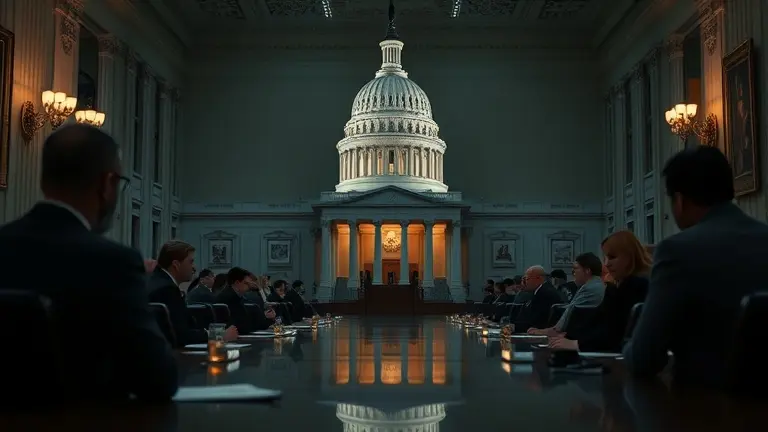
The landscape of American digital asset finance is teetering on the edge of a historic transformation. As the Senate Banking Committee gathers to deliberate on the CLARITY Act, the industry finds itself at a crossroads between the volatile era of ‘regulation by enforcement’ and a future defined by structured, statutory authority. For the retail investor, this is more than just a legislative hurdle; it is the most significant shift in market rules since the inception of cryptocurrency. With high-stakes lobbying from giants like Coinbase and Ripple colliding with intense scrutiny over consumer protections, the outcome of this markup hearing will dictate the volatility—and the opportunity—of your portfolio for years to come.
Yet, amidst the noise of political theater and corporate maneuvering, a vital question remains: how do you maintain a clear perspective when the very rules of the road are being rewritten? Navigating this legislative fog requires more than just market data; it demands an unwavering mental sharpness. As we peel back the layers of the CLARITY Act to separate fact from fiction, it becomes evident that your ability to interpret these regulatory shifts is just as important as the legislation itself.
Understanding the CLARITY Act: A Turning Point for US Crypto Regulation

The CLARITY Act (Digital Asset Market Clarity Act) represents the most significant legislative shift in the history of American digital finance. Following its successful passage through the House of Representatives in July 2025, the act has become the focal point of a national debate regarding the future of decentralized finance. At its core, the legislation seeks to dismantle the prevailing “regulation by enforcement” environment—a strategy previously employed by the SEC—and replace it with a comprehensive, statutory market structure that provides clear rules for both crypto businesses and traditional financial institutions.
Why the May 14 Senate Markup Matters
The May 14, 2026, Senate Banking Committee markup hearing serves as a watershed moment for the industry. This legislative checkpoint determines whether the bill will advance to the full Senate floor or face further roadblocks. For the digital asset sector, the stakes are immense:
- Market Stability: The transition from ambiguous regulatory guidance to codified statutory law is expected to reduce the volatility associated with legal uncertainty.
- Corporate Influence: Major industry players, including Coinbase and Ripple, have invested heavily in lobbying efforts, reflecting the industry’s desperate need for a stable regulatory landscape.
- Investor Impact: Institutional interest, evidenced by the record $25.8 million inflow into XRP ETFs, suggests that market participants are positioning themselves for a post-enforcement era.
The CLARITY Act is not merely a technical policy adjustment; it is a fundamental pivot point. While proponents argue that the bill will foster unprecedented technological innovation and provide necessary legal safeguards for participants, skeptics remain wary. Critics cite potential risks to consumer protection and concerns that the framework might inadvertently facilitate illicit finance. As the Senate committee deliberates, the balance between fostering an innovative crypto ecosystem and maintaining robust oversight remains the primary friction point in Washington.
The May 14 Vote: Analyzing the Senate Banking Committee Outcome

The May 14 Senate Banking Committee markup of the CLARITY Act has concluded, serving as a watershed moment for the future of digital assets in the United States. Following the House of Representatives’ approval of the act in July 2025, the Senate committee served as the primary firewall for the bill’s advancement. The outcome of this session has effectively signaled whether the current “regulation by enforcement” approach will give way to a formalized statutory market structure. With intense lobbying from industry titans like Coinbase and strategic pressure from the Trump administration, the committee’s decision creates a binary path for the market: either a swift march toward a full floor vote or a period of prolonged regulatory limbo.
Key Points of Contention and Market Impact
The legislative debate remains polarized around the delicate balance between fostering innovation and maintaining rigorous consumer protection standards. If the bill advanced, focus now shifts to the floor vote timeline and the potential for amendments that could either dilute or strengthen existing AML (Anti-Money Laundering) requirements. Conversely, should the bill have stalled, the impasse largely centers on two core areas:
- Jurisdictional Clarity: The fundamental disagreement over whether digital assets should be classified under existing securities laws or a novel framework tailored for blockchain technology.
- Compliance Thresholds: The degree of burden placed on decentralized finance (DeFi) protocols to collect user data, a requirement that remains a major sticking point for privacy advocates and industry lobbyists.
- Enforcement Parity: The degree to which the bill limits the SEC’s current discretionary power to initiate litigation against crypto firms without explicit statutory guidelines.
Investors have already begun adjusting their positions, evidenced by the record $25.8 million inflow into XRP ETFs just days before the hearing. This surge in volume underscores the high level of market anticipation surrounding the CLARITY Act. Whether the committee’s final vote facilitates a pathway to law or necessitates a structural overhaul, market participants must now prepare for a transition toward a more defined, albeit heavily scrutinized, regulatory landscape. The next phase of legislative negotiation will likely determine whether the US maintains its competitive edge in the global digital economy or continues to navigate a fragmented and unpredictable regulatory environment.
The Core Conflict: Innovation vs. Consumer Protection

At the heart of the CLARITY Act lies a fundamental tension between two competing visions for the future of American finance. On one side, industry leaders like Coinbase and Ripple argue that the current “regulation by enforcement” approach stifles growth and drives domestic companies overseas. For these firms, the act serves as a vital blueprint for regulatory certainty, providing a clear path to integrate digital assets into the mainstream economy without fear of unpredictable legal retribution from the SEC. They contend that by establishing firm, statutory rules, the United States can secure its position as a global hub for technological innovation.
Conversely, skeptics of the legislation express deep-seated concerns regarding the erosion of safety nets for the average investor. Critics argue that the current version of the bill may prioritize corporate interests over consumer protection. The core of their opposition often centers on:
- Anti-Money Laundering (AML) Standards: Concerns that looser oversight could inadvertently create conduits for illicit finance.
- Retail Safeguards: Doubts regarding whether the CLARITY Act provides adequate recourse for everyday users in the event of platform insolvency or fraud.
- Accountability Mechanisms: Fears that shifting authority away from specialized regulatory agencies might weaken the enforcement tools necessary to police bad actors in the crypto space.
Ultimately, the debate is not just about technical rules; it is a battle over the soul of the digital asset market. Proponents believe that removing the “regulatory fog” will invite institutional capital and stabilize the market, as evidenced by the recent surges in XRP ETFs. Meanwhile, consumer advocates remain wary, pushing for more robust guardrails to ensure that if the industry is to be “unlocked,” it does not come at the expense of retail investor security. Balancing these two priorities—growth and safety—remains the most significant hurdle for lawmakers navigating the legislative process.
Rules of the Road: Crypto Businesses vs. Traditional Finance

The CLARITY Act represents a fundamental departure from the current “regulation by enforcement” model that has defined the digital asset landscape for years. By establishing a formal statutory framework, the bill aims to bridge the operational gap between crypto-native enterprises and the rigid, well-defined compliance environments mandated for traditional banking and finance firms. Under the existing regime, companies often face ambiguous litigation from the SEC and CFTC, leading to significant market volatility. The new act seeks to codify clear distinctions between commodities and securities, providing a predictable roadmap for compliance that mirrors the transparency requirements already expected of Wall Street incumbents.
Harmonizing Compliance Standards
The transition to this new federal regulatory umbrella requires crypto firms to adopt standardized reporting protocols that closely resemble traditional institutional finance. Businesses will be expected to adhere to more stringent AML (Anti-Money Laundering) and KYC (Know Your Customer) procedures, effectively ending the era of jurisdictional gray areas. Key functional changes include:
- Asset Classification: The bill introduces a functional test to determine whether a digital asset acts as a commodity or a security, ending years of debate over token status.
- Registration Requirements: Crypto platforms must register with federal authorities, subjecting their internal controls and audit processes to institutional-grade scrutiny.
- Operational Disclosure: Similar to publicly traded companies, issuers will be required to provide recurring, standardized disclosures to protect retail investors from misinformation.
- Custodial Mandates: The act formalizes rules for asset segregation, ensuring that customer funds are held in a manner consistent with traditional broker-dealer obligations.
By aligning these requirements, the CLARITY Act aims to mitigate systemic risk while providing the legal certainty necessary for mainstream financial institutions to expand their digital asset services. While skeptics argue these mandates might stifle the “move fast and break things” ethos of the startup sector, supporters contend that these rules are essential for long-term integration into the global financial system. Ultimately, the bill forces crypto businesses to choose between embracing institutional-grade accountability or operating outside the protection of the federal market structure.
Maintaining Cognitive Clarity in a Volatile Market
The CLARITY Act represents a monumental pivot for the digital asset ecosystem, promising to replace ambiguity with a codified framework. While the legislative outcome remains in flux, one truth is certain: those who succeed in this new era will be the ones who can cut through the noise of regulatory uncertainty. The struggle between innovation and consumer protection creates a high-pressure environment that often leads to cognitive fatigue, clouding the judgment required for sound financial decision-making.
Just as the industry requires a framework of clarity to function effectively, your portfolio decisions require a clear, undistracted mind to navigate these high-stakes legislative shifts. This is where The Brain Song becomes an essential component of your financial toolkit. Designed as a cognitive optimization tool, it helps serious investors maintain the mental sharpness needed to process complex policy changes without falling prey to stress-induced trading errors.
By incorporating this neuroscience-backed routine, you can ensure that your decision-making remains as precise as the regulations themselves, allowing you to turn market volatility into strategic advantage. Don’t let mental fog compromise your financial future; sharpen your focus and prepare for the next market cycle with confidence.
 Optimize your cognitive performance for the next market cycle—start your 12-minute daily routine to ensure your decision-making is as clear as the new regulatory framework.Sharpen My Decision-Making Now!