
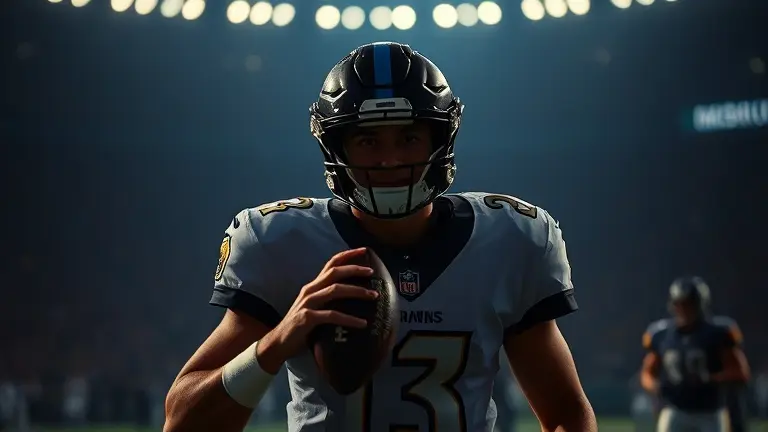
The meteoric rise and subsequent volatility surrounding former Vanderbilt quarterback Diego Pavia offers a stark masterclass in the unforgiving economics of professional football. Once celebrated as a high-octane collegiate playmaker with a $2 million NIL valuation, Pavia’s transition into the NFL as an undrafted free agent (UDFA) with the Baltimore Ravens has been defined less by his highlight-reel scrambles and more by the intense scrutiny of his public persona. As he fights for a roster spot, the narrative has shifted from Heisman-level potential to a question of whether a polarizing reputation can coexist with the rigid, high-stakes requirements of an NFL training camp.
While the surface-level conversation remains fixated on off-field headlines and the lack of guaranteed money in his contract, the deeper story is one of cognitive endurance. For an UDFA, the margin for error is non-existent. Surviving this environment requires more than just arm talent; it necessitates a level of mental fortitude and focus that can withstand both the media microscope and the crushing internal pressure of the business of sports, where one lapse in judgment can cost a career before it truly begins.
The Trajectory of Diego Pavia: From Collegiate Stardom to UDFA Reality

The meteoric rise of Diego Pavia began with his command of the offense at New Mexico State before his high-profile transfer to Vanderbilt. During his tenure as a Vanderbilt quarterback, Pavia became a polarizing yet undeniably effective playmaker. His ability to extend plays and manufacture offense in critical situations propelled him into the national spotlight, with several analysts at the peak of the 2026 season labeling him a legitimate Heisman Trophy candidate. At the height of his collegiate success, his NIL market value was estimated at over $2 million, reflecting his status as one of the most recognizable faces in the sport.
Despite these accolades, the 2026 NFL Draft proved to be a harsh reality check. Scouts expressed concerns regarding his physical profile and transition to an NFL-style passing scheme, ultimately leading to Pavia going undrafted. This outcome represents a significant pivot point in his career, moving from the protected environment of college stardom to the high-stakes, meritocratic world of the professional ranks.
Navigating the UDFA Landscape
Following the draft, Pavia signed with the Baltimore Ravens as an undrafted free agent (UDFA). However, the terms of his contract underscore the fragile nature of his professional standing:
- Non-Guaranteed Compensation: Reports from insiders like Mike Florio indicate the absence of guaranteed money, leaving Pavia with zero margin for error during training camp.
- Fringe Roster Status: As a UDFA, he faces an uphill battle to secure a spot on the 53-man roster, competing against established depth and veteran backups.
- Reputational Challenges: Recent off-field controversies, including viral social media incidents, have further complicated his standing, as teams increasingly prioritize “locker room fit” when evaluating borderline prospects.
For Pavia, the transition from being the centerpiece of a college program to a developmental project in Baltimore highlights the unforgiving business of the NFL. His ability to balance his dynamic on-field identity with the discipline required of a fringe roster player will dictate whether he can bridge the gap between collegiate hype and professional longevity.
The Economics of an Undrafted Free Agent Contract

The transition for Diego Pavia, Vanderbilt quarterback turned Baltimore Ravens UDFA, serves as a stark case study in the harsh fiscal realities of the NFL. While college football stars often command significant NIL valuations—Pavia’s previous market valuation eclipsed $2 million—the professional landscape operates under a radically different set of financial incentives. Unlike drafted rookies who benefit from standard four-year contracts featuring guaranteed signing bonuses, an undrafted free agent (UDFA) contract is essentially a “prove-it” deal with minimal financial protection. Reports indicating an absence of guaranteed money in Pavia’s contract highlight a precarious position: he is essentially an auditioning employee with no long-term security.
The Financial Disparity and Job Security
In the business of the NFL, guaranteed money functions as a team’s “sunk cost” investment; the more a team invests in a player, the more patience they exercise during development. For a player like Pavia, the lack of a financial anchor means the margin for error is razor-thin. When a franchise has no significant capital tied to a roster spot, personnel decisions are dictated purely by performance and, increasingly, reputation.
- Risk Mitigation: Without guaranteed salary, the Ravens can release a player at any point during training camp with zero financial penalty, effectively ending his season before it begins.
- The Reputation Tax: For fringe roster players, off-field controversies act as a liability. When two players are competing for the final spot on a 53-man roster, front offices often default to the individual who carries the least amount of “noise” or potential for distraction.
- The Uphill Climb: Pavia must not only outperform his peers on the practice field but also convince the coaching staff that he is a cultural fit, a task significantly complicated by recent public controversies that have clouded his professional narrative.
Ultimately, Pavia’s shift from a collegiate star to an NFL underdog underscores the ruthless efficiency of professional sports economics. For a player without the security of a draft pick’s contract, every snap in the preseason is a fight for financial viability. His journey reflects the reality that in the NFL, your previous market value rarely dictates your current worth on a depth chart.
Off-Field Conduct and the Business of NFL Security

In the hyper-competitive ecosystem of the NFL, the transition from college star to professional athlete requires more than raw physical talent; it demands an unwavering commitment to professional standards. For Diego Pavia, the former Vanderbilt quarterback, the journey from a collegiate standout to an undrafted free agent (UDFA) with the Baltimore Ravens serves as a stark case study in the fragility of professional security. While on-field production is the primary currency for roster spots, off-field behavior acts as a multiplier—either enhancing or eroding a player’s perceived value. Recent controversies, including viral social media footage, have underscored the reality that NFL front offices increasingly prioritize “character capital” when evaluating prospects who occupy the bottom of the roster.
The Professionalism Margin
For franchise cornerstones, teams are often willing to invest resources in behavioral coaching or public relations management. However, for a fringe player or a UDFA, the margin for error is razor-thin. When a player’s public perception shifts toward the negative, the cost-benefit analysis for a general manager changes. The “business of sports” dictates that unless a player possesses generational, game-altering talent, the risk of a potential distraction—even one perceived as minor—can outweigh the reward of their athletic contribution. Key factors influencing this professional calculus include:
- Roster Stability: Organizations prefer low-maintenance personnel who allow coaching staffs to focus entirely on tactical implementation.
- Media Scrutiny: Every headline generated by off-field conduct forces an organization to answer difficult questions, diverting energy away from competitive goals.
- Asset Liquidity: Without guaranteed contract clauses, players like Pavia are effectively on a “day-to-day” audition, where any reputational damage provides an easy justification for a sudden roster cut.
Ultimately, the contrast between Pavia’s lucrative $2 million NIL valuation in college and his current, non-guaranteed professional reality highlights a transition from being a protected campus figure to an expendable professional asset. For any athlete entering the professional ranks, professionalism functions as a critical asset, directly impacting their longevity and their ability to secure a lasting foothold in the league.
The Training Camp Gauntlet: Proving Potential Against Perception
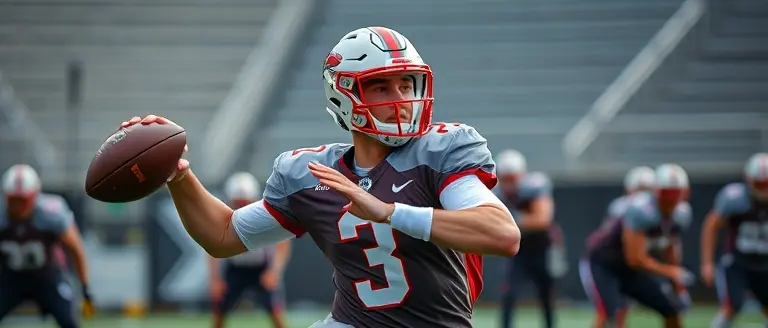
For Diego Pavia, the transition from collegiate stardom at Vanderbilt to the Baltimore Ravens training camp represents the most challenging pivot of his athletic career. While his college highlight reels showcased an elite ability to improvise and extend plays, the NFL environment demands a shift toward technical precision, complex defensive reads, and a level of professional accountability that few rookies fully grasp. As an undrafted free agent (UDFA) lacking guaranteed contract money, Pavia operates on the thinnest of margins. Every repetition in practice serves as a live audition for a roster spot, where the margin for error is effectively zero compared to the high-volume, high-reward system he enjoyed as a star playmaker.
Bridging the Gap: Performance vs. Professionalism
To survive the cut, Pavia must demonstrate that his on-field production can be replicated against NFL-caliber speed and scheme discipline. Beyond physical development, his professional trajectory is currently hampered by off-field noise, specifically recent controversies that have shifted the narrative from “dynamic underdog” to “roster liability.” In the NFL, coaches prioritize consistency and locker room cohesion; for a fringe player, any off-field distraction provides an easy excuse for personnel departments to cut ties without financial penalty.
To secure his position, Pavia must prioritize the following adjustments:
- Mastery of the System: Demonstrating rapid assimilation of the Ravens’ playbook, specifically showing that he can move beyond “backyard football” to function as a disciplined, rhythmic passer.
- Reputation Rehabilitation: Engaging in active personal brand management to signal maturity. NFL franchises are historically hesitant to invest development time in players who introduce volatility into the team ecosystem.
- Maximizing Limited Reps: With established depth charts already in place, Pavia must capitalize on third-team repetitions, turning sparse opportunities into efficient scoring drives that force coaching staff to notice his upside over safer, veteran alternatives.
Ultimately, the financial contrast between his past $2 million NIL valuation and his current non-guaranteed professional reality underscores the harsh “business of sports.” Pavia’s survival rests on his ability to prove that his playstyle is not just a college-level anomaly, but a sustainable professional asset that justifies the risks associated with his current reputation.
Mastering the Mental Edge in High-Stakes Sports
The journey from the spotlight of collegiate stardom to the uncertainty of an NFL practice squad is a psychological gauntlet. For players like Diego Pavia, the challenge is not just physical—it is about maintaining absolute clarity while the world watches your every move. The business of football often ignores the human element, yet navigating this transition requires a level of mental focus that can withstand intense public and internal scrutiny. Mastering this capacity for concentration is what ultimately separates those who break through the noise from those who fade into the background of training camp history.
When the pressure mounts and the professional stakes are at their highest, your ability to remain locked in determines your survival. This is exactly where The Brain Song proves essential. By leveraging advanced neuroscience-based auditory stimulation, it provides a non-invasive way for elite performers to sharpen their mental game and cultivate the cognitive resilience necessary to handle extreme stress. It is the sophisticated edge required for any athlete or professional aiming to sustain peak performance when the outcome of every decision is career-defining.
By integrating this tool into your daily preparation, you are not just working harder; you are optimizing your neurological capacity for the high-pressure environments that define success. It is the practical, proven step for those who refuse to let external chaos dictate their internal performance. Make the investment in your cognitive baseline today to ensure you stay ahead of the curve.
 Discover how elite performers use neuroscience-based auditory stimulation to sharpen their mental game and sustain focus during their most critical career transitions.Transform My Mental Performance Now!