
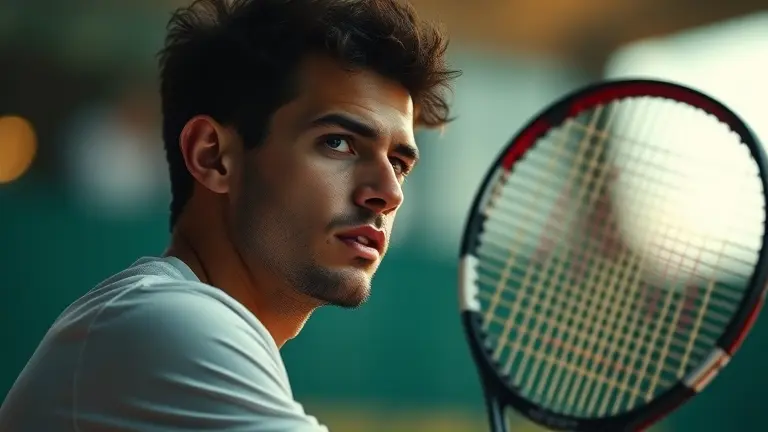
Twelve months ago, Rafael Jodar was navigating the rugged, high-stakes trenches of collegiate tennis for the University of Virginia, an environment where pressure is constant but the spotlight remains relatively dim. Today, the 19-year-old Spaniard is no longer an obscure prospect; he is the most talked-about disruptor on the ATP tour. With a meteoric ascent from outside the top 900 to the world’s top 35, Jodar hasn’t just climbed the rankings—he has dismantled the established order with a tactical sophistication that has even the most seasoned analysts, including Brad Gilbert, scrambling to define his ceiling.
While his physical pace and court coverage are undeniable, the true catalyst behind Jodar’s sudden dominance is a profound psychological pivot. By trading the suffocating expectations of the NCAA circuit for a mindset rooted in “enjoying the process,” Jodar has unlocked a level of cognitive composure under fire that defines the elite. His performance at the Italian Open was more than a victory; it was a masterclass in mental clarity, positioning him as the clear frontrunner for the Next Gen title and a legitimate dark horse heading into Roland Garros.
From UVA to the ATP Elite: The Meteoric Rise of Rafael Jodar

The trajectory of Rafael Jodar during the 2026 tennis season is nothing short of unprecedented. Just one year ago, the 19-year-old Spaniard was refining his craft on the courts of the University of Virginia, competing within the rigors of the American collegiate system. Today, he stands as a formidable force on the ATP Tour, having vaulted from outside the world’s top 900 rankings to a position within the prestigious top 35. This meteoric climb represents one of the fastest transitions from university tennis to professional stardom in modern history, defying the traditional, often slower developmental pathways favored by many young prospects.
His recent performance at the Italian Open served as the ultimate catalyst for his ascent, transforming him from a promising challenger into a genuine threat to established top-tier players. By dismantling high-ranked opponents with a brand of tennis characterized by explosive baseline rallies and tactical versatility, Jodar has captured the attention of both fans and veteran analysts, including the renowned Brad Gilbert. His efficiency on clay, coupled with an ability to sustain intensity during high-stakes matches, has redefined expectations for his immediate future on the professional circuit.
Several key factors have fueled this historic breakout:
- College Foundation: His time at UVA provided a high-pressure environment that prepared him for the physical and mental demands of the ATP Tour.
- Rapid Ranking Surge: Rising from the lower rungs of the rankings to the top 35 in a matter of months highlights a rare level of consistency and rapid adaptation.
- Elite Momentum: His recent successes have not only secured his status as a dark horse for Roland Garros but have also forced oddsmakers to slash his entry prices, moving him from long-shot status to a legitimate contender.
As Jodar continues to dominate the Next Gen Race, his journey serves as a powerful testament to the value of adapting one’s mentality and match preparation. Analysts note that his transition is not merely a result of improved technique, but a fundamental shift in his competitive approach, allowing him to thrive under the intense scrutiny of the global tennis spotlight.
The ‘Next Gen’ Frontrunner: Analyzing His Tactical Evolution

Rafael Jodar has rapidly solidified his position as the clear frontrunner for the Next Gen title, currently leading the standings by a significant margin. His meteoric rise from the University of Virginia collegiate circuit to the top 35 of the ATP rankings is not merely a product of raw athleticism; it is the result of a profound tactical evolution. Analysts, including the esteemed Brad Gilbert, have pointed to Jodar’s ability to neutralize high-paced groundstrokes as his primary competitive advantage. Unlike many young prospects who rely solely on power, Jodar incorporates a sophisticated blend of heavy topspin and flat, redirected pace that disrupts the rhythm of established ATP veterans.
Technical Adjustments and Court Craft
Jodar’s success on the clay courts, notably demonstrated during the Italian Open, highlights his refined tactical versatility. His game has undergone several critical adjustments that allow him to thrive against elite competition:
- Aggressive Court Positioning: Jodar has moved closer to the baseline, taking the ball on the rise to rob opponents of their recovery time.
- Point Construction: He displays a veteran-level understanding of geometry, often forcing opponents into uncomfortable wide positions before switching the direction of play.
- Serve Efficiency: While not always the fastest server on tour, his ability to mix spin and placement has drastically reduced the number of break points he faces.
- Mental Resilience: By focusing on “enjoying the process,” Jodar maintains composure during high-leverage moments, a trait that often eludes players in their first year on the professional circuit.
This tactical maturity is why industry experts now view him as a genuine “dark horse” contender for major titles. By integrating his collegiate foundations with a professional-grade strategic blueprint, Rafael Jodar has developed a style uniquely suited for the modern game. His transition from an unranked prospect to a top-tier threat proves that he is not just a participant in the Next Gen conversation—he is currently the standard-bearer.
Mentality Under Pressure: Why Jodar Stays Grounded

The meteoric rise of Rafael Jodar from the collegiate courts of the University of Virginia to the upper echelons of the ATP tour has been characterized not just by technical proficiency, but by a remarkably resilient psychological framework. While many young players crumble under the weight of sudden media scrutiny and the pressure of global expectations, Jodar has remained notably composed. According to recent interviews, the 19-year-old attributes his current success to a fundamental shift in perspective: a conscious decision to “enjoy the process” rather than focusing solely on the outcome of a match or his rapidly climbing ranking.
Embracing the Transition
The transition from college tennis to the high-stakes professional circuit often overwhelms athletes due to the abrupt change in atmosphere, travel demands, and the sheer talent level of opponents. However, Jodar appears to have internalized this challenge by viewing every stadium match as an opportunity for growth rather than a test of his worth. This “grounded” mindset has been essential in his ability to dismantle seasoned veterans who are often rattled by the Spaniard’s fearless playstyle.
Key pillars of Jodar’s psychological approach include:
- Routine Consistency: Maintaining the same match preparation rituals that served him during his collegiate career to provide a sense of stability in the chaotic ATP environment.
- Detachment from Expectations: By publicly downplaying his own rapid ascent, Jodar insulates himself from the external pressure exerted by fans and betting markets, where his odds for upcoming Grand Slams like Roland Garros have plummeted from +5000 to +2500.
- Reframing Failure: Viewing setbacks as necessary data points for improvement, a philosophy that has enabled him to maintain focus even when faced with stadium ovations and the intense spotlight of the Next Gen Race.
By prioritizing long-term development over short-term accolades, Jodar has effectively neutralized the “spotlight syndrome.” His ability to remain calm amidst the hype surrounding his breakout season is arguably his greatest weapon, proving that his mental toughness is as elite as his physical game. As he continues to navigate the highest levels of tennis, this steady, process-oriented mentality remains the cornerstone of his potential for future major victories.
Roland Garros Dark Horse: Betting Markets and Grand Slam Expectations

The meteoric rise of Rafael Jodar has sent shockwaves through the sportsbooks, signaling a rare shift in how oddsmakers view first-time contenders at Roland Garros. Recent data indicates that his betting odds for the upcoming French Open have been aggressively slashed, moving from a long-shot +5000 to +2500 in a matter of weeks. This drastic adjustment reflects market confidence in his recent clay-court dominance, where his ability to dismantle established ATP veterans has transitioned from a statistical anomaly to a predictable pattern. While the betting markets treat him as a legitimate “dark horse,” the true test lies in his ability to withstand the unique rigors of the Grand Slam format.
Navigating the Best-of-Five Transition
While Jodar’s recent success is undeniable, transitioning from the ATP tour’s best-of-three matches to the physical and mental attrition of a best-of-five Grand Slam environment presents a significant hurdle. Experts note that his success at the Italian Open serves as a strong indicator of his stamina, but playing two weeks of consecutive high-stakes tennis is a different challenge entirely. To sustain his current trajectory at Roland Garros, Jodar must address several critical factors:
- Physical Durability: Sustaining intensity over five sets requires a level of conditioning that college tennis rarely demands, even at the highest levels of the University of Virginia program.
- Mental Resilience: Grand Slam matches often feature momentum swings that force players to reset; Jodar’s stated “major change in mentality” will be tested under the immense spotlight of Parisian crowds.
- Tactical Versatility: Opponents now have extensive footage of his tendencies, meaning Jodar must evolve his point construction to remain unpredictable in long, grueling rallies.
Despite the inherent unpredictability of a maiden major run, the hype surrounding Jodar is grounded in tangible performance metrics. By currently leading the Next Gen Race and demonstrating elite movement on clay, he has proven that his baseline game is ready for the top tier. Whether he can convert this momentum into a deep run remains the most compelling narrative heading into Paris.
Harness the Mental Clarity of a Champion
The story of Rafael Jodar is not merely one of raw talent, but a blueprint for mastering high-stakes pressure. His transition from the collegiate courts to the global stage proves that the ultimate differentiator in elite performance isn’t just physical endurance—it is the ability to maintain unwavering focus when the world is watching. When the game is on the line and the crowd goes silent, it is the player who can enter a flow state most efficiently who walks away with the trophy.
You don’t need to be a professional athlete to master the same cognitive discipline that Jodar uses to dismantle his opponents. Just as Jodar relies on specific mental protocols to sharpen his game, you can optimize your own cognitive resilience with The Brain Song. Designed as a powerful ‘cognitive accelerator,’ this tool utilizes science-backed auditory stimulation to help you bypass mental fog and sustain deep, productive focus during your most demanding tasks.
By integrating this routine, you are effectively training your mind to operate with the same calm, surgical precision that defines a Grand Slam contender. Whether you are navigating corporate pressure or seeking to improve your learning capacity, this is your opportunity to mirror the mental toughness of a breakout superstar. It is time to stop playing defense with your focus and start performing at your absolute peak.
 Unlock your own ‘match-ready’ mental clarity—experience the 12-minute auditory routine that is redefining peak performance.Transform My Mental Performance Now!