
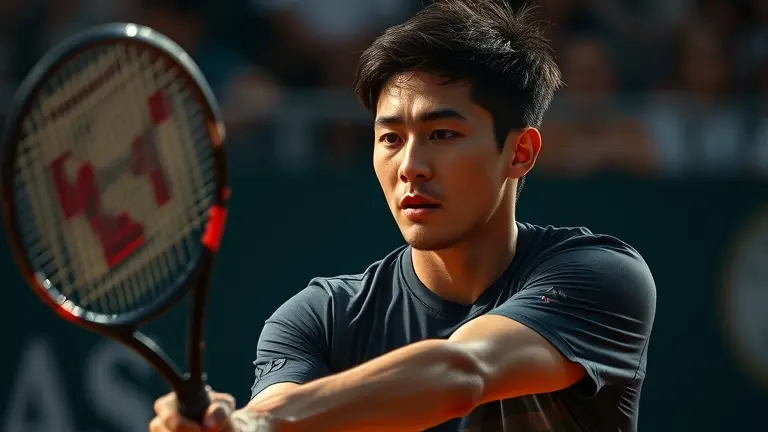
The 2026 Italian Open in Rome is witnessing a compelling evolution in Brandon Nakashima’s professional career. Fresh off a commanding 6-4, 6-0 demolition of veteran Roberto Bautista Agut in the Round of 64, the American has signaled that his game is undergoing a sophisticated transformation. Fans and analysts alike are no longer just looking at the scoreboard; they are dissecting a player who has finally synchronized his technical baseline mechanics with a more resilient tactical approach on the challenging clay surface.
This isn’t merely a streak of good form—it is a calculated shift in trajectory. Nakashima’s performance in Rome provides the perfect case study for a rising star whose ranking prospects are tied directly to his ability to solve the complex puzzles of elite-level competition. As we dive into the specific adjustments he has made to his serve consistency and court positioning, it becomes clear that Nakashima is not just competing; he is mastering the mental and physical variables required to establish himself as a consistent force in the upcoming Grand Slams.
Brandon Nakashima’s Breakthrough at the 2026 Italian Open
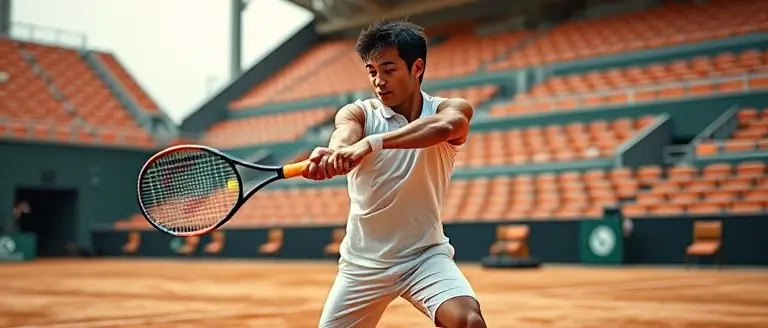
Brandon Nakashima has firmly cemented his status as a major player to watch at the 2026 Italian Open, delivering a masterclass performance in his Round of 64 victory against the seasoned veteran Roberto Bautista Agut. Winning with a commanding 6-4, 6-0 scoreline, Nakashima demonstrated a level of tactical maturity on clay that has often eluded him in previous seasons. This victory is particularly significant, as the Rome tournament serves as a rigorous testing ground for the world’s elite, and Nakashima’s ability to dismantle a grinder like Bautista Agut suggests a major leap in his transition from a hard-court specialist to a versatile all-surface competitor.
Tactical Evolution on Clay
The efficiency of Nakashima’s baseline game in this matchup highlights critical adjustments in his 2026 tactical approach. Rather than relying solely on his trademark serve-and-first-strike rhythm, he utilized higher margins and patience to neutralize the heavy spin generated by his opponent. Key takeaways from this standout performance include:
- Improved Court Positioning: Nakashima displayed superior movement, consistently taking the ball on the rise to cut off angles on the slower clay surface.
- Serve Consistency: By maintaining a high first-serve percentage, he avoided vulnerable second-serve opportunities that opponents previously exploited on red clay.
- Neutralizing the Grind: His ability to dictate points during long rallies—a traditional weakness—signifies that his off-season fitness and training regimens are yielding immediate competitive dividends.
This dominant display in Rome has sent a clear signal to the ATP tour: the American is no longer just a contender on faster surfaces. As he advances, his performance level indicates he is peaking at the right moment to improve his ATP ranking, potentially securing a favorable seed for the upcoming Grand Slams. For fans and analysts monitoring the tour, Nakashima’s current form is a testament to his rising trajectory and evolving tactical profile.
Tactical Breakdown: The Evolution of Nakashima’s Clay Court Game

Brandon Nakashima has long been recognized for his precision on hard courts, but his performance at the 2026 Italian Open demonstrates a significant tactical maturation on red dirt. His recent 6-4, 6-0 dismantling of veteran Roberto Bautista Agut serves as a masterclass in adapting an aggressive, flat-hitting game to the slower, higher-bouncing European clay. Evidence suggests that Nakashima has successfully recalibrated his baseline positioning, choosing to stand slightly deeper to absorb heavy topspin while maintaining his signature strike-zone consistency.
Mastering the Clay Court Transition
The primary shift in Nakashima’s gameplay centers on his serve-to-groundstroke transition. Rather than seeking quick, one-two punch winners that often fail on slower surfaces, he is now prioritizing high-percentage “plus-one” shots. By utilizing more kick on his serve, he creates the necessary time to set up his forehand, allowing him to dictate rallies from the center of the court. Key elements of his evolving clay game include:
- Increased Rally Patience: Nakashima has transitioned from a high-risk aggressor to a methodical builder, often extending points to 8+ shots to find the right window for an attack.
- Refined Footwork: His ability to slide into shots and recover while staying balanced has improved drastically, allowing him to neutralize opponents who previously exploited his movement on non-hard courts.
- Spin Variation: By incorporating more heavy topspin into his cross-court exchanges, he prevents opponents from getting into a rhythm, effectively limiting their ability to step inside the baseline.
These adjustments are critical for his 2026 trajectory. As he continues to climb the ATP rankings, this newfound tactical versatility provides a stable foundation for deep runs in high-profile Masters 1000 tournaments. By blending his hard-court power with these refined clay-court fundamentals, Nakashima is rapidly positioning himself as a formidable threat on any surface, a development that bodes well for his upcoming seeding prospects at major Grand Slams.
The Road to Grand Slam Seeding: Analyzing the Numbers
The 2026 season represents a pivotal chapter for Brandon Nakashima, as his recent performance at the Italian Open underscores a clear upward trajectory in his professional career. By dismantling seasoned veterans like Roberto Bautista Agut in straight sets, Nakashima is not merely accumulating match wins; he is effectively narrowing the gap between himself and the ATP top-tier seeds. His current form on clay suggests that the tactical refinements implemented during the off-season are yielding measurable dividends, particularly regarding his court positioning and defensive transition play. These technical improvements are essential for a player of his profile, as consistent deep runs in Masters 1000 events are the primary catalysts for significant leaps in the world rankings.
For fans and analysts alike, the math behind the rankings is clear: every victory in Rome contributes vital points that stabilize his position and provide the necessary momentum heading into the Grand Slam circuit. A successful campaign at the Italian Open serves as a benchmark for his seeding prospects, potentially allowing him to avoid top-eight opponents in the early rounds of upcoming majors. To understand the significance of his rise, consider the following impact factors on his ATP ranking trajectory:
- Point Accumulation: Securing wins against top-tier competition in Masters 1000 tournaments provides the high-value points necessary to climb inside the top 30, a threshold that often guarantees a protected seeding spot.
- Seeding Advantages: By climbing the rankings, Nakashima avoids the “danger floater” status, ensuring a more favorable path through the initial rounds of Grand Slam events.
- Consistency Metrics: Evidence suggests that Nakashima has improved his serve consistency under pressure, a key KPI that separates tournament contenders from early-round exits.
- Surface Versatility: His dominant display on clay highlights his adaptation to varied court speeds, proving he is no longer just a hard-court specialist.
As the tournament progresses, the stakes for Nakashima rise proportionally. By maintaining this level of baseline aggression, he is effectively signaling his arrival as a perennial threat in major tournaments. His ability to translate rigorous training into real-time match outcomes positions him as one of the most promising American prospects currently navigating the professional tennis landscape.
The ‘Rising Star’ Trajectory: What’s Next for Nakashima?
Brandon Nakashima is currently navigating a pivotal chapter in his professional career, transforming from a promising talent into a consistent contender on the ATP Tour. His clinical dismantling of Roberto Bautista Agut at the 2026 Italian Open highlights more than just a singular win; it serves as a barometer for his improved tactical maturity on clay courts. Analysts tracking his 2026 season note that Nakashima is no longer just relying on his natural ball-striking ability. Instead, he has integrated a high-percentage, methodical approach that prioritizes court positioning and serve-plus-one efficiency, a necessity for competing at the elite Masters 1000 level.
This steady, incremental growth is fueling optimism that Nakashima is primed for a definitive breakthrough into the ATP Top 20. Unlike players who experience volatile ranking jumps, Nakashima’s trajectory is built on the foundation of physical durability and mental fortitude. By managing his tournament schedule to avoid burnout while still testing himself against top-tier competition in Rome, he is demonstrating the disciplined scheduling required of a long-term staple in American tennis.
Keys to Continued Advancement
To maintain this upward momentum throughout the remainder of the 2026 season, Nakashima’s development plan likely hinges on three critical areas:
- Surface Versatility: Refining his movement on slow clay surfaces to complement his inherently aggressive hard-court game, which remains his primary weapon.
- Ranking Consistency: Leveraging high-profile wins at events like the Italian Open to secure better seeding for upcoming Grand Slams, thereby avoiding difficult early-round draws against top-ten seeds.
- Tactical Variation: Increasing the frequency of net approaches and implementing a more diverse variety of spin to disrupt the rhythm of veteran baseliners.
Evidence suggests that if Nakashima maintains this level of disciplined execution, he will not only be a consistent presence in the latter stages of major tournaments but will also solidify his standing as a central figure in the next generation of American stars. His focus remains squarely on the long game, a strategy that is increasingly paying dividends as he closes the gap on the world’s elite.
Mastering the Mental Game on the Court
Brandon Nakashima’s dominant performance at the 2026 Italian Open is a testament to more than just physical prowess; it is the result of refined tactical discipline and a heightened mental edge. As he continues to climb the ATP rankings, his ability to translate strategic adjustments into high-percentage points on clay highlights the evolution of a true professional. The consistency he has displayed serves as a blueprint for athletes aiming to transcend the standard match-by-match grind.
Just as Nakashima meticulously calibrates his baseline maneuvers to conquer the unpredictable nature of clay, professional athletes are increasingly turning to neuroscience to sharpen the mental focus required to execute these high-stakes decisions. The ability to maintain cognitive clarity under pressure is the ultimate differentiator between a rising star and a champion. This is exactly where The Brain Song becomes an essential asset in your performance toolkit.
By leveraging an auditory performance routine designed for cognitive optimization, you can cultivate the same level of mental sharpness that elite players utilize to maintain focus during grueling rallies. Whether you are aiming to enhance your decision-making on the court or seeking peak productivity in your daily life, this science-based approach provides the neurological foundation necessary for excellence. Don’t just watch the progress—replicate the discipline that fuels it.
 Unlock your peak mental performance and sharpen your focus with The Brain Song’s neuroscience-based audio routine.Transform My Mental Performance Today!