

When 18-year-old Iva Jovic stepped onto the court at the 2026 Internazionali BNL d’Italia to face Coco Gauff, she wasn’t just battling a top-ranked opponent; she was confronting the surreal reality of competing against a player she views as a seasoned veteran. Yet, Gauff is only 22. This striking generational dynamic at the Rome tournament underscores a seismic shift in women’s tennis, where the lines between ‘up-and-comer’ and ‘established champion’ are blurring at an accelerated pace.
While the physical intensity of the clay court season is undeniable, the true divide between these rising stars and established legends is no longer just about baseline power or serve speed. It is defined by an extreme cognitive demand—the ability to maintain laser-like focus while navigating the immense pressure of media scrutiny and high-stakes performance. As Gauff continues to evolve her technical defensive prowess, players like Jovic are forced to adapt to a mental battlefield that is as unforgiving as it is rapid, setting the stage for a new era of American tennis dominance.
The Rome Showdown: When the ‘Veteran’ Meets the Next Gen
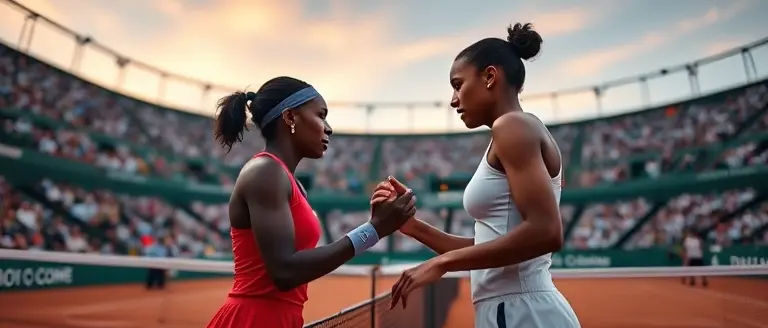
The 2026 Internazionali BNL d’Italia provided more than just WTA Rome 2026 results; it delivered a profound “changing of the guard” moment that captured the tennis world’s attention. The matchup between Coco Gauff and 18-year-old Iva Jovic served as a microcosm of the rapidly evolving landscape of professional women’s tennis. Despite Gauff being only 22 years old, her status as a Grand Slam champion and multi-year tour staple led Jovic to label her a “veteran”—a comment that went viral for its surreal perspective on the rapid acceleration of modern careers. This sentiment highlights a new reality where athletes reach maturity at an increasingly young age, turning players in their early twenties into the established benchmarks that rising stars like Jovic must overcome.
Tactical Evolution and Generational Pressure
Beyond the human interest angle, the match offered a fascinating technical look at how the Coco Gauff 2026 season is unfolding on clay. Gauff has displayed significant tactical refinement since her 2025 Roland Garros title run, showing improved defensive patience and a more aggressive baseline geometry. For Iva Jovic, this Iva Jovic breakout opportunity was a trial by fire. Analyzing the gameplay reveals:
- Defensive Anchoring: Gauff utilized her trademark movement to neutralize Jovic’s aggressive pace, forcing the teenager into high-percentage shot selection.
- Tactical Adjustments: Jovic demonstrated composure by varying her spin patterns, though she struggled to penetrate Gauff’s improved defensive coverage.
- The Psychological Hurdle: Jovic’s quotes underscore the unique mental pressure faced by the current generation; competing against a peer who is perceived as a tour veteran creates a complex psychological barrier that only high-level match experience can dismantle.
As the US women’s tennis pipeline continues to flourish, this Rome encounter serves as a testament to the depth of talent currently entering the tour. The narrative surrounding this match is not merely about a win or loss, but about the seamless transition of power as established stars meet the incoming wave of rising American talent.
Coco Gauff’s 2026 Season: Navigating the Pressure of Expectations
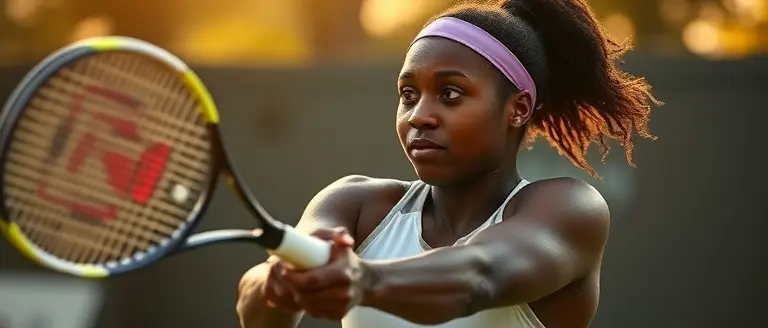
As the 2026 WTA tour reaches its mid-season stride, Coco Gauff finds herself in a unique transitional phase. No longer the teenage prodigy breaking onto the scene, the 22-year-old is now firmly established as a tour leader. Her 2026 campaign reflects a strategic refinement in her game, moving away from the purely physical attrition-based style that defined her early years toward a more nuanced, tactical approach. Analysts tracking the WTA Rome 2026 results have noted that while her raw power remains a primary weapon, her defensive positioning has become significantly more efficient. By minimizing unnecessary movement on clay, Gauff is effectively conserving energy for the grueling two-week format of Grand Slams, signaling a mature approach to longevity in a sport where burnout is a common obstacle.
Adapting to the Changing Competitive Landscape
The recent spotlight on Iva Jovic and other rising talents has highlighted the “generational shift” currently unfolding on the tour. Facing younger opponents who grew up studying her match tapes, Gauff is forced to evolve her game rapidly to stay ahead of the curve. Her ability to dismantle emerging players under the bright lights of Rome suggests that her mental conditioning is perhaps her most improved asset. Managing the weight of expectations as a multi-year US tennis superstar requires not just physical talent, but an immense degree of psychological fortitude.
Key observations regarding Gauff’s current performance metrics include:
- Tactical Flexibility: A noticeable increase in successful net approaches compared to her 2025 title-winning season at Roland Garros.
- Service Reliability: A higher percentage of first-serve points won, reducing the pressure on her baseline rallies during critical games.
- Emotional Regulation: Consistently measured reactions in high-leverage situations, proving she has internalized the pressures of elite competition.
As Gauff continues to navigate her mid-20s, the discourse surrounding her career has shifted from “potential” to “dominance.” Evidence suggests that by balancing aggressive offense with calculated patience, she is positioning herself to remain a permanent fixture in the Top 5 rankings for the foreseeable future. The challenge for Gauff remains in sustaining this level of play, but if her recent tactical pivots are any indication, she is successfully transitioning from a rising star into a seasoned veteran of the professional game.
Iva Jovic’s Breakout: Is This the Future of American Tennis?
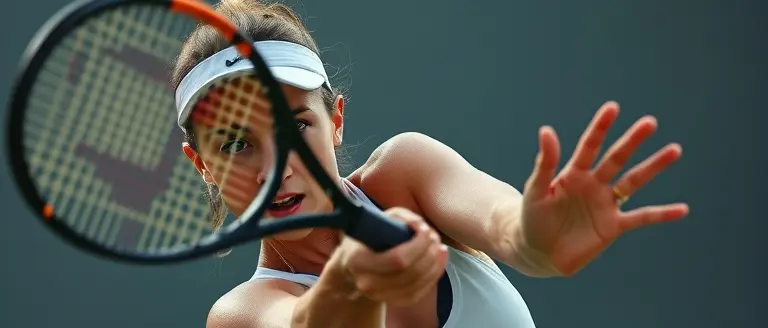
The rise of Iva Jovic at the 2026 Internazionali BNL d’Italia has signaled a definitive shift in the landscape of American women’s tennis. At just 18 years old, Jovic has transitioned from a promising junior prospect to a formidable tour-level competitor, capable of pushing established stars to their limits. Her recent matchup against Coco Gauff in Rome served as a stark, if surreal, reminder of how quickly the sport evolves. While Gauff is widely recognized as a premier talent, being labeled a “veteran” by Jovic at only 22 years old highlights the rapid acceleration of the current tour and the immense pressure placed on young athletes to reach peak performance earlier than ever before.
Technical Profiling and Tactical Evolution
Jovic’s game is defined by a modern, high-intensity baseline approach that mirrors the technical requirements of today’s clay court circuit. Unlike players of previous generations who relied heavily on specific surface adaptations, Jovic demonstrates an ability to neutralize pace and construct points with calculated aggression. Key aspects of her recent breakout performance include:
- Baseline Resilience: Jovic displays a defensive maturity that allows her to extend rallies, a trait often missing in teenagers, forcing opponents to overhit.
- Tactical Flexibility: Evidence suggests that Jovic possesses an advanced court sense, often identifying the precise moment to transition from defense to attack.
- Mental Toughness: Competing against established names like Gauff, Jovic has shown an ability to manage the psychological burden of high-stakes environments without compromising her service rhythm.
As the 2026 season progresses, the contrast between Jovic’s raw ambition and the refined defensive strategies employed by Coco Gauff provides a fascinating narrative for tennis analysts. While Gauff continues to lean on her seasoned tactical experience to navigate the pressures of the WTA tour, Jovic represents the next wave of talent that refuses to be intimidated by pedigree. Whether this momentum leads to a deep run in upcoming Grand Slams remains to be seen, but Jovic’s performance in Rome has undoubtedly established her as a critical player to watch in the evolving American tennis hierarchy.
The Generational Shift: Longevity and Modern Tennis Demands
The recent matchup at the 2026 Internazionali BNL d’Italia has highlighted a surreal reality in the WTA: Coco Gauff, at only 22 years old, is now viewed as a “veteran” by the next generation of American talent, including 18-year-old rising star Iva Jovic. This perception shift underscores a critical evolution in professional tennis, where the intensity of the tour and the early entry of elite juniors compress career cycles. While Gauff remains at the peak of her physical powers, her multi-year experience on the main stage positions her as the benchmark for younger players navigating the same pathway to the top of the rankings.
Comparative Metrics and Training Demands
The statistical contrast between these two players during the 2026 season illustrates the changing demands of the sport. While Gauff has mastered the defensive durability required for deep runs at events like the Italian Open, players like Jovic are entering the tour with more aggressive, high-risk tactical frameworks.
Key factors defining this generational dynamic include:
- Professional Longevity: Modern recovery protocols and data-driven scheduling allow younger players to compete at higher intensities, but the mental fatigue associated with the tour remains a barrier to early consistency.
- Tactical Evolution: Gauff has shifted from a pure athlete to a strategic tactician, utilizing superior court geometry to neutralize opponents. Conversely, breakout talents like Jovic are focusing on blistering baseline speed and high-velocity shot-making.
- The ‘Veteran’ Label: In the modern era, “veteran” status is no longer defined by age (30+), but by total matches played on the WTA tour. With Gauff having logged thousands of high-stakes points since her debut, she possesses the institutional knowledge that makes her the quintessential standard-bearer for American tennis today.
As the 2026 season progresses, the technical evolution of both athletes will be the primary metric for their continued success. Evidence suggests that while the “new wave” may have the physical firepower, the tactical discipline displayed by Coco Gauff—honed through her 2025 Grand Slam experience—remains the blueprint for sustained excellence in an increasingly crowded and competitive field.
Mastering the Cognitive Edge
The progression of talents like Iva Jovic and the sustained excellence of Coco Gauff highlight a fundamental truth in modern professional sports: technical skill is merely the entry fee. The true separator, especially as the pace of competition intensifies, is cognitive endurance. Staying locked in during a crucial set break or maintaining clarity while defending a breakpoint requires more than just physical conditioning; it demands elite-level mental agility and sustained focus that persists even under the most grueling circumstances.
This is where the distinction between a promising player and a dominant force is made. Just as these athletes push their physical limits, professional high-performers are increasingly turning to cognitive conditioning to sharpen their decision-making speed and clear the mental fog that often compromises performance. Our specialized training aligns perfectly with the intense, data-driven environment of elite tennis, providing the exact mental framework required to navigate high-stakes moments with absolute precision.
By integrating the right cognitive tools into your daily routine, you can replicate the calm, analytical composure that separates the greats from the rest. It is time to stop playing defense with your own mindset and start actively conditioning your brain for peak performance. Experience the science-backed routine that professionals rely on to sustain elite focus under immense pressure.
 Master your own mental game: Discover how the 12-minute Brain Song routine helps professionals sustain elite focus under pressure.Unlock My Peak Performance Now!