
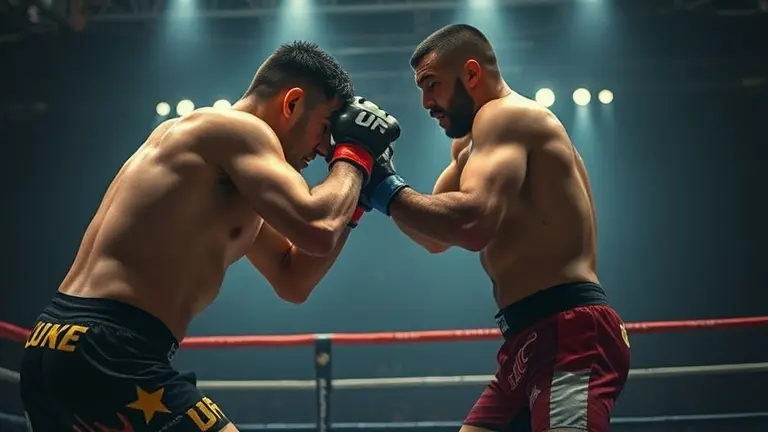
In the high-stakes arena of UFC 328, Joshua Van solidified his status as a transcendent force in the flyweight division. His fifth-round TKO victory over the formidable Tatsuro Taira wasn’t merely a successful title defense; it was a career-defining performance that silenced skeptics and established Van as a complete, multifaceted martial artist. Fans and analysts alike are still dissecting the “Fight of the Year” contender, a brutal, back-and-forth battle that saw Van defy expectations by neutralizing Taira’s elite grappling, only to unleash a devastating finishing sequence when it mattered most.
As the combat sports world turns its eyes toward what’s next for the reigning champion, the mystery surrounding Van’s rapid evolution has become the primary topic of conversation. From his humble origins to his meteoric rise, Joshua Van has proven that sustained, high-output intensity is the hallmark of a true champion. This article dives deep into the tactical brilliance of the Joshua Van vs Tatsuro Taira showdown, explores the background of the flyweight king, and analyzes what this performance means for the future of a division hungry for new legends.
UFC 328: How Joshua Van Cemented His Legacy Against Tatsuro Taira

The co-main event at UFC 328 on May 7, 2026, will long be remembered as the night Joshua Van solidified his status as the premier force in the flyweight division. Entering the octagon against the undefeated grappling phenom Tatsuro Taira, Van faced the most significant test of his young career. The tension was palpable, as this high-stakes showdown served as the primary supporting bout to the blockbuster headliner between Sean Strickland and Khamzat Chimaev. While the main event drew massive global attention, the Joshua Van vs. Tatsuro Taira clash arguably stole the show, delivering a technical masterpiece that has already entered the conversation for ‘Fight of the Year.’
The fight dynamics showcased a dramatic clash of styles that kept fans on the edge of their seats for nearly 25 minutes. Van, once labeled a pure striker, displayed remarkable defensive wrestling to neutralize Taira’s elite submission game. Throughout the bout, the momentum shifted repeatedly, with both athletes demonstrating championship-level resolve. The conclusion arrived in the fifth round, where Van’s relentless output and tactical adjustments finally overwhelmed Taira, leading to a decisive TKO victory. This finish not only retained his flyweight title but also silenced critics who questioned his ability to handle world-class grappling pressure.
Key Takeaways from the Historic Fight
- Fight of the Night: Both Van and Taira were awarded ‘Fight of the Night’ bonuses, reflecting the sheer intensity and high-level skill displayed by both combatants.
- Evolution of a Champion: This victory proved that Van has evolved into a complete mixed martial artist capable of thriving in deep-water, championship rounds.
- The Stoppage Debate: While social media discourse has seen some debate regarding the referee’s intervention, the consensus remains that Van was firmly in control and trending toward an inevitable finish.
Ultimately, van vs taira proved that the flyweight division is currently home to the most exciting technical battles in the sport. By securing his belt against such a formidable opponent, Van has firmly planted his flag as the man to beat, setting the stage for his next defense in an increasingly competitive landscape.
Tactical Breakdown: Neutralizing the Elite Grappling of Tatsuro Taira

The Joshua Van vs Tatsuro Taira clash at UFC 328 served as a definitive masterclass in defensive grappling and tactical patience. Entering the cage, the primary concern for pundits was whether Van could survive the elite mat work of Taira, a fighter widely considered the premier prospect on the ground in the division. However, Van exhibited a sophisticated understanding of distance control and frame management that effectively stalled Taira’s momentum throughout the championship rounds.
Defensive Mechanics and Frame Management
Van’s success relied on three core pillars of defensive wrestling that prevented Taira from securing fight-ending submissions:
- Active Underhooks: Whenever Taira closed the distance to initiate a clinch, Van consistently fought for the underhook to neutralize back-takes and body locks, preventing Taira from transitioning into his signature deep-choke sequences.
- Persistent Framing: Van utilized stiff frames against Taira’s neck and hips, creating the necessary space to reset his posture. By refusing to concede his neck, he forced Taira to burn significant cardiovascular energy without advancing his position.
- Distance Control: Van utilized rhythmic footwork to ensure that engagement was strictly on his terms. By circling away from the cage fence, he limited Taira’s ability to use the wall for leverage, which is a common staple of taira ufc style grappling.
The Shift to the Finish
The momentum shifted decisively in the fifth round when Van identified that Taira’s submission-hunting had left him defensively vulnerable on the feet. Having successfully neutralized the ground game for four rounds, Van exploited Taira’s fatigue. He transitioned from a defensive posture to a high-volume striking rhythm, utilizing short, sharp combinations that exploited the space Taira left while attempting reactive takedowns. This technical pivot was the catalyst for the TKO finish, proving that Joshua Van has evolved from a pure striker into a well-rounded champion capable of neutralizing top-tier grapplers before dictating the terms of the closing exchange.
From Prospect to Champion: The Rise of Joshua Van

The meteoric ascent of Joshua Van from a hungry prospect to a battle-tested UFC flyweight champion serves as one of the most compelling narratives in modern mixed martial arts. Fans frequently ask where is Joshua Van from, a question rooted in his rapid emergence as a global star. Van’s journey is defined by a relentless work ethic and an ability to adapt his skillset under the brightest lights. Moving beyond his initial reputation as a pure striker, Van has evolved into a well-rounded athlete capable of dictating the pace of a fight against world-class specialists.
Evolution and Tactical Discipline
The championship-defining performance in the Joshua Van vs Tatsuro Taira bout at UFC 328 underscored his technical maturity. Entering the cage for his first title defense, Van faced the grueling pressure of Tatsuro Taira, an elite grappler known for his submission prowess. Throughout the grueling five-round contest, Van demonstrated a sophisticated defensive awareness that allowed him to neutralize Taira’s offensive sequences. His evolution as a fighter can be attributed to several key factors:
- Grappling Resilience: Developing the strength and technical knowledge to survive high-level grappling exchanges, effectively nullifying the threat of Taira’s takedowns.
- Strategic Conditioning: Maintaining explosive output and high-volume striking deep into the championship rounds, a requirement that separated him from previous challengers.
- Mental Fortitude: Displaying the calm, analytical mindset necessary to secure a finish when the momentum shifted, ultimately leading to his decisive fifth-round TKO.
This historic win—widely viewed as a “Fight of the Year” candidate—has cemented his position at the summit of the flyweight division. As Taira UFC fans and analysts alike dissect the brilliance of his late-round finish, it is clear that Van’s dedication to mastering every facet of the sport has provided him the foundation to remain a dominant champion for the foreseeable future.
The Future of the Flyweight Division Post-UFC 328

The outcome of Joshua Van vs. Tatsuro Taira has fundamentally altered the power structure of the UFC flyweight division. By successfully defending his title in such a high-stakes, “Fight of the Year” caliber performance, Joshua Van has effectively shed the “striker-only” label that once defined his early career. His ability to systematically neutralize Taira UFC-level grappling exchanges proves that he is a complete mixed martial artist, setting a daunting new benchmark for every contender currently chasing gold in the 125-pound weight class. The victory serves as a message to the division: to defeat Van, opponents can no longer rely on singular skill sets, as he has proven capable of surviving and thriving in deep water against world-class ground specialists.
Next Steps and Potential Challengers
With Van firmly established at the helm, the matchmakers are looking toward a new wave of challengers who possess the versatility to test his championship mettle. While discussions often gravitate toward legacy names, the landscape now requires fighters who can pressure Van without compromising their defensive integrity—a difficult balance given Van’s late-round finishing ability.
The trajectory of the division now includes:
- The Grappling Conundrum: Contenders must now solve the tactical puzzle that Tatsuro Taira could not, specifically finding a way to drain Van’s gas tank without opening themselves up to his devastating counter-strikes.
- Division Parity: The “Van Era” has forced mid-tier contenders to accelerate their development, as the gap between the champion and the rest of the top 10 has arguably widened post-UFC 328.
- Strategic Shifts: Expect future opponents to shift toward heavy clinch-work and cage-pressure strategies, attempting to stifle the space that Van exploited in the championship rounds.
As fans continue to research where is Joshua Van from and study his rapid ascent, it is clear that he is no longer just a rising star; he is the undisputed standard-bearer. The future of the flyweight division depends on who can evolve fast enough to challenge a champion who is already perfecting his own craft.
Unlocking Your Own Championship Potential
The epic clash between Joshua Van and Tatsuro Taira served as a masterclass in heart, tactical evolution, and, most importantly, metabolic endurance. Van’s ability to dig deep into his reserves and secure a TKO in the fifth round wasn’t just a display of fighting skill—it was a testament to the supreme physical conditioning required to compete at the very pinnacle of the UFC flyweight division. His transition from a pure striker to an athlete who can nullify elite grappling is a blueprint for anyone looking to master their craft.
Just as a professional fighter must meticulously manage their metabolism and energy output to dominate in the later rounds, your own daily performance requires a similar commitment to metabolic health. If you are struggling with energy slumps or plateaus in your fitness journey, your body might be fighting against its own efficiency. By understanding how to support your system’s natural thermogenic capacity, you can bridge the gap between where you are and the elite standards of professional athletes like Van.
CitrusBurn acts as a powerful metabolic accelerator designed to help you reactivate your natural fat-burning processes while maintaining high energy levels throughout your busiest days. It is the perfect tool for those ready to mirror the discipline of a champion and optimize their physical output. Don’t let a sluggish metabolism hold you back from your peak potential.
 Optimize your own performance levels—discover the science behind efficient metabolism with CitrusBurn here.Transform My Life Today