
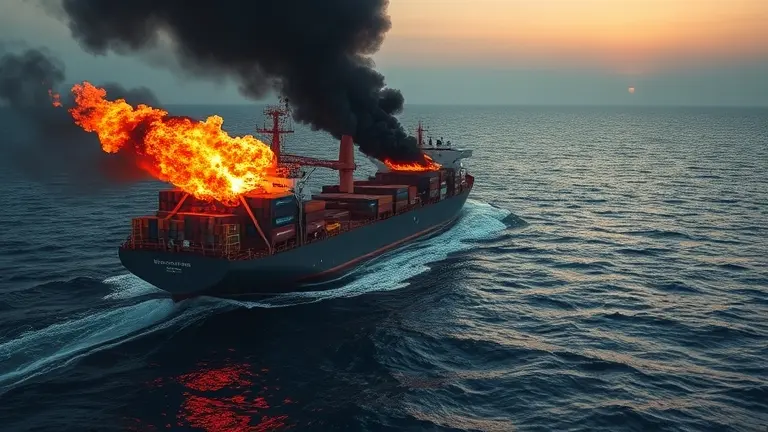
On May 10, 2026, the fragile equilibrium of the Persian Gulf was tested once again as a commercial cargo vessel fell victim to an unknown projectile strike within Qatari territorial waters. Amidst a delicate ceasefire between the United States and Iran, this high-stakes maritime incident has ignited immediate concern regarding the vulnerability of vital shipping lanes. While initial reports from the British military and local authorities indicate that the fire was successfully contained and no injuries were sustained, the event has cast a long shadow over regional security, forcing geopolitical analysts to scrutinize the efficacy of existing de-escalation frameworks.
As the international community awaits forensic confirmation regarding the origin of the projectile—frequently identified in early accounts as a drone—the focus must remain on objective, evidence-based assessments of maritime risk. This situation demands more than speculation; it requires a deep-dive analysis into the strategic geographic breakdowns of the region’s energy infrastructure. Navigating these complex maritime risks in the Gulf requires a precise, blueprint-level understanding of the region’s geography, much like any successful, high-stakes project relies on having the right set of accurate, tested plans at your fingertips to ensure success.
Maritime Incident Off the Qatar Coast: Situation Overview

On May 10, 2026, a significant maritime security event unfolded when a commercial cargo ship was struck by an unknown projectile in waters northeast of Doha. This ship fire off the Qatar coast has drawn immediate international attention, as it occurred within Qatari territorial waters, a region critical to global energy stability. Both British military maritime authorities and Qatari officials have confirmed the incident, reporting that a fire broke out on the vessel’s deck following the impact. Fortunately, the blaze was quickly brought under control by the ship’s crew, and no injuries were reported among the personnel on board. The vessel remains seaworthy and has been cleared to continue its scheduled transit.
Geopolitical Context and Regional Stability
The incident takes place against the backdrop of a highly fragile US-Iran ceasefire, leading analysts to scrutinize the event as a potential stress test for regional diplomacy. While the origin of the projectile remains under investigation, some early reports have pointed toward the potential use of a drone, heightening concerns regarding the vulnerability of commercial shipping lanes in the Gulf.
Key takeaways from the current situation include:
- Structural Integrity: The vessel sustained damage but remains operational, avoiding a major environmental or navigational disaster.
- Security Monitoring: International maritime security entities are currently heightening their surveillance across the region to deter further escalations.
- Diplomatic Fallout: The strike serves as a pointed reminder of the volatile security environment, testing the resolve of stakeholders currently adhering to the US-Iran diplomatic agreement.
By maintaining a focus on maritime safety, observers are carefully monitoring whether this incident represents an isolated event or a calculated provocation aimed at disrupting the delicate geopolitical status quo. Forensic teams continue to analyze the projectile’s origins to determine responsibility, while officials urge caution to prevent further regional instability.
The Fragile Ceasefire: Geopolitical Implications
The recent ship fire off Qatar coast has sent shockwaves through regional diplomatic channels, serving as a high-stakes test for the delicate US-Iran ceasefire. As international observers monitor the situation, the incident is being widely characterized by geopolitical analysts as a “ceasefire test,” highlighting the inherent volatility of maritime security in the Gulf. While the vessel reportedly suffered only limited damage and continued its voyage without injuries, the symbolic weight of an “unknown projectile” striking a commercial ship in Qatari territorial waters complicates ongoing efforts to maintain stability between major regional powers.
Navigating Maritime Escalation Risks
The strike near Doha serves as a stark reminder of the vulnerability of critical shipping lanes. The involvement of an unidentified projectile—linked by some sources to drone technology—underscores the evolving nature of proxy warfare and the difficulty of attributing such strikes without comprehensive forensic evidence. To understand the broader implications for regional security, experts are focusing on the following factors:
- Strategic Stability: The extent to which this incident tests the limits of current diplomatic commitments between the United States and Iran.
- Maritime Security Protocols: How regional navies and international maritime entities adjust their posture following localized, high-precision strikes.
- Economic Impact: The potential for increased insurance premiums and security costs for vessels navigating the Persian Gulf, which remains a vital artery for global energy markets.
Maintaining a neutral stance is currently paramount, as state and non-state actors alike assess the fallout. Because the incident occurred within the context of a fragile, tested ceasefire, any hasty conclusions regarding the origin of the projectile could trigger a rapid escalation. For now, the global focus remains on the resilience of diplomatic backchannels to prevent a localized maritime disruption from destabilizing the broader Middle East security architecture.
Maritime Security and Gulf Trade Routes

The Persian Gulf remains one of the most vital arteries for global commerce, serving as a primary corridor for energy exports and containerized trade. The recent ship fire off Qatar coast serves as a stark reminder of the inherent vulnerabilities within these high-traffic transit zones. Because a significant percentage of the world’s oil and liquefied natural gas (LNG) passes through these waters, any disruption—whether through conventional kinetic action or unconventional threats like drone strikes—creates immediate ripple effects across international energy markets and shipping insurance premiums.
Navigating Geopolitical Risk
Maritime security protocols in the Gulf are designed to manage a complex ecosystem of civilian commercial vessels and regional naval assets. Standard risk management for ships transiting these corridors includes:
- Enhanced Radar Monitoring: Utilizing long-range detection to identify non-transponder vessels or low-altitude aerial threats.
- Armed Security Detachments: Private or military-backed protection to mitigate the risk of piracy or localized incursions.
- Collective Naval Patrols: International maritime coalitions coordinate to provide a deterrence umbrella, ensuring that sea lanes remain open despite underlying regional tensions.
Despite these measures, the incident involving an “unknown projectile” highlights a shift in maritime warfare. The increasing use of inexpensive, hard-to-detect technology against commercial assets presents a unique challenge for international naval patrols. When an incident occurs in such a politically sensitive area, the primary objective is to maintain the flow of trade while preventing escalation. The fact that the vessel involved in this specific event was able to continue its journey suggests that current hardening measures were sufficient to prevent a catastrophic loss, yet the diplomatic implications of this “ceasefire test” remain a point of extreme concern for global shipping authorities and regional policymakers alike.
Moving Forward: International Response and Investigation

The ship fire off Qatar coast has triggered a swift, multi-national assessment to determine the origin of the “unknown projectile” that struck the vessel northeast of Doha. As international maritime security entities move to secure the area, the investigation is expected to prioritize the recovery of debris and forensic analysis of the impact site. Given the delicate state of the current US-Iran ceasefire, investigators are working with high urgency to establish whether this was a targeted strike or an isolated maritime security breach. Collaborative efforts between Qatari authorities and global maritime agencies are critical to ensuring that the incident is handled with transparency, preventing further regional instability.
Investigative Priorities and Diplomatic Caution
In the coming days, stakeholders and the public should expect a methodical approach to the forensic investigation. Experts are currently focusing on:
- Forensic Evidence Recovery: Identifying the signature of the projectile to determine if it was a drone or another type of aerial system.
- Maritime Traffic Coordination: Ensuring the continued safety of transit lanes in the Gulf, which remain vital to global energy supplies.
- Diplomatic Data Sharing: Coordinating with regional powers to cross-reference sensor data from radar stations and regional intelligence networks.
Amidst the growing curiosity regarding the perpetrator, analysts strongly advise against adopting speculative narratives. The geopolitical stakes are too high for unverified claims, as premature accusations could jeopardize ongoing diplomatic efforts. Reliable information will likely emerge only after physical evidence has been processed by qualified maritime investigators. Until then, observers are encouraged to monitor updates exclusively from official government sources and authorized maritime security portals. Maintaining this evidence-based perspective is essential for understanding the broader implications of this incident on maritime security and the stability of the Gulf region.
Navigating Complexity with Structural Certainty
The incident off the Qatari coast serves as a stark reminder of how quickly regional stability can shift, underscoring the necessity for clear, evidence-based analysis in an era of asymmetric threats. While diplomatic channels work to de-escalate tensions, the broader lesson remains that understanding any complex system—be it maritime security or engineering projects—requires an unwavering commitment to accurate data and methodical planning. Just as analysts must rely on precise geographic blueprints to map risks, any endeavor requiring structural integrity demands the right resources.
This pursuit of technical certainty is where true mastery begins. Whether you are navigating global geopolitical dynamics or embarking on a high-stakes personal construction project, the difference between success and failure often comes down to the quality of your plans. Trial-and-error is a luxury that modern, high-precision environments simply do not allow.
By utilizing professional-grade, verified technical resources, you remove the guesswork from your objectives, mirroring the same level of rigorous detail required for professional site assessment. Master the art of technical precision in your own projects with the same level of detail required for professional site analysis; explore the full library here.
 Master the art of technical precision in your own projects with the same level of detail required for professional site analysis; explore the full library here.Access My Professional Plans Now