
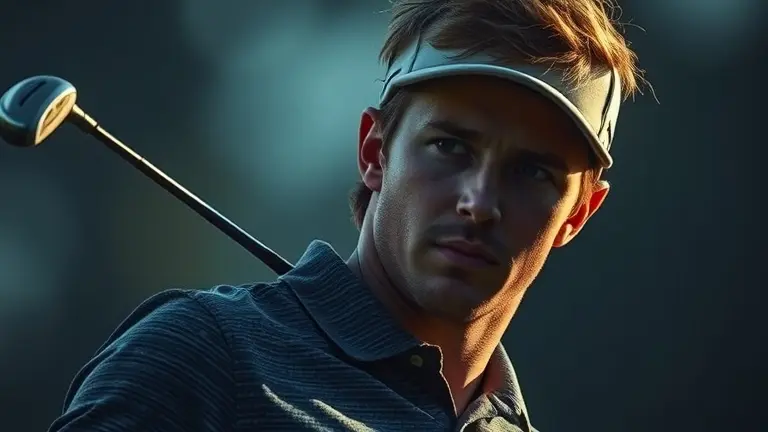
As the 2026 PGA Championship approaches, all eyes are locked on Jordan Spieth—a man perpetually standing on the precipice of golf immortality. With the career Grand Slam tantalizingly within reach, the narrative surrounding Spieth has shifted from the brilliance of his youth to the grueling, four-year quest to reclaim the winner’s circle. Competing this week at the Truist Championship, Spieth faces a complex trifecta of hurdles: the technical search for consistency, the logistical friction of a late-stage caddie shift, and an increasingly polarized locker room environment amid the ongoing PGA-LIV discourse. Every swing at Quail Hollow is not merely a stroke count; it is a high-stakes referendum on his legacy.
Yet, the greatest battle for the three-time major champion remains internal. While the public scrutinizes his stance on returning LIV stars or his performance statistics, the real story is the silent, crushing weight of elite-level decision-making. In a sport where a fraction of a degree separates glory from frustration, Spieth’s struggles highlight the universal truth that peak physical performance is ultimately governed by the mind’s ability to maintain absolute clarity under fire. Understanding how to sustain that focus, even when the world is watching, is the key to bridging the gap between practice-range brilliance and the final round of a major.
The 2026 Crossroads: Spieth’s Quest Amidst Off-Course Turbulence
As the golfing world turns its collective gaze toward the upcoming PGA Championship, Jordan Spieth finds himself standing at a pivotal juncture in his professional career. Now entering his fourth year without a victory, the narrative surrounding the former world number one is defined by a paradox: his unwavering public confidence in his current swing mechanics juxtaposed against a statistically stagnating season. While competing in the 2026 Truist Championship at Quail Hollow, Spieth is not merely battling the formidable field; he is fighting the psychological weight of a looming career Grand Slam that has remained elusive since his early career dominance.
Navigating Institutional and Personal Friction
The path to major championship glory is rarely linear, and for Spieth, the 2026 season has been complicated by significant off-course variables. His recent public commentary regarding the re-integration of LIV Golf players onto the PGA Tour has placed him at the center of a divisive locker room conversation. This external pressure is compounded by internal operational shifts, including reports of recent adjustments within his support team. Managing these distractions is critical as he seeks to optimize his performance for the demanding conditions of major championship golf.
Key factors currently influencing the Jordan Spieth narrative include:
- The Pursuit of History: The 2026 PGA Championship represents a vital opportunity to join an elite, exclusive club of players who have achieved the career Grand Slam.
- Operational Resilience: Amidst swirling rumors regarding a caddie transition, Spieth must maintain technical consistency under the highest level of competitive scrutiny.
- Industry Dynamics: His vocal stance on the PGA-LIV integration suggests he remains a central, if somewhat polarizing, figure in the ongoing governance and cultural debates shaping professional golf.
Ultimately, Spieth’s ability to filter out the noise of industry politics and operational turbulence will dictate whether he can leverage his swing confidence to break his drought. With the major season reaching its peak, the spotlight on the 2026 PGA Championship will serve as the ultimate litmus test for his legacy and his capacity to return to the winner’s circle.
Chasing History: The Final Piece of the Career Grand Slam

For Jordan Spieth, the PGA Championship represents far more than just another stop on the major circuit; it is the final frontier in his pursuit of a Career Grand Slam. Having already captured the Masters, the U.S. Open, and The Open Championship, Spieth occupies an elite tier of golfing history. However, the four-year victory drought dating back to 2022 has transformed this specific major into a psychological and tactical litmus test. As he navigates the 2026 Truist Championship at Quail Hollow, observers are closely analyzing whether his renowned creative shot-making and short-game precision can overcome the grueling length and strategic complexity demanded by current major championship venues.
Strategic Demands and Legacy Implications
The challenge at the PGA Championship is unique, favoring players who can balance power off the tee with exceptional recovery skills—a traditional hallmark of Spieth’s game. His ability to manipulate the ball around firm greens remains one of the best in the professional field, yet his consistency with the driver has been a point of contention during his recent winless streak. To secure the Wanamaker Trophy, Spieth must contend with several critical factors:
- Shot Shaping: The course layout requires precise approach angles to navigate difficult hole locations, playing directly into Spieth’s strength of imagination.
- Mental Fortitude: Managing the pressure of the Grand Slam narrative while dealing with external locker-room friction regarding LIV Golf integration will require immense focus.
- Statistical Efficiency: Evidence suggests that while his swing confidence remains high, he must reduce unforced errors off the tee to keep pace with the modern power-game metrics.
Ultimately, this major serves as a referendum on his enduring legacy. While younger challengers may possess more raw distance, Spieth’s deep reservoir of major championship experience provides a distinct advantage. If he can synthesize his strategic prowess with sustained ball-striking stability, he remains a formidable contender to join the ranks of the game’s immortal legends.
Data-Driven Analysis: Deconstructing the Four-Year Drought
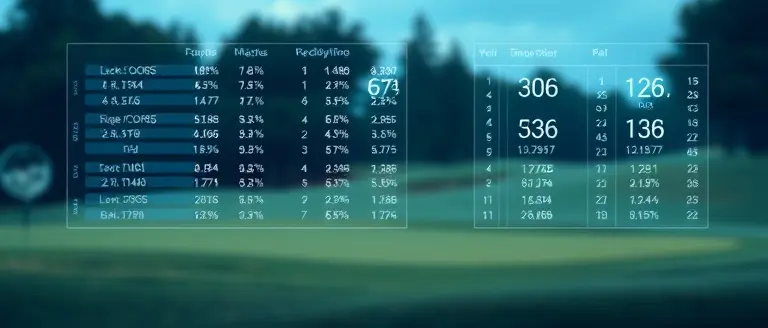
To understand why Jordan Spieth has remained winless since 2022, we must look beyond the narrative of “swing confidence” and examine the cold reality of his Strokes Gained (SG) metrics during the 2026 season. While Spieth remains a fan favorite and a perennial contender in terms of pure ball-striking potential, data suggests a widening gap between his elite tee-to-green flashes and his consistency under pressure. In 2026, his SG: Approach-the-Green numbers have fluctuated significantly, showing a marked regression in proximity to the hole compared to his peak years. This inconsistency forces him into recovery mode more often than a player chasing a Career Grand Slam can afford.
Metrics of the 2026 Season
A granular look at the data highlights specific hurdles that have hindered his ability to close tournaments:
- SG: Putting Volatility: Historically, Spieth’s short game was his safety net. Current evidence suggests a decline in his performance from the 10-to-15-foot range, a distance that previously defined his championship DNA.
- Driving Accuracy: While distance is not the primary issue, his lateral dispersion off the tee has increased. This often leaves him in difficult angles at venues like Quail Hollow, requiring miraculous recovery shots that are rarely sustainable over four rounds.
- Strokes Gained: Around-the-Green: This remains his strongest statistical pillar. His ability to save par from difficult lies keeps him relevant on leaderboards, yet this reliance on “scrambling” serves as a symptom of his ball-striking struggles rather than a strategy for success.
The fundamental disconnect for Jordan Spieth in 2026 lies in the transition from recovery to dominance. While his SG: Off-the-Tee metrics are adequate, the lack of “Tier 1” approach shots means he is fighting to save pars rather than setting up eagle or birdie opportunities. To break his drought at the upcoming PGA Championship, the data indicates he must find a higher baseline of iron accuracy; otherwise, he will continue to rely on unsustainable “hero golf” that inevitably falters under the high-pressure conditions of major tournament weekends.
Strategy Over Sentiment: Navigating the PGA Championship Pressure
To break his four-year victory drought, Jordan Spieth must transition from his characteristic “feel-based” artistry to a more disciplined, data-driven approach during the upcoming PGA Championship. While his confidence remains a cornerstone of his professional identity, the statistical reality of his 2026 season suggests that his aggressive shot-making often leads to avoidable errors in high-leverage situations. To secure the career Grand Slam, Spieth must prioritize strategic course management over highlight-reel heroics, focusing on high-percentage fairways and conservative green-side recovery. This tactical shift is vital, as the major championship environment demands a level of emotional compartmentalization that has become increasingly difficult amidst the ongoing PGA Tour and LIV Golf integration debates.
Tactical Priorities for the Major
The pressure on Spieth is compounded by the intense locker room discourse surrounding returning LIV stars. To remain competitive, he must navigate these distractions by insulating his preparation process. Key tactical adjustments include:
- Shot Selection Discipline: Moving away from high-risk, “miracle” shots that defined his early career in favor of consistent, calculated play that accounts for fluctuating course conditions.
- Caddie Synergy: Maintaining a stable and communicative dynamic with his bagman is critical. Effective communication will serve as a buffer against external noise, allowing Spieth to maintain focus on technical execution during long, grueling tournament days.
- Mental Compartmentalization: By distancing himself from the polarizing political climate of professional golf, Spieth can refocus his energy on his swing mechanics and rhythm, which have shown flashes of his championship-level form during the 2026 Truist Championship.
Ultimately, whether Jordan Spieth succeeds will depend on his ability to align his immense natural talent with a rigorous, disciplined game plan. If he can reconcile his instinctual style with the strategic demands of the course, he remains a formidable contender, capable of ending his winless streak on the grandest stage of the sport.
Mastering the Mindset of a Champion
Whether Jordan Spieth secures the elusive Grand Slam this year or continues to refine his process, his journey serves as a poignant reminder that even the world’s greatest athletes contend with the fragility of focus. The transition from intense practice to high-pressure execution is where legends are made, and it is here that the intersection of psychology and sports performance becomes vital. Spieth’s tactical hurdles are not just technical; they represent the same mental fatigue that every professional faces when navigating high-stakes environments.
Just as Spieth struggles to bridge the gap between his practice-range confidence and tournament-day execution, many of us face our own ‘mental fog’ when performing under pressure. This is where The Brain Song becomes a game-changer. Designed for the ‘mental athlete,’ this tool moves beyond generic solutions to provide science-based cognitive optimization, helping you enhance your focus, accelerate learning, and mitigate the mental fatigue that sabotages peak performance in both your personal and professional life.
By integrating a proven cognitive routine into your daily regimen, you gain the mental clarity necessary to execute at your highest potential, regardless of the stakes. Do not let mental clutter hold you back from your own championships. It is time to treat your cognitive health with the same rigor that a major champion applies to their game.
 Unlock your own peak performance and clear the mental fog by starting your daily 12-minute brain-optimization routine today.Yes, I Want This Now!