
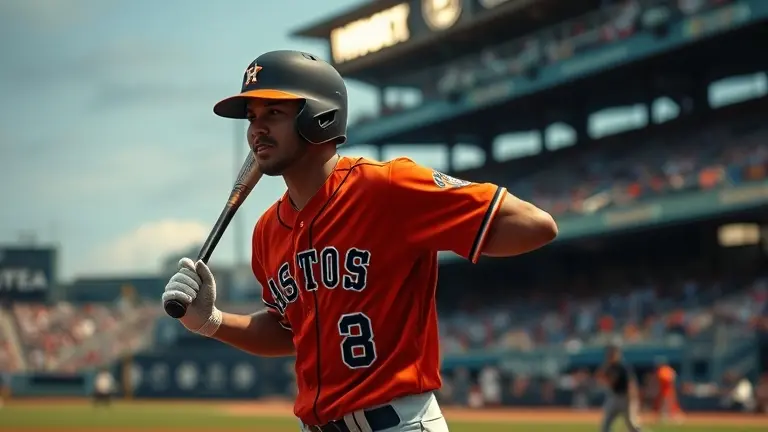
The atmosphere at the ballpark during the latest Dodgers vs Astros series has shifted from anticipated excitement to a somber reflection on the future of the Houston franchise. On May 6, 2026, the devastating news dropped: Carlos Correa will miss the remainder of the season due to a torn ankle tendon. For a team already struggling with a 15-22 record, this injury isn’t just a roster setback—it is a potential turning point that leaves the organization scrambling for answers. As fans look to the Astros score and the immediate implications for the ongoing series, the question isn’t just how they finish this week, but whether the team’s playoff window is slamming shut.
The void left by a cornerstone talent is immense, requiring the front office to execute a flawless reconfiguration of the infield. The path forward for the 2026 Astros demands more than reactionary roster moves; it requires the same level of strategic precision as architectural planning. In the high-stakes world of professional sports, much like in complex structural engineering, one wrong step in the design phase can lead to a total collapse of the project. As we analyze the potential replacements and the outlook for the remainder of the season, it becomes clear that success lies in the details of the foundation.
The Carlos Correa Injury: A Pivotal Turning Point in the Dodgers-Astros Series
The dodgers vs astros series, already a high-tension rivalry for baseball fans, took a devastating turn on May 6, 2026. Just hours before the first pitch, the Houston Astros confirmed that franchise cornerstone Carlos Correa suffered a season-ending torn tendon in his left ankle during batting practice. Reports indicate that Correa felt a distinct “pop” while taking swings in the cage, a catastrophic development that immediately silenced the clubhouse. With the team already laboring through a difficult 15-22 start, the loss of their primary leader is being viewed as the potential final blow to their 2026 postseason aspirations.
Impact on Team Morale and Roster Strategy
The timing of this injury could not be worse. The Astros were looking to the current astros game series against Los Angeles as a litmus test for their competitiveness. Instead, the focus has shifted entirely to survival. The astros score and collective performance will now face intense scrutiny as the front office scrambles to fill an irreplaceable void in the middle of the diamond. The loss creates a massive vacuum in leadership and offensive production that the current roster is ill-equipped to fill.
Key implications of this mid-season emergency include:
- Infield Reconfiguration: The coaching staff must decide between moving defensive specialists to shortstop or searching for external depth, as the internal options currently struggle to provide the same level of consistency.
- Morale Crisis: A 15-22 record was already weighing heavily on the team; losing a player of Correa’s caliber risks a complete collapse in confidence.
- Future Outlook: With the dynasty narrative already under question, management is now forced to determine if this season is a rebuilding year or if they have the tactical flexibility to stay relevant.
Ultimately, the injury transcends a single series. It forces a fundamental re-evaluation of the team’s identity and leaves fans questioning whether this marks the inevitable end of a historic era in Houston baseball.
The Astros Without Correa: 3 Potential Roster Moves
The season-ending injury to Carlos Correa creates a massive void in the heart of the Houston lineup. With the Astros currently sitting at a disappointing 15-22 record, the front office faces an urgent need to stabilize the infield during their critical dodgers vs astros series. Addressing the Carlos Correa replacement issue is not just about filling a defensive slot; it is about saving a 2026 campaign that is rapidly spiraling. To stay competitive, the organization must act decisively on these three tactical fronts:
1. Promoting a High-Ceiling Prospect
The most cost-effective solution involves calling up a top-tier minor league shortstop. This move allows the team to evaluate young talent under high-pressure conditions without sacrificing long-term assets. While the learning curve in the majors is steep, injecting youth into the clubhouse could provide the spark needed to revitalize a stagnant offense that has struggled to produce consistent Astros score results.
2. Targeting a Veteran Shortstop via Trade
If the front office remains committed to a playoff push, pursuing an established veteran on an expiring contract is a logical pivot. By trading mid-level prospects, Houston can secure a stable defensive presence who provides leadership during this transitional period. This approach prioritizes immediate production and mitigates the chaos caused by the current Astros lineup changes.
3. Leveraging Utility Depth
Alternatively, the coaching staff may look internally, rotating current utility players into the shortstop role. By moving existing talent to accommodate the new defensive alignment, the Astros can maintain positional flexibility while keeping their most productive bats in the lineup. While this does not replace the elite output of Correa, it preserves the current roster structure while the team navigates this difficult injury timeline. Whether these moves will be enough to salvage the season remains a primary concern for fans tracking every astros game moving forward.
Is the Astros’ 2026 Playoff Window Officially Closing?
With the official confirmation that Carlos Correa will miss the remainder of the 2026 campaign, the Astros season outlook 2026 has shifted from a desperate scramble to a sobering evaluation of the franchise’s trajectory. Entering the current dodgers vs astros series with a lackluster 15-22 record, the team was already struggling to find consistency. The loss of their primary defensive anchor and offensive engine is, for many analysts, the definitive catalyst for a potential rebuild. Statistical probability models suggest that climbing out of a seven-game-under-.500 hole in a competitive AL West is a monumental task even with a healthy roster; without Correa, the mountain appears increasingly insurmountable.
Evaluating the Path Forward
The front office faces a critical juncture regarding whether to trade veteran assets to bolster the farm system or to attempt a “miracle” pivot. While the organization has historically shown resilience, the following factors signal that the current playoff window may be rapidly closing:
- Roster Depth Deficit: The immediate search for a Carlos Correa replacement has highlighted a lack of high-ceiling utility depth in the minor leagues, forcing management to look for external stopgaps who may not impact the astros score in a meaningful way.
- AL West Competitiveness: With divisional rivals gaining momentum, the Astros no longer occupy a position of strength, making a Wild Card push mathematically improbable given the current run differential.
- Long-term Financial Flexibility: Prolonged mediocrity risks tying up payroll in aging veterans rather than transitioning to the next core of talent.
Evidence suggests that doubling down on a 2026 postseason run is an inefficient allocation of resources. Rather than pursuing short-term fixes during the ongoing astros game cycles, the smarter tactical move may involve a pivot toward 2027. By prioritizing long-term durability over the immediate, high-risk attempt to salvage this season, Houston may be better positioned to revitalize its dynasty rather than watching it fade through a series of expensive, high-stakes failures.
Tactical Adjustments: Keeping the Lineup Competitive Against Elite Pitching
The devastating news of Carlos Correa being sidelined for the remainder of the 2026 season creates a massive void in the heart of the Houston order. With the team currently struggling at 15-22, the coaching staff must pivot away from a reliance on individual power towards a more disciplined, contact-oriented approach to remain competitive against elite rotations like the one showcased in the dodgers vs astros series. Without their star shortstop, the offensive strategy must evolve to maximize run production through high-frequency situational hitting.
Reconfiguring the Lineup and Philosophy
To compensate for the loss of Correa’s production, management is expected to shuffle the batting order, prioritizing high-on-base percentage (OBP) players at the top to set the table for the middle of the order. The astros game plan will likely transition toward “small ball” tactics, emphasizing:
- Increased Plate Discipline: Reducing strikeout rates against high-velocity arms by forcing deeper counts and drawing more walks.
- Strategic Advancement: Utilizing hit-and-run plays and aggressive base running to pressure the defense, compensating for the lack of a middle-of-the-order anchor.
- Utility Integration: Relying on bench depth to provide specialized defensive support while platoon-splitting to exploit favorable matchups in late-inning situations.
The absence of a cornerstone player forces the remaining core to shoulder the load, but the burden cannot fall on one individual. By emphasizing situational hitting, the team aims to manufacture runs despite the dip in total power output. This shift is essential not only for the current high-stakes matchup against the Dodgers but for the long-term survival of the astros season outlook 2026. If the team fails to adapt its hitting philosophy quickly, the 15-22 record could spiral further, pushing the franchise toward a difficult mid-season reset. The ability to grind out wins against championship-caliber pitchers will serve as the primary litmus test for whether the astros lineup changes can keep their postseason aspirations alive.
Mastering the Blueprint for a Successful Turnaround
The loss of Carlos Correa is undeniably a massive blow, but for the Houston Astros, the season is not yet a lost cause—provided they approach their roster reconstruction with surgical accuracy. Replacing a franchise pillar requires a methodical, step-by-step approach to team building. When the pressure is at its peak and the margin for error is non-existent, the ability to rely on a proven, expert-level blueprint becomes the difference between a calculated recovery and a chaotic, failed experiment.
Just as a championship-caliber team requires precise blueprints to rebuild their roster after a devastating loss, you need that same level of technical accuracy to master your own complex projects. Stop relying on guesswork or the frustrating trial-and-error approach that leads to costly mistakes. Ted’s Woodworking offers the ultimate collection of detailed plans designed for those who value structural integrity and technical precision in every build.
Whether you are rebuilding a lineup or tackling a professional-grade project at home, the right blueprints are your most valuable asset. It is time to move past the amateur mistakes that hold you back and start executing your vision with the confidence of a master craftsman.
 Stop guessing and start building with precision—get the blueprints for your next project here.Yes, I Want to Build With Precision!