
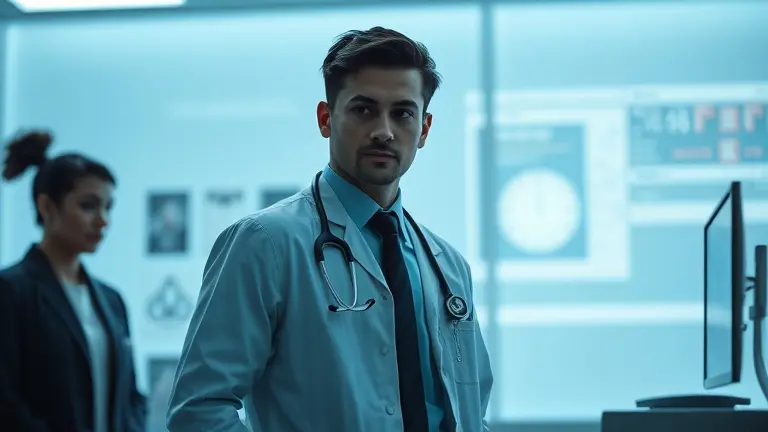
When NBC officially pulled the plug on Brilliant Minds on May 1, 2026, it didn’t just end a show; it marked a somber milestone in broadcast television history. Despite critical acclaim and the undeniable star power of Zachary Quinto, the medical drama suffered from a consistent, systemic slide in viewership that ultimately branded it as the lowest-rated scripted series of the 2025-2026 season. The industry is now left to grapple with the NBC Brilliant Minds rating declines, a trend that highlights a harsh reality: in a fragmented digital landscape, even high-quality, intellectually stimulating narratives are struggling to find a sustainable home on traditional linear networks.
This failure invites us to look past the superficial headlines and interrogate the structural disconnect between prestige storytelling and the modern viewing experience. As audiences migrate toward specialized streaming platforms, the traditional procedural format is facing an existential crisis. Is the issue truly the quality of the broadcast drama, or are we witnessing a broader cultural shift where the cognitive demands of sophisticated television no longer align with the fragmented attention spans of today’s exhausted viewers?
The Anatomy of a Cancellation: Why Brilliant Minds Lost Its Momentum
The official cancellation of Brilliant Minds on May 1, 2026, serves as a sobering case study for the current state of linear broadcast television. Despite boasting a high-profile lead in Zachary Quinto and earning generally positive critical reception, the medical drama could not bridge the gap between creative quality and viewer engagement. By the conclusion of the 2025-2026 season, NBC Brilliant Minds rating declines had become the defining narrative for the series, cementing its status as the network’s lowest-rated scripted drama. The decision to pull the plug, announced simultaneously with the mockumentary Stumble, highlights a broader, systemic struggle within the industry to maintain an audience for traditional scripted content.
Tracking the Downward Trend
The failure of the series was not sudden, but rather the result of a persistent erosion of its viewer base. Analysts tracking the NBC Brilliant Minds rating declines noted several critical factors that contributed to the show’s demise:
- Year-Over-Year Erosion: The series suffered from severe double-digit viewership drops, indicating that even consistent time slots were insufficient to retain the initial curiosity-driven audience.
- The Fragmented Landscape: Evidence suggests that high-concept medical dramas are facing stiffer competition from niche streaming platforms, which cater to specialized viewer interests more effectively than broad-spectrum network programming.
- The Zachary Quinto Effect: While the star power of Zachary Quinto initially generated buzz, it ultimately proved insufficient to mask the waning appeal of the traditional procedural format in a digital-first era.
This “post-mortem” analysis reveals a troubling trend: critical acclaim no longer guarantees survival on network TV. As the industry continues to pivot, the cancellation of Brilliant Minds reflects a hard reality—that star-driven vehicles are increasingly unable to overcome the structural audience shifts currently impacting broadcast networks like NBC.
Data-Driven Failure: Analyzing the Double-Digit Downward Trend

The official cancellation of the medical drama Brilliant Minds has brought the harsh reality of linear television economics into sharp focus. For industry analysts, the NBC Brilliant Minds rating declines were not merely a seasonal slump but a sustained, systemic failure to maintain viewer retention. By the time the network reached its final decision on May 1, 2026, the data showed a consistent double-digit, year-over-year viewership decline that effectively signaled the show’s expiration. Unlike series that fluctuate based on specific plot beats or guest stars, Brilliant Minds suffered from a gradual erosion of its core demographic, a metric that proved insurmountable against NBC’s internal performance benchmarks for the 2025-2026 season.
The Metrics of Decline
The failure of the show to sustain its audience can be attributed to several compounding factors that transformed from minor dips into catastrophic losses. As week-over-week performance reports suggest, the following dynamics led to the network’s intervention:
- Audience Erosion: The show experienced consistent week-over-week declines in the critical 18-49 demographic, failing to convert its “critically acclaimed” status into actual eyeballs.
- Benchmark Discrepancy: The production costs associated with a high-profile drama featuring Zachary Quinto required a specific threshold of linear engagement that the series failed to meet by a significant margin.
- The Streaming Disconnect: Evidence suggests that while the series may have found a niche audience, it lacked the “appointment viewing” urgency required to bolster network ratings in an era where fragmented digital content dominates consumer behavior.
For NBC, the decision was a calculated reaction to the reality of the 2026 landscape. Even with strong critical support, the declining ratings meant the series no longer justified its spot on the schedule. The data suggests that linear networks are increasingly intolerant of shows that fail to show growth, leading to a “cut-fast” mentality for any scripted series that cannot maintain a stable, let alone expanding, viewer base. This post-mortem serves as a case study for why even quality storytelling can falter when it fails to generate the raw numbers needed for network sustainability.
Critical Acclaim vs. Viewer Disconnect: A Shifting Industry Landscape

The cancellation of Brilliant Minds serves as a poignant case study in the evolving tension between critical prestige and linear broadcast viability. Despite earning praise for its narrative ambition and a compelling lead performance by Zachary Quinto, the series ultimately fell victim to consistent NBC Brilliant Minds rating declines. This disconnect highlights a growing industry trend where high-quality production values are no longer sufficient to secure a sustainable audience in a fragmented 2026 media landscape. While critics lauded the show’s intricate storytelling, the modern viewer’s preference for on-demand, bingeable content often leaves traditional, week-to-week medical dramas struggling to maintain the consistent momentum required for renewal.
The Saturation of the Medical Procedural
The medical drama genre faces an uphill battle against extreme market saturation. By the time Brilliant Minds hit the airwaves, audiences were already inundated with decades of established hospital procedurals. Evidence suggests that viewers are increasingly selective, opting for specialized streaming content that offers immediate gratification or unconventional narrative structures. The failure of this series to gain traction illustrates several systemic challenges:
- Platform Fragmentation: Linear television continues to lose market share to streaming-first platforms that prioritize data-driven subscriber retention over traditional Nielsen metrics.
- The “Zachary Quinto Effect”: While star power can generate initial interest, it is rarely enough to sustain a series if the episodic format feels redundant compared to the high-stakes, limited-run series dominant in the streaming era.
- Viewer Fatigue: The consistent year-over-year viewership declines indicate that even critically acclaimed dramas struggle to break through the noise of a crowded, platform-heavy ecosystem.
Ultimately, the show’s departure underscores that “prestige” branding is not a safeguard against low mass-market engagement. As networks grapple with these shifts, the narrative remains clear: when the gap between critical approval and actual viewership persists, networks are increasingly forced to prioritize fiscal longevity over artistic experimentation.
Beyond Zachary Quinto: Star Power in the Age of Algorithm-Driven TV

The cancellation of Brilliant Minds serves as a poignant case study for the diminishing returns of traditional celebrity-led television. For decades, the “star power” of a high-profile actor like Zachary Quinto was considered an ironclad insurance policy for network success. However, the consistent NBC Brilliant Minds rating declines throughout the 2025-2026 season highlight a fundamental shift in viewer behavior. In an era where audiences are guided by platform algorithms and hyper-personalized recommendations, a famous lead is no longer sufficient to guarantee the sustained loyalty required to keep a linear scripted drama afloat.
The Algorithm vs. The A-Lister
Evidence suggests that modern viewers prioritize content discoverability and thematic resonance over individual name recognition. While Quinto’s performance was lauded by critics, the show’s inability to penetrate the digital noise meant it failed to cultivate a dedicated, recurring audience. Key factors contributing to this disconnect include:
- Fragmented Attention: Streaming platforms utilize predictive analytics to keep viewers engaged, whereas broadcast networks often rely on legacy scheduling that struggles to capture the attention of younger, digital-native demographics.
- Content Saturation: The sheer volume of high-quality dramas across competing platforms has diluted the value of a singular “name brand” actor.
- Algorithmic Discovery: If a series does not trigger the internal engagement metrics favored by modern recommendation engines, it risks falling into obscurity regardless of the talent attached to the project.
This failure signals a challenging future for traditional network dramas. The industry is witnessing a transition where the viability of a project is determined by its ability to generate “viral” moments or social media traction—metrics that often exist independently of the show’s lead star. Ultimately, the NBC Brilliant Minds rating declines prove that in the current landscape, data-driven relevance is a more powerful predictor of longevity than star wattage. To survive, future broadcast models must pivot toward shows that can build organic, algorithm-friendly communities rather than relying solely on the marquee value of individual performers.
Reclaiming Your Mental Edge for Premium Content
The post-mortem of Brilliant Minds reveals more than just a failure of ratings; it highlights a growing chasm between the complexity of high-stakes television and the audience’s capacity for deep, sustained engagement. We are living in an era of unprecedented content volume, yet our ability to process and truly appreciate nuanced, intellectual storytelling is being hampered by pervasive mental fatigue. If we want to continue enjoying the next generation of prestige drama without falling victim to the same viewer exhaustion that sidelined this series, we must prioritize the health of our own cognitive focus.
Perhaps the reason high-concept shows are struggling isn’t just a platform issue, but a neurological one. To fully immerse yourself in the rich, intricate worlds of modern television, you need a sharper, more resilient mind. This is where The Brain Song becomes an essential tool for the discerning viewer. By incorporating a daily 12-minute auditory routine into your schedule, you can combat the brain fog that disconnects you from the narratives you love, effectively sharpening your focus to stay fully engaged with complex, high-stakes content.
It is time to stop passively scrolling and start actively experiencing your entertainment with the clarity it deserves. You don’t have to sacrifice your enjoyment of challenging media to the pressures of a fragmented digital age. Reclaim your mental acuity, enhance your cognitive clarity, and dive deeper into the stories that matter.
 Reclaim your focus and dive deeper into the content you love; start your daily 12-minute auditory routine with The Brain Song today.Transform My Mental Clarity Now!