
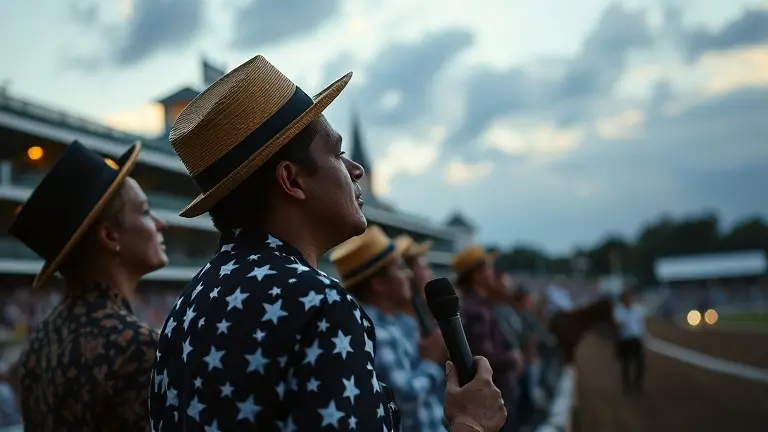
The 152nd Kentucky Derby delivered a thrilling victory for ‘Golden Tempo,’ yet the event’s most lingering debate didn’t happen on the racetrack. Instead, it unfolded across social media, where the Tedeschi Trucks Band’s performance of ‘The Star-Spangled Banner’ sparked intense Kentucky Derby anthem reactions. While music is subjective, the stark divide between those praising the complex blues-rock arrangement and those longing for a traditional vocal rendition has left many wondering why certain performances resonate while others fall flat.
This divide becomes even more apparent when contrasted with the Kentucky Oaks, where Nicole Scherzinger’s vocal-forward performance received overwhelming acclaim. The discrepancy highlights a fascinating tension between artistic innovation and the comfort of traditional expectations. By examining why the Derby performance triggered such a ‘mixed’ consensus compared to the Oaks, we gain deeper insight into the psychology of auditory perception and how our brains process—and occasionally reject—unfamiliar sonic landscapes.
Analyzing the 152nd Kentucky Derby Anthem: A Performance in Review
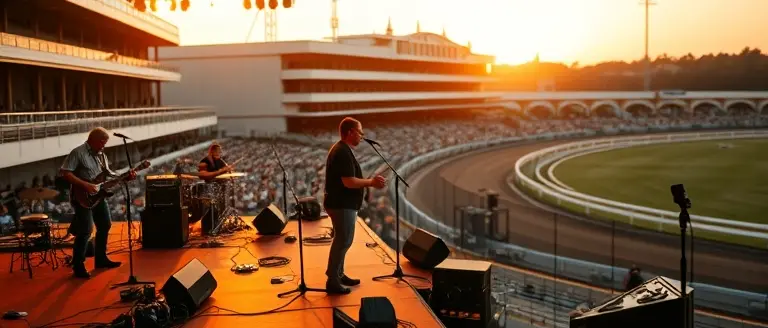
The performance of “The Star-Spangled Banner” at the 152nd Kentucky Derby on May 2, 2026, became a major talking point almost immediately following the conclusion of the ceremony. Delivered by the Tedeschi Trucks Band, the rendition was characterized by the ensemble’s signature blues-rock influence and intricate musical arrangement. While the performance showcased significant instrumental talent, the Kentucky Derby anthem reactions on social media were notably polarized, reflecting the classic tension between artistic reinterpretation and traditional expectations for a national sports anthem.
A Divided Audience
The discourse surrounding the 2026 performance highlights how high-profile sporting events serve as a lightning rod for viewer opinion. Digital platforms, particularly X (formerly Twitter), saw a stark divide in sentiment:
- Proponents: Supporters praised the Tedeschi Trucks Band for bringing a sophisticated, soulful, and musically complex arrangement to the Derby, arguing that it offered a refreshing departure from the standard, formulaic vocal performances typically heard at major US sporting events.
- Critics: Conversely, detractors felt the arrangement was overly experimental or unconventional for a patriotic opening. Some tech and gaming commentators noted that the unique pacing did not align with their personal expectations for the anthem, leading to a “mixed” consensus that often follows performances deviating from traditional vocal-led styles.
This reaction occurred during an electrifying day at Churchill Downs, which saw the historic victory of the horse ‘Golden Tempo’. While the excitement of the race largely defined the day, the anthem remains a focal point for debate regarding the role of creative license in national ceremonies. Ultimately, the performance serves as a reminder that when it comes to the Kentucky Derby 2026 anthem, audience preference remains deeply subjective, often split between those who value technical musicality and those who favor a strictly traditional presentation.
The Benchmark: Why Nicole Scherzinger’s Kentucky Oaks Performance Resonated
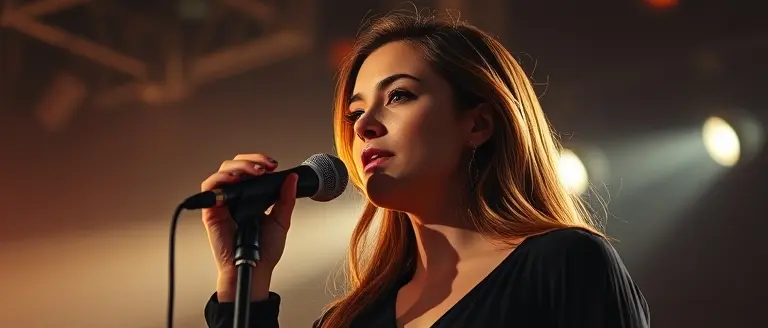
The discourse surrounding Kentucky Derby anthem reactions cannot be fully understood without examining the standard set just 24 hours earlier at the Kentucky Oaks. Nicole Scherzinger’s rendition of “The Star-Spangled Banner” was met with widespread critical acclaim, quickly solidifying its status as the gold standard for the 2026 racing weekend. Her performance prioritized a traditional, powerful vocal delivery that leaned into the song’s classic melodic structure. By avoiding excessive stylistic departures or experimental arrangements, Scherzinger met the audience’s inherent desire for a reverent and familiar experience. This performance resonated deeply with sports fans and attendees, effectively framing the public’s expectations for the main event at Churchill Downs.
The contrast between the two performances highlights a recurring friction in sports entertainment: the divide between artistic interpretation and traditionalist expectations. Several factors contributed to the overwhelming success of Scherzinger’s Oaks performance:
- Vocal Clarity: By focusing on technical precision rather than complex instrumental interplay, she ensured the lyrics remained the center of gravity for the crowd.
- Expectation Alignment: Fans attending major sporting events typically favor straightforward, anthemic renditions that encourage collective singing or standing in solemn unison.
- Acoustic Familiarity: The familiarity of her arrangement helped bridge the gap between casual listeners and die-hard horse racing fans, creating a cohesive atmosphere of unity.
Because the Oaks performance was perceived as “spectacular” and even labeled the “best ever” by many, it created a difficult hurdle for subsequent performers. When the Tedeschi Trucks Band took the stage for the Kentucky Derby, the audience was already primed with a specific benchmark for excellence. The resulting discrepancy in social media sentiment—where the Derby performance faced mixed reviews—is largely a byproduct of this “performer fatigue” and the high bar established by Scherzinger. Ultimately, her success at the Oaks proved that, within the high-stakes environment of the Kentucky Derby weekend, a traditional approach remains the most reliable path to achieving universal positive reception.
Tedeschi Trucks Band vs. Nicole Scherzinger: Contrasting Styles and Audience Expectations
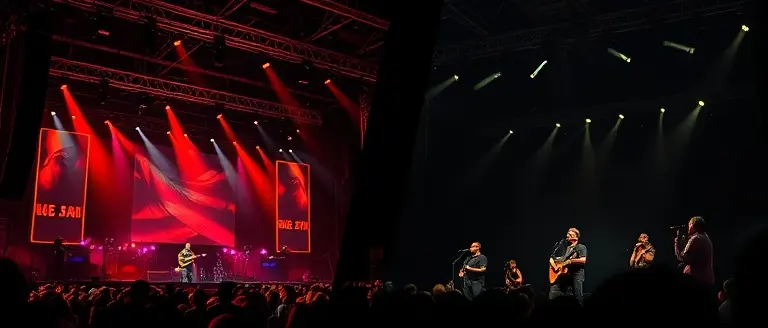
The 152nd Kentucky Derby weekend provided a fascinating case study in how musical arrangement shapes Kentucky Derby anthem reactions. When comparing the performance of the Tedeschi Trucks Band at the Derby to Nicole Scherzinger’s earlier appearance at the Kentucky Oaks, the discrepancy in public sentiment becomes clear. While Scherzinger delivered a conventional, powerhouse vocal performance that adhered to traditional patriotic expectations, the Tedeschi Trucks Band opted for a signature blues-rock, improvisational interpretation. This divergence highlights a persistent tension in American sports culture: the preference for standardized, reverent renditions of ‘The Star-Spangled Banner’ versus artistic reinterpretation.
The Impact of Genre and Traditionalism
The “mixed” feedback regarding the Kentucky Derby 2026 anthem largely stems from how listeners perceive the role of a performer during a national event. Evidence suggests that for high-profile sporting events, the audience generally seeks a “safe” and familiar melodic structure. When a band introduces complex guitar arrangements or rhythmic shifts, as the Tedeschi Trucks Band did, it often alienates viewers who associate the anthem with a singular, solemn experience. In contrast, several key factors contributed to the disparity in reactions:
- Vocal-Centricity: Nicole Scherzinger relied on a direct, pop-vocal style that mirrored the anthem’s standard arrangement, satisfying the crowd’s desire for technical precision without stylistic experimentation.
- Improvisational Friction: The Tedeschi Trucks Band’s ensemble-based approach prioritized instrumental interplay, which many purists found distracting from the lyrical gravitas expected of the national anthem.
- Contextual Framing: Coming off the heels of a universally praised Oaks performance, the Derby crowd arrived with a heightened expectation for a similar, traditional experience, which likely intensified the polarized Tedeschi Trucks Band vs. Nicole Scherzinger debate.
Ultimately, this weekend proved that while musical creativity is celebrated in most entertainment contexts, the national anthem remains a lightning rod for criticism when it strays from traditional norms. The public discourse serves as a reminder that in major sports atmospheres, the audience’s cultural expectation for uniformity often outweighs the appetite for original artistic expression.
The Impact of Social Media on Modern National Anthem Discourse

The immediate, unfiltered nature of platforms like X (formerly Twitter) and Instagram has fundamentally transformed how audiences process high-profile performances. In the case of the 152nd Kentucky Derby, these digital arenas functioned as a rapid-fire feedback loop, amplifying Kentucky Derby anthem reactions within seconds of the final note. Because users can instantly cross-reference live events with pre-recorded clips or alternative performances, the standard for a “successful” anthem has shifted toward a comparative model. This environment prioritizes instant hot takes over nuanced critique, often leaving complex musical arrangements, such as those by the Tedeschi Trucks Band, vulnerable to aggressive social media polarization.
The Power of Viral Comparisons
The stark divide between the reception of the Kentucky Oaks and the Kentucky Derby serves as a case study in modern digital scrutiny. By the time the Derby anthem commenced, viewers had already established a high benchmark via Nicole Scherzinger’s widely praised performance at the Oaks. This setup created a “comparison trap” where the public perception of the Derby performance was heavily skewed by the preceding day’s success. Key drivers of this social media discourse included:
- Benchmark Anchoring: Fans subconsciously used the “spectacular” Oaks performance as the standard, causing any deviation in style at the Derby to be viewed as a decline in quality.
- Algorithmic Echo Chambers: Negative commentary often gains more traction in algorithm-driven feeds, which can exacerbate the appearance of a “mixed” consensus even when opinions are more balanced.
- Performer Fatigue: Social media users increasingly treat high-profile weekend events as a singular content stream, leading to heightened demands for consistency across multiple days of entertainment.
Ultimately, high-profile events in 2026 are no longer judged in isolation. The ease with which users can toggle between different performers ensures that every national anthem is subjected to relentless, comparative scrutiny, forcing artists to navigate a media landscape where technical excellence is rarely enough to escape subjective, viral debate.
Tune Into Clarity: Beyond the Noise of Public Debate
The polarization surrounding the Kentucky Derby anthem reveals that our reactions to sound are rarely just about the music itself; they are about how our brains interpret, categorize, and respond to complex auditory stimuli. When an arrangement deviates from the expected pattern, it can trigger cognitive friction, leading to the listener dissatisfaction observed during the Derby weekend. Much like the right arrangement heightens an emotional connection, the right auditory frequencies can act as a catalyst for cognitive performance, helping you maintain clarity when the world feels chaotic.
Just as the Oaks performance succeeded by aligning with audience expectations, you can achieve a higher level of personal harmony by aligning your own brain with the power of sound patterns. The Brain Song is designed to bridge this gap, utilizing neuroscience-based auditory stimulation to help you sharpen your focus and eliminate the mental fog that often follows a high-pressure day. By integrating these precise acoustic patterns into your routine, you move beyond passive listening into a state of active cognitive tuning.
This is more than just listening; it is about leveraging the same principles of sound perception to optimize your mental output. If you are ready to cut through the noise of your own hectic schedule and experience the clarity that comes from balanced auditory processing, there is no better time to begin your transformation.
 Discover how the right sound patterns can sharpen your focus and clear the mental fog of a hectic day—try The Brain Song today.Transform My Life Today