
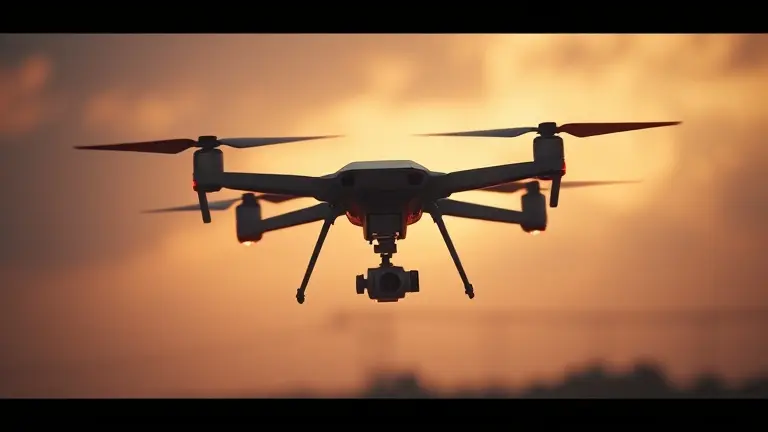
In the high-stakes arena of modern aerial warfare, the invisible barrier of electromagnetic jamming has long been the primary shield against drone threats. However, a seismic shift is currently reshaping the battlefield: the rapid emergence of the fiber optic drone. Unlike its RF-controlled predecessors, which rely on vulnerable radio signals easily intercepted or disrupted by electronic warfare suites, these wire-guided units feed data through a physical glass tether. As seen in recent developments from Eastern Europe to the Middle East, this technology effectively renders traditional ‘kill-switches’ and frequency blockers obsolete, creating an unbreakable link between pilot and payload.
This is not merely an incremental upgrade; it is a fundamental reconfiguration of asymmetric combat. By decoupling the drone from the electromagnetic spectrum, military engineers have bypassed the cat-and-mouse game of RF signal spoofing. But as the conflict shifts from the airwaves to the structural integrity of the airframe, a new bottleneck has emerged for innovators and security researchers: the physical mastery of the craft itself. Understanding the fiber-optic tether is the opening move, but the true challenge for the next generation of aerial platforms lies in the precision of the chassis that carries them.
The Rise of Fiber-Optic Drones: A Paradigm Shift in Modern Conflict
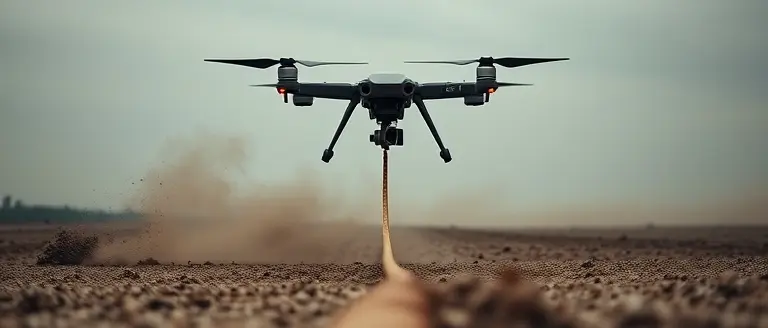
The emergence of the fiber optic drone represents a definitive turning point in the evolution of asymmetric warfare. As Electronic Warfare (EW) suites have saturated modern battlefields—most notably in the Russia-Ukraine conflict and recent skirmishes in Southern Lebanon—the reliance on radio frequency (RF) links for Unmanned Aerial Vehicle (UAV) control has become a strategic liability. Traditional drones are increasingly susceptible to sophisticated jamming technologies that sever the control signal, causing the unit to crash or hover helplessly. By replacing these wireless links with a physical, high-bandwidth tether, operators have effectively neutralized the efficacy of broad-spectrum RF interference.
This shift to wire-guided systems introduces several critical advantages for tactical operations:
- Immunity to Jamming: Because there is no radio transmission to intercept or scramble, these drones remain fully operational within high-intensity EW environments where RF-dependent systems fail.
- Low-Latency Transmission: Fiber-optic cables offer superior data throughput, allowing for high-definition, real-time video feedback that is immune to signal degradation or “noisy” electromagnetic environments.
- Extended Secure Range: Evidence from recent reports suggests these drones can maintain control links at distances of up to 60km, provided the spooling mechanism maintains proper tension.
The shift toward this “phantom” technology marks a move away from the high-tech signal race and toward a return to mechanical, physical-link solutions. While RF jammers are designed to flood the electromagnetic spectrum, they are entirely ineffective against a light-pulse transmitted through a glass strand. This evolution forces security forces and defense contractors to pivot away from signal-based countermeasures toward physical disruption strategies. As this technology continues to proliferate, the global military paradigm is forced to account for a new breed of UAV that is essentially “invisible” to standard electronic defense grids, necessitating a complete redesign of airspace security and anti-drone protocols for the remainder of the decade.
Bypassing the Jammer: Why Wire-Guided Systems Defeat RF Interference

The rise of the fiber optic drone represents a fundamental paradigm shift in electronic warfare (EW). Traditional unmanned aerial vehicles (UAVs) rely on radio frequency (RF) links, typically operating within the 2.4GHz or 5.8GHz bands. These signals are inherently vulnerable to electromagnetic interference (EMI) and active signal jamming, which flood the operational spectrum to sever the connection between the operator and the drone. By transitioning to a physical fiber-optic tether, these systems effectively opt out of the contested RF environment entirely, rendering traditional, ground-based jamming equipment obsolete.
The Physics of Immunity
Unlike RF signals that propagate through the air and can be intercepted or spoofed, the fiber-optic link acts as a “closed-circuit” data highway. Because the control signals and high-definition video feeds are transmitted via modulated light pulses through a glass core, they are entirely immune to electromagnetic pulses (EMP) and broadband jamming.
Key advantages of this architecture include:
- Zero Spectral Footprint: Because the drone does not emit RF signals to communicate, it becomes invisible to electronic support measures (ESM) that hunt for UAV transmission signatures.
- Unrivaled Bandwidth: Fiber optics provide massive throughput, allowing for low-latency, high-resolution visual feedback that exceeds the capabilities of standard frequency-hopping spread spectrum (FHSS) technologies.
- Tension Management Innovation: Recent developments in microscopic spooling mechanisms allow these drones to maintain a lightweight, hair-thin fiber connection over distances exceeding 60km, ensuring that the physical tether does not impede flight maneuverability in urban or complex terrain.
While traditional drones struggle with “signal noise” in cluttered environments, the fiber-optic drone maintains a stable, interference-free connection, ensuring that precision strike accuracy remains high even in heavily jammed zones. This transition effectively neutralizes the primary counter-UAV strategy used by modern militaries, forcing a desperate race to develop kinetic, physical interception methods rather than digital ones.
Tactical Advantages and Operational Limitations

The emergence of the fiber optic drone represents a definitive paradigm shift in asymmetric warfare. By replacing traditional radio frequency (RF) links with a physical fiber-optic tether, these systems gain absolute immunity to the standard electronic warfare (EW) suites that have dominated the modern battlefield. Unlike conventional first-person view (FPV) drones, which are highly susceptible to GPS spoofing, signal jamming, and frequency hijacking, a wire-guided system maintains a secure, unhackable connection between the operator and the airframe. This hardware-level security ensures that once the drone is deployed, it remains unresponsive to electromagnetic interference, allowing for precise engagement even in heavily contested “dirty” electronic environments where signal noise is at a maximum.
Tactical Benefits of the Fiber Tether
The integration of fiber optics offers several decisive operational advantages that are reshaping urban combat and localized reconnaissance:
- Zero RF Signature: Because the system does not emit a continuous control signal, it is invisible to RF-detection sensors, effectively making it a “phantom” asset that is difficult to locate until the moment of impact.
- Latency and Bandwidth: The physical tether allows for high-definition, zero-latency video transmission, which is critical for target identification in complex urban environments like those observed in Chasiv Yar.
- Resilience to EW: Operators no longer need to worry about “dead zones” caused by wide-spectrum jammers, as the control link is entirely galvanicly isolated from the air.
Operational Constraints and Logistical Hurdles
Despite these capabilities, the fiber optic drone faces significant limitations that dictate its specific tactical niche. The most notable constraint is the physical length of the spool. While modern iterations can manage distances up to 60km, the cable adds weight and mechanical complexity. Furthermore, the tether creates a tangible risk of snagging in dense urban environments, such as power lines, foliage, or debris-strewn ruins, which can lead to immediate mission failure if the line is severed. Additionally, because the drone is physically connected to the ground station, the pilot’s mobility is restricted; once the spool is depleted or entangled, the drone effectively becomes a stationary sensor or a kinetic asset with no return path, emphasizing a “one-way” mission profile that differs significantly from battery-swapping, reusable aerial platforms.
The Future of Electronic Warfare: Security Outlook and Counter-Measures

The emergence of the fiber optic drone represents a fundamental pivot in the architecture of modern asymmetric warfare. As these systems utilize a physical, wire-guided tether for command and control, they effectively bypass the entire electromagnetic spectrum that current Electronic Warfare (EW) suites are designed to monitor and disrupt. By eliminating the need for radio frequency (RF) signals, these drones render traditional “soft-kill” measures—such as frequency jamming and signal spoofing—completely obsolete. This paradigm shift forces military strategists to reconsider the efficacy of existing air defense grids, which have relied heavily on digital interference over the last decade.
Moving Toward Hard-Kill and Kinetic Interception
With soft-kill solutions failing to neutralize the fiber optic drone threat, the defense industry is rapidly pivoting toward “hard-kill” technologies. Because the connection is physical rather than invisible, detection must now rely on high-resolution electro-optical/infrared (EO/IR) sensors or acoustic monitoring rather than spectrum analysis. Future security outlooks suggest a high probability of the following tactical evolutions:
- Kinetic Interception: A renewed focus on automated point-defense systems, such as rapid-fire autocannons and proximity-fused munitions, designed to destroy the drone before it reaches its target.
- Physical Cable-Cutting Technology: Experimental research into specialized interceptor drones or “net-guns” designed to snag or sever the fiber optic tether, causing the hostile drone to lose guidance and drift off-target.
- Layered Sensor Fusion: Integrating AI-driven object recognition with existing radar platforms to identify the distinct signature of a trailing fiber-optic line, which is often invisible to legacy radar systems.
Ultimately, the battle for airspace security is shifting back toward the physical realm. While the fiber optic drone currently holds a significant tactical advantage by negating electronic counter-measures, the race to develop reliable physical interception methods is already underway. Defense contractors are under immense pressure to deploy systems that can bridge the gap between traditional radio-reliant defense and the new reality of wire-guided, jam-resistant hardware.
Engineering the Future of Aerial Stability
The rise of the fiber optic drone signifies a permanent departure from the reliance on radio frequencies, forcing security experts and defense developers to pivot toward physical, rather than digital, solutions. While the tether resolves the jamming dilemma, it introduces complex requirements for airframe durability and mechanical spooling systems. The future of this technology belongs to those who can transition from theoretical military analysis to the precise, hands-on fabrication of robust, custom aerial platforms capable of handling high-speed cable deployment.
Understanding the physics of wire-guided communication is only the first half of the battle; the real hurdle for serious researchers is the engineering of the specialized airframes required to house these sensitive spooling units. This is where professional-grade manufacturing expertise becomes the differentiator between a failed prototype and a functional, mission-ready asset.
Ted’s Woodworking serves as the essential workshop foundation for this transition, offering an extensive library of 16,000 precision-tested plans that provide the structural backbone for any custom project. By leveraging these verified architectural guides, engineers and DIY innovators can ensure their platforms possess the structural integrity required for next-generation tethered flight. Master the precision engineering required for your drone frames; explore the 16,000 workshop-tested plans here to build your next-generation aerial platform.
 Master the precision engineering required for your drone frames; explore the 16,000 workshop-tested plans here to build your next-generation aerial platform.Transform My Engineering Capabilities Today!