
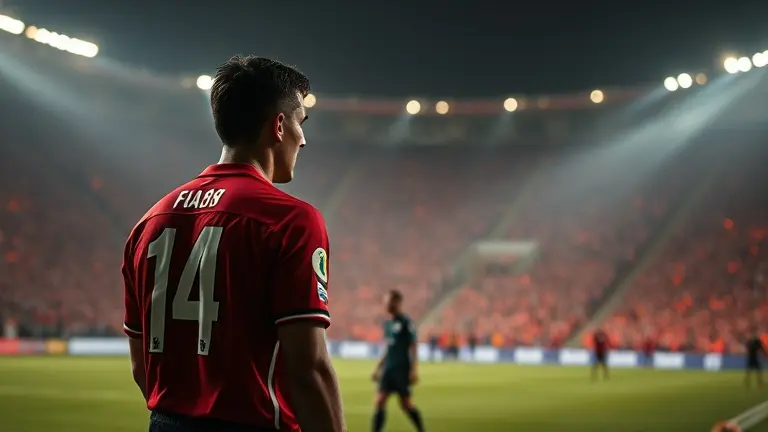
When Galatasaray took to social media during the halftime of the high-stakes intercontinental derby against Fenerbahce to decry the ‘evil’ within officiating, it was more than just a venting of frustration—it was a calculated, albeit volatile, manifestation of a deep-seated institutional rot. For the casual observer, the tweet was a headline-grabbing soundbite; for those tracking the Turkish Super Lig, it served as the latest flashpoint in an escalating war between one of the nation’s most historic clubs and the Turkish Football Federation (TFF). This standoff over refereeing standards and perceived bias has now transcended the pitch, threatening the commercial stability of the league and the integrity of its broadcast rights.
Yet, amidst the swirling rumors of high-profile transfers like Victor Osimhen and the constant noise of fan outrage, a fundamental question remains: what does this constant state of ‘institutional combat’ do to the cognitive health and professional longevity of those involved? As the lines between aggressive club diplomacy and irrational reactionism blur, the crisis in Turkish football highlights the immense mental strain of navigating high-stakes environments. It is a cautionary tale of how quickly polarized chaos can cloud objective judgment, whether you are a sports executive fighting for your club’s future or a fan trying to make sense of the industry’s decline.
The Institutional Crisis: Analyzing Galatasaray’s Standoff with the TFF
The recent intercontinental derby between Galatasaray and Fenerbahce serves as a high-stakes microcosm of the systemic instability currently plaguing the Turkish Super Lig. During the halftime interval of the match, the league-leading club bypassed traditional diplomatic channels, taking to social media to broadcast a searing critique of officiating standards. By publicly declaring that they “see your malice” and referencing “the evil inside,” the club moved beyond standard post-match complaints, signaling a total breakdown in communication between the hierarchy of the sport and its most prominent participants.
Escalation and Institutional Fractures
This public outburst is not an isolated incident but rather the latest escalation in a long-standing war of attrition between Galatasaray and the Turkish Football Federation (TFF). The club has previously taken the unprecedented step of suspending all institutional relations with the federation, effectively freezing formal dialogue in protest of perceived systemic biases. This strategy of “digital diplomacy”—using social media as a weapon of governance—has significant consequences for the broader ecosystem of Turkish football:
- Erosion of Authority: The public nature of these disputes undermines the TFF’s credibility, making it increasingly difficult to enforce neutral refereeing standards.
- Fan Polarization: By framing technical officiating issues as moral crises involving “evil,” the club risks intensifying the already volatile atmosphere between rival supporter bases.
- Commercial Risk: Financial stakeholders and broadcasting partners are viewing this breakdown with concern, as the toxic narrative threatens the long-term marketability and brand equity of the Super Lig.
Rather than a mere moment of frustration, the halftime tweet should be viewed as a calculated act of institutional defiance. It highlights a dangerous reality where the lines between competition, business, and political pressure have become blurred, leaving the league in a state of perpetual crisis that transcends the final score of any single derby.
Historical Context: A Legacy of Refereeing Disputes in Turkish Football

The current friction between Galatasaray and the Turkish Football Federation (TFF) is not an isolated event; it represents the latest chapter in a decades-long narrative of systemic mistrust within the Turkish Super Lig. Historically, the “Big Four” clubs—Galatasaray, Fenerbahçe, Beşiktaş, and Trabzonspor—have frequently clashed with the league’s governing body over officiating standards. These disputes often stem from a culture where refereeing decisions are viewed not merely as human error, but as evidence of institutional bias or structural incompetence. This environment has fostered a high-pressure atmosphere where every whistle during an intercontinental derby is scrutinized under a microscope, often turning match officials into lightning rods for broader socio-political tensions.
Systemic Drivers of Officiating Frustration
The persistent instability regarding match officiating can be attributed to several recurring factors that plague the Turkish domestic game:
- Lack of Institutional Transparency: Clubs frequently express dissatisfaction with the TFF’s appointment processes and the lack of clarity regarding the Central Referee Committee’s disciplinary evaluations.
- Intense Fan Polarization: The immense pressure exerted by millions of passionate supporters creates an environment where referees are often the target of severe, club-sanctioned rhetoric, as seen in the recent “evil inside” discourse.
- Financial Stakes: With the lucrative nature of broadcasting rights and the massive financial rewards associated with Champions League qualification, the cost of a perceived “wrong” decision is magnified, leading to aggressive public posturing from club boards.
Evidence suggests that when clubs like Galatasaray openly challenge the federation, it is often a strategic move to rally their fanbase and pressure the league’s governing body to reform its oversight mechanisms. However, this approach carries significant risks. By externalizing blame for on-field struggles, these organizations may inadvertently contribute to a toxic environment that complicates the recruitment of elite officials and potentially harms the league’s commercial reputation. As the title race reaches its boiling point, this historical pattern of public conflict remains the primary obstacle to achieving a professional, standardized, and neutral officiating environment in Turkish football.
The Business of Sport: Financial Implications of League Hostility

The ongoing institutional friction between Galatasaray and the Turkish Football Federation (TFF) extends far beyond the emotional intensity of a derby match; it represents a significant risk to the commercial viability of the Turkish Super Lig. When a club as prominent as Galatasaray openly declares a suspension of relations with the national governing body, it creates a climate of institutional instability that can deter blue-chip sponsors and international media partners. In the competitive global sports market, broadcasters seek stable, predictable environments to maximize return on investment. Prolonged disputes, particularly those characterized by inflammatory rhetoric regarding “malice” or systemic bias, undermine the brand equity of the entire league, potentially devaluing future broadcasting rights cycles.
Economic Risks of Institutional Volatility
The financial ecosystem of a professional football league relies heavily on the perceived integrity and professionalism of its governance. When governance is publicly challenged, the following economic risks emerge:
- Sponsorship Erosion: Corporate partners often include morality clauses in their agreements; a league perceived as “toxic” or perpetually mired in conflict becomes less attractive for long-term sponsorship deals.
- Broadcasting Rights Value: Global media conglomerates prefer leagues with high standards of sports diplomacy. High-profile disputes decrease the appeal of the Super Lig in foreign markets, limiting export revenue.
- Foreign Investment Barriers: Potential international investors, who may be looking at clubs like Galatasaray for high-value talent acquisition or infrastructure projects, often view systemic conflict between clubs and the federation as a primary “red flag” for market entry.
- Player Retention Concerns: As seen with the focus on elite talents like Victor Osimhen, the stability of the league is a secondary factor for star players. A chaotic environment can increase salary demands to offset the perceived professional risk.
Ultimately, the confrontational social media communication utilized by Galatasaray during high-stakes matches serves as a double-edged sword. While it satisfies the immediate demands of a fervent domestic fanbase, it potentially alienates the international stakeholders necessary for the league to scale. For the Turkish Super Lig to compete with other European tiers, the transition from reactive, aggressive discourse to proactive institutional negotiation is essential to safeguarding the long-term financial health of the clubs involved.
Market Dynamics: Superstar Transfers Amidst Volatility

The current institutional friction between Galatasaray and the Turkish Football Federation (TFF) creates a complex backdrop for high-stakes recruitment. As the club navigates public disputes—characterized by aggressive social media messaging—the ripple effects extend directly into the transfer market. Elite talent, such as star forward Victor Osimhen, often evaluates a potential destination based on more than just legacy or stadium atmosphere. Modern players and their representatives prioritize stability, project longevity, and the professional environment surrounding the league’s governance when weighing significant career moves.
When a club engages in an escalating conflict with national football authorities, it inevitably alters the risk-reward calculus for international superstars. For a player of Osimhen’s caliber, the primary considerations include:
- Institutional Stability: A professional environment where administrative disputes do not overshadow on-pitch performance.
- League Reputation: The impact of erratic officiating and civil discord on the long-term broadcasting value and global prestige of the Turkish Super Lig.
- Projected Growth: Whether the club’s historical stature is sufficient to insulate the squad from the broader volatility currently plaguing the league.
Evidence suggests that while Galatasaray maintains significant brand power and a fervent fan base, persistent volatility can deter top-tier talent seeking a streamlined professional experience. The current atmosphere forces potential marquee signings to question if the club’s diplomatic instability could eventually jeopardize international exposure or league standing. Ultimately, if the rift between the club and the TFF remains unresolved, it may force the board to pay a “stability premium”—either in higher wage structures or shortened contract durations—to convince world-class stars that the project remains a viable career path despite the ongoing turbulence.
Navigating Chaos with Cognitive Clarity
The institutional crisis gripping the Turkish Super Lig is a reminder that sports management, at its core, is a test of emotional intelligence and mental endurance. As we have explored, the current friction between Galatasaray and the TFF is not merely a refereeing dispute; it is a symptom of a modern sporting landscape where pressure is relentless and reactionary impulses are rewarded. To survive—and indeed thrive—in this environment, leaders and professionals must detach from the noise and prioritize the cognitive sharpness required to address the root causes of systemic decay.
While club administrations grapple with the chaotic noise of public disputes, the ability to maintain a calm, analytical mind is a superpower. This is where The Brain Song becomes an essential asset for the modern professional. By addressing the psychological undercurrents of high-pressure environments, this neuroscience-backed routine helps you overcome the mental fog caused by external volatility. It offers the cognitive clarity needed to separate emotion from strategy, ensuring you can navigate complex challenges without succumbing to the ‘malice’ of reactionary stress. It is not just about avoiding distractions; it is about reclaiming your mental dominance in an era of constant, high-frequency chaos.
Integrate this discipline into your daily routine to enhance your focus and ensure that you are making decisions based on data and logic, not the turbulence of the moment. Reclaim your focus and start performing at your peak by investing in your cognitive longevity today.
 Optimize your own cognitive endurance and maintain focus on what really matters by incorporating this neuroscience-backed routine into your daily regimen.Yes, I Want This Now!