
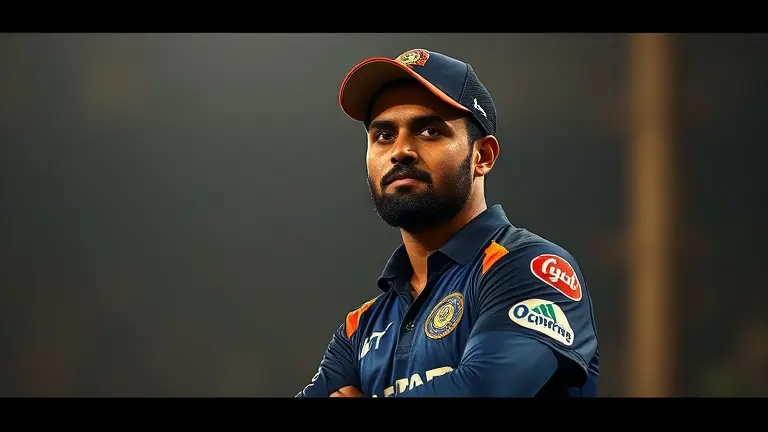
The cricketing world was caught off guard on May 2, 2026, when 33-year-old Raghu Sharma stepped onto the field for the Mumbai Indians. In a high-stakes clash against the Chennai Super Kings, this leg-spinner—long a loyal squad member since 2025—finally received his chance to shine as an Impact Player. His debut was more than just a tactical selection; it was a testament to the persistence of a true ‘late-bloomer’ who refused to let his dream of an IPL career fade simply because he had crossed the age of 30.
Fans and analysts alike are now scrambling to understand the mechanics behind Sharma’s sudden rise. Known for his technical precision and an unwavering admiration for the legendary Shane Warne, Sharma’s story challenges the narrative that professional sport is exclusively for the young. His journey from the domestic sidelines to the pressure-cooker of an IPL debut serves as a compelling case study on the value of patience, preparation, and the belief that your prime is not a date on a calendar, but a state of readiness. We take an in-depth look at what makes this underdog story one of the most inspiring tales of the season.
The Rise of Raghu Sharma: A 33-Year-Old Debut for the Ages
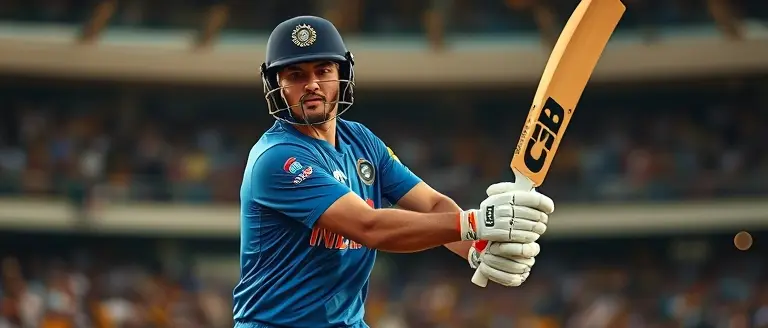
The cricketing landscape was electrified on May 2, 2026, when Raghu Sharma stepped onto the field for the Mumbai Indians (MI) in a high-stakes clash against the Chennai Super Kings (CSK). Making his IPL debut at the age of 33, Sharma’s inclusion served as a poignant reminder that the path to professional stardom is rarely linear. While many players reach the pinnacle of the Indian Premier League in their early twenties, Sharma’s journey was defined by patience, persistence, and an unwavering commitment to his craft. Having been a consistent presence within the MI squad as an injury replacement since the 2025 season, his sudden elevation to the playing eleven transformed him from a background support figure into a central protagonist of the tournament.
A Tactical Masterstroke or Surprise Gamble?
The decision to deploy Raghu Sharma as an Impact Player during such a pressurized encounter sparked widespread debate among analysts and fans alike. As a dedicated leg-spin bowler who openly models his bowling action and tactical mindset after the legendary Shane Warne, Sharma brings a unique dimension to the Mumbai Indians’ bowling attack. His debut was not merely an act of necessity but a calculated risk by the team management to introduce a fresh, unknown element against a formidable CSK batting lineup. Key aspects of his sudden rise include:
- Late-Career Breakthrough: Proving that elite domestic talent can transition to the IPL stage even in their thirties.
- Technical Versatility: His leg-spin mechanics provide the MI squad with crucial variation in the middle overs.
- Strategic Integration: His role as an Impact Player highlights the tactical flexibility modern franchises utilize to leverage specific skill sets during high-stakes matches.
Sharma’s entrance into the fray signifies a broader trend in professional cricket: the value of veteran experience and specialized skill sets over raw youth. By stepping into the limelight under the tutelage of leaders like Hardik Pandya, he has successfully transitioned from a training-ground fixture to a genuine IPL contender, captivating the audience with a “late-bloomer” narrative that resonates deeply with cricket enthusiasts worldwide.
The Late-Bloomer Narrative: Perseverance in Professional Cricket

The emergence of Raghu Sharma in the 2026 Indian Premier League (IPL) serves as a powerful testament to the value of patience in a sport often obsessed with youth. Making his debut at age 33, Sharma defies the conventional trajectory of professional cricketers who typically break into high-profile leagues during their early twenties. His journey from an injury replacement in the 2025 Mumbai Indians (MI) squad to a featured player in a high-stakes clash against Chennai Super Kings (CSK) highlights the immense mental fortitude required to sustain a career in the shadows. For a professional athlete, spending over a year on the bench without a formal match appearance requires a level of discipline and match-readiness that is rarely acknowledged by the public.
The Mental Rigor of the “Waiting Game”
Maintaining peak physical and mental condition without the feedback loop of regular game time is arguably the greatest challenge for any squad player. Sharma’s ability to stay prepared despite the lack of on-field opportunities underscores several key aspects of his professional development:
- Sustained Training Ethics: Unlike younger players, a 33-year-old athlete must manage recovery times and workload intensity with surgical precision to ensure they remain viable options for the team management.
- Psychological Resilience: The uncertainty of squad selection can lead to complacency, yet Sharma remained committed to his craft, embodying the grit necessary to transition from the training nets to a global stage.
- Strategic Patience: By biding his time and refining his leg-spin bowling mechanics, he ensured that when the call from Hardik Pandya finally came, he was physically and technically equipped to handle the pressure of an IPL atmosphere.
This narrative of perseverance not only humanizes the player but also shifts the focus from purely physical talent to the importance of mindset. Raghu Sharma represents the “late-bloomer” archetype, providing a compelling blueprint for domestic players who refuse to hang up their boots, proving that the dream of reaching the pinnacle of cricket remains valid regardless of one’s age. His story serves as a reminder that in the high-stakes environment of the IPL, readiness is the ultimate currency.
Spinning the Shane Warne Way: Technique and Inspiration

Raghu Sharma has captured the cricket world’s attention not just for his late-career emergence, but for a bowling aesthetic that serves as a tribute to the late, great Shane Warne. Long before his high-profile debut for the Mumbai Indians, Sharma spent years grinding through the domestic circuit, refining a classic leg-spin action that prioritizes flight, drift, and deceptive trajectory over raw speed. Much like his idol, Sharma emphasizes the importance of the “rip” off the surface, utilizing a high arm action that allows him to extract maximum revolutions on the ball, consistently challenging batters in the middle overs.
His approach to the crease mirrors the strategic nuances associated with Warne’s legendary craft:
- Tactical Patience: Rather than forcing wickets, he relies on consistent line and length to build pressure, forcing the batter to commit a mistake.
- Flight and Deception: He utilizes subtle variations in his speed to manipulate the batter’s footwork, often inducing stumping opportunities or mistimed lofted shots.
- The “Shane Warne” Influence: Analysts note that Sharma’s grip and wrist position are strikingly similar to the Australian icon, showing a dedication to the traditional art of leg-spin in an era dominated by T20 specialists.
The path to the IPL for a 33-year-old spinner is rarely linear, and Sharma’s technical evolution is a testament to his perseverance. By spending seasons in the domestic shadows, he developed a “cricketing maturity” that allows him to remain calm under the immense pressure of a CSK vs. MI clash. His ability to hit his areas instantly, despite the lack of recent top-flight exposure, suggests that his long-term dedication to honing his craft has paid off. As an Impact Player, Sharma represents the value of experience, proving that a technically sound, classic leg-spinner can still find a vital niche in the high-stakes, data-driven environment of modern franchise cricket.
From Bench to Big Stage: The Impact Player Strategy

The tactical deployment of Raghu Sharma as an Impact Player during the high-stakes 2026 clash against the Chennai Super Kings (CSK) serves as a compelling case study in modern IPL roster management. At 33 years old, Sharma’s sudden promotion from a long-term squad member to a frontline participant highlights a sophisticated reliance on domestic experience over youthful exuberance. By waiting for a critical juncture to introduce a leg-spinner who has been quietly training within the Mumbai Indians (MI) ecosystem since 2025, the team management signaled a deep-seated confidence in his tactical preparation. Unlike younger debutants, Sharma’s composure is derived from years of domestic grind, allowing him to absorb the intense pressure of an El Clásico-style atmosphere without succumbing to the nerves typical of a maiden IPL appearance.
The Logic Behind the Selection
The decision to field a late-bloomer in such a pivotal fixture suggests that Mumbai Indians valued procedural familiarity over experimental rotation. Integrating a player who has spent significant time in the nets observing the team’s strategies provided the MI leadership with a reliable asset. Key factors driving this selection include:
- Tactical Versatility: Using the Impact Player rule allowed MI to bolster their spin-bowling department specifically for the middle-overs phase, effectively neutralizing the opponent’s momentum.
- Psychological Readiness: Evidence suggests that Sharma’s prolonged tenure as a reserve prepared him for the physical and mental rigors of the IPL, mitigating the “debut shock” often seen in younger players.
- Strategic Risk Mitigation: Leveraging a veteran spinner against a heavyweight opponent like CSK indicates an intent to prioritize high-percentage, control-based bowling over high-variance aggressive deliveries.
Ultimately, Sharma’s debut represents a shift in how franchises utilize their benches. By rewarding his patience and discipline, the Mumbai Indians showcased the importance of maintaining squad continuity, proving that veteran domestic players remain a vital, albeit underutilized, engine for success in the league’s high-pressure environment.
Redefining Your Personal Peak Performance
Raghu Sharma’s journey to the IPL at 33 is a powerful reminder that the timeline of success is not fixed. Just as Sharma proved that reaching your thirties doesn’t mean your professional peak is behind you, your own body’s potential for high-level performance remains dormant, waiting for the right catalyst to reignite. History often suggests that athletic and physical prime ends early, but the reality is that with the right approach, you can defy these conventional limitations.
This is where the ‘Late-Bloomer Accelerator’ comes into play. If you feel that your energy levels or physical vitality haven’t kept pace with your ambitions, you need a strategy that targets the root of metabolic efficiency. CitrusBurn is specifically formulated for those over 35, designed to reactivate your body’s natural metabolic thermogenesis. It works by bridging the gap between where you are and the peak performance you desire, mirroring the dedication of an athlete who refuses to accept the status quo.
By choosing to optimize your metabolic health now, you aren’t just improving your energy; you are investing in your own comeback story. Just as Sharma seized his moment on the big stage, it is time for you to reclaim your vitality and perform at your peak, regardless of the years on the clock.
 Ready to stage your own comeback? Discover how to reactivate your body’s natural energy processes and perform at your peak, regardless of your age.Transform My Life Today!