
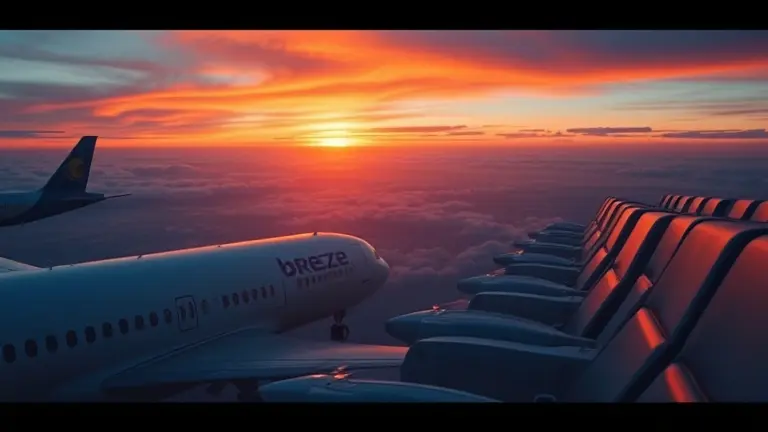
The landscape of American aviation shifted permanently on May 2, 2026, when Spirit Airlines officially ceased operations, leaving a massive vacuum in the low-cost carrier market. While industry analysts scrambled to assess the fallout, one airline has emerged from the chaos with remarkable poise: Breeze Airways. Recently named one of TIME magazine’s 100 Most Influential Companies for 2026, Breeze is successfully flipping the script on budget travel by proving that ‘low-cost’ does not have to mean ‘low-quality.’ By aggressively expanding its route network while competitors struggle under the weight of consolidation, the airline is capturing a growing segment of passengers who are tired of the bare-bones, high-stress experiences typical of legacy ultra-low-cost carriers.
This shift reflects a broader change in consumer behavior, where the ‘optimized traveler’ now prioritizes comfort, reliability, and mental clarity over the mere pursuit of the lowest possible fare. As Breeze airlines carves out a new niche for the ‘nice-low-cost’ flyer, it forces us to rethink what we demand from our travel experiences. Are we finally witnessing the end of the race to the bottom, and could this smarter, more focused approach to growth be the blueprint for long-term success in a volatile industry?
A New Era for Low-Cost Travel: The Breeze Airways Growth Narrative
The US aviation landscape underwent a seismic shift on May 2, 2026, with the permanent shutdown of Spirit Airlines. This closure left a significant market vacuum, forcing millions of budget-conscious travelers to reevaluate their transit options. As traditional ultra-low-cost carriers (ULCCs) struggle under the weight of operational volatility, Breeze Airways has emerged as the definitive successor for the modern traveler. Recognition in TIME magazine’s 100 Most Influential Companies for 2026 underscores the airline’s strategic pivot, proving that the market is currently favoring companies that balance affordability with a human-centric service model.
Redefining the Budget Experience
Unlike its predecessors, which focused almost exclusively on the “lowest price” metric at the expense of passenger comfort, Breeze has championed a “Seriously Nice” service model. This philosophy serves as a direct rebuttal to the frustration that plagued the ULCC sector for years. By prioritizing higher-end amenities, flexible booking policies, and a more pleasant cabin experience, Breeze airlines is capturing the loyalty of mid-tier leisure travelers who are no longer willing to sacrifice comfort for a bargain.
Key factors driving this successful transition include:
- Strategic Route Expansion: Rapidly scaling international leisure destinations such as Cancún, Montego Bay, and Punta Cana, effectively capturing the demand previously serviced by larger, less agile carriers.
- Service Differentiation: Moving away from the “a la carte” nickel-and-diming approach to offer a more integrated, “nice” flying experience.
- Resilience in Turbulence: Operating with a leaner, more efficient structure that allows Breeze to thrive where bloated, legacy-style budget models have failed.
Evidence suggests that this evolution is not merely a temporary trend but a permanent shift in consumer behavior. As Breeze scales its operations, it is setting a new benchmark for what travelers expect from a budget airline, effectively bridging the gap between convenience and cost-effectiveness in an increasingly consolidated market.
Filling the Spirit Vacuum: Why the ULCC Model is Evolving

The permanent shutdown of Spirit Airlines on May 2, 2026, has sent shockwaves through the US aviation sector, effectively ending the era of the aggressive, bare-bones ultra-low-cost carrier (ULCC) model. For years, the ULCC strategy relied on bottom-of-the-barrel base fares supplemented by punitive ancillary fees and a lack of creature comforts. However, shifting consumer expectations have signaled that the lowest price is no longer the sole driver of passenger loyalty. As travelers grow increasingly tired of cramped cabins and unpredictable service, a clear market vacuum has emerged, allowing carriers that balance affordability with a “nice-low-cost” experience to capture significant market share.
The Shift Toward Passenger-Centric Value
Market analysis indicates that travelers are pivoting toward airlines like Breeze Airways, which emphasize a “seriously nice” value proposition over the stripped-down, transactional experience previously dominated by failing competitors. This transition highlights a fundamental change in the modern budget traveler’s mindset:
- Reliability over Rock-Bottom Pricing: Consumers are demonstrating a willingness to pay a moderate premium for consistent service, better legroom, and fewer hidden costs.
- Amenities as a Competitive Moat: By offering features like high-speed connectivity and premium seating options, Breeze distinguishes itself from the “no-frills” legacy of defunct carriers.
- International Leisure Expansion: The move by Breeze airlines to expand into destinations like Cancún and Montego Bay signals a sophisticated strategy to capture the vacation market that previously relied on unreliable low-cost alternatives.
This structural shift suggests that the future of the budget sector does not lie in the race to the bottom, but in providing a comfortable, humane travel experience at a competitive price point. As the industry consolidates, companies that prioritize passenger experience—rather than just operational efficiency—are effectively positioning themselves to define the new standard for the American traveler. Evidence suggests that this hybrid approach is not just a trend, but a necessary evolution for survival in a post-Spirit economy.
The Breeze Advantage: Amenities Over Austerity

As the US aviation landscape undergoes a fundamental shift following the permanent shutdown of Spirit Airlines, Breeze Airways has emerged as the definitive successor for value-conscious travelers. Unlike the “austerity-first” model that defined ultra-low-cost carriers (ULCCs) for decades, Breeze distinguishes itself by prioritizing a “nice-low-cost” experience. By bridging the gap between bare-bones budget travel and traditional legacy carriers, the airline has successfully captured market share from passengers who previously felt alienated by the restrictive, fee-heavy nature of defunct competitors.
Redefining the Passenger Experience
The core of this growth strategy lies in the airline’s tiered fare structure, which offers travelers granular control over their journey without sacrificing basic dignity. Through their “Nice, Nicer, and Nicest” fare classes, the airline has effectively gamified travel comfort:
- Nice: Provides the entry-level price point, maintaining affordability while avoiding the “seat-only” isolation of legacy ULCCs.
- Nicer: Introduces added value, often including extra legroom and priority boarding, which caters to the modern business-leisure traveler.
- Nicest: Features premium seating options that rival domestic first-class cabins, challenging the notion that budget flights cannot be comfortable.
This pivot toward value-based service has fostered significant brand loyalty. Evidence suggests that travelers, fatigued by the industry-wide consolidation and service degradation observed in recent years, are increasingly migrating toward Breeze airlines because of its flexible booking policies and significantly higher cabin standards. By eliminating many of the “gotcha” fees that defined the legacy budget era, Breeze is not merely replacing defunct carriers; it is setting a new standard for what it means to be a modern, accessible airline. As the industry recalibrates, the ability of Breeze to balance operational efficiency with genuine passenger amenities appears to be the winning formula for long-term sustainability in a post-Spirit economy.
Is Breeze the New Standard for the Modern Budget Traveler?

The permanent shutdown of Spirit Airlines on May 2, 2026, has created a massive vacuum in the US aviation sector, effectively ending the era of hyper-aggressive, bare-bones ultra-low-cost carriers. In this shifting landscape, Breeze Airways is emerging as the primary beneficiary, positioning itself as a “nice-low-cost” alternative that prioritizes passenger experience without sacrificing affordability. Unlike its defunct competitors, which relied on high-density seating and heavy ancillary fees, Breeze has capitalized on a strategy of providing mid-tier amenities—such as better legroom and streaming entertainment—on underserved, point-to-point routes. This approach is not merely a reactive measure to market volatility but a calculated move to capture a demographic that is increasingly disillusioned with the “race to the bottom” pricing models of the past.
Defining the ‘Breeze Model’ for Future Growth
The sustainability of the Breeze airlines model hinges on its operational agility and strategic route selection. While traditional carriers struggle under the weight of mounting debt and aging, inefficient fleets, Breeze has expanded its footprint into international leisure markets, including new routes to Cancún, Montego Bay, and Punta Cana. This transition suggests a shift toward the “adventure-retiree” and premium-leisure segments, which are less sensitive to economic downturns than the ultra-budget traveler.
Key advantages that solidify the breeze long-term outlook include:
- Operational Efficiency: Utilization of a modern, fuel-efficient fleet that reduces per-seat costs while maintaining higher comfort standards.
- Strategic Market Positioning: Replacing volatile ULCC capacity with reliable, non-stop service to secondary cities, bypassing the congestion of major hubs.
- Brand Perception: Recent recognition as one of TIME magazine’s 100 Most Influential Companies validates the brand’s consumer-centric reputation, distinguishing it from legacy carriers often plagued by operational meltdowns.
Evidence suggests that the Breeze Airways model is poised to dictate the future of US short-to-mid-haul travel. By balancing low fares with a focus on “nice” service, the airline is successfully converting the former Spirit customer base into loyal passengers, signaling that the future of low-cost aviation in the US lies in quality, not just cost-cutting.
The Future of Travel is Focused
As the aviation market continues to consolidate, the rise of Breeze Airways serves as a clear indicator that the modern traveler is no longer willing to sacrifice their well-being for a cheap ticket. By choosing airlines that prioritize a superior passenger experience, you are already making a conscious decision to reclaim your peace of mind and improve the quality of your journeys. It is a transition toward efficiency and intent that mirrors how you should be managing your own cognitive performance.
Just as savvy travelers are upgrading their flight experience to Breeze for a stress-free journey, they are also seeking better ways to sharpen their focus and navigate their demanding daily schedules with newfound clarity. You don’t have to settle for the mental fatigue caused by constant industry noise or the stress of modern living. This is where The Brain Song becomes your essential companion, offering a science-backed, 12-minute auditory solution designed to enhance your cognitive function and restore your natural focus on the go.
By integrating this tool into your routine, you are choosing to operate at the same high standard you now demand from your travel providers. This is the ultimate upgrade for the optimized individual who refuses to compromise on efficiency, whether in the air or at your desk. Elevate your performance and ensure that every minute of your day is as intentional as your travel plans.
 Discover how you can elevate your cognitive performance and regain your focus while on the go.Transform My Life Today