
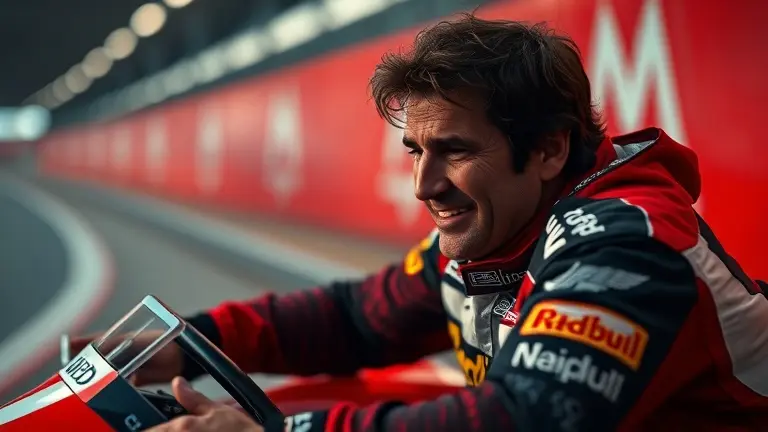
On May 2, 2026, the world mourned the loss of Alessandro “Alex” Zanardi, a man whose existence transcended the boundaries of motorsport and human capability. Passing away peacefully at 59, Zanardi left behind a legacy that is defined not merely by his achievements on the track or the podium, but by an ironclad spirit that refused to break in the face of unimaginable tragedy. From his daring days in Formula 1 and the CART series to his breathtaking resurrection as a four-time Paralympic gold medalist, Zanardi turned the concept of ‘impossible’ into his personal playground, proving that the human will is the ultimate engine of progress.
His story is a masterclass in psychological resilience. After the 2001 CART accident that claimed both his legs, the world expected a tragedy; instead, Zanardi delivered a triumph of human spirit and cognitive adaptation. By analyzing the life of this extraordinary icon, we don’t just recount a timeline of victories; we investigate the inner machinery of a champion. It was a journey of profound neural plasticity, where his mental acuity became the very force that allowed him to rewrite his own limitations and conquer the world stage once more.
Remembering the Life and Legacy of Alex Zanardi
The sporting world is in mourning following the announcement that Alex Zanardi passed away peacefully on the night of Friday, May 1, 2026, at the age of 59. While global media outlets, including The Guardian and Sky Sports, have confirmed his death, the family has maintained privacy regarding the specific medical circumstances. Consequently, there is no official confirmation of a definitive alex zanardi cause of death beyond the family’s statement that he passed away surrounded by his loved ones. This moment of collective sorrow invites fans and observers alike to reflect on a career that transcended the boundaries of traditional athletics, defining the very essence of human resilience.
A Dual Legacy of Sporting Excellence
Alex Zanardi’s professional journey was marked by a rare ability to conquer two vastly different, yet equally demanding, disciplines. His legacy is defined by a “never give up” philosophy that transformed how the public perceives both motorsport and adaptive sports:
- Motorsport Mastery: Before his life-altering accident in 2001, Zanardi was a formidable force in the CART series, celebrated for his aggressive driving style and two championship titles.
- Paralympic Dominance: Following the amputation of his legs, he defied medical expectations to become a world-class para-cyclist, securing four gold medals across multiple Paralympic Games.
- Adaptive Innovation: His commitment to cycling pushed the frontiers of sports technology, proving that physical limitations were merely challenges to be engineered around.
Throughout his life, Zanardi remained a symbol of hope. Whether he was behind the wheel of a high-speed racing machine or powering his handcycle toward a finish line, he embodied a relentless spirit that inspired millions. As we honor his memory, we remember him not merely for the trophies he collected, but for the profound impact he had on the sports medicine community and his unwavering dedication to pushing the limits of the human spirit. His absence leaves a void in the racing and Paralympic communities that will be felt for generations.
From the Racetrack to the Global Stage: A Career Defined by Speed
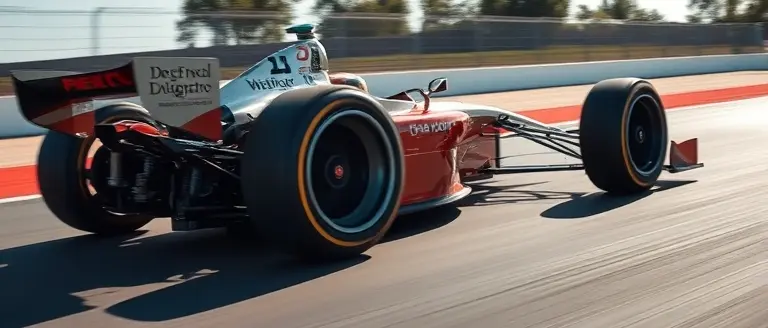
Long before he became a beacon of resilience, Alex Zanardi was known as one of the most charismatic and fearless drivers in professional motorsport. His journey to global stardom began with an aggressive driving style that thrilled fans and terrified competitors alike. While he had brief stints in Formula 1, it was in the American CART series (now known as IndyCar) where Zanardi truly found his rhythm, transforming from a talented prospect into a dominant force on the track. His ability to pull off daring, last-lap overtakes became his signature, solidifying his reputation as a driver who refused to yield regardless of the odds.
A Dominant Force in CART
Zanardi’s tenure in the CART series remains a legendary chapter in open-wheel racing history. Representing Chip Ganassi Racing, he showcased a level of consistency and raw speed that few could match. Key highlights of his championship run include:
- 1997 CART Championship: He secured his first title in dominant fashion, earning five wins and 14 podium finishes throughout the season.
- 1998 CART Championship: He successfully defended his title, displaying remarkable tactical intelligence to secure seven victories and cement his place as the series’ benchmark.
- The “Pass”: His iconic move at the Corkscrew turn during the 1996 Laguna Seca race remains a fixture in highlight reels, serving as a masterclass in aggressive, high-stakes maneuvering.
These years were defined by his relentless pursuit of perfection and an infectious, joyful personality that made him a favorite in the paddock. Whether he was spinning his car in victory donuts or engaging with fans, Zanardi’s competitive nature was always fueled by a genuine passion for the sport. This foundation of elite-level endurance and mental fortitude proved essential later in his life, long before the world began asking questions about the alex zanardi cause of death and mourning his passing at 59. Before the 2001 accident that changed his life, he had already mastered the art of overcoming mechanical and tactical challenges, setting the stage for his eventual transition into Paralympic greatness.
The 2001 Turning Point: Transforming Tragedy into Triumph

The 2001 CART accident at the Lausitzring circuit in Germany stands as the defining moment of Alex Zanardi’s life, not merely for its intensity, but for the extraordinary resilience that followed. After a high-speed collision left him with the amputation of both legs, the global racing community feared his competitive career had reached an abrupt, tragic end. However, Zanardi viewed this pivot as a challenge rather than a conclusion. His recovery process was methodical and relentless, driven by a philosophy that focused on the capabilities he retained rather than the faculties he had lost.
Pioneering Adaptive Athleticism
Zanardi’s journey toward recovery fundamentally altered the landscape of sports medicine and adaptive technology. By working closely with engineers to design custom, high-performance prosthetics, he successfully returned to the cockpit of a race car in 2003, modified with hand-operated controls. This milestone provided a blueprint for how professional athletes could integrate advanced engineering to overcome severe physical trauma. His focus soon shifted to para-cycling, where he pushed the boundaries of human endurance. His transition was characterized by:
- Technological Innovation: Collaborating on carbon-fiber handbike designs that optimized aerodynamics and power transfer.
- Mental Fortitude: Replacing the thrill of high-speed open-wheel racing with the rhythmic, grueling demands of endurance cycling.
- Global Inspiration: Proving that elite-level competition remains accessible through innovation and a “never give up” mindset.
While his passing has sparked discussions regarding the Alex Zanardi cause of death, his legacy remains rooted in this 2001 turning point. Rather than succumbing to the trauma, he became a symbol of human possibility. His refusal to accept retirement allowed him to secure multiple Paralympic gold medals, ensuring that his influence extended far beyond the motor racing paddock and into the heart of the global disability sports community.
Mastering the Handbike: Paralympic Success and Beyond

Following the 2001 CART accident that resulted in the amputation of both his legs, Alex Zanardi refused to define his life by his limitations. Instead, he channeled his characteristic competitive drive into a new discipline: para-cycling. His transition was not merely a hobby; it was a professional evolution that required mastery of a handbike, a custom-engineered vehicle that allowed him to harness his upper-body strength with the same tactical precision he once applied to Formula 1 cockpits. His training regimen was exhaustive, often involving thousands of miles of road work to refine his aerodynamic posture and power output, effectively bridging the gap between mechanical engineering and human endurance.
Paralympic Dominance and Global Impact
Zanardi’s performance on the international stage shattered perceptions of what was possible for an athlete with a disability. His dominance was characterized by a rare combination of raw power and strategic racing intellect:
- London 2012: Secured two gold medals in the individual time trial and road race, signaling his arrival as a force in para-cycling.
- Rio 2016: Successfully defended his time trial gold and added a team relay gold, proving his longevity at the elite level.
- Tokyo 2020 (held in 2021): Continued to represent the pinnacle of his sport, inspiring a new generation of para-athletes to pursue excellence.
Beyond the medals, Zanardi served as a vital mentor to the international sporting community. He viewed his role not just as a competitor, but as an advocate for adaptive technology, constantly working with engineers to improve the ergonomics of his handbikes. By redefining the limits of human potential, he moved the conversation in sports medicine toward a more inclusive future. While the world reflects on his legacy following his recent death, the influence of Alex Zanardi remains deeply embedded in the Paralympic movement, ensuring that his philosophy of relentless resilience continues to guide future athletes who face life-altering adversity.
Cultivating Your Own Elite Mental Clarity
Alex Zanardi’s life was the ultimate testament to the fact that physical prowess is only half the battle; the true victory is won within the mind. His ability to maintain composure, focus, and strategic brilliance in the wake of catastrophic trauma serves as a blueprint for anyone seeking to overcome their own obstacles. He didn’t just survive; he optimized his mental pathways to thrive, demonstrating that our cognitive resilience is a muscle that, when trained, can overcome the greatest of life’s hurdles.
While we celebrate the physical milestones of Zanardi’s journey, his most significant victory was his unwavering mental clarity. You do not need to be a Paralympic athlete to harness that same level of cognitive fortitude. By prioritizing your own neural health, you can emulate the discipline and sharpness that defined Zanardi’s career, tapping into a state of flow that allows you to rise above daily challenges with grace and intensity.
The Brain Song is designed specifically for those who seek to unlock that hidden reservoir of potential. By supporting BDNF levels and fostering superior focus, it provides the neural foundation necessary for high-level performance in any arena of life. It is the natural bridge between your current capacity and the high-functioning, resilient mindset required to chase your own gold-medal dreams.
 Learn how you can start your own 12-minute daily mental conditioning routine to improve focus and cognitive resilience.Transform My Life Today