
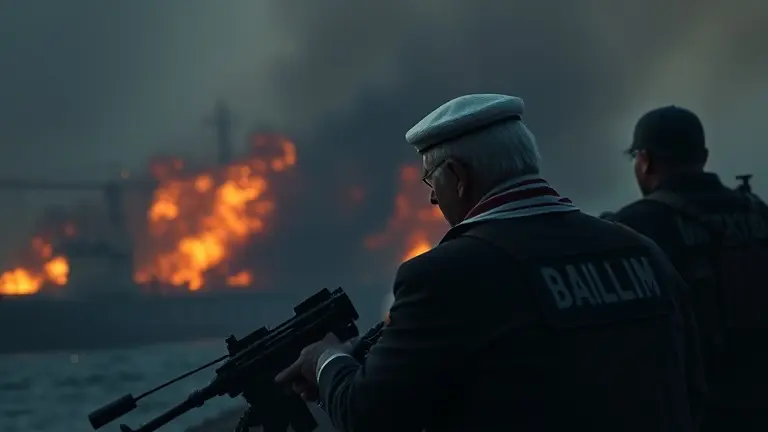
As the White House faces a critical May 1 deadline in the escalating conflict with Iran, the world watches a high-stakes standoff that transcends mere headlines. With a naval blockade choking Iranian oil logistics and the Trump administration rejecting peace proposals due to ongoing nuclear concerns, the current trajectory suggests a dangerous, multi-dimensional impasse. While the media remains fixated on the daily theater of congressional grillings and diplomatic pageantry involving international dignitaries, the true story lies in the missing strategic architecture of the US response. Without a clear path toward resolution or authorization, we are witnessing the consequences of attempting to navigate a complex geopolitical crisis through reactive, fragmented decision-making rather than a coherent, long-term master plan.
The geopolitical landscape is shifting rapidly, and the lack of a clearly defined ‘Day After’ strategy is fueling both market volatility and legislative paralysis. To understand the true stakes, we must look beyond the noise of live updates and deconstruct the fundamental technical, economic, and legislative hurdles that have led to this failure. This analysis moves past the daily news cycle to examine the structural weaknesses of the current confrontation and the necessity for a more rigorous, blueprint-oriented approach to crisis resolution.
The May 1 Deadline: Navigating the U.S.-Iran Military Flashpoint
As of April 30, 2026, the US-Iran conflict has reached a critical juncture, defined by a rigid, self-imposed deadline of May 1. The Trump administration currently maintains a comprehensive naval blockade of Iranian ports, a strategy intended to neutralize Tehran’s regional influence and force concessions regarding its nuclear program. However, recent developments indicate that this pressure campaign has hit a stalemate. The administration’s formal rejection of Iran’s most recent peace proposal—citing the plan’s failure to adequately address nuclear proliferation—has shifted the focus toward a precarious military and legislative endgame.
Legislative Friction and Military Accountability
The intensity of the current crisis is mirrored within the halls of Congress, where Defense Secretary Pete Hegseth faces rigorous scrutiny from Democratic senators. During recent testimony, Hegseth defended the administration’s aggressive posture, even as lawmakers questioned the long-term viability of the military operation. The tension highlights a growing divide regarding executive authority and the necessity of seeking formal congressional authorization to continue the war. Key concerns raised by legislators include:
- Strategic Clarity: Doubts regarding whether the naval blockade can achieve objectives without a protracted, costly escalation.
- Economic Fallout: The potential for long-term disruption in the Strait of Hormuz, which threatens to sustain volatility in global energy markets.
- Diplomatic Missed Opportunities: Arguments from analysts like Richard Haass suggest the administration may be overestimating its leverage, potentially missing a pathway to a de-escalation that protects U.S. interests without further military bloodshed.
As the May 1 deadline looms, the administration faces the binary reality of either securing legislative backing for a widened conflict or attempting an eleventh-hour pivot to avoid an indefinite impasse. The convergence of these military and political pressures makes this moment one of the most volatile chapters in recent American foreign policy.
The Three Potential Outcomes Post-May 1

As the self-imposed Friday deadline approaches, the US-Iran conflict stands at a precarious juncture. With Defense Secretary Pete Hegseth under intense scrutiny from Democrats regarding the efficacy of current military operations, the Trump administration must navigate three distinct strategic pathways. Each outcome carries profound implications for global energy markets and domestic political stability.
1. Congressional Authorization for War
The administration may seek formal legislative approval to continue the current military campaign. This path would provide the Trump administration with a clear legal mandate, yet it faces significant hurdles in a polarized Senate. Securing the necessary votes requires overcoming skepticism from lawmakers concerned about the long-term economic toll of the naval blockade and the potential for a regional conflict to escalate beyond the Strait of Hormuz.
2. A Revised Diplomatic Framework
Despite the recent rejection of Iran’s proposal, a pivot toward a new diplomatic framework remains possible. This scenario would necessitate the inclusion of stringent, verifiable nuclear safeguards—a point of contention that stalled previous talks. If the administration opts for this route, it must justify the shift to a public that has been primed for decisive military action. Success here hinges on whether Iran is willing to make concessions that satisfy U.S. security requirements regarding its nuclear program.
3. Prolonged Naval Escalation
Should no deal be reached and legislative support fail, the U.S. may default to an open-ended naval strategy. This “impasse” scenario risks:
- Market Volatility: Sustained pressure on Brent crude prices as oil storage and logistical bottlenecks persist.
- Economic Strain: The long-term degradation of regional trade infrastructure, impacting global supply chains.
- Diplomatic Isolation: Increased pressure from international allies who remain wary of an indefinite military confrontation.
Ultimately, the choice between these paths will define the trajectory of the US-Iran relationship for the remainder of the decade. While military officials argue the U.S. remains in a position of strength, analysts like Richard Haass caution that the lack of an exit strategy could turn a tactical advantage into a prolonged, costly struggle.
Economic Shockwaves: The Naval Blockade and Global Trade
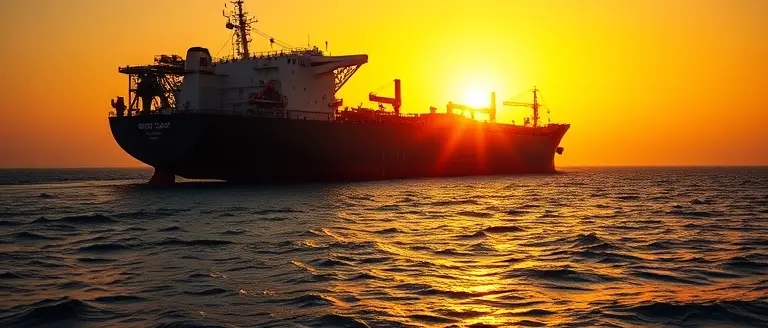
The US-Iran conflict has moved beyond rhetoric, manifesting in a severe naval blockade that is fundamentally altering the flow of global energy. By restricting access to major Iranian oil ports, the Trump administration has effectively paralyzed a significant portion of Middle Eastern output, forcing a structural recalibration of supply chains. As tankers remain stranded and logistical bottlenecks persist, the volatility in Brent crude prices serves as a barometer for market anxiety, reflecting deep-seated concerns regarding the security of the Strait of Hormuz.
Ripple Effects on Global Energy and Logistics
The logistical reality of this blockade extends far beyond a simple reduction in supply. Maritime insurers are responding to the heightened military risk by aggressively hiking premiums for vessels operating in the Persian Gulf, creating a “risk tax” on every barrel of oil transported through the region. This financial pressure is compounded by the following factors:
- Increased Shipping Costs: The rerouting of tankers to avoid contested waters adds substantial operational overhead, impacting everything from refined fuel costs to downstream industrial goods.
- Insurance Premia Surges: War-risk insurance premiums for transit near Iranian waters have hit unprecedented levels, complicating the balance sheets of global energy conglomerates.
- Storage Constraints: Evidence suggests that Iran is facing a domestic inventory crisis, with onshore storage facilities reaching capacity, further complicating their economic endurance.
Domestic Impacts and the Future of Energy
For the American consumer, the cumulative effect of these geopolitical tensions is becoming increasingly tangible. While domestic production remains a buffer, the global nature of energy pricing means that domestic gasoline prices are intrinsically linked to the stability of the Strait of Hormuz. If the current impasse continues past the May 1, 2026, deadline, the potential for a sustained inflationary spike in energy costs is significant. The market is currently pricing in a long-term supply disruption, and without a clear diplomatic off-ramp, the risk of a sustained, high-price environment threatens to stifle broader economic growth, forcing the administration to weigh its military objectives against the immediate financial health of the U.S. economy.
Diplomatic Dissonance: State Pageantry Amidst War

The current geopolitical climate in Washington presents a jarring visual and narrative duality. Even as the Trump administration intensifies its US-Iran military posture, the arrival of King Charles III and Queen Camilla for a state visit has forced a surreal bifurcation in the American media cycle. This display of traditional diplomatic pageantry against the backdrop of an active naval blockade of Iranian ports creates a complex optics challenge for the White House. While the administration seeks to project an image of global stability and traditional alliance-building, the underlying reality of an escalating military conflict in the Middle East looms over every official photograph and ceremony.
Managing Conflicting Narratives
The juxtaposition of white-tie events with the gravity of war complicates the administration’s messaging strategy, particularly as Defense Secretary Pete Hegseth navigates aggressive scrutiny in the Senate. This diplomatic dissonance underscores several critical friction points:
- Strategic Messaging: The White House is forced to oscillate between the rigid formality of hosting British royalty and the chaotic, high-stakes reporting of US-Iran hostilities.
- Global Perception: International observers are parsing these events for clues regarding the U.S. capacity to maintain traditional diplomatic commitments while simultaneously managing the logistical and economic fallout of a restricted Strait of Hormuz.
- Congressional Pressure: Critics and Democratic lawmakers are leveraging this disconnect to challenge the administration’s priorities, questioning whether a focus on state pageantry obscures the lack of a clear exit strategy for the ongoing confrontation with Tehran.
Ultimately, this duality creates an environment where the administration’s “business as usual” approach is increasingly scrutinized. As the May 1, 2026, deadline approaches, the contrast between the aesthetic of diplomacy and the harsh realities of the US-Iran war highlights the limitations of traditional statecraft in the face of an evolving, volatile military impasse. The challenge remains for policymakers to convince the public that these two spheres—the ceremonial and the operational—are not mutually exclusive but part of a unified, if difficult, national security objective.
Beyond the Chaos: Building Certainty in Unpredictable Times
As the May 1 deadline looms, the US-Iran conflict serves as a stark reminder of the dangers inherent in navigating complex systems without a coherent, battle-tested blueprint. The current geopolitical deadlock, defined by reactive maneuvers and failed proposals, underscores a fundamental truth: whether in international diplomacy or personal endeavors, the absence of a structured, evidence-based approach is a recipe for structural failure. Attempting to force an outcome through trial-and-error in high-stakes environments inevitably leads to the type of systemic volatility we are witnessing in global markets today.
Just as in complex engineering where a single missing detail can lead to catastrophic collapse, the current diplomatic impasse proves that effective resolution requires the precision of a master plan. You don’t have to navigate your own objectives with the same haphazard uncertainty currently plaguing our highest levels of government. By shifting your mindset from reactive ‘crisis management’ to a system built on technical clarity and proven results, you regain control over your environment.
This is where Ted’s Woodworking becomes an essential framework for success. It offers the same rigorous, step-by-step precision that is so conspicuously absent from today’s political stage, allowing you to bypass the frustration of guesswork and build your projects—and your peace of mind—with absolute, tested certainty.
 Just as we need a master plan to navigate this geopolitical shift, you can stop settling for half-baked solutions and start building your own projects with absolute certainty here.Transform My Projects Today!