
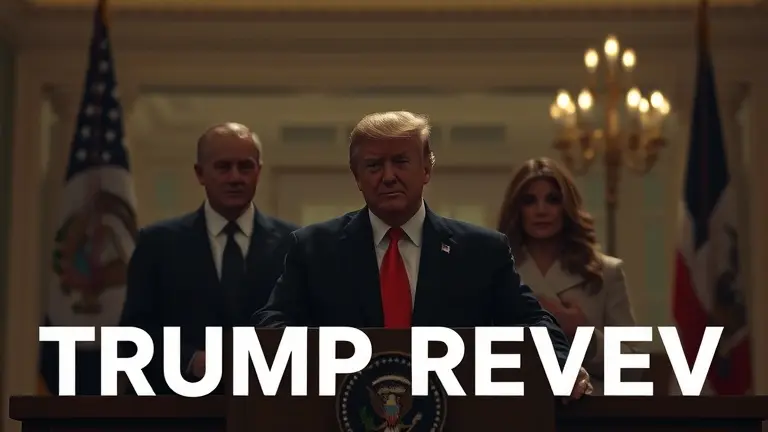
In the wake of a highly charged exchange involving late-night host Jimmy Kimmel and President Donald Trump, the landscape of American broadcast regulation has entered a period of profound instability. What began as a pointed remark regarding the President’s age—an incident that has fueled the widespread “trump age” narrative—has rapidly escalated into an institutional showdown. With FCC Chairman Brendan Carr ordering an accelerated review of ABC’s broadcast licenses, the industry is witnessing a unprecedented intersection of personal political grievances and federal regulatory oversight.
This is not merely a clash between a celebrity and the executive branch; it is a critical litmus test for the First Amendment in the modern era. As federal power is increasingly wielded to address media content, questions surrounding the constitutional limits of the Federal Communications Commission have moved to the forefront of the national discourse. For those tasked with navigating this chaotic information environment, distinguishing between genuine regulatory standards and political retribution requires both sharp legal insight and a clear, undistracted mind.
The Kimmel-Trump Conflict: How a Late-Night Joke Sparked an FCC Regulatory Review

The current standoff between the White House and ABC originated from a monologue by late-night host Jimmy Kimmel, which quickly escalated into a national debate over the limits of executive power. During his broadcast, Kimmel quipped that First Lady Melania Trump possessed a “glow like an expectant widow,” a remark the administration interpreted as a malicious commentary on the trump age—specifically highlighting the 23-year gap between the President and the First Lady. While Kimmel maintains his intent was to highlight the age disparity rather than incite violence, the President’s inner circle categorized the rhetoric as “despicable,” leading to aggressive demands for the network to terminate the host’s contract.
The FCC’s Regulatory Pivot
The situation intensified on April 28, 2026, when the Federal Communications Commission (FCC), led by Chairman Brendan Carr, initiated an unprecedented early review of Disney-owned ABC broadcast licenses. This regulatory maneuver has moved the conflict far beyond a personal feud into a constitutional dilemma. Critics argue that the timing of the review suggests a direct nexus between presidential displeasure and administrative retaliation. Key points regarding this escalation include:
- Administrative Oversight: The FCC is exercising its broad authority to review license renewals, a process typically rooted in technical compliance rather than content-based grievances.
- The First Amendment Threshold: Legal scholars are questioning whether the commission’s intervention constitutes “viewpoint discrimination,” which would arguably violate protected speech under the First Amendment.
- Political Volatility: The focus on the trump age trend has galvanized supporters who view the FCC’s action as a necessary accountability measure for media conglomerates, while opponents characterize the move as a dangerous precedent for government censorship.
By leveraging the administrative power of the Federal Communications Commission in response to a comedy monologue, the administration has signaled a potential shift toward a more aggressive regulatory posture against broadcast media. As this investigation proceeds, the legal community remains divided on whether this review is a legitimate exercise of broadcast standards or a calculated attempt to exert political influence over private media entities.
The Bounds of Regulatory Authority: Understanding the FCC’s License Review Process

The Federal Communications Commission (FCC) is legally mandated to oversee the nation’s airwaves, primarily evaluating whether broadcast license holders operate in the “public interest, convenience, and necessity.” Under standard procedure, license renewals occur on a cyclical basis—typically every eight years. These reviews focus on technical compliance, ownership transparency, and adherence to programming guidelines, such as indecency or technical interference standards. However, the recent decision by Chairman Brendan Carr to initiate an “early” review of Disney-owned ABC licenses departs significantly from these administrative norms, raising critical questions about the agency’s neutrality.
Administrative Power vs. Political Retribution
Critics argue that by accelerating the review process in the wake of the Jimmy Kimmel controversy, the FCC is effectively weaponizing its regulatory mandate. When a federal agency targets a specific network following a comedian’s jokes regarding the trump age and his relationship with the First Lady, it risks blurring the line between technical oversight and content censorship.
The legal feasibility of this action rests on shaky ground, as courts have historically protected broadcast networks from state-sponsored retaliation. Key concerns regarding this unprecedented move include:
- Selective Enforcement: Whether the FCC is applying standards inconsistently to exert pressure on networks critical of the executive branch.
- First Amendment Protections: The extent to which the agency can penalize a network for political speech or subjective interpretations of “despicable” content.
- Precedent Setting: The potential for future administrations to utilize early license reviews as a permanent mechanism for curbing media criticism.
While the agency maintains that its oversight is grounded in regulatory authority, the timing of this investigation invites scrutiny regarding the agency’s independence. If the FCC continues to pivot toward acting as an enforcement arm for presidential grievances, it threatens to fundamentally alter the relationship between federal regulators and the media, moving away from technical governance toward active political policing.
First Amendment Implications: Can Regulatory Pressure Silence Political Speech?

The recent decision by the Federal Communications Commission to initiate an early review of Disney-owned broadcast licenses has ignited a fierce constitutional debate. At the core of this controversy is whether the FCC, under Chairman Brendan Carr, is overstepping its administrative mandate by using license renewals as a tool for political leverage. Legal experts argue that when a regulatory body targets a network following criticism of the President, it may constitute viewpoint discrimination, a direct violation of the First Amendment. Under established Supreme Court precedents, the government is strictly prohibited from penalizing media outlets for the content of their political speech or satire, even when that content is deemed offensive or “despicable” by the executive branch.
The Chilling Effect on Satire and Discourse
The precedent established by this regulatory pressure creates a significant “chilling effect” on late-night comedy and political commentary. When networks perceive that airing jokes—such as those centered on the trump age or the 23-year age gap—could jeopardize their multibroadcast operations, they are incentivized to engage in self-censorship. This dynamic undermines the role of the media as a watchdog, potentially signaling a shift toward state-influenced broadcast standards.
Key concerns regarding this regulatory escalation include:
- Administrative Overreach: Using broadcast licensing, which is intended to ensure technical and public interest compliance, as a retaliatory weapon against protected political expression.
- Erosion of Media Independence: The fear that continuous oversight threats will discourage satire regarding high-ranking officials to avoid costly legal battles and license challenges.
- Constitutional Limitations: The FCC lacks the authority to regulate content based on its political tone, yet the current “early review” framework blurs the line between legitimate administrative oversight and political retribution.
Ultimately, while the FCC maintains authority over the public airwaves, the move to scrutinize ABC following the controversy suggests a shift in how administrative power is weaponized. If this process becomes normalized, it threatens to permanently alter the landscape of American broadcast media, transforming it into a space where political satire is moderated not by public taste, but by the threat of government-imposed financial ruin.
Historical Precedents of Presidential Pressure on Media Independence

The current escalation involving the Federal Communications Commission and its review of ABC’s broadcast licenses marks a significant departure from historical norms regarding executive branch restraint. While presidents have long utilized the “bully pulpit” to criticize journalists and networks, the shift toward utilizing administrative agencies for direct regulatory pressure represents a volatile evolution in media relations. Historically, tensions between the White House and broadcast media—such as the Nixon administration’s public hostility toward news networks or various efforts to influence broadcasting standards—rarely resulted in the weaponization of the licensing process itself. The current intervention by Chairman Brendan Carr suggests a transition from political rhetoric to administrative retaliation, a move that legal scholars argue could permanently alter the landscape of media independence in the United States.
The Evolution of Regulatory Intervention
The scrutiny of Disney-owned assets in the wake of the Jimmy Kimmel controversy highlights the vulnerability of broadcast networks to shifting political winds. When comparing this to past eras, the distinguishing factor is the specific targeting of institutional longevity. Key concerns regarding this regulatory posture include:
- Weaponized Oversight: The use of the Federal Communications Commission to evaluate license renewals based on specific content disagreements risks transforming a neutral regulatory body into an enforcement arm for political grievances.
- Chilling Effects on Speech: By pressuring networks, the administration indirectly encourages self-censorship, as media conglomerates may prioritize avoiding government scrutiny over maintaining editorial independence.
- Precedent for Retaliation: This event establishes a template where personal commentary—such as jokes regarding the trump age gap—can be leveraged to trigger high-stakes legal and regulatory reviews.
This pattern suggests that future administrations may view broadcast licenses not merely as public trust assets, but as strategic leverage points. If the current regulatory investigation leads to tangible sanctions, it will likely confirm fears that the executive branch has abandoned the long-standing norm of keeping institutional policy separate from partisan retaliation. Consequently, the independence of the fourth estate now faces its most significant administrative challenge in decades, as the threshold for what constitutes “objectionable content” continues to expand in the political arena.
Preserving Clarity Amidst Political Noise
The current confrontation over broadcast licenses serves as a stark reminder that media independence is a fragile construct, subject to the shifting tides of executive policy. As observers continue to analyze whether the FCC’s actions signal a permanent shift in how administrations retaliate against dissent, it is essential for the public to maintain cognitive resilience. The relentless cycle of hyper-polarized news can often cloud our ability to interpret complex administrative law and the broader implications for the First Amendment.
In an era of relentless media scrutiny and high-stakes political narratives, maintaining your own mental clarity and ability to parse complex information is more vital than ever. This is precisely why we developed The Brain Song. Designed as a sophisticated tool for researchers, journalists, and media-savvy individuals, this solution helps you cut through the “mental fog” induced by volatile news cycles. By supporting your cognitive capacity, it ensures you remain sharp and focused, allowing you to engage with critical constitutional debates without becoming overwhelmed by the noise of the “trump age” phenomenon.
Optimizing your mental state is the natural next step for anyone dedicated to staying informed in a climate of instability. Whether you are tracking regulatory precedents or simply keeping pace with the rapid flow of information, clarity is your greatest asset. Experience the difference that neuroscience-based support can make in your ability to synthesize, analyze, and focus.
 Optimize your cognitive resilience for the ongoing news cycle—click here to experience The Brain Song and sharpen your focus today.Yes, I Want This Now!