
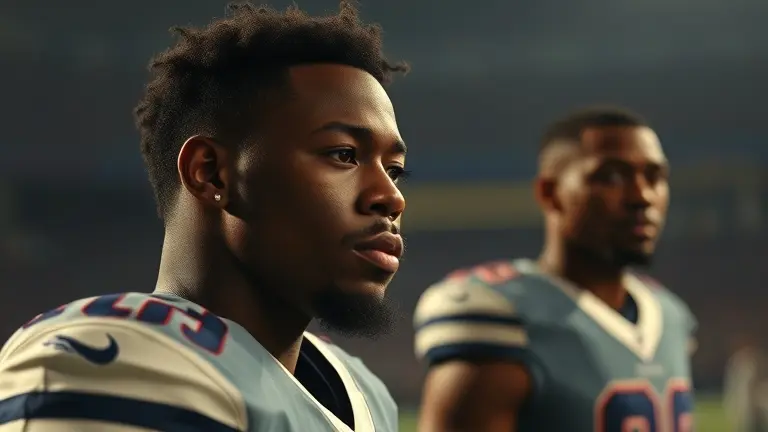
In the high-stakes arena of the NFL, a championship roster is rarely the result of mere luck; it is a meticulously engineered structure, built piece by piece. On April 27, 2026, the Dallas Cowboys signaled a shift in their front office philosophy by signing veteran wide receiver Marquez Valdes-Scantling, along with Tyler Johnson and Curtis Robinson, immediately following the NFL Draft. This maneuver arrives at a critical juncture, as the franchise grapples with a high-profile contractual standoff involving star receiver George Pickens. By prioritizing seasoned experience over the uncertainty of unresolved salary demands, the Cowboys appear to be fortifying their depth with surgical precision, raising urgent questions about their long-term commitment to their current star core.
This roster-building strategy reflects a broader organizational pivot: a move away from reliance on singular, disgruntled superstars toward a more balanced, schematic approach to team construction. As the organization evaluates the rotation of talent like Johnson and Robinson within their defensive and offensive frameworks, the message is clear—the Cowboys are drafting and signing with an eye toward a system that functions independently of individual ego. This deep-dive analysis explores whether these veteran additions are merely stopgaps or the first steps in a structural reorganization designed to weather the storm of a potential post-Pickens era.
Post-Draft Rebuilding: Assessing the Dallas Cowboys’ April 27 Acquisitions

In the immediate aftermath of the 2026 NFL Draft, the Dallas Cowboys front office shifted gears to address critical roster vulnerabilities. By securing one-year deals for Marquez Valdes-Scantling, Tyler Johnson, and Curtis Robinson, the team has signaled a pivot toward a high-floor veteran depth strategy. This approach serves a dual purpose: filling immediate holes created by draft outcomes and providing organizational leverage amid the ongoing contract standoff with star wideout George Pickens. The acquisition of these three players represents a calculated move to stabilize the rotation without committing to long-term financial liabilities.
Strategic Roles for the New Additions
The arrival of these veterans provides the Cowboys with specific, high-utility tools for both offense and defense:
- Marquez Valdes-Scantling: Bringing his experience as a two-time Super Bowl champion, MVS offers the vertical speed necessary to stretch defenses. His role is to provide a reliable deep threat should the team be forced to navigate the season without their primary receiver.
- Tyler Johnson: The addition of Tyler Johnson to the NFL receiver corps provides the Cowboys with a savvy route-runner capable of operating in slot and possession capacities. Tyler Johnson adds much-needed versatility to a group that requires consistent hands in high-leverage downs.
- Curtis Robinson: On the defensive side, Curtis Robinson is expected to contribute primarily through special teams and as a rotational linebacker. His experience ensures that the team maintains defensive integrity during sub-package transitions.
By integrating these veterans, the Cowboys are prioritizing a plug-and-play roster philosophy. Evidence suggests that by spreading cap space across these low-risk, one-year contracts, the front office is protecting itself against the potential fallout of the George Pickens trade rumors. This post-draft strategy ensures that regardless of how the situation with their star player evolves, the coaching staff maintains a competitive, seasoned roster capable of maintaining production throughout the 2026 campaign.
The MVS Factor: Analyzing His Role as a Deep-Threat Specialist

The acquisition of Marquez Valdes-Scantling signals a calculated pivot in the Dallas Cowboys’ offensive philosophy. As a two-time Super Bowl champion, MVS brings a level of championship-tested discipline that is invaluable for a locker room facing uncertainty. His profile as a vertical stretcher—a player capable of consistently blowing the top off coverage—directly addresses the stagnation observed in the Cowboys’ passing attack during the 2025 campaign. While the current roster features high-volume receivers, it has lacked a definitive “burner” who forces safeties to respect the deep middle, thereby compressing the field and hindering the effectiveness of intermediate route runners.
Comparing MVS to the Current WR Room
When evaluating how MVS integrates into the existing scheme alongside veterans like Tyler Johnson, the distinction in roles becomes clear. While Tyler Johnson often excels in contested-catch situations and working the slot, MVS is a specialized tool designed to create horizontal and vertical space. The team’s reliance on him to occupy the secondary’s attention allows other targets to find soft spots in zone coverage. Key advantages of this signing include:
- Elite Verticality: MVS forces defensive coordinators to allocate deep-safety help, effectively simplifying the read for the quarterback.
- Championship Pedigree: His experience in high-stakes environments provides a veteran presence that helps mentor younger receivers during the transition period.
- Strategic Flexibility: By signing MVS to a one-year deal, the front office retains the mobility to pivot if the standoff with George Pickens reaches a breaking point.
Evidence suggests that by prioritizing this type of speed-based depth, the Cowboys are hedging against a potential future where their WR1 is no longer in the building. While the team remains hopeful for a resolution with their star, the insertion of Marquez Valdes-Scantling ensures the offense remains explosive rather than one-dimensional, providing a viable insurance policy that maintains the team’s competitive window for the 2026 season.
The George Pickens Dilemma: Is a Trade Imminent?
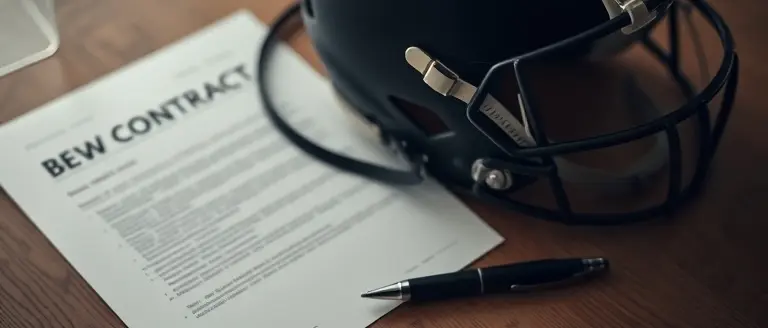
The recent acquisition of Marquez Valdes-Scantling and Tyler Johnson by the Dallas Cowboys signals a calculated pivot in the team’s front-office strategy, particularly as the franchise faces a mounting contractual standoff with star wide receiver George Pickens. With Pickens reportedly demanding a long-term, high-value deal, the decision to bring in experienced veterans on one-year contracts suggests that the organization is actively hedging its bets. By securing a two-time Super Bowl champion in Marquez Valdes-Scantling and a reliable playmaker like Tyler Johnson, the Cowboys are building a roster capable of maintaining offensive production if negotiations with their current WR1 continue to sour.
Evaluating the ‘Receiver-by-Committee’ Contingency
Evidence suggests that the front office is preparing for the possibility of a post-Pickens era, leaning into a depth-oriented approach rather than overpaying for a single disgruntled asset. Integrating Tyler Johnson—often noted for his precise route running—alongside the deep-threat capabilities of MVS provides the coaching staff with tactical flexibility. Key implications of this strategy include:
- Risk Mitigation: By avoiding a massive, multi-year payout to Pickens, the team preserves salary cap space for a more balanced roster construction.
- Tactical Versatility: The inclusion of veterans allows for a rotation-heavy scheme that reduces reliance on any single individual, potentially forcing defenses to account for multiple targets.
- Leverage in Negotiations: The presence of proven veterans provides the organization with significant bargaining power, signaling to Pickens that the team has immediate, capable alternatives if a long-term agreement cannot be reached.
While the addition of Curtis Robinson bolsters the linebacker corps, the primary narrative remains the team’s shift in receiver philosophy. Whether this signifies that a trade is imminent remains a topic of intense speculation; however, these signings function as a clear insurance policy, ensuring the Cowboys’ offensive ceiling remains intact regardless of the final outcome with their star wideout.
Front Office Strategy: Navigating the 2026 Competitive Landscape
The Dallas Cowboys’ recent decision to sign Marquez Valdes-Scantling, Tyler Johnson, and Curtis Robinson reflects a calculated shift toward a “post-draft depth” philosophy. By securing these veterans to one-year contracts immediately following the 2026 NFL Draft, the front office is prioritizing salary cap flexibility over long-term, high-risk financial commitments. This strategy allows the team to maintain a competitive roster while keeping maneuverability high, especially as the organization navigates a complex contractual standoff with star receiver George Pickens. The addition of Tyler Johnson and Marquez Valdes-Scantling provides the receiving corps with proven, cost-effective options, ensuring that the offense remains potent regardless of the outcome of ongoing trade rumors.
Balancing Roster Depth and Financial Prudence
The current front office approach appears designed to hedge against the potential departure of high-priced talent. By bringing in players like Curtis Robinson to bolster defensive schemes and secondary depth, the team ensures that the 2026 roster does not rely on a single superstar. This “team-first” construction strategy aims to:
- Mitigate Contractual Volatility: By refusing to overextend on long-term deals, the Cowboys protect their future cap space from the potential fallout of a disgruntled star player’s holdout.
- Enhance Rotational Capacity: The integration of Tyler Johnson (nfl veteran) allows coaching staff to implement versatile packages that don’t collapse if key starters are sidelined or traded.
- Leverage Championship Experience: Bringing in a two-time Super Bowl champion like Marquez Valdes-Scantling provides immediate locker room leadership and field-stretching speed without the heavy salary cap anchor associated with top-tier free agents.
Evidence suggests that the Cowboys are preparing for a landscape where a cohesive, deep roster is more valuable than individual star power. This front office shift underscores a transition toward long-term organizational stability, favoring adaptable veterans who can perform in high-stakes situations over the uncertainty surrounding the George Pickens situation. By layering these strategic additions, Dallas is clearly prioritizing insurance policies that keep their championship window open through 2026.
The Architect’s Approach: Building for Lasting Success
Ultimately, the Dallas Cowboys’ decision to bring in Marquez Valdes-Scantling and his counterparts suggests that the front office is no longer willing to leave the structural integrity of their roster to chance. Just as a master carpenter recognizes that a project is only as strong as its foundation, Jerry Jones and his team are realizing that championship aspirations require a verified blueprint—not a reliance on potentially volatile variables. By investing in depth and schematic versatility, they are attempting to insulate the roster from the costly mistakes that often arise when team-building is compromised by ego and contractual instability.
The act of roster construction is, in essence, a professional craft. It requires the same precision, vision, and reliance on proven master plans that differentiate a flimsy, makeshift project from a work of lasting excellence. When you approach your own life and professional challenges with the same rigor that elite organizations use to manage their multi-million dollar assets, the margin for error vanishes. You don’t need to guess your way through complex projects; you need a comprehensive, battle-tested framework to ensure structural success every single time.
Stop relying on amateur blueprints and start building your projects with the precision of a master craftsman; explore the world’s most comprehensive library of professional woodworking plans today.
 Stop relying on amateur blueprints and start building your projects with the precision of a master craftsman; explore the world’s most comprehensive library of professional woodworking plans today.Yes, I Want This Now!