
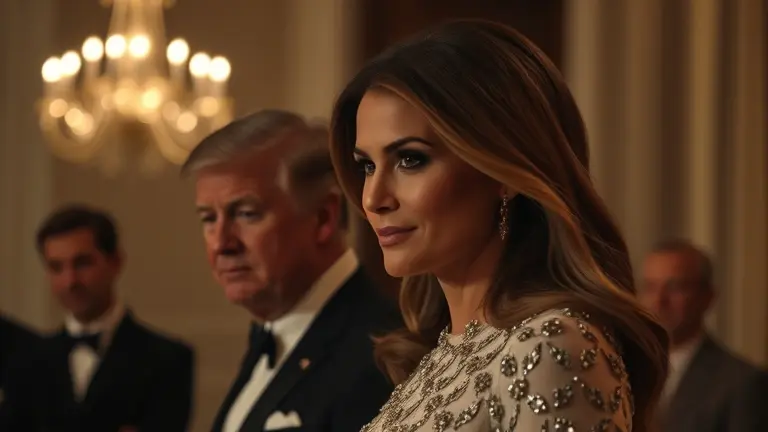
In the high-stakes arena of late-night television, the line between biting satire and dangerous provocation has never been thinner. The recent firestorm surrounding Jimmy Kimmel and his controversial reference to Melania Trump as an ‘expectant widow’ serves as a stark case study in the volatility of modern political discourse. Delivered just 48 hours before an assassination attempt on Donald Trump, the monologue triggered an explosive backlash, with the former First Lady and the President labeling the remarks as ‘hateful’ and ‘violent’ while demanding immediate corporate accountability from ABC and Disney.
This incident is more than just a clash between a comedian and a political figure; it represents a significant shift in the cultural landscape where ‘firing culture’ has become a primary tool for political warfare. As networks and hosts navigate the narrowing scope of acceptable humor under the weight of intense polarization, audiences are left trapped in a cycle of constant, unproductive agitation. In an era where the news cycle intentionally fuels mental fatigue, it is essential to step back and reclaim our cognitive focus from the noise.
The Jimmy Kimmel and Melania Trump Controversy: A Timeline of Events
The controversy erupted following a broadcast of Jimmy Kimmel Live! that occurred on April 23/24, 2026. During a segment parodying political discourse, the host delivered the now-infamous remark: “Mrs. Trump, you have a glow like an expectant widow.” This Jimmy Kimmel Melania expectant widow comment was intended as sharp satirical commentary, but its perception shifted dramatically due to the tragic events that followed. Approximately 48 hours after the monologue aired, an assassination attempt was carried out against Donald Trump, creating an immediate and volatile nexus between late-night television humor and real-world political violence.
The timeline of the public backlash unfolded rapidly following the shooting. As news of the attempt on the former president’s life circulated, the Kimmel widow joke was highlighted by critics as a prime example of inflammatory rhetoric. The sequence of events defining the current tension includes:
- The Broadcast: Jimmy Kimmel delivers the controversial monologue, sparking initial debate over the boundaries of late-night satire.
- The 48-Hour Gap: A critical window where the comment existed as entertainment before the assassination attempt fundamentally reframed the context of the statement.
- The Formal Denunciation: Both Donald and Melania Trump publicly condemned the remark, characterizing it as “hateful” and potentially inciting violence.
- Calls for Accountability: The Trump family, supported by various political allies and the White House press secretary, formally demanded that ABC and its parent company, Disney, terminate Kimmel’s employment.
This incident has forced a broader conversation regarding the role of media figures in an era of extreme political polarization. While supporters of the host defend the monologue as protected speech, critics argue that the timing of the Kimmel Melania Trump commentary crossed a professional line. The demand for his firing reflects an escalating trend where the distinction between satire and incitement is being rigorously scrutinized by both public figures and corporate entities.
The Evolution of ‘Firing Culture’ in Late-Night Television

The traditional landscape of American late-night comedy has undergone a seismic shift, moving from a space of relatively protected political satire to one where hosts face immediate, high-stakes demands for termination. Historically, comedians operated under an unspoken agreement where public figures—even those in the highest offices—were considered “fair game” for sharp-witted mockery. However, the recent controversy surrounding the Jimmy Kimmel expectant widow comment has signaled a departure from this norms-based buffer. When Kimmel remarked that Melania Trump had a “glow like an expectant widow” just 48 hours before an assassination attempt on the former president, the backlash was swift, transforming the joke into a flashpoint for intense political mobilization.
From Satire to Corporate Accountability
As political polarization intensifies, media conglomerates like ABC and its parent company, Disney, find themselves in a precarious position. Unlike in previous decades, where network executives might have shielded their talent under the umbrella of creative freedom, the current climate of “firing culture” demands rapid responses to public outcry. The Trumps’ formal demand for Kimmel’s dismissal represents a new era in which the subjects of satire actively weaponize their platforms to seek direct professional repercussions for hosts. This has created a significant dilemma for major networks:
- Political Sensitivity: The narrowing window for what is considered acceptable satire in an era of heightened threat levels.
- Brand Risk: The increasing pressure on advertisers and corporate stakeholders to distance themselves from hosts perceived as using inflammatory rhetoric.
- The Precedent Effect: How a host’s career survival now depends more on navigating partisan storms than on traditional ratings or creative output.
This trend suggests that late-night television is no longer viewed merely as entertainment, but as a battlefield for cultural and political legitimacy. As viewers debate what did Jimmy Kimmel say in the context of broader systemic safety, the industry must grapple with whether it can sustain its traditional model of biting comedy without infringing upon the tightening boundaries of modern political discourse.
Political Instability and the Narrowing Scope of Satire

The controversy surrounding the jimmy kimmel melania expectant widow comment highlights a profound shift in the American media landscape, where the traditional boundaries of political satire are rapidly contracting. For decades, late-night television operated under the implicit agreement that the “comedian as social critic” enjoyed broad immunity, even when using biting, personal, or inflammatory language. However, in an era defined by extreme political polarization and documented threats of real-world violence, audiences and public figures are exhibiting significantly lower thresholds for content that was once viewed as standard satirical tropes.
The Impact of Volatility on Satirical Boundaries
The 48-hour gap between the monologue and the assassination attempt on Donald Trump has transformed a routine punchline into a lightning rod for national debate. When kimmel melania trump jokes are scrutinized through the lens of heightened volatility, they are no longer viewed merely as comedy, but as potential catalysts for instability. This evolution is reshaping public expectations of media accountability:
- Heightened Sensitivity: Political figures now argue that inflammatory rhetoric—even when framed as a joke—carries a moral responsibility to avoid inciting harm.
- The “Expectant Widow” Precedent: The outrage following the jimmy kimmel expectant widow comment suggests that the public, particularly those critical of mainstream media, no longer separates the performer’s intent from the real-world impact of their words.
- Corporate Risk Management: Networks like ABC and parent companies like Disney are increasingly forced to navigate the tension between preserving creative freedom and managing the backlash from high-stakes demands for termination.
As the lines between political entertainment and dangerous speech blur, the industry faces an existential question: can late-night satire survive in a climate where every jest is analyzed for its capacity to spark civil unrest? The demand for what did jimmy kimmel say to melania trump to be categorized as “hateful” or “violent” rhetoric marks a significant departure from historical norms, signaling that the era of “anything goes” political comedy may be nearing a structural collapse under the weight of contemporary domestic instability.
Corporate Accountability in a Polarized Media Landscape

The fallout surrounding the Jimmy Kimmel Melania expectant widow comment has thrust ABC and its parent company, Disney, into a complex crisis of corporate governance. When high-profile entertainers face public calls for termination following controversial remarks, networks are forced to navigate the precarious intersection of creative freedom and institutional risk management. The demand from the Trump family to fire the late-night host highlights a shift in public expectations, where audiences increasingly hold media corporations directly responsible for the content produced by their talent, even under the guise of satire.
The Precarious Balance of Late-Night Satire
This incident illustrates the shrinking margin for error in late-night television. As political instability deepens, the traditional “roast” style of comedy is being scrutinized with unprecedented intensity. Networks now face a fundamental dilemma:
- Protecting Creative Autonomy: Defending kimmel melania trump jokes as a protected form of political expression, which is essential to the historical legacy of late-night talk shows.
- Mitigating Political Backlash: Responding to consumer boycotts and executive pressure that threaten advertising revenue and network reputation.
The 48-hour timeline between the jimmy Kimmel expectant widow comment and the subsequent assassination attempt has created a causal narrative that complicates the network’s defense. Whether or not the remarks objectively incited violence is secondary to the public perception of the incident. In the eyes of many, the kimmel widow joke crossed the threshold from political commentary into inflammatory rhetoric. For ABC, the challenge is not just determining the intent behind the script, but managing the reputational damage caused by content that is perceived as violating basic standards of public decorum during a time of national crisis. This situation serves as a bellwether for the future of late-night television, where the pressure to maintain “brand safety” may eventually force a shift toward more cautious and homogenized content strategies.
Restoring Clarity in a Polarized World
The controversy surrounding the ‘expectant widow’ remark underscores a broader trend: the weaponization of language and the resulting exhaustion it inflicts on the public. Whether one views Kimmel’s monologue as an overstep of satirical boundaries or as protected free speech, the reality is that such high-anxiety content keeps us in a state of constant, unproductive agitation. This mental fog is not an accident; it is the natural byproduct of a media landscape designed to keep us perpetually on edge, preventing us from engaging with the world with the clarity and calmness we deserve.
When the news cycle feels like an endless loop of conflict, it is vital to prioritize your cognitive health. This is why we recommend The Brain Song, a scientifically grounded tool designed specifically to clear mental clutter. By utilizing non-invasive auditory stimulation, it offers a necessary cognitive reset, helping you break free from the reactive state triggered by polarizing media. It is the perfect remedy for the stress analyzed in this article, providing an immediate, practical way to restore your ability to think clearly despite the surrounding chaos.
Reclaim your mental clarity and tune out the noise; try The Brain Song’s 12-minute daily routine to sharpen your focus today.
