
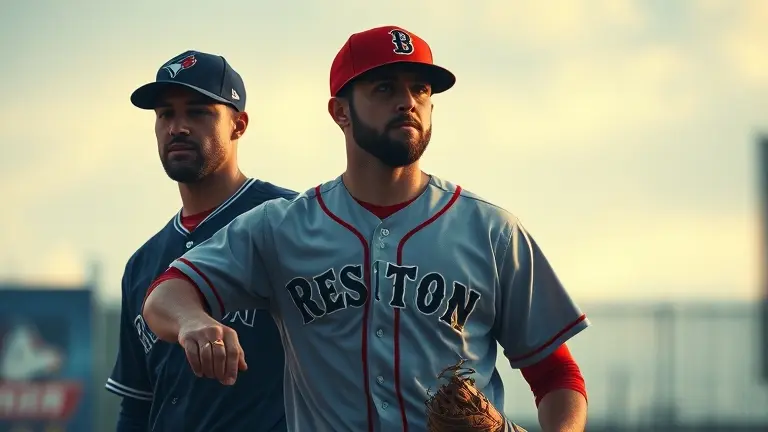
The air at the ballpark is thick with more than just spring humidity as the Boston Red Sox face the Toronto Blue Jays on April 27, 2026. This isn’t just another divisional matchup; it is a collision between an organization in the throes of a tectonic internal shift and a team refining its identity behind a powerhouse rotation. With the Red Sox reeling from a massive coaching staff purge—including the departure of manager Alex Cora—the dugout feels like a pressure cooker. Boston is searching for a definitive reset, desperate to salvage an 11-17 start that has tested the resolve of even the most loyal fan base.
Conversely, the Toronto Blue Jays arrive with calculated confidence, anchored by the high-profile integration of Dylan Cease. Cease’s arrival, following his stellar 2025 World Series campaign, has fundamentally altered the chemistry of the Toronto pitching staff. As Cease steps onto the mound to attack the specific, exposed vulnerabilities in the Boston lineup, this game serves as the ultimate litmus test: Can the Red Sox rebuild their tactical foundation in the heat of battle, or will the Blue Jays’ disciplined precision dismantle them? To truly decode the nuance of this game, we must look beyond the stat sheets and into the high-stakes psychology driving these professional athletes.
A Tale of Two Franchises: The April 27th Clash and the AL East Shakeup

The red sox vs blue jays matchup on April 27, 2026, represents far more than a standard divisional game; it serves as a stark collision between organizational stability and systemic upheaval. Entering the contest, the Toronto Blue Jays have solidified their rotation with the high-profile integration of Dylan Cease. Following his standout 2025 World Series performance, Cease has become the anchor of a pitching staff that, while currently battling bullpen fatigue, possesses the elite top-tier talent required to stifle high-pressure lineups. Toronto’s tactical approach centers on Cease’s ability to manipulate the strike zone—a necessity given the increasing prevalence of the ABS (Automated Ball-Strike) challenge system, which demands extreme precision from starting pitchers to minimize late-game reliance on a taxed relief corps.
In contrast, the Boston Red Sox arrive in Toronto amidst a period of profound uncertainty. The recent firing of manager Alex Cora, alongside five other coaching staff members, has left an 11-17 club searching for a new identity. This “reset” is not merely administrative; it is a psychological hurdle for players like Wilyer Abreu and Ceddanne Rafaela, who are now tasked with performing while the franchise undergoes a mid-season cultural overhaul. The red sox – blue jays series acts as a litmus test, forcing Boston to reconcile their internal locker room transition against the calculated, methodical playstyle of a Blue Jays team that clearly understands its competitive window.
Strategic Implications of the 2026 Season
The narrative stakes for this series go beyond the box score, highlighting the divergent paths these AL East competitors are currently navigating:
- Rotation Reliability: The Blue Jays’ heavy reliance on Cease reflects a “pitcher-first” philosophy designed to limit volatility, a direct counter to the fluid and currently unstable leadership situation in the Boston dugout.
- The Psychological Reset: The Red Sox are under intense public and front-office pressure to demonstrate that the personnel purge will catalyze better performance rather than further internal fracturing.
- Tactical Execution: With the integration of the ABS system, the margin for error for pitchers like Cease is razor-thin, turning every inning into a strategic chess match that highlights the current gap between Toronto’s established core and Boston’s search for direction.
Ultimately, this series serves as a pivotal inflection point. While Toronto looks to cement its position in the AL East, Boston faces a crucial opportunity to prove that the recent staff changes can foster a late-spring turnaround rather than a continued slide.
The Cease Factor: Analyzing the Blue Jays’ New Mound General

The arrival of Dylan Cease in Toronto has fundamentally altered the chemistry of the Blue Jays’ rotation. Following his high-stakes 2025 World Series appearance, Cease has brought a level of professional poise that is proving critical as the team navigates the early months of the 2026 campaign. His ability to anchor the staff is particularly vital given current bullpen fatigue, as the front office relies on his capacity to consistently provide quality innings. During this red sox vs blue jays matchup, the tactical focus centers on how Cease utilizes his elite slider-fastball combination to exploit the specific vulnerabilities within the Boston batting order.
Tactical Sequencing and Pitch Profile
Cease’s approach against the red sox – blue jays lineup involves a calculated strategy of attacking the lower third of the zone. His movement profile—characterized by late break and high velocity—is designed to induce chase rates on pitches just off the plate, a known area of struggle for the current Boston squad. By leveraging his postseason-tested command, he limits hard contact and forces hitters to expand their zone, effectively neutralizing the aggressive, albeit inconsistent, approach of the Red Sox.
Key elements of his impact include:
- Elite Secondary Stuff: His primary slider remains the deadliest tool in his arsenal, frequently forcing ground-ball contact against top-of-the-order threats.
- Composure Under Pressure: Drawing from his deep 2025 playoff run, Cease maintains an even keel, preventing runners in scoring position from disrupting his rhythm.
- Pitch Efficiency: By attacking early in the count, he successfully mitigates the Blue Jays’ reliance on a depleted relief corps.
Ultimately, Cease provides more than just raw statistics; he brings a veteran presence that allows the Blue Jays to dictate the tempo of the game. For the Red Sox, facing such a disciplined starter while dealing with the fallout of their internal coaching purge represents one of the most challenging tests of their young season.
Boston’s Identity Crisis: Coaching Staff Vacancies and the ‘Reset’ Mandate

The Red Sox vs Blue Jays matchup on April 27, 2026, arrives at a moment of profound organizational volatility for Boston. Following the sudden termination of Alex Cora and five key coaching staff members, the Red Sox are not merely battling a lackluster 11-17 start; they are navigating a total vacuum of leadership. This “reset” mandate leaves the players in a precarious position, tasked with establishing a new offensive identity while facing the formidable challenge of Toronto’s refined pitching rotation. The psychological weight of a locker room in transition cannot be overstated, as the club attempts to pivot from a failed strategic foundation to an interim philosophy under immense media and fan scrutiny.
Tactical Challenges Against Dylan Cease
The immediate strategic obstacle is Dylan Cease, whose arrival in Toronto has fundamentally altered the division’s competitive landscape. For a struggling Boston lineup, Cease represents a high-velocity, high-spin nightmare that tests their ability to remain disciplined at the plate.
- Rotational Stability: Cease’s ability to eat innings provides the blue jays with a massive advantage, particularly as they look to mitigate recent bullpen fatigue.
- Offensive Identity: With the departure of the previous coaching staff, hitters like Wilyer Abreu and Ceddanne Rafaela must now adjust to new tactical approaches mid-series.
- Pressure Dynamics: The interim staff faces the impossible task of implementing systematic changes while staring down an ace pitcher capable of neutralizing the heart of the order.
Evidence suggests that the Red Sox’s primary goal tonight is to survive the starting pitching onslaught. Without a cohesive coaching hierarchy to provide instant feedback or mechanical adjustments, the players are largely forced to rely on personal preparation. Facing a pitcher of Cease’s caliber during such organizational upheaval forces a “sink or swim” scenario, where the long-term strategic implications of the recent purge will be tested in real-time. Whether this instability sparks a renewed sense of urgency or leads to further fracturing remains the most critical storyline of this divisional clash.
Tactical Breakdown: Where the Red Sox Lineup Needs to Adapt

The red sox vs blue jays matchup represents a critical juncture for a Boston squad currently grappling with the fallout of a mid-season coaching purge. As the team pivots under new leadership, the primary tactical challenge lies in neutralizing the elite repertoire of dylan cease. Since his high-profile move to Toronto, Cease has utilized a vertical-heavy attack, specifically targeting the upper third of the strike zone. Boston’s current lineup, which has struggled with high-velocity fastballs above the letters, must alter its approach to avoid continuing their stagnant 11-17 start.
Exploiting Zone-Hitting Tendencies
Evidence suggests that the Red Sox batting order has fallen into a pattern of chasing pitches outside the zone, particularly when trailing in the count. To find success against a pitcher of Cease’s caliber, hitters like Wilyer Abreu and Ceddanne Rafaela must prioritize contact over power. Cease relies heavily on inducing swings at elevated heaters; disciplined plate approach will be the only way to force him into the middle-to-lower portion of the zone where Boston has historically produced higher exit velocities.
- Adjusting to Velocity: The Red Sox must shorten their swings to account for Cease’s late-movement fastball, which currently boasts a high swing-and-miss rate against hitters who over-rotate.
- ABS Challenge Discipline: With the Automated Ball-Strike (ABS) system in play, hitters must be smarter about their challenge usage, ensuring they do not waste opportunities on pitches that clearly graze the edges of the zone.
- Countering the Slider: Cease often pairs his high fastball with a sharp, down-and-away slider. Boston’s core hitters need to identify the pitch trajectory earlier, forcing Cease to work deep into counts and potentially exposing the Toronto Blue Jays bullpen earlier than anticipated.
Ultimately, the goal for Boston is to shorten the game. By forcing Cease to throw more pitches per inning, the Red Sox can mitigate his ability to dominate, effectively stabilizing their offensive rhythm during this pivotal managerial transition.
The Competitive Edge in Professional Analysis
As the Red Sox navigate their post-Cora era and the Blue Jays leverage the clinical dominance of Dylan Cease, the true winners are the analysts who can peer beneath the surface. This divisional series is a masterclass in high-pressure execution, where a single mental lapse in a pitching sequence or a shaky managerial decision can decide the game. Success at this level—whether on the diamond or in the analysis booth—demands an elite degree of focus and cognitive clarity to synthesize complex data into winning insights.
Just as these teams require peak mental precision to navigate such a high-pressure divisional matchup, the modern sports fan needs equally sharp cognitive performance to decode the game’s complex variables and managerial shifts. This is where The Brain Song becomes an essential tool for the serious enthusiast. By enhancing your natural ability to process high-level statistics and tactical intricacies without the typical “brain fog” that plagues casual observers, this non-invasive, science-backed solution offers you a competitive mental edge that mirrors the performance optimization seen in the pros.
Integrating this cognitive tool into your daily routine allows you to move beyond the shallow betting-prop narratives and truly master the mechanics of the game. It is not merely a supplement; it is the analytical edge you need to maintain clarity while studying the rapid evolution of the AL East. Don’t just watch the game—deconstruct it with the precision of a front-office strategist.
 Optimize your analytical performance and gain a sharper perspective on this series by integrating The Brain Song into your daily routine.Transform My Mental Performance Today!