
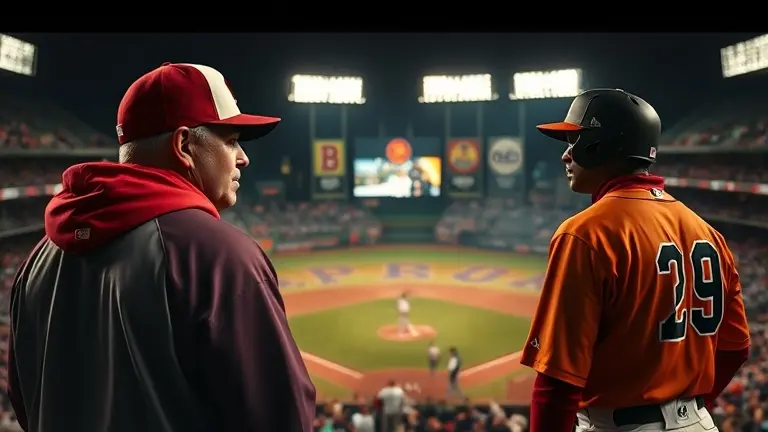
The landscape of the American League East shifted seismically this past weekend, as the volatile red sox vs orioles series became the backdrop for a franchise-altering decision. Following a dismal 9-17 start, the Boston Red Sox parted ways with manager Alex Cora on Saturday, April 25, 2026—a move that arrived just hours after a confusingly dominant 17-1 victory over Baltimore. This sudden firing punctuated a series defined by extremes: from Adley Rutschman’s explosive, six-RBI performance that dismantled starter Brayan Bello on April 24, to the subsequent front-office upheaval that has left fans and analysts scrambling to decipher the team’s true identity.
While the scoreboards captured the headlines, the real story lies in the systemic instability currently plaguing the Boston organization. As the Red Sox search for a new direction, the narrative has shifted from simple game-day results to a critical evaluation of long-term strategy, pitching development, and the pressure-cooker environment surrounding stars like Rafael Devers. The question is no longer just about the next game; it is about whether this management change is a catalyst for renewal or merely a symptom of a deeper, ongoing struggle to maintain competitiveness in an increasingly sophisticated league.
A Weekend of Extremes: The Red Sox-Orioles Series That Ended an Era

The late April red sox vs orioles series served as the final breaking point for a Boston franchise spiraling toward catastrophe. On April 24, the narrative centered on the sheer dominance of Adley Rutschman, who dismantled the Boston pitching staff. Brayan Bello, tasked with steadying the rotation, struggled significantly, allowing the Orioles to dictate the tempo in a demoralizing 10-3 loss. This defeat highlighted the systemic pitching issues that had plagued the team throughout their dismal 9-17 start to the 2026 campaign.
However, the volatility of the series reached a fever pitch just 24 hours later. On April 25, the red sox – orioles matchup produced one of the most bizarre statistical outliers of the season: a lopsided 17-1 victory for Boston. While fans and pundits were initially stunned by the offensive explosion, the celebration was short-lived. Evidence suggests the front office had already reached a decision, as the massive win failed to mask the deeper issues surrounding the club’s leadership.
The shock factor of the weekend cannot be overstated:
- The Managerial Purge: Shortly after the final out on April 25, the organization officially fired manager Alex Cora alongside five members of his coaching staff.
- Performance Whiplash: The team swung from a brutal double-digit loss to a dominant blowout win in less than 24 hours, yet the poor aggregate record remained the primary driver for the change.
- Pitching Volatility: The inconsistency displayed by starters like Brayan Bello underscored the lack of reliability that defined the team’s early-season struggles.
Ultimately, the weekend solidified that the orioles game today results were merely a backdrop to a necessary organizational reset. The Red Sox hierarchy determined that even a 17-run offensive outburst could not justify the status quo, signaling that the franchise was prepared to sacrifice its leadership core in hopes of salvaging the remainder of the 2026 season.
The Anatomy of a Collapse: Analyzing the Red Sox Pitching Struggles

The recent red sox vs orioles series served as a grim microcosm for the team’s broader 2026 defensive shortcomings. While the 17-1 victory provided a temporary reprieve, the April 24th loss exposed fundamental flaws in the pitching rotation that eventually cost manager Alex Cora his job. The performance of Brayan Bello during that contest was particularly emblematic of the staff’s instability. Bello, once viewed as a foundational piece, struggled with command, leaving his fastball over the heart of the plate rather than painting the corners. When a starter fails to locate secondary pitches effectively, the team loses its defensive rhythm, forcing the bullpen into high-leverage situations prematurely.
Metrics of the Breakdown
The metrics surrounding the April 24th defeat highlight a critical lack of efficiency. When analyzing the red sox – orioles matchup, two primary factors stand out:
- Secondary Pitch Success: Bello’s inability to keep hitters off-balance with his slider allowed opponents to sit exclusively on his heat, leading to explosive production for the opposition.
- The Rutschman Factor: Adley Rutschman capitalized on these mechanical lapses, consistently driving the ball with authority. His two-home-run performance proved that Boston’s current pitch sequencing is far too predictable for elite hitters.
- Velocity Consistency: Data suggests that when Bello’s velocity dips even slightly in mid-inning transitions, his recovery rate for locating pitches decreases, leading to the high-run-scoring events that have plagued the team’s 9-17 start.
Ultimately, the pitching staff’s inability to execute basic strategic tenets eroded the team’s confidence, placing unsustainable pressure on the coaching staff. For an orioles game today and beyond, the Red Sox must reconcile these technical failures, as the current rotation’s reliance on high-risk, high-reward sequencing is no longer sustainable for a team looking to rebuild its competitive identity in the American League East.
Survivor-Style Management: Why the Red Sox Leadership Churn Persists
The sudden departure of Alex Cora, coupled with the termination of five additional coaches, signals a desperate “Survivor-style” restructuring within the organization. While the red sox vs orioles series in late April highlighted the stark volatility of the current squad—ranging from a 10-3 collapse involving a struggling Brayan Bello to a explosive 17-1 victory—management turnover rarely serves as a cure-all for systemic roster deficiencies. Boston’s front office appears to be banking on a cultural reset to salvage a dismal 9-17 start, yet the fundamental questions regarding pitching depth and offensive consistency remain largely unaddressed.
Assessing the Organizational Disconnect
The reliance on coaching changes to mask deeper issues is a recurring theme in modern professional sports, but the Red Sox are now facing the reality that optics cannot replace production. When analyzing the series against Baltimore, it becomes clear that elite individual performances, such as the power display from Adley Rutschman, have exposed significant gaps in Boston’s bullpen management and defensive alignment.
Key indicators that the leadership churn may be insufficient include:
- Pitching Volatility: The erratic performances from rotation staples like Brayan Bello suggest a need for specialized coaching intervention rather than just a top-down managerial change.
- Roster Construction: Replacing the manager does not immediately fix the lack of high-leverage arms required to compete against top-tier AL East talent like the Orioles.
- Developmental Stagnation: A “survivor-style” approach often prioritizes short-term wins over the long-term maturation of core players, potentially alienating franchise cornerstones like Rafael Devers.
Ultimately, while the red sox – orioles rivalry remains a spectacle, the Red Sox must pivot toward comprehensive structural reform. Unless the organization addresses its inability to generate consistent value from its farm system and pitching analytics, the carousel of managers will continue to spin without delivering the championship-caliber results fans expect.
Looking Ahead: What’s Next for the Red Sox and Orioles?
The red sox vs orioles series served as a catalyst for a massive organizational pivot in Boston, but it also highlighted the stark disparity between a rebuilding franchise and a legitimate American League powerhouse. For the Baltimore Orioles, the takeaway from this series remains clear: they are built for sustained success. Even after the lopsided 17-1 loss, Baltimore’s core—anchored by the exceptional Adley Rutschman—possesses the depth and offensive consistency to withstand periodic bullpen lapses. Rutschman’s ability to anchor the lineup and handle a pitching staff makes the Orioles a dangerous contender for the remainder of the season, regardless of any single game outcome.
Boston’s Tactical Reset
For the Red Sox, the immediate reality is daunting. Sitting at a 9-17 record, the firing of Alex Cora signals that the front office is no longer willing to accept systemic underperformance. As the team searches for a new identity, the incoming interim leadership faces several critical tactical hurdles:
- Pitching Stabilization: Brayan Bello and the rest of the rotation must find consistency. Without reliable outings from the starters, the team’s early-season struggles will only deepen.
- Offensive Sustainability: The 17-run outburst must become more than just an outlier. Boston needs to determine if their hitting performance is repeatable or if the roster requires significant shuffling to compete in a crowded AL East.
- Leadership Vacuum: The organization must define a clear strategy to support franchise cornerstones like Rafael Devers, who cannot be expected to carry the team’s offensive load indefinitely.
While the 17-1 victory provided a temporary morale boost, the path to .500 and beyond is narrow. The remainder of the 2026 season for Boston will serve as a referendum on their current roster construction. Whether the team chooses to sell at the trade deadline or attempts a desperate mid-season turnaround will depend entirely on their performance in the next thirty games. For fans tracking the orioles game today or the broader league landscape, Boston’s trajectory remains the most unpredictable variable in the division.
Decoding the Future of Red Sox Baseball
The firing of Alex Cora serves as a stark reminder that in professional baseball, the margin between systemic failure and a turnaround is razor-thin. For analysts and die-hard fans attempting to dissect the wreckage of the 2026 season, the data is overwhelming. Understanding why a talent like Brayan Bello falters while the team struggles to find consistency requires more than just watching the box scores; it demands a high level of critical, analytical endurance to navigate the noise surrounding the front office and player performance metrics.
Just as the Red Sox front office needs a clear-headed, systematic approach to rebuild their roster, you need maximum cognitive acuity to cut through the noise of this sports crisis. To effectively process the complex data defining this season, you need to eliminate the mental fog that clouds your judgment during high-stakes evaluations. This is where The Brain Song becomes an essential tool for the serious sports observer; it serves as a cognitive performance enhancer, sharpening your focus and improving your capacity to synthesize the intricate details of team management and player development.
By integrating this 12-minute daily audio routine into your analytical workflow, you gain the mental clarity required to see the patterns that others miss. Whether you are forecasting the impact of a new manager or evaluating the potential for a mid-season surge, peak mental performance is your greatest asset. Don’t let mental fatigue derail your analysis of the season’s most critical turning point.
 Optimize your analytical edge and clear the mental fog; start your 12-minute daily audio routine now to stay ahead of the game.Sharpen My Analytical Edge Now!