
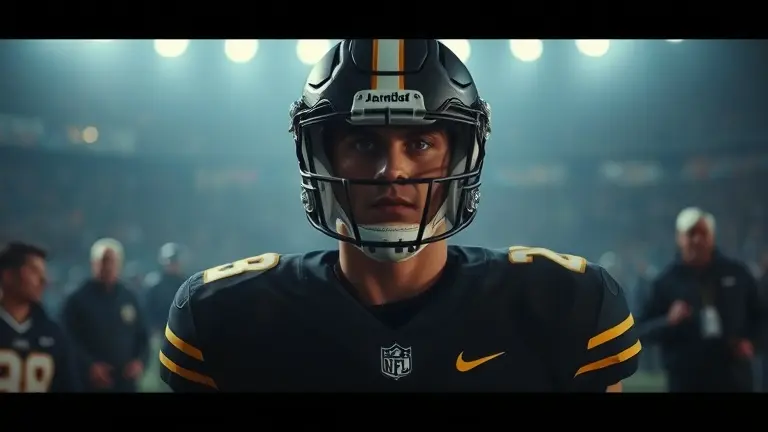
When the 2026 NFL Draft concluded without the name Diego Pavia being called, the sports world was left in a state of collective disbelief. As a standout Heisman Trophy finalist and the SEC Offensive Player of the Year, Pavia’s omission was more than just a draft-day surprise—it was a historic anomaly, marking the first time in over a decade that a Heisman finalist failed to secure a professional contract. While voices like Deion Sanders have publicly rallied around the Vanderbilt star, urging him to “stay strong,” the emotional narrative of a “shock snub” often obscures the colder, more technical reality of modern league scouting.
To truly understand why a playmaker of Pavia’s caliber fell off the draft board, we must move beyond the headlines and analyze the Pavia Paradox: the widening gap between collegiate production and the hyper-specific, metrics-driven expectations of modern NFL front offices. This isn’t just about athletic stats; it is about how scouts evaluate mental processing speed and situational awareness under the extreme pressures of the pro level. The question is no longer just about what happens on the field, but how a quarterback’s brain translates complex data into split-second execution—the very core of the professional scouting process.
The Pavia Paradox: Decoding the 2026 Draft’s Most Shocking Snub

The 2026 NFL Draft concluded with one of the most polarizing storylines in recent sports history: the inexplicable slide of Vanderbilt star Diego Pavia. Despite a stellar collegiate campaign that saw him earn the title of SEC Offensive Player of the Year and secure a spot as a Heisman Trophy finalist, Pavia was notably absent from the seven-round draft board. This development marked the first time a Heisman finalist had gone unselected since 2014, sparking a massive media firestorm and leaving analysts and fans questioning the efficacy of modern scouting metrics.
The public reaction was swift, underscored by a high-profile show of solidarity from Colorado Buffaloes head coach Deion Sanders. In a widely circulated social media post, Sanders reached out directly to Pavia, stating, “Stay strong and don’t let up.” While this viral support highlighted the emotional weight of the snub, it also brought into sharp focus the “Pavia Paradox”—the widening chasm between tangible collegiate production and the rigid, often antiseptic, requirements of professional draft boards.
Understanding the Disconnect
The confusion regarding why did Diego Pavia get drafted—or, more accurately, why he didn’t—stems from a fundamental shift in how NFL franchises value quarterback prospects today. Several critical factors likely influenced the decision-makers:
- Size vs. System: NFL scouts often prioritize specific height-weight-speed archetypes that Pavia may not satisfy according to modern “prototypical” standards.
- Offensive Scheme Translation: There is a growing skepticism regarding whether college production in specialized systems translates to the complex, pro-style schemes favored in the NFL draft.
- The Analytical Shift: Modern teams increasingly rely on deep-dive performance metrics and internal athletic testing over traditional accolades like the Heisman trophy.
Ultimately, while the Diego Pavia draft outcome shocked the casual observer, it serves as a sobering reminder of the professional scouting community’s shift toward projection-based models over historical performance. As Pavia enters the league as an undrafted free agent, the debate continues over whether the league is prioritizing the right tools, or if a generation of hyper-productive college stars is being systematically overlooked.
Production vs. Projection: Why Elite College Stats Didn’t Translate
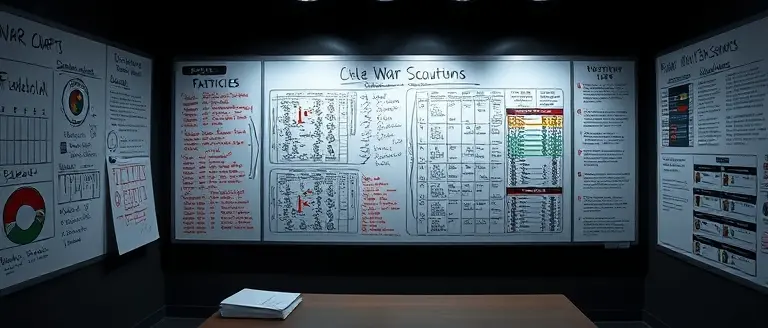
The exclusion of Diego Pavia from the 2026 NFL Draft has ignited a firestorm of debate regarding the “Pavia Paradox”—the widening chasm between collegiate production and professional evaluation. As a Heisman Trophy finalist and the SEC Offensive Player of the Year, Pavia’s resume was undeniably elite. However, modern NFL front offices have increasingly pivoted toward a “traits-based” scouting philosophy, which prioritizes measurable physical benchmarks over the intangible “winner” pedigree that characterized Pavia’s time at Vanderbilt. While fans point to his win percentage and leadership, scouts are often mandated to weigh arm talent, frame, and verified athleticism against the specific requirements of pro-style passing schemes.
The skepticism surrounding Pavia stems from a fundamental shift in how the NFL identifies future franchise quarterbacks. Today’s scouting departments leverage data-driven models that emphasize high-ceiling physical attributes, such as elite velocity and stature, as primary indicators of long-term success. Unfortunately for Pavia, his playstyle—which relied heavily on improvisation, mobility, and high-level field processing—was viewed by many evaluators as “scheme-dependent.” This created a disconnect:
- Traits vs. Production: Scouts often fear that college systems—no matter how successful—might mask physical limitations that will be exposed by the speed and complexity of NFL defensive schemes.
- Rigid Benchmarks: Despite the success of non-traditional quarterbacks, many NFL teams remain tethered to size-and-strength thresholds that Pavia did not meet, leading to his status as a shock snub.
- Draft Methodology: The move toward “traits-based” drafting assumes that raw physical tools can be developed, whereas a player reaching his “ceiling” early in college is sometimes unfairly penalized for a perceived lack of future upside.
This reliance on potential rather than proven output is why did Diego Pavia get drafted became the most searched question during the draft weekend. While vocal support from figures like Deion Sanders underscores the human element of the sport, the Pavia draft slide highlights a cold reality: in the eyes of many general managers, elite production at the collegiate level is no longer the definitive prerequisite for an NFL selection. By prioritizing replicable physical traits, teams are betting on development, often leaving players with Pavia’s unique, gritty, and result-oriented skill set on the outside looking in.
The Changing Face of NFL Scouting in the Modern Era

The modern NFL draft has undergone a seismic shift, moving away from traditional tape-heavy evaluation toward a model defined by advanced analytics and rigid physical thresholds. The unexpected slide of a Heisman finalist like Diego Pavia highlights a growing disconnect between collegiate production and professional projections. In today’s scouting climate, personnel departments increasingly rely on proprietary simulation software and high-tech biometric data to mitigate risk. This data-centric approach prioritizes “prototypical” physical traits—arm strength, height-to-weight ratios, and vertical leap—over the high-level cognitive processing and leadership qualities that defined the careers of successful college stars.
This evolution in scouting methodology relies on several key pillars that often overlook the “intangible” winner’s spirit that characterized Pavia during his standout season at Vanderbilt:
- GPS Tracking Data: Teams track every movement during games and practices, valuing explosive movement patterns over traditional football IQ.
- Combine Metrics: The obsession with “testing” numbers often forces teams to bet on physical ceilings rather than proven on-field outcomes.
- Predictive Modeling: Software simulations attempt to forecast how a player’s college success translates to the professional level, frequently penalizing players who lack “standard” NFL size or arm mechanics.
Consequently, many college football fans are left questioning why elite performers are routinely bypassed in the draft. While coaches like Deion Sanders recognize the value of a gritty, productive “football player,” the NFL draft process often views such athletes as statistical outliers who do not fit the established algorithm. By valuing hypothetical potential over verified weekly performance, the league may be inadvertently filtering out individuals capable of leading winning programs. The Pavia situation serves as a prime example of this “Pavia Paradox,” where the data says no, but the game film says otherwise, leaving the future of scouting in a state of high-stakes scrutiny.
Fan Disconnect: Is the NFL Undervaluing College Accolades?
The exclusion of Diego Pavia from the 2026 NFL Draft has ignited a firestorm of debate regarding the relevance of collegiate honors in professional scouting. For the casual observer, seeing an SEC Offensive Player of the Year and a Heisman Trophy finalist go unselected is baffling. This sentiment highlights a growing rift between the “eye test”—which prioritizes competitive toughness, leadership, and on-field production—and the modern NFL’s reliance on rigid data modeling. While fans celebrate the heart and grit that made Pavia a standout, NFL front offices are increasingly prioritizing measurable athletic traits, arm velocity, and physical prototypes that fit specific offensive schemes, often at the expense of established college success.
The Shift Toward Predictive Analytics
The disconnect stems from a fundamental shift in how teams view talent. Where the draft once prioritized a player’s résumé, the current climate favors “traits-based” evaluation. This methodology creates a unique challenge for unconventional quarterbacks like Pavia:
- Scheme Compatibility: Modern NFL coordinators look for specific processing speeds and release mechanics that may not perfectly align with the high-tempo, read-heavy systems seen in college.
- The “Prototype” Bias: Teams are hesitant to invest draft capital in prospects who do not meet height, weight, and hand-size thresholds, even when those players boast high-level collegiate output.
- Predictive Modeling: Advanced analytics often discount historical production if a player lacks elite-level “trinket” metrics, leading to situations where a Heisman finalist is bypassed for a raw athlete with higher measurable upside.
This trend suggests a future where college football performance may become secondary to private workout metrics. For fans, this creates a frustrating reality where individual awards like the Heisman no longer serve as a reliable indicator of NFL draft stock. Unless there is a market correction that balances production with physical traits, the “Pavia Paradox”—the gap between collegiate greatness and professional viability—will likely remain a point of contention, leaving supporters to wonder if the professional game is drifting too far from the very spirit of the sport.
Mastering the Mindset of Elite Performance
The case of Diego Pavia serves as a stark reminder that in the modern era, physical accolades are only part of the equation. NFL scouts are increasingly obsessed with cognitive durability—the ability to process, react, and maintain focus when the margin for error disappears. Just as professional athletes are beginning to recognize that their brain is the ultimate muscle, we must shift our perspective on what truly separates the good from the elite. Whether you are leading a team on the gridiron or navigating the high-stakes demands of your daily life, the secret to longevity and peak performance lies in your cognitive clarity.
This is where the science of mental optimization becomes vital. Just as top-tier prospects turn to neuroscience to sharpen their split-second decision-making, you can bridge the gap between potential and performance. The Brain Song is designed to support the very mental functions that determine success, providing a scientific edge to help you enhance focus, clarity, and processing power. By treating your brain as the essential performance tool it is, you are not just keeping up; you are conditioning yourself for a higher level of achievement.
Don’t let your potential remain untapped. It is time to treat your mental performance with the same rigor that elite professionals apply to their physical game. Unlock your peak mental potential and train your brain like an elite athlete—discover how The Brain Song can sharpen your focus and processing power.
 Unlock your peak mental potential and train your brain like an elite athlete—discover how The Brain Song can sharpen your focus and processing power.Transform My Life Today