

When Coco Gauff stepped onto the court at the Mutua Madrid Open, the tennis world braced for another display of her evolving baseline game. However, the narrative shifted rapidly as the young American star faced an grueling physical battle against Sorana Cirstea. While the headlines were quick to latch onto the sensationalist aspects of her mid-match illness, the true story lies in the sheer competitive fortitude required to survive on the demanding, slow-burning red clay. Gauff’s ability to force a comeback victory under extreme physical duress serves as a compelling case study in elite-level grit, highlighting the intersection between raw tactical skill and the necessity of unwavering metabolic endurance.
As the clay season pivots toward the ultimate test at Roland Garros, Gauff’s performance in Madrid acts as a mirror for the physical toll that professional tennis extracts from its top competitors. Analyzing her movement, shot selection, and sustained intensity under fatigue offers more than just a sports recap; it provides a blueprint for understanding what it takes to maintain peak output when the body demands a breakdown. Moving past the initial health reports, we must examine how Gauff is recalibrating her game for the rigors of high-intensity clay court play, where every point is a marathon of focus and energy.
Resilience in Madrid: Gauff’s Gritty Comeback Against Cirstea

The third-round encounter at the 2026 Mutua Madrid Open served as a definitive showcase of Coco Gauff’s elite mental fortitude. Facing a challenging matchup against the heavy-hitting Sorana Cirstea, Gauff found herself navigating not only a high-stakes tactical battle on the red clay but also a sudden, significant physical setback. While reports highlighted her on-court illness, the true story of the match lies in her unwavering ability to compartmentalize physical distress to execute a high-level game plan. Rather than succumbing to the fatigue brought on by the grueling conditions of the Madrid circuit, Gauff adjusted her court positioning and maintained the discipline required to dismantle Cirstea’s offensive patterns.
The Anatomy of a Comeback
This victory is a testament to the growth of the young American’s professional maturity. Throughout the match, Gauff demonstrated that her competitive spirit is arguably her greatest weapon on the WTA Tour. Her ability to pivot during the match—shifting from a defensive posture to finding windows for aggressive, top-spin-heavy forehands—highlights a technical evolution that has been months in the making. Key takeaways from this performance include:
- Tactical Flexibility: Gauff showed an improved capacity to shorten points when her endurance was compromised, utilizing drop shots and strategic slices to keep Cirstea off-balance.
- Mental Toughness: By managing the psychological weight of an on-court medical crisis without losing focus on match scoreline, she solidified her reputation as one of the most resilient competitors in women’s tennis.
- Clay Court Adaptation: The win confirms her increasing comfort level on European clay, suggesting that the technical adjustments made during her off-season training are paying dividends as she heads into the critical stretch toward Roland Garros.
By overcoming such a volatile situation, Gauff has proven that her game is becoming increasingly “weather-proof.” Her performance against Cirstea serves as a stark reminder to the field that even when she is not playing at 100% physical capacity, her strategic baseline and championship mindset make her an incredibly difficult opponent to put away. As the clay season intensifies, this match will likely be viewed as a pivotal moment in her 2026 trajectory.
Analyzing Gauff’s Tactical Evolution on Clay
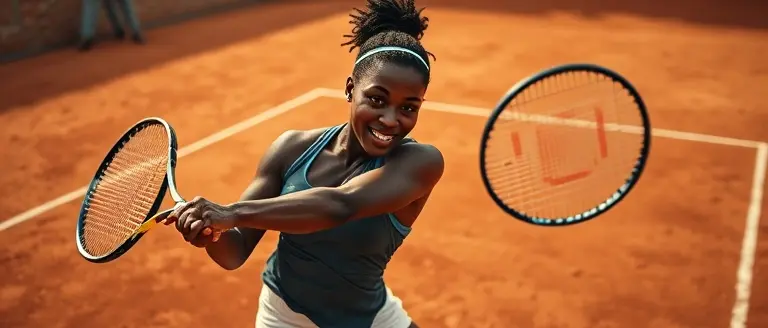
While the headlines following her Mutua Madrid Open victory focused on physical resilience, Coco Gauff is quietly orchestrating a significant tactical evolution on red clay. Her game, historically built on elite defensive range and transition speed, is undergoing a technical refinement designed to thrive on the slower, higher-bouncing surface. Evidence suggests that Gauff is increasingly prioritizing heavy topspin to neutralize opponents, moving away from flat-hitting patterns that often faltered during deep rallies on European clay. By increasing the arc and rotation on her groundstrokes, she is forcing adversaries to strike the ball from well behind the baseline, effectively dictating court positioning.
Her improved forehand stability remains the most critical variable in this transition. By shortening her backswing and focusing on a more compact contact point, Gauff is minimizing the error-prone windows that previously plagued her game during high-intensity exchanges. This technical adjustment is paying dividends in her ability to withstand pressure and pivot from defense to offense. Key aspects of her current technical profile include:
- Heightened Spin Rate: Utilizing topspin to push opponents out of their comfort zones, preventing them from dictating the tempo.
- Elite Court Coverage: Leveraging her superior lateral movement to defend the corners, a non-negotiable trait for any deep run at Roland Garros.
- Strategic Serve Placement: Incorporating more kick and slice serves to exploit the clay surface’s friction, setting up shorter balls for her signature aggressive forehand.
This evolution is not merely about surviving matches; it is about establishing a sustainable tactical blueprint that complements her physical gifts. As the clay season intensifies, Gauff’s ability to blend her traditional athleticism with this newfound technical discipline will be the ultimate barometer for her championship potential. By maintaining a high margin over the net and utilizing deep, central heavy-spin balls, she is successfully limiting the effectiveness of power-hitters, proving that her game is as much about strategic nuance as it is about pure physical endurance.
The Road to Roland Garros: Adjusting to the Clay Season

The transition to the European clay court swing represents one of the most demanding physical and tactical shifts in the professional tennis calendar. For Coco Gauff, the Mutua Madrid Open serves as a vital proving ground, where the unique combination of high altitude and slower-moving surfaces forces players to recalibrate their shot selection and movement patterns. While the altitude in Madrid tends to make the ball travel faster through the air, it simultaneously tests a player’s aerobic capacity and defensive recovery. Gauff’s recent resilience—notably her ability to secure a comeback win against Sorana Cirstea despite physical setbacks—signals a maturity in her game that is essential for surviving the grueling three-set matches typically encountered during the Roland Garros fortnight.
Strategic Evolution on Red Clay
Analyzing Gauff’s technical adjustments reveals a concerted effort to manage points with greater patience. On the slower, sliding surfaces of the European circuit, Coco Gauff is increasingly utilizing heavy topspin to neutralize opponents, moving away from relying solely on raw pace. This tactical shift is a deliberate move to improve her consistency on the surface that has historically challenged her most. Key factors currently influencing her clay-court performance include:
- Improved Sliding Technique: Mastering the ability to slide effectively into the backhand corner to maintain court balance.
- Court Positioning: Playing deeper behind the baseline during high-altitude rallies to mitigate the erratic bounces common on clay.
- Mental Fortitude: Her capacity to perform under physical duress confirms she possesses the competitive floor required for a deep Grand Slam run.
Heading into Paris, these performances are highly positive indicators. While the conditions in Madrid are distinct from the heavier, slower clay found at Roland Garros, the core requirements remain the same: superior endurance, precise point construction, and the mental toughness to endure long, physical rallies. Gauff’s form suggests she is not just participating in the clay season but actively refining her profile to become a perennial contender on the surface.
What’s Next: Strategic Priorities for the World No. 3

Following her gritty comeback at the Mutua Madrid Open, the path forward for Coco Gauff is defined by a transition from reactive survival to proactive technical dominance. While her resilience under physical duress—highlighted by her victory against Sorana Cirstea—proves her elite mental fortitude, the focus now shifts toward sustained clay-court efficiency. To remain a top-tier contender for the French Open, Gauff must bridge the gap between her explosive athleticism and the tactical patience required by the slower surface of red clay.
Refining Tactical Execution on Clay
The primary challenge for Gauff involves managing the rhythm of long-rally exchanges. On clay, the ball’s bounce rewards players who can construct points through controlled depth rather than just raw pace. Strategic improvements should center on:
- Second-Serve Aggression: Gauff needs to maintain high placement accuracy on her second serve to prevent opponents from dictating play early in the point. Increasing the depth of her delivery will be crucial in neutralizing aggressive returners.
- Rally Endurance: While her cardio is rarely in question, her ability to maintain a high-intensity, heavy-spin baseline game for seven consecutive matches remains a technical hurdle. Integrating more variety, such as mid-court angles and well-timed drop shots, will help shorten points when necessary.
- Footwork and Court Positioning: Moving effectively on European clay requires different mechanics than hard courts. Minimizing slide-recovery time will allow Gauff to better defend against players looking to pull her out wide.
As Gauff progresses through the remainder of the Madrid draw and prepares for upcoming WTA 1000 events leading into Roland Garros, the consistency of her backhand down the line will be a key performance indicator. If she can combine her newfound tactical discipline with her natural competitive edge, Gauff is well-positioned to cement her status as a premier threat on the clay season’s biggest stages.
Optimizing Your Performance for the Long Game
Coco Gauff’s ability to grind out a victory while physically compromised highlights a fundamental truth of elite athletics: success on the court is rarely just about skill—it is about metabolic resilience. Whether you are competing in a high-stakes sport or navigating the relentless demands of your daily schedule, the ability to maintain steady, crash-free energy is the ultimate competitive advantage. Without a stable foundation for your metabolic health, focus slips, fatigue sets in, and your potential remains locked behind a wall of exhaustion.
This is where the science of proactive energy management becomes essential. Just as Gauff fine-tunes her game to survive the grueling clay season, you can optimize your physical and mental endurance by addressing energy stability at its source. Sugar Defender provides a science-backed, natural foundation for your body, helping to prevent the mid-day energy dips and cognitive ‘brain fog’ that compromise performance. By supporting healthy metabolic function, you ensure that your body has the consistent, sustained power required to tackle your most demanding challenges with the same intensity as a professional athlete.
Don’t let fatigue dictate your results. Empower yourself with the same level of physiological support that separates the elite from the rest. It is time to stabilize your energy, reclaim your clarity, and perform at your peak every single day.
 Discover how to stabilize your own energy levels and maintain peak performance during your most demanding daily challenges.Transform My Energy Levels Today!