
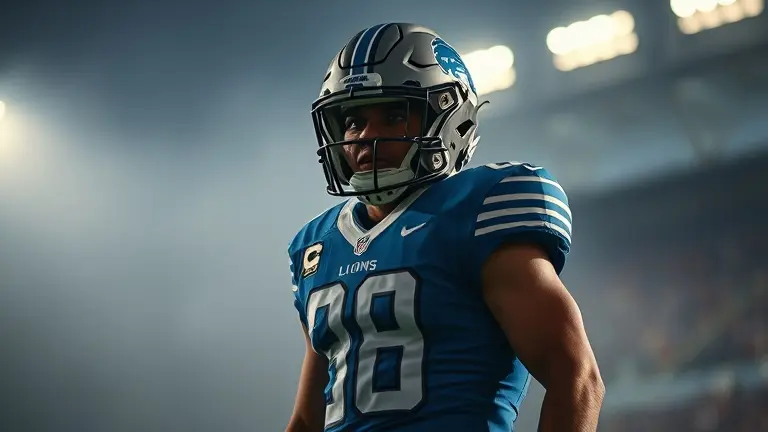
When the Detroit Lions went on the clock with the 118th overall pick in the 2026 NFL Draft, the War Room decision to select Michigan linebacker Jimmy Rolder sent an immediate shockwave through the fanbase. In a draft class defined by physical outliers and high-ceiling prospects, the Lions’ aggressive pursuit of Rolder signals more than just a depth-chart fill; it reinforces a growing, polarizing trend of doubling down on the Wolverines’ collegiate pipeline. While pundits debate the strategic merits of keeping the local college-to-pro transition so tight, the raw tape tells a compelling story of a ‘violent-handed’ defender ready to translate his All-Big Ten dominance into NFL production.
Beyond the headline-grabbing selection, the deeper question remains: Is this a calculated risk based on proven athletic metrics, or an over-reliance on a familiar system? As we dissect Rolder’s transition and compare his Relative Athletic Score (RAS) against the current Lions defensive core, it becomes clear that navigating the 2026 draft landscape requires more than just a surface-level glance. To truly understand the strategic blueprint behind this pick, we must sharpen our analytical edge and look at the data driving the Lions’ front office to make these high-stakes decisions.
Jimmy Rolder Joins the Detroit Lions: A 2026 Draft Recap

On April 25, 2026, the Detroit Lions front office made a decisive move during the fourth round of the 2026 NFL Draft, selecting University of Michigan standout linebacker Jimmy Rolder with the 118th overall pick. This selection marks the latest chapter in the organization’s aggressive pursuit of talent from the Wolverines program, a strategy that has become a defining characteristic of the Lions’ recent roster construction. Rolder, who solidified his status as a premier defender during his 2025 All-Big Ten campaign, was widely viewed as a high-upside prospect capable of contributing immediately to the team’s defensive rotation.
Elite Athleticism Meets Professional Opportunity
The excitement surrounding the Jimmy Rolder NFL draft selection is heavily influenced by his exceptional testing numbers. Evaluators have pointed to his staggering 9.51 Relative Athletic Score (RAS), which places him in the top tier of prospects at his position since 1987. This physical profile suggests that Rolder possesses the raw speed, explosion, and lateral agility required to thrive in the modern, high-paced NFL environment. His transition from the collegiate level to the pros is expected to be seamless given his experience in high-leverage defensive schemes at Michigan.
Key highlights of his transition include:
- Versatile Skillset: Scouts have praised his “violent-handed” playstyle, noting his ability to shed blockers and pursue ball carriers with relentless intensity.
- Tactical Fit: By joining a Lions defense that prioritizes high-motor linebackers, Rolder is positioned to bolster the team’s depth and special teams efficacy immediately.
- Draft Value: Secured at pick 118, analysts are already labeling the move as a potential “steal” given the scarcity of high-RAS linebackers available in the mid-to-late rounds.
The immediate reaction across social platforms and sports media outlets has been largely positive, though the “Wolverine-heavy” nature of the roster remains a hot topic for debate. Regardless of the broader strategy, the consensus is clear: the Lions have secured a high-ceiling athlete with the work ethic to make an impact in his rookie season.
Draft Grade & Analysis: Assessing the Value of Pick 118

The selection of Jimmy Rolder with the 118th overall pick in the 2026 NFL Draft represents a calculated gamble on physical upside and high-level collegiate pedigree. From a value perspective, landing a linebacker with a 9.51 Relative Athletic Score (RAS) in the fourth round is statistically significant. By performing better than 95.1% of linebackers evaluated since 1987, Rolder provides the Detroit Lions with an elite athletic ceiling that is rare at this stage of the draft. When analyzing the jimmy rolder nfl draft profile, his production during a standout tenure at the University of Michigan suggests a player who is already acclimated to high-pressure defensive schemes, justifying an initial draft grade of ‘B+.’
Positional Utility and Athletic Metrics
The Lions’ defensive front requires players who possess both lateral speed and the “violent-handed” engagement style that defines Rolder’s film. While mid-round selections are often viewed as developmental projects, Rolder enters the league with a polished technical foundation that bridges the gap between college production and professional utility. Compared to the current Lions linebacker corps, Rolder offers a specific blend of coverage awareness and downhill aggression that was identified as a primary need following the team’s defensive adjustments.
Key takeaways regarding his value include:
- Elite RAS Profile: His 9.51 score indicates superior physical tools that should translate well to special teams duties immediately, providing early roster stability.
- Scheme Fit: As a product of a sophisticated Michigan defense, he exhibits high football IQ, allowing him to diagnose plays quickly—a trait essential for mid-round rookies competing for playing time.
- Developmental Trajectory: Unlike raw prospects, Rolder’s 2025 All-Big Ten performance proves he can handle the physical toll of a full collegiate season, suggesting he is ready to adapt to the rigors of the professional level.
Ultimately, while some analysts might debate the reliance on Michigan-based talent, the sheer athletic profile of Rolder at pick 118 mitigates the risk typically associated with mid-round selections. He represents high efficiency in roster building, offering a blend of immediate special teams impact and long-term rotational depth in a championship-caliber defense.
Relative Athletic Score (RAS) Comparison: How Rolder Measures Up

The selection of Jimmy Rolder in the 2026 NFL Draft has sent shockwaves through the analytical community, primarily due to his elite testing numbers. With a staggering 9.51 Relative Athletic Score (RAS), Rolder ranks in the 95.1st percentile of all linebackers drafted since 1987. This metric is not merely a collection of isolated statistics; it represents a comprehensive profile of speed, explosive power, and lateral agility that current Detroit Lions linebackers have struggled to achieve consistently. By benchmarking Rolder against the incumbent roster, it becomes clear that the Lions front office prioritized a high-ceiling athletic profile to address their defensive coverage vulnerabilities.
Athletic Ceiling and Positional Fit
Rolder’s testing data suggests he possesses the range necessary to operate in modern, space-heavy defensive schemes. His lateral quickness allows him to mirror tight ends and running backs in passing downs—a specific area where the Lions sought significant improvement. When compared to the current depth chart, Rolder offers a distinct advantage in vertical closing speed, which enables him to diagnose plays in the backfield and deliver the “violent-handed” contact that has defined his reputation.
- Elite Agility: Rolder’s shuttle and cone drill metrics suggest he can navigate the trash-filled interior of the offensive line with ease.
- Physicality Profile: His RAS highlights a rare combination of mass and burst, indicating he can hold his own against interior linemen while maintaining the pursuit speed to track down mobile quarterbacks.
- Scheme Versatility: By pairing this level of athleticism with the professional coaching staff in Detroit, Rolder is projected to be an immediate contributor on sub-packages, potentially evolving into a three-down starter as he masters the NFL playbook.
Ultimately, the data supports the Jimmy Rolder NFL draft selection as a high-value pick in the fourth round. While some analysts prioritize collegiate production, the Lions have doubled down on raw, high-end athleticism, betting that Rolder’s physical tools provide a higher long-term utility than more experienced but athletically capped prospects.
The Michigan-to-Lions Pipeline: Strategy or Coincidence?

The selection of Jimmy Rolder in the 2026 NFL Draft has reignited intense debate among the Detroit Lions faithful regarding the organization’s persistent reliance on the University of Michigan talent pool. While some critics argue that the front office may be limiting its scouting scope, a closer examination suggests that the Lions’ “Michigan-to-Lions pipeline” is far from a coincidental preference. Instead, it appears to be a calculated strategic choice rooted in organizational familiarity and the proven physical baseline of Wolverine athletes. By focusing on prospects whose collegiate development mirrors the high-intensity, “violent-handed” culture fostered by the Lions’ coaching staff, the team minimizes the inherent risks associated with professional transition.
Evaluating the Strategic Rationale
The Lions’ front office frequently prioritizes players who offer high floor value and schematic compatibility. Jimmy Rolder serves as a prime case study; his impressive 9.51 Relative Athletic Score (RAS) indicates an elite physical profile that exceeds 95% of linebackers evaluated since 1987. For the Lions, the benefit of drafting a Michigan prospect includes:
- Cultural Alignment: Familiarity with high-pressure, winning environments common in Ann Arbor.
- Proven Performance: A documented history of success in pro-style systems that share terminology with the Lions’ playbook.
- Scouting Reliability: Greater access to medical records and character assessments due to the proximity and frequency of scouting visits to the Big Ten program.
While fan discourse on platforms like r/detroitlions remains polarized, the statistical reality is that the Lions are not simply selecting familiar names; they are selecting elite athletes who satisfy specific analytical criteria. By valuing data-driven metrics alongside the verified developmental success of the Michigan football program, Detroit continues to build a roster defined by efficiency and high-level physical traits, effectively turning a common critique into a tangible competitive advantage.
Violent-Handed Playstyle: Rolder’s Scouting Report Highlights

The most distinct attribute that propelled Jimmy Rolder up draft boards and into the sights of the Detroit Lions during the 2026 NFL Draft is his aggressive, “violent-handed” engagement at the point of attack. Unlike linebackers who rely solely on pursuit speed or lateral agility, Rolder utilizes his heavy hands to dictate the terms of engagement against offensive linemen. By delivering forceful, well-timed strikes to the chest plate or shoulder pads of blockers, he effectively disrupts their leverage, allowing him to stack and shed with remarkable consistency. This mechanical proficiency prevents blockers from latching onto his frame, keeping him clean to make plays in the backfield.
Mechanics of the Hit
Rolder’s tackling mechanics mirror his engagement style; he does not merely wrap up, but rather strikes through the ball carrier with explosive hip drive and locked-out arms. When scouting his tape, fans should look for the following technical traits that differentiate him from standard collegiate prospects:
- Initial Punch: Watch how Rolder initiates contact; he uses a sudden, violent strike to a blocker’s exterior frame, effectively widening the gap and creating a clear path to the ball carrier.
- Block Shedding: Observe his ability to disengage; he employs a “swipe and swim” technique that requires immense grip strength and hand speed, keeping his momentum moving toward the line of scrimmage.
- Tackling Geometry: Rolder demonstrates an elite capacity to “shoot the gap,” using his lower-body power to explode into the contact zone, which effectively kills a runner’s momentum upon impact.
These physical tools, corroborated by his staggering 9.51 Relative Athletic Score (RAS), suggest that Rolder is more than just a high-motor player; he is a technician who understands how to utilize his wingspan and force to neutralize larger opponents. For Lions fans evaluating his potential impact in the NFC North, these specific hand-fighting skills are the primary indicators that his University of Michigan success will translate effectively to the professional speed of the NFL.
Mastering the Analytical Edge
The selection of Jimmy Rolder is a testament to the Lions’ reliance on data-driven scouting, focusing on high-motor athletes who fit their specific, aggressive defensive scheme. However, interpreting these complex drafting trends and comparing athletic benchmarks requires an immense level of mental clarity and focus. Just as the Detroit Lions rely on precise, high-level metrics to identify elite talent like Rolder, your own ability to process intricate sports data and stay sharp during deep-dive analysis depends on your cognitive performance.
This is where The Brain Song becomes an essential tool for the modern, stats-obsessed sports enthusiast. Designed to enhance focus and mental agility, it serves as the ultimate cognitive training tool for those who refuse to settle for surface-level headlines and demand a deeper understanding of the game. By optimizing your mental clarity, you can digest complex scouting reports and draft strategies with the same precision that front offices use to build championship rosters. Elevate your analytical game and stay ahead of the curve as the NFL landscape continues to evolve.
 Unlock your peak analytical performance and process the 2026 draft data with total clarity—try The Brain Song today.Sharpen My Analytical Edge Now!