

As Paris Saint-Germain marches toward the final stages of the 2025-2026 Ligue 1 season, the Stade Raymond-Kopa prepares for a high-stakes encounter against Angers SCO. While the table reveals a significant gap between the league-leading Parisians and the 13th-placed hosts, the tactical reality of this match runs far deeper than mere statistics. For the discerning football analyst, the true story lies in how Angers will attempt to stifle PSG’s relentless high-pressing offense—a chess match of defensive structural integrity against world-class attacking fluidity.
Successfully deconstructing this encounter requires moving beyond superficial betting predictions. Whether you are tracking the individual duels between PSG’s midfield maestros and the Angers defensive core or evaluating the performance markers for players like Fabian Ruiz and Prosper Peter, the ability to process complex tactical data in real-time is the hallmark of a true student of the game. To gain a professional-grade understanding of these intricate match flows, one must approach the 90 minutes with absolute cognitive clarity and unwavering mental endurance.
Match Overview: PSG’s Title Charge Hits the Stade Raymond-Kopa

As the 2025-2026 Ligue 1 season enters its final stretch, the upcoming angers – psg fixture on April 25, 2026, serves as a defining moment for both ends of the table. Paris Saint-Germain arrives at the Stade Raymond-Kopa holding a commanding lead at the summit of the league, boasting 66 points from 29 matches. For the visitors, this 31st-round encounter is about maintaining their relentless momentum as they hunt for yet another league title. However, the atmosphere at the Stade Raymond-Kopa is expected to be electric, as the home crowd looks to inspire their team against the league’s most dominant force.
Strategic Stakes for the 13th-Placed Hosts
For Angers SCO, currently situated in 13th place, this match is far more than a routine fixture. While they sit comfortably away from the immediate relegation dogfight, securing points against a titan like Paris-SG would provide a massive psychological boost and solidify their standing in the mid-table pack. The tactical challenge is immense, as the home side must balance defensive discipline with the courage to exploit transition opportunities when PSG commits players forward.
Key factors defining this clash include:
- PSG’s Tactical Consistency: The league leaders have shown remarkable ability to break down compact blocks, relying on high-pressing intensity and individual brilliance.
- Home Advantage: The Stade Raymond-Kopa atmosphere often energizes the hosts, forcing opponents to remain vigilant throughout the full 90 minutes.
- Performance Indicators: With interest surging around player props and tactical outcomes, both teams are under pressure to execute their game plans precisely to satisfy a global audience and local supporters alike.
This showdown represents the classic contrast between the league’s established hierarchy and a resilient mid-table side eager to prove their quality on the grandest stage. As the whistle approaches, all eyes remain on whether the tactical deployment of the hosts can disrupt the orchestrated offensive fluidity that has defined PSG’s season thus far.
Tactical Breakdown: The Flank Battles Deciding the Match
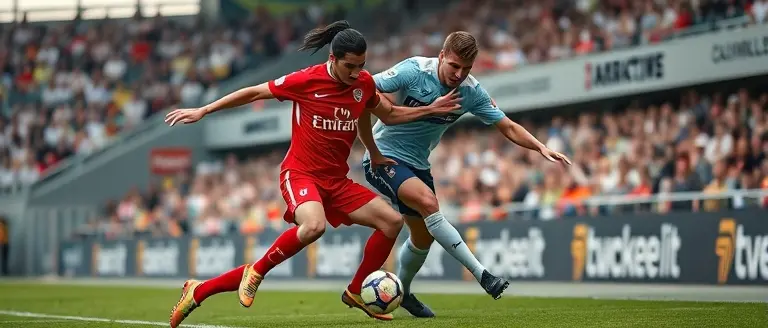
The clash between Angers and Paris-SG at the Stade Raymond-Kopa will likely be decided by the tactical friction occurring in the wide areas. As the league leaders, PSG are expected to dominate possession, forcing the hosts into a compact, low-block defensive shell. To break this down, the visitors will rely on vertical interchanges between their wingers and overlapping fullbacks. The primary challenge for Angers will be maintaining their defensive discipline without ceding too much ground to the explosive pace of the Parisian attack.
Neutralizing the Wide Threat
The battle on the flanks involves specific individual duels that could shift the momentum of the angers – psg fixture. Tactical analysis suggests the following areas will be critical:
- Overload Dynamics: PSG utilizes high-pressing sequences to trap opponents near the touchline. If the Parisian fullbacks push high, Angers must rely on their wing-backs to track back deep, effectively forming a back five to prevent numerical superiority in the wide channels.
- Transition Management: The transition game is where Angers hopes to find relief. By targeting the space vacated by advancing PSG defenders, the hosts can initiate rapid counter-attacks. Keeping the pitch wide in possession will be essential for the hosts to stretch the defensive shape of the league leaders.
- Midfield Support: Much of the outcome hinges on whether the central midfielders, such as Fabian Ruiz, can dictate the tempo and provide diagonal switches of play. By quickly shifting the point of attack, PSG aims to catch the Angers defensive line as they rotate toward the ball, creating isolation opportunities for their agile wingers.
Ultimately, the match becomes a game of chess: can the home side maintain a rigid defensive structure against constant horizontal stretching, or will the technical superiority of the visitors prove too much to contain? Expect both managers to make mid-match adjustments to the width of their formations as they look to exploit fatigue in the second half.
Player Spotlight: Tactical Analysis of Fabian Ruiz and Prosper Peter

As the angers – psg matchup approaches, the tactical battleground will be defined by the influence of two key individuals: Paris Saint-Germain’s midfield metronome, Fabian Ruiz, and the defensive engine of Angers SCO, Prosper Peter. Their respective roles serve as the pivot point for how each side attempts to dictate the tempo at the Stade Raymond-Kopa.
The Midfield Architect: Fabian Ruiz
Fabian Ruiz remains the heartbeat of the paris-sg offensive structure. His ability to maintain ball retention under pressure is vital for PSG’s high-pressing system. Against a mid-table side like Angers, Ruiz is expected to drop deep to collect the ball from the center-backs, initiating vertical transitions that bypass the initial defensive lines.
Fans and analysts should track the following metrics for Ruiz:
- Progressive Passes: His ability to find attackers in the final third.
- Pass Completion Rate: A key indicator of PSG’s control over the rhythm of the game.
- Defensive Recovery: Ruiz’s role in neutralizing counter-attacks before they reach the Parisian backline.
The Defensive Disruptor: Prosper Peter
Conversely, Prosper Peter serves as the primary tactical disruptor for Angers. Tasked with shielding the back four, Peter is expected to operate in a tight defensive pivot, aiming to stifle the creative output of PSG’s midfield trio. His physical presence will be tested as he attempts to force turnovers in the transition phase.
Key indicators of Peter’s performance during the angers – paris-sg encounter include:
- Tackles and Interceptions: Essential for stalling PSG’s momentum.
- Duels Won: His effectiveness in individual battles against high-caliber opponents.
- Positional Discipline: How well he holds his lane to prevent Ruiz from finding pocket space between the midfield and defense.
While PSG enters the match as the heavy favorite, the duel between these two players represents the classic ‘league leader vs. underdog’ tactical challenge. If Peter can limit the service to PSG’s forwards, Angers may find the breathing room necessary to execute their own counter-attacking strategy.
Post-Match Performance Metrics: Predicting vs. Reality

Analyzing the angers – psg clash requires looking beyond final scorelines to truly understand tactical effectiveness. When evaluating players like Fabian Ruiz or Prosper Peter, the gap between pre-match projections and actual performance often reveals the efficacy of a manager’s setup. To derive meaningful insights from the angers – paris-sg encounter, observers should utilize an analytical framework that prioritizes efficiency and defensive contribution over superficial box-score stats like goals or assists.
Decoding Statistical Heat Maps and Defensive Impact
The “true” performance of a player is rarely captured by a simple goal contribution. Instead, tactical success is hidden in spatial data and transition metrics. When reviewing the data, focus on the following:
- Passing Accuracy Under Pressure: Analyze whether Ruiz maintained his expected completion percentage when facing high-pressing defensive blocks from Angers.
- Heat Map Discrepancies: Compare the pre-match tactical “zones of influence” against where the player actually spent their time. A wider drift or more restricted movement can highlight tactical shifts forced by the opposition’s defensive shape.
- Defensive Actions and Interceptions: For players like Peter, evaluate the success of defensive interventions in the final third. High-quality metrics consider not just volume, but the specific danger-zone location of each recovery.
By cross-referencing these metrics with pre-match analytical projections, you can determine whether a player fulfilled their specific tactical role. Did Fabian Ruiz act as the pivot the scouting reports predicted, or was he forced into a more defensive role due to PSG’s lineup rotations? Understanding this distinction separates casual observation from professional-grade tactical analysis. Use these indicators to assess whether the angers – psg matchup unfolded according to the strategic blueprint, or if mid-table tactical discipline successfully neutralized the league leaders’ offensive flow.
Master the Tactical Narrative of the Game
Analyzing a match of this magnitude involves more than just watching the ball; it requires a sophisticated eye for defensive shifting, spatial awareness, and momentum transitions. As we break down the tactical battle between Angers and PSG, it becomes clear that the difference between a casual fan and an expert analyst is the ability to maintain consistent focus throughout the entire 90 minutes. Just as a professional tactical analyst needs to maintain razor-sharp focus to deconstruct the defensive strategies of Angers, you can leverage neuroscience-based tools to optimize your own cognitive clarity during the match.
Integrating The Brain Song into your pre-game routine acts as a cognitive accelerator, designed specifically for data-driven enthusiasts who demand professional-level precision. By eliminating mental fog and enhancing your capacity for information retention, this product ensures you never miss a pivotal tactical adjustment or a subtle shift in the game’s flow. It is the essential productivity tool for those who want to process complex match statistics with unparalleled speed and accuracy.
Elevate your viewing experience and transform how you interpret the beautiful game. The data is waiting, and with the right mental framework, you will see the patterns that others overlook. Take control of your analytical performance today and experience the game with newfound clarity.
 Unlock your maximum analytical potential during the match by integrating The Brain Song into your pre-game routine.Yes, I Want This Now!