

The market landscape shifted violently on April 23, 2026, as Intel (INTC) shattered expectations with a Q1 earnings report that has sent shockwaves through Wall Street. A 25% surge in the INTC stock price isn’t just a reaction to better-than-expected numbers; it is a profound market re-evaluation of the company’s pivot toward AI-integrated hardware and its aggressive foundry strategy. For years, the narrative surrounding Intel was one of stagnation against agile competitors like AMD and ARM, but this quarter serves as a definitive inflection point that challenges the bearish status quo.
As retail skeptics grapple with this sudden momentum shift, institutional heavyweights are aggressively accumulating, sensing that the legacy giant has finally successfully retooled for the AI era. For the serious investor, the burning question is no longer whether Intel can survive, but whether this valuation is the start of a multi-year growth cycle or a localized peak. Analyzing the sustainability of these gains requires more than just skimming financial headlines; it demands deep focus and the ability to process complex, high-stakes market signals in real time.
The Q1 2026 Intel Breakout: Decoding the 25% Rally

The market reaction to Intel’s Q1 2026 financial results has effectively dismantled the narrative of a stagnant legacy chipmaker, marking a definitive inflection point for the company. With an impressive revenue print of $13.6 billion, Intel not only shattered Wall Street’s conservative projections but also solidified its strategic pivot toward AI-integrated hardware. This massive earnings beat triggered a 20-25% surge in the INTC stock price during extended trading, a move that institutional investors view as a validation of the company’s restructuring efforts. Before this surge, the stock had already posted a notable 81% year-to-date rebound, suggesting that the recent price action is not a momentary flash, but rather a reflection of renewed confidence in management’s execution.
Decoding the Drivers of Institutional Accumulation
The surge in INTC earnings success is largely tied to a shift in how the market values the company’s long-term infrastructure. Several factors have converged to drive this breakout:
- AI-Focused CPU Strategy: Intel’s ability to weave AI capabilities directly into its latest processor architecture has successfully countered competitive pressure from AMD and ARM, regaining market share in high-growth segments.
- Foundry Maturity: The consistent progress in Intel foundry operations has moved from a speculative concept to a tangible revenue driver, attracting investors who previously viewed the business as a pure-play product company.
- Earnings Consistency: By beating EPS expectations, the firm has signaled a return to operational efficiency, which is essential for sustaining valuations at these near-record highs.
For investors monitoring the INTC stock price, this rally represents a fundamental shift in sentiment. The divergence between retail skepticism regarding Intel’s legacy status and the aggressive institutional accumulation seen in late April confirms that major players are pricing in a successful turnaround. As the company continues to scale its manufacturing capabilities, the primary question for shareholders is no longer about survival, but about whether this valuation can hold as the firm integrates deeper into the global AI supply chain.
Intel vs. The Field: Benchmarking Against AMD and ARM
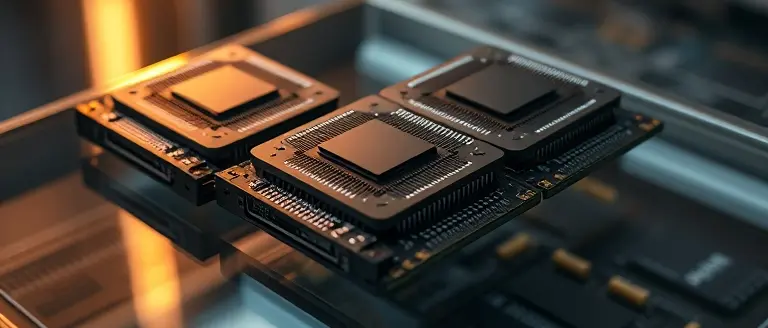
The Q1 2026 earnings beat has fundamentally altered the competitive landscape for Intel, effectively silencing critics who argued that the legacy giant had lost its edge to AMD and ARM-based architectures. As of April 2026, Intel is demonstrating a decisive turnaround, particularly in the data center sector, where its latest AI-integrated CPU architecture is finally delivering the performance-per-watt metrics required to challenge the dominance of AMD’s EPYC line. By optimizing power efficiency and integrating dedicated AI acceleration directly onto the silicon, Intel has successfully reduced the “TCO gap”—the total cost of ownership—that had previously driven hyperscalers toward competitors.
Competitive Performance Drivers
The shift in market sentiment reflects a technical realization that Intel’s strategic pivot is working. Key factors include:
- Performance-Per-Watt Gains: Intel’s recent architectural refinements have narrowed the gap with ARM-based chips, offering superior legacy software compatibility while matching the energy efficiency benchmarks that previously favored RISC-based designs.
- Data Center Market Share: Evidence suggests that Intel is clawing back cloud infrastructure share, as enterprise clients prioritize platforms that seamlessly support existing software stacks while providing high-performance AI inference capabilities.
- Foundry Synergies: Unlike its fabless competitors, Intel’s vertical integration allows for faster iteration and customized chip designs, an advantage that has become increasingly critical as AI hardware demand fluctuates.
While AMD remains a formidable rival with its robust chiplet strategy, the current INTC stock price action signals that institutional investors now view Intel as a resurgent contender rather than a declining legacy firm. By successfully deploying its roadmap ahead of previous expectations, Intel is proving that it can compete on both innovation and scalability. For investors monitoring the INTC earnings trajectory, the takeaway is clear: the company is no longer just defending its territory but is actively regaining lost ground in the high-growth AI hardware market.
The Foundry Pivot: Why Intel’s Manufacturing is the Real Long-Term Engine

While the immediate surge in INTC stock price following the Q1 2026 earnings report was largely fueled by AI-focused CPU demand, the core of Intel’s long-term value proposition lies in its aggressive transformation into a world-class foundry. By evolving from a vertically integrated manufacturer into a premier foundry service provider, Intel is effectively decoupling its revenue from the volatile consumer hardware cycle. This strategic pivot allows the company to capitalize on the global demand for advanced silicon, positioning itself as a vital manufacturing partner for third-party designers who previously relied exclusively on Asian-based fabrication facilities.
Scaling Through Strategic Manufacturing
The shift toward foundry operations represents a fundamental change in Intel’s business model, turning capital-intensive fabrication plants into profit-generating assets. Evidence suggests that this diversification is the key to stabilizing Intel earnings over the next three to five years. By opening its doors to external clients, Intel is building a multi-layered revenue stream that hedges against downturns in the PC market. Key pillars of this manufacturing strategy include:
- Capacity Expansion: Massive investment in state-of-the-art lithography processes to meet the complex requirements of high-performance AI chips.
- Geopolitical Resilience: Providing a secure, US-based supply chain alternative that is increasingly attractive to government and enterprise contractors.
- Operational Efficiency: Utilizing the economies of scale from its internal product demand to drive down per-unit manufacturing costs for external customers.
Analysts monitoring the current INTC trajectory emphasize that the foundry business is no longer a speculative play; it is an integrated engine of growth. As the company continues to demonstrate improvements in yield and output, institutional investors are increasingly viewing Intel’s manufacturing prowess as a durable moat. This transition is essential for sustaining the valuation levels achieved this quarter, ensuring that the company remains a fundamental player in the global semiconductor ecosystem rather than just another hardware vendor.
Investment Strategy: Navigating the Post-Earnings Landscape

For investors who missed the initial 20-25% breakout in INTC stock price following the Q1 2026 earnings report, the immediate challenge is distinguishing between a short-term momentum trade and a fundamental shift in value. The current rally, which pushed shares to near-record highs, reflects a market finally pricing in the successful execution of Intel’s AI-focused CPU roadmap and foundry expansion. Moving forward, the strategy must pivot from reactive trading to monitoring long-term baseline growth. Investors should be wary of entering positions based solely on the “fear of missing out” (FOMO) following such a vertical move; instead, look for healthy consolidation patterns that suggest institutional support at these elevated levels.
Assessing the AI-Driven Inflection Point
The intel earnings report serves as a critical indicator of structural recovery. Unlike previous quarters, the revenue beat to $13.6 billion confirms that Intel’s hardware is gaining tangible traction in the AI data center market. To navigate this landscape, investors should monitor these specific performance drivers:
- Foundry Utilization Rates: As Intel’s foundry business scales, watch for incremental improvements in margins as a key sign of sustainable long-term profitability.
- AI CPU Market Share: Track competitive benchmarks against AMD and ARM; if Intel sustains its current technological edge, the stock’s valuation may justify a higher multiple than the historical “legacy” chipmaker discount.
- Volatility Management: Given the sharp 81% year-to-date rebound, expect heightened volatility. Utilize dollar-cost averaging rather than full-position entry to mitigate the risk of a potential pullback as the market digests these gains.
Ultimately, the divergence between retail skepticism and institutional accumulation suggests that Intel stock is undergoing a fundamental re-rating. While swing traders might focus on technical resistance levels, long-term investors should treat this quarter as the new floor. Focus your due diligence on sustained demand signals for AI hardware, as these will be the primary catalysts dictating the next twelve months of price action for INTC.
Mastering the Market: Your Competitive Edge
Intel’s recent earnings surprise proves that institutional accumulation can rapidly dismantle outdated narratives. However, as the market digests these record-breaking figures, the ability to synthesize data on foundry potential and competitive performance against ARM and AMD becomes your primary differentiator. Navigating this volatility isn’t just about identifying trends; it is about maintaining the cognitive clarity to execute your strategy when others are lost in the noise.
While the data provides the ‘what,’ maintaining the deep focus required to analyze these complex pivots necessitates your own internal ‘foundry’ to be firing at peak capacity. To stay ahead of the next market shift, you must treat your own mental bandwidth as your most valuable asset. The Brain Song is designed specifically for high-performance finance professionals who need to eliminate mental fog and sharpen their analytical focus during high-stakes trading sessions.
By integrating this specialized neuroscience-based routine, you provide your mind with the support necessary to process complex information, ensuring you remain as sharp as the market requires. Do not let cognitive fatigue be the reason you miss the next major inflection point in the semiconductor sector.
 Optimize your cognitive performance for the next market shift by integrating this 12-minute daily neuroscience-based routine into your trading morning.Yes, I Want This Now!