

The semiconductor sector is experiencing a tectonic shift, one that has turned Intel stock into the focal point of a historic market renaissance. Following a Q1 2026 earnings report that shattered expectations and propelled the stock to heights not seen since the turn of the millennium, investors are scrambling to decipher if this is a temporary AI-fueled rally or the beginning of a sustained structural revaluation. Yet, the story is far from one-sided. As Intel’s resurgence captures headlines, AMD stock continues to trade at record highs, forcing a critical divergence in the investment thesis that defines the current semiconductor arms race.
For the astute investor, the challenge lies in separating the noise of the AI-driven CPU demand cycle from the fundamental realities of supply constraints and long-term market share potential. While the ‘rising tide’ narrative has certainly benefited the industry, identifying whether to back the legacy turnaround of Intel or the aggressive growth trajectory of AMD is the most pressing question of the quarter. Navigating this landscape requires more than just reacting to price action; it demands a deep-dive, high-stakes analysis of infrastructure capability versus hype-cycle momentum.
The Intel Renaissance: Decoding the Q1 2026 Earnings Surge

The April 24, 2026, market session marked a historic inflection point for Intel stock, as the company shattered resistance levels not seen since the turn of the millennium. Following a stellar Q1 earnings report that exceeded even the most optimistic analyst projections, Intel shares surged approximately 25% in a single day. This rally is far more than a technical breakout; it serves as a validation of the company’s multi-year restructuring efforts and its aggressive pivot toward meeting the explosive AI-driven CPU demand. By delivering a strong Q2 outlook and demonstrating clear execution in its foundry and chip design divisions, Intel has successfully shifted the narrative from a legacy struggle to a genuine renaissance.
Why This Surge Signals a Structural Pivot
Unlike speculative rallies driven by market sentiment alone, Intel’s recent performance is anchored in tangible operational success. Evidence suggests that enterprise adoption of high-performance computing to power agentic AI workloads is creating a sustained cycle of demand that plays directly into Intel’s manufacturing strengths. This “halo effect” has not only bolstered Intel but has also propelled AMD stock to new record highs, as investors increasingly view the entire semiconductor sector through a lens of systemic growth.
Key factors driving this fundamental shift include:
- Supply Chain Efficiency: Improved yield rates in advanced nodes have allowed Intel to better satisfy the insatiable appetite for data center silicon.
- AI Integration: The integration of AI acceleration directly into consumer and enterprise CPUs has stabilized margins and improved long-term revenue visibility.
- Analyst Reassessment: Notable upgrades, including Evercore ISI’s shift to an ‘outperform’ rating, reflect a broader consensus that Intel is no longer trailing, but is now a necessary component of the global AI infrastructure build-out.
While both Intel and AMD are currently benefiting from this rising tide, the divergence in their growth paths remains significant. AMD continues to leverage its agile, fabless growth model to reach all-time highs near $346, while Intel’s resurgence represents a massive turnaround for a vertically integrated giant. Investors should note that while the AMD stock price reflects pure-play growth, Intel’s value proposition currently centers on its massive scale and its ability to supply the foundational architecture for next-generation computing.
The Halo Effect: Why AMD and Intel are Rising in Tandem
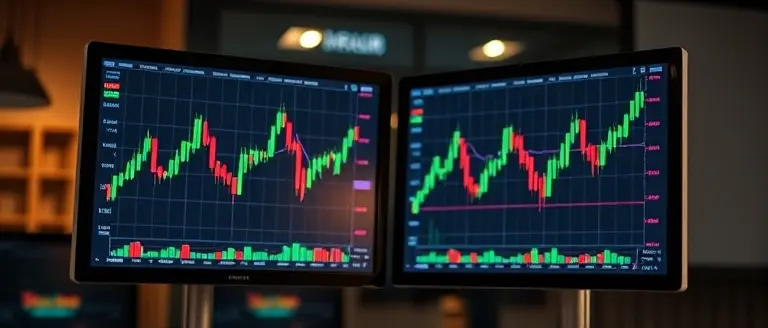
The semiconductor industry is currently witnessing a rare phenomenon where long-standing rivals are benefiting simultaneously from a singular catalyst: the surge in AI-driven CPU demand. Following Intel’s (INTC) stellar Q1 2026 earnings report on April 24, which triggered a 25% rally in Intel stock, the market experienced a profound “halo effect.” Investors interpreted Intel’s capacity to exceed guidance not merely as a company-specific turnaround, but as definitive proof of a massive, sector-wide appetite for high-performance computing hardware. This shift in sentiment directly propelled AMD stock to record highs near $346, representing a 13% single-day jump as the market recalibrated its expectations for the entire chip ecosystem.
Investor Psychology and Sector-Wide Momentum
The synergy between Intel and AMD in the current market environment stems from a fundamental reassessment of how artificial intelligence integrates with legacy infrastructure. By successfully demonstrating that traditional CPUs remain essential to the AI stack—specifically for agentic workloads—Intel validated the long-term roadmap for both competitors. Key drivers for this synchronized rally include:
- Validation of Market Health: Intel’s ability to navigate supply constraints while reporting record-setting momentum acted as a stress test that the broader industry successfully passed.
- Sector-Wide Bullishness: Analysts at firms like Evercore ISI have pivoted toward a more optimistic stance, viewing Intel’s beat as a macro-indicator that growth is no longer limited to niche AI players.
- Competitive Re-rating: Because Intel and AMD dominate the CPU market, institutional investors now view both firms as “must-own” assets to capture the ongoing AI infrastructure build-out.
While Intel is being celebrated for its aggressive restructuring and successful execution, AMD continues to enjoy the reflected glory of this surge. Investors are increasingly concluding that the sheer scale of global AI adoption is large enough to sustain robust growth for both giants, provided they can continue to manage complex supply chain logistics effectively. This transition from “either/or” competition to a “rising tide” narrative has turned both tickers into bellwethers for the resilience of the US tech sector.
Navigating Supply Constraints in the AI Hardware Boom

As the semiconductor industry navigates an unprecedented surge in AI-driven CPU demand, supply chain bottlenecks have emerged as a critical variable for investors tracking intel stock and amd stock price. Analysts at Morgan Stanley have highlighted that while the current rally reflects massive market optimism, the physical reality of chip manufacturing presents a complex hurdle. The divergence between Intel’s integrated device manufacturer (IDM) model and AMD’s fabless strategy creates two distinct risk-reward profiles for stakeholders evaluating the current market highs.
Intel’s renaissance is fundamentally anchored in its aggressive expansion of internal manufacturing capacity. By maintaining control over its own foundries, Intel aims to mitigate the global supply constraints that have historically throttled the semiconductor sector. This “in-house” advantage allows the company to prioritize its own production schedules, potentially capturing a larger share of the market if supply chain volatility increases. However, this strategy requires immense capital expenditure, which investors must weigh against the company’s need to maintain its newfound momentum.
Conversely, AMD operates on a fabless model, relying heavily on strategic partnerships with third-party foundries. While this allows for greater agility and lower fixed asset costs, it leaves the company more vulnerable to the capacity limitations of its manufacturing partners. As amd stock hits record levels, market participants must consider whether AMD can secure sufficient wafer allotments to meet the explosive requirement for high-performance processors.
Key considerations for investors include:
- Manufacturing Autonomy: Intel’s IDM approach provides a hedge against external foundry bottlenecks but introduces higher operational complexity and cost.
- Agility vs. Control: AMD’s fabless model offers superior margins and design flexibility, provided the global supply chain remains stable enough to meet its aggressive growth targets.
- Capacity Utilization: The ability to scale production in lockstep with the AI hype cycle will likely determine which company sustains its valuation, as supply-demand imbalances could penalize those unable to deliver inventory to customers.
Ultimately, the sector-wide health evidenced by the recent earnings reports suggests that both firms are currently benefiting from a “rising tide” of AI infrastructure investment. Whether this rally holds depends on how effectively these companies navigate the delicate balance between surging demand and the physical constraints of semiconductor fabrication.
Risk vs. Reward: Should You Enter at These Record Price Levels?

The recent market surge, which saw intel stock climb roughly 25% and amd stock price reach record highs, has left many investors questioning whether the current valuation reflects sustainable growth or a temporary sentiment-driven bubble. While the narrative of “a rising tide lifts all boats” is compelling, institutional analysis suggests a nuanced divergence between the two firms. Intel is currently in the midst of a high-stakes renaissance, successfully pivoting its foundry strategy to meet AI-driven CPU demand, while AMD remains on an established growth trajectory as a primary beneficiary of data center expansion. Investors must weigh the reward of sustained infrastructure spending against the inherent risk of entering these equities during a vertical breakout.
Navigating Volatility and Valuation
When evaluating entry points in this heated semiconductor climate, retail investors should consider the following framework to mitigate downside exposure:
- Supply Chain Resilience: Monitor updates from Morgan Stanley regarding semiconductor supply constraints. As demand for AI-optimized silicon surges, companies with robust internal manufacturing—like Intel—may eventually see margin expansion that fabless competitors could struggle to match if capacity tightens.
- The “AI Agentic” Multiplier: Analyze how upcoming AI agentic workloads will specifically impact CPU requirements. Unlike standard cloud computing, these next-generation workloads demand consistent, high-performance compute cycles that favor the current product roadmaps of both Intel and AMD.
- Technical Over-extension: With AMD shares trading near $346, the stock has moved into a technical stratosphere. Consider scaling into positions rather than deploying capital at once, as historical market rallies of this velocity often experience short-term mean reversion as momentum traders lock in gains.
Ultimately, the decision to enter depends on your investment horizon. If you are banking on the multi-year cycle of AI infrastructure, the current “halo effect” provides a compelling entry for those who view these companies as fundamental pillars of the modern tech stack. However, expect significant volatility; entering at an all-time high requires the conviction that the current AI-driven CPU demand is a secular shift in global productivity, not just a cyclical peak.
Mastering the Semiconductor Wave
The recent surge in Intel stock, coupled with AMD’s record-breaking momentum, signals that we are far past the point of simple sector-wide hype. As the AI-driven CPU demand continues to reshape the landscape, the real investment winners will be those who can look beyond the ticker tapes and identify which company is truly building a sustainable foundation for the next decade of computing. While the sector rally is compelling, distinguishing between the renaissance of a legacy giant and the aggressive growth of an established player requires rigorous, sustained, and crystal-clear analysis.
Navigating this volatility demands more than just capital; it requires a level of cognitive sharpness that can keep pace with rapidly shifting supply chain data and complex AI infrastructure metrics. In an era where information overload leads to decision fatigue, your ability to maintain focus is your greatest competitive advantage. This is where The Brain Song becomes an essential tool for the modern investor. By sharpening your mental acuity, it acts as an analytical accelerator, allowing you to process deep-dive research with the precision needed to capitalize on these specific semiconductor market shifts.
Don’t let mental fog cloud your judgment during this high-stakes market cycle. Elevate your analytical capacity, sustain your focus through hours of complex data evaluation, and approach your portfolio with the clarity required for high-conviction decision-making.  Optimize your analytical focus for the next market cycle—discover how to sustain peak cognitive performance during your financial research.Yes, I Want to Unlock My Analytical Focus Now!