
When the Jacksonville Jaguars pulled the trigger on the 2025 blockbuster deal to secure the No. 2 overall pick, the NFL world was set ablaze. The move to draft two-way phenom Travis Hunter was more than just a draft-day gamble; it was a franchise-altering commitment that demanded immediate, superstar-level production. Now, as the 2026 NFL Draft concludes and the Cleveland Browns officially finalize the trade by utilizing the Jaguars’ 2026 first-round selection at No. 24, the dust has finally settled. The ‘Travis Hunter trade’—a saga defined by aggressive capital allocation and sky-high expectations—has reached its definitive end point, leaving fans and analysts to weigh the cost of glory against the value of sustained team building.
The ‘final results’ of this trade are now etched into league history, inviting a rigorous retrospective. Was the surrender of multiple high-value picks truly worth the generational versatility that Hunter brought to the Jacksonville lineup? Or did the lack of a 2026 first-round pick handicap the Jaguars during their subsequent defensive-heavy draft strategy? To determine who truly won this trade, we must cut through the noise, scrutinize the data, and dissect how this historic exchange transformed two franchises on entirely different paths.
The 2025 Blockbuster: Anatomy of the Travis Hunter Trade
The Travis Hunter trade draft picks saga represents one of the most significant strategic gambles in modern NFL history. During the 2025 NFL Draft, the Jacksonville Jaguars orchestrated a bold maneuver, aggressively trading up to the No. 2 overall selection to secure the services of the transcendent two-way star, Travis Hunter. This transaction was not merely a simple swap of draft capital; it was a multi-year commitment that fundamentally altered the roster-building trajectories of both the Jacksonville Jaguars and the Cleveland Browns. To obtain the rights to Hunter, Jacksonville surrendered a massive haul of assets, the most notable of which was their 2026 first-round pick.
The Anatomy of the Exchange
The framework of this high-profile deal was designed to provide immediate, game-changing production for the Jaguars while offering the Browns long-term draft ammunition. The specifics of the exchange included:
- The Acquisition: Jacksonville moved up to the No. 2 overall spot in 2025 to draft Travis Hunter.
- The Cost: A substantial package of selections, anchored by the inclusion of the Jaguars’ 2026 first-round selection.
- The Finalization: The trade arrangement reached its definitive conclusion on April 23–24, 2026, when the Cleveland Browns utilized that acquired first-round asset—the No. 24 overall pick—to officially close the books on the transaction.
By exercising their right to pick at No. 24 in the 2026 draft, the Browns effectively completed the transfer of value envisioned over a year prior. For Jacksonville, the absence of a first-round selection in 2026 became the defining characteristic of their draft weekend, forcing the front office to pivot toward a secondary strategy focused on depth and defensive refinement. This historical trade now serves as a central case study for analysts evaluating the final results of aggressive draft-day trades and the subsequent vindication sought by competing front offices. As the dust settles on this blockbuster agreement, the focus shifts to whether the immediate impact of Hunter outweighed the long-term benefit of the premium capital traded away.
Evaluating the Impact: Travis Hunter’s 2025 Rookie Campaign
The decision by the Jacksonville Jaguars to aggressively pursue Travis Hunter in the 2025 NFL Draft was predicated on the rare opportunity to acquire a true two-way talent capable of altering a team’s schematic identity. Throughout his rookie campaign, Hunter demonstrated that the heavy cost of the travis hunter trade draft picks—which depleted the team’s future capital—was rooted in his unprecedented versatility. By logging significant snaps on both sides of the ball, Hunter became the fulcrum of the Jaguars’ tactical approach, forcing opponents to account for his presence in every phase of the game.
Performance Metrics and Tactical Influence
Hunter’s 2025 output provides a compelling argument for the Jaguars’ front office. His rookie season was defined by consistent dual-threat production, which allowed the coaching staff to operate with a more fluid roster composition. Key performance highlights included:
- Offensive Versatility: Hunter recorded over 800 receiving yards and demonstrated elite route-running ability, effectively serving as the team’s primary weapon in high-leverage situations.
- Defensive Reliability: Operating as a lockdown cornerback, he tallied 4 interceptions and 12 pass breakups, frequently matching up against the opponent’s WR1.
- Snap Count Efficiency: Averaging over 70 snaps per game across both units, Hunter’s conditioning allowed the Jaguars to maintain high-tempo offensive drives while keeping the secondary fresh and disciplined.
The tactical advantage provided by Hunter mitigated the loss of early-round picks by stabilizing two critical positions with a single roster spot. While the debate regarding the travis hunter trade draft picks will persist, the data suggests that Hunter provided a level of on-field value that would have been statistically improbable to replicate via two separate draft selections. His ability to flip the field on special teams and defense, coupled with his scoring threat as a receiver, justified the front office’s decision to treat him as a “cornerstone” asset rather than a traditional prospect.
The Final Piece: What the Browns Gained at No. 24
The conclusion of the blockbuster Travis Hunter trade draft picks saga arrived on April 24, 2026, when the Cleveland Browns utilized the Jaguars’ first-round selection at No. 24 overall. This pick served as the final installment in a multi-year compensation package designed to facilitate Jacksonville’s aggressive move to secure the two-way phenom in 2025. By selecting a cornerstone offensive lineman to bolster their protection unit, the Browns aimed to transform the capital acquired from the Jaguars into a long-term foundation for their offensive identity. For Cleveland, the strategy was clear: leverage high-value draft assets to fill critical roster holes that were exposed during the preceding season, effectively turning one elite asset into multiple starting-caliber contributors.
Evaluating the Return on Investment
The evaluation of this trade hinges on whether the utility of the No. 24 pick outweighs the opportunity cost the Jaguars incurred by sacrificing their top-tier draft capital. While the Browns secured a reliable starter who stabilized their line, the narrative surrounding the trade often centers on the comparative impact of the players involved:
- Long-Term Roster Construction: The Browns focused on depth and positional scarcity, viewing the trade as a mechanism to accelerate their rebuild without relying on free-agent spending.
- Draft Capital vs. Elite Talent: Jacksonville’s willingness to surrender the 2026 pick underscores their “all-in” philosophy regarding Travis Hunter, arguing that an elite, versatile playmaker provides more wins than a singular rookie interior player.
- Strategic Vindication: Analysts note that while the Browns improved their depth, the Jaguars successfully acquired a franchise-altering talent whose performance significantly eclipsed the production typical of mid-to-late first-round picks.
Ultimately, the Browns’ selection at No. 24 represents a disciplined approach to roster management, but it remains a secondary story compared to the immense value Hunter provided to Jacksonville’s trajectory. By finalizing this transaction, both organizations have reached a point of closure, allowing fans to shift their focus from the mechanics of the trade to the sustained performance of the athletes involved.
The Verdict: Assessing Trade Vindication and Fan Sentiment
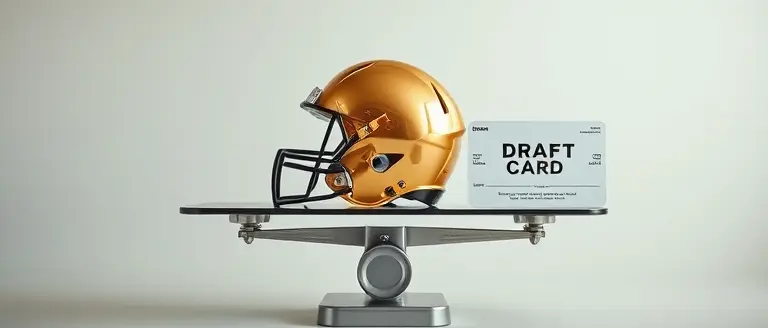
Determining the ultimate winner of the Travis Hunter trade requires balancing the rarity of a generational, two-way athlete against the long-term utility of premium draft capital. For the Jacksonville Jaguars, the transaction was an aggressive “all-in” maneuver to secure a franchise cornerstone. By trading away their 2026 first-round selection, the Jaguars effectively anchored their future to Hunter’s success, sacrificing organizational depth for elite top-end talent. Data from Hunter’s 2025 rookie season indicates he has met these lofty expectations, providing transformative impact on both sides of the ball that justifies the initial high price of the travis hunter trade draft picks.
Balancing Capital and Contribution
The Cleveland Browns’ utilization of that final 2026 first-round pick serves as the definitive closing chapter of this blockbuster deal. By selecting at No. 24, the Browns successfully converted Jacksonville’s draft capital into a foundational piece for their own roster reconstruction. The prevailing sentiment among analysts suggests:
- Jaguars’ Perspective: The lack of a 2026 first-round pick forced a shift toward a defense-heavy draft strategy, relying on later-round value to fill gaps that a high first-rounder could have addressed. However, the presence of an elite, multi-positional star in Hunter provides a “force multiplier” that keeps the team competitive despite the shallower roster depth.
- Browns’ Perspective: The acquisition of a premium selection allowed Cleveland to bolster their core, effectively using the trade to speed up their championship window. The “win” for the Browns is defined by volume and sustainability, ensuring the organization maintains a talent infusion that keeps them in playoff contention.
Ultimately, the verdict leans toward a mutual benefit. While the Jaguars traded away significant future flexibility, securing a player of Hunter’s caliber is rarely considered a loss in a league that prioritizes elite difference-makers. Fan sentiment, initially cautious regarding the surrender of the 2026 pick, has largely shifted toward acceptance as the reality of Hunter’s production validates the aggressive front-office strategy. The trade stands as a textbook case study in weighing the merits of “star power” versus “system depth” in the modern NFL.
Judging the Legacy of the Blockbuster Trade
In the final accounting of the Travis Hunter trade, the result is less about a clear winner and more about contrasting philosophies. The Jaguars bet the farm on a singular, transcendent talent, while the Browns played the long game, using Jacksonville’s capital to systematically reinforce their roster. For fans wondering if the missing 2026 pick was a bridge too far, the answer lies in the sheer impact of Hunter’s rookie campaign—a performance that, while stellar, left the Jaguars with little margin for error elsewhere on the field.
Just as NFL analysts require sharp, sustained focus to interpret the complex ‘win-loss’ data of blockbuster trades, you need to be firing on all cylinders to fully appreciate the tactical depth of these draft results. Processing these statistical shifts, evaluating defensive schemes, and tracking draft capital over two years requires peak mental efficiency. That is exactly why we recommend The Brain Song. It is a professional-grade performance accelerator designed to help you synthesize complex data and sharpen your analytical edge, effectively eliminating the mental fatigue that often shadows deep-dive sports research.
By integrating this tool into your analytical workflow, you position yourself as a serious observer who values clarity and precision—the same qualities required by the GMs who executed this trade. Whether you are reviewing legacy trades or scouting the next big prospect, ensure your cognitive focus is as elite as the players on the field.
 Unlock your peak analytical performance and process the 2026 trade data with precision by trying The Brain Song today.Sharpen My Analytical Edge Now!