
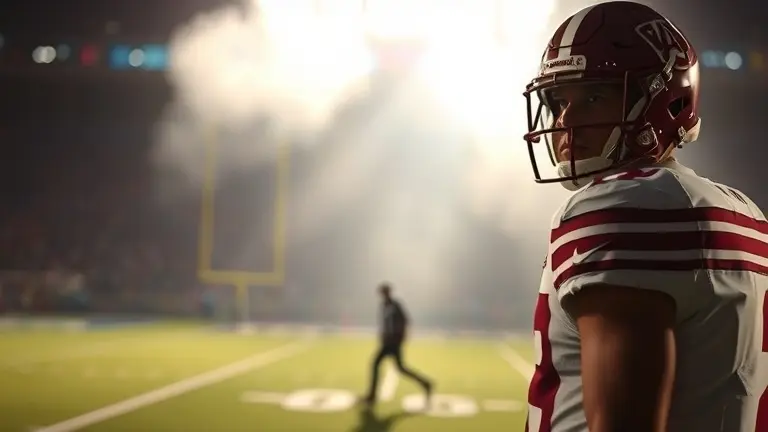
As the clock ticks down on the 2026 NFL Draft, few prospects have commanded as much polarizing discourse as Ty Simpson. With a collegiate body of work that is admittedly slim, the former Alabama signal-caller has become a Rorschach test for scouts and analysts alike. To his detractors, he represents the quintessential ‘project’ quarterback whose lack of extensive game film makes him a risky first-round investment. To his proponents, however, his physical tools and recent public poise in the face of intense scrutiny suggest a player whose ceiling is significantly higher than his statistical résumé indicates.
The debate surrounding Simpson isn’t just about arm talent or pocket mobility; it is about the intangible processing power required to survive at the highest level of professional football. Whether he finds his home in Arizona or elsewhere, the burning question remains: can he bridge the gap between collegiate flash and professional consistency? As we break down the tactical reality of his draft day standing, we must look beyond the physical attributes to the neurological edge that ultimately decides which quarterbacks thrive and which ones fade into the history of draft-day busts.
The Ty Simpson Paradox: Evaluating the 2026 NFL Draft’s Most Polarizing Prospect
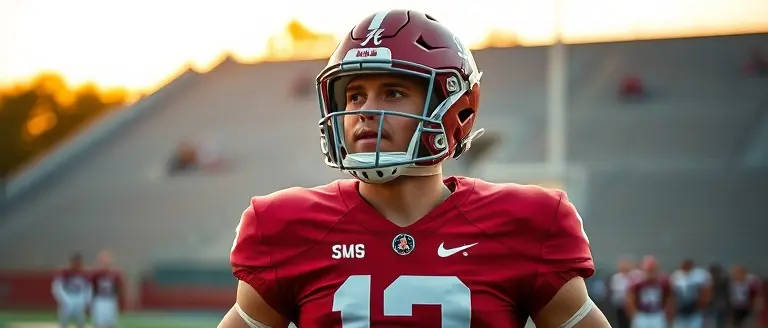
As the 2026 NFL Draft reaches its climax, Ty Simpson stands as the definitive litmus test for modern scouting philosophies. The central tension surrounding the former Alabama standout lies in the “small body of work” debate. While traditionalist analysts, including those at Sporting News, have labeled him a primary bust candidate due to his limited starting experience, front offices are clearly mesmerized by his elite physical tools and high-ceiling mechanics. The paradox is clear: scouts are being asked to bet on potential rather than production, a high-stakes gamble that has divided the league’s decision-makers leading into the first round.
The Scouting Divide: Potential vs. Proven Production
The skepticism surrounding Simpson is rooted in the lack of extensive game tape compared to his peers. However, his supporters—most notably ESPN’s Dan Orlovsky—point to his natural arm talent and high-pressure performance as evidence that he is ready for the professional stage. The core points of contention include:
- Inexperience Factor: Critics argue that without a deep reserve of collegiate starts, Simpson may struggle with the complex defensive coverages he will face in the NFL.
- Physical Upside: Proponents emphasize his “NFL-ready” arm strength and mobility, suggesting these traits are more critical than cumulative collegiate statistics.
- Scheme Fit: Rumored landing spots, such as the Arizona Cardinals at pick No. 28, suggest that teams view him as a developmental project with franchise-QB potential.
Amid this intense scrutiny, Simpson has remained composed, publicly addressing his critics and emphasizing that his faith in Jesus Christ provides the necessary foundation for the rigors of professional football. By framing his confidence as a product of his personal journey rather than just raw talent, Simpson has attempted to silence narratives questioning his psychological readiness. As teams weigh these intangibles against the inherent risks of a short collegiate resume, the final decision on draft night serves as a referendum on how much “raw upside” a front office is willing to bank on in the modern era.
Draft Night Reality: Analyzing the Landing Spot and Scheme Fit

As the 2026 NFL Draft concludes, the selection of Ty Simpson has ignited a firestorm of analytical debate across the league. Whether he landed with a quarterback-needy franchise like the Arizona Cardinals or another organization willing to bet on his immense physical tools, the decision represents a quintessential high-stakes gamble. Front offices choosing Simpson are clearly prioritizing his raw traits—specifically his elite arm talent and pocket presence—over the traditional requirement for a massive, multi-year collegiate statistical resume. By selecting him, these teams have signaled that they value his development ceiling and potential for professional growth in a structured system over the “safe” but lower-upside prospects currently available.
Schematic Synergy and Tactical Fit
The logic behind selecting a prospect with a limited body of work, such as Ty Simpson, often rests on how effectively his skill set integrates into a modern, vertical-passing offense. If the team operates a scheme that emphasizes quick decision-making and play-action efficiency, Simpson’s collegiate experience at Alabama may prove more transferable than critics suggest. Key factors for his immediate success include:
- System Versatility: His ability to execute RPO concepts, which were a staple during his time in the SEC, provides a seamless transition for coordinators looking for immediate versatility.
- Support System: A veteran-heavy locker room and a stable coaching staff are crucial to mitigate the “bust” concerns often cited by draft analysts.
- Developmental Runway: If the drafting team has a bridge quarterback, it creates the ideal environment for Simpson to refine his footwork and timing without the pressure of an immediate start.
Ultimately, the front office is betting that the risk associated with his limited game tape is outweighed by the scarcity of elite quarterback talent in the draft. Whether this selection becomes a franchise-altering move or serves as a cautionary tale will depend entirely on the coaching staff’s ability to translate his “high upside” into consistent production at the professional level.
The ‘Bust’ or ‘Steal’ Debate: Assessing the Limited Collegiate Sample Size

The evaluation of Ty Simpson ahead of the 2026 NFL Draft has created a masterclass in front-office risk management. NFL scouts are currently grappling with the “small sample size” trap, a phenomenon where a prospect’s elite physical traits and pedigree are weighed against a lack of extensive starting experience. Unlike traditional prospects who have three years of game tape, Simpson’s collegiate career at Alabama is defined by sporadic opportunities rather than consistent exposure to complex defensive schemes. Critics argue that this limited footage makes him a high-risk “bust” candidate, as there is insufficient evidence to determine how he will process sophisticated NFL coverages or remain composed under high-leverage pass-rush pressure.
The Scouting Paradox
Front offices are divided on whether Simpson represents a strategic “steal” or a draft-day liability. Supporters, including analysts like Dan Orlovsky, emphasize his natural arm talent and ability to execute in high-pressure environments, suggesting that his limited work is a byproduct of Alabama’s depth chart rather than a deficiency in skill. However, the skepticism remains rooted in the following concerns:
- Processing Speed: With limited starts, observers question if he can transition from college-style reads to the rapid decision-making required in the professional league.
- Pressure Management: How he reacts to elite edge rushers without the luxury of a premier collegiate offensive line protecting him is purely speculative.
- Scheme Fit: His ability to anchor an offense relies on his capacity to command a playbook under the intense scrutiny of a professional coaching staff.
Ultimately, betting on Ty Simpson requires a front office to trust their internal interviews and Pro Day assessments over traditional game-day production. If a team like the Arizona Cardinals selects him in the first round, they are betting on his ceiling—the “upside”—over the safety of a more experienced, yet less physically gifted, prospect. This selection will serve as a bellwether for how modern organizations value raw potential versus proven commodity in the modern NFL.
Long-Term Projections and Developmental Hurdles

Regardless of where Ty Simpson lands in the 2026 NFL Draft, his professional trajectory will be defined by his ability to overcome the limitations of his collegiate resume. Scouts have frequently pointed to his “small body of work” as a primary developmental hurdle. To transition from a polarizing prospect to a reliable NFL starter, Simpson must accelerate his grasp of complex defensive schemes and refine his mechanical consistency. Unlike veteran draftees with extensive starting experience, Simpson faces a steep learning curve in terms of anticipation; he must prove that he can progress through multiple reads at game speed rather than relying on the sheer arm talent that characterized his time at Alabama.
Technical Refinements and Tactical Growth
The transition to the professional level requires significant adjustments in footwork and pocket management. Analysts have noted that while Simpson possesses elite raw potential, his lower-body mechanics remain inconsistent under pressure. Addressing these technical gaps is non-negotiable for long-term success:
- Progression Reading: Developing the “internal clock” required to navigate NFL-caliber pass rushes and identify secondary receivers.
- Footwork Efficiency: Eliminating unnecessary movement during his drop-back to improve accuracy and quicken his release time.
- Scheme Versatility: Demonstrating the mental aptitude to operate within diverse offensive frameworks, whether the team emphasizes pro-style sets or RPO-heavy designs.
Beyond the physical, Simpson’s professional longevity will hinge on his psychological resilience. As a polarizing pick, he will face immediate scrutiny from both media and fanbases. His public emphasis on his faith provides a foundational element of his confidence, yet he must channel that inner stability to tune out the “bust” narratives that follow high-stakes selections. By focusing on film study and deliberate practice, Simpson can convert his high-upside profile into a sustained career, provided his coaching staff offers the patience required to develop his raw skill set into a polished professional standard.
The Cognitive Edge in Professional Greatness
Ultimately, the NFL Draft is an exercise in predicting who can handle the immense weight of professional expectations. Ty Simpson’s transition will hinge not just on his ability to read a defensive shell, but on his cognitive processing speed and mental resilience when the game is on the line. While physical stats grab the headlines, the true separator between a franchise quarterback and a cautionary tale is often the athlete’s ability to maintain peak mental clarity under extreme, high-stakes pressure.
This is where the difference between collegiate potential and professional execution is truly forged. For those looking to master their own performance, cognitive optimization is no longer optional—it is the competitive advantage. Just as top prospects must refine their mental bandwidth to survive the grind of the NFL, individuals aiming for elite success in any field must prioritize neurological training to enhance focus and reaction time.
By integrating sophisticated auditory training, you are not just improving your focus; you are conditioning your mind to perform at a higher frequency when it matters most. It is the perfect tool for those who understand that in the high-pressure world of professional athletics and beyond, your brain is your most valuable asset.
 Unlock your elite processing potential—experience the neuroscience-based auditory training that mirrors the focus required by today’s top NFL prospects.Transform My Mental Performance Now!