
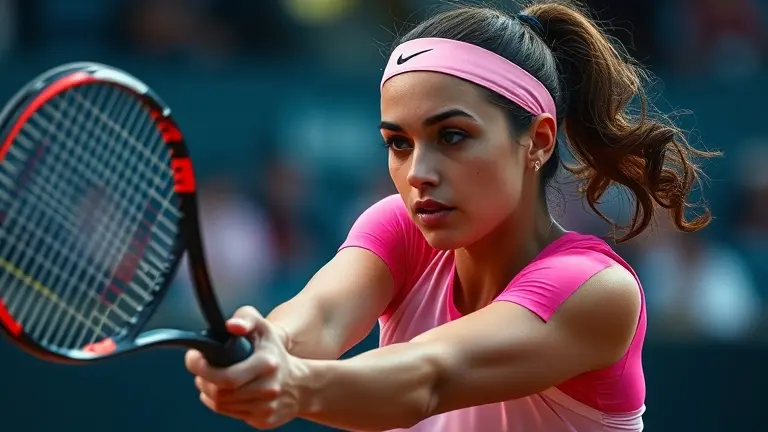
When the dust settled at the 2026 Mutua Madrid Open, the tennis world was buzzing not just about the favorites, but about the strategic tenacity displayed by Panna Udvardy during her high-stakes second-round battle against Mirra Andreeva. In an era where the WTA field is increasingly defined by raw power, Udvardy’s recent performance served as a masterclass in tactical adaptability and court positioning. As enthusiasts and analysts sift through the match statistics, it becomes clear that players like Udvardy, much like rising talents such as Iva Jovic, are challenging the established hierarchy by proving that a sharp, analytical approach to every point is just as lethal as a blistering serve.
However, moving beyond the superficiality of betting odds and final scorelines reveals a deeper, more compelling narrative about the modern professional athlete. The true difference-maker in these grueling three-set encounters is not merely physical endurance, but the ability to maintain unwavering cognitive precision under the immense pressure of a WTA 1000 main draw. To understand how Udvardy navigates these pivotal moments, we must look at the neuroscience behind elite performance and what it takes to keep a focused mind when the stadium lights are brightest.
Panna Udvardy at the 2026 Mutua Madrid Open: The Andreeva Showdown

The second-round clash at the 2026 Mutua Madrid Open between Panna Udvardy and the highly-touted Mirra Andreeva on April 23, 2026, served as a litmus test for the rising depth of the WTA tour. While the match concluded in a straight-sets victory for Andreeva, the tactical narrative was far more nuanced than the final scoreline suggests. For Panna Udvardy, the challenge was twofold: maintaining composure against an aggressive, baseline-heavy opponent and effectively navigating the high-pressure environment of a WTA 1000 event. The significant search interest surrounding this fixture highlights the growing appetite among fans to understand how “dark horse” players—those often ranked outside the top 50—attempt to dismantle the rhythm of established young stars.
Tactical Breakdown and Match Dynamics
In analyzing the gameplay, it is evident that Udvardy attempted to utilize her versatility to disrupt Andreeva’s timing. However, the efficacy of Andreeva’s groundstrokes ultimately neutralized Udvardy’s defensive resilience. Key takeaways from their court performance include:
- Pressure Management: Udvardy faced extreme difficulty in protecting her service games, as Andreeva consistently dictated play with deep, penetrating returns.
- The “Rising Star” Factor: Similar to the buzz surrounding other emerging talents like Iva Jovic, the attention on this match was fueled by the expectation that the WTA field is becoming increasingly competitive, where even top-tier seeds must earn their path through intense rallies.
- Performance Metrics: While Udvardy displayed flashes of tactical intelligence, the statistical disparity in unforced errors proved decisive.
By framing this match as an analytical case study rather than a mere result, we see that Udvardy’s presence in such a high-stakes bracket underscores her evolution on the tour. Even in defeat, the experience gained against a talent of Andreeva’s caliber provides a foundational lesson in modern power-tennis, offering fans a deeper perspective on the grit required to compete at the sport’s highest tier.
Tactical Breakdown: How Udvardy Challenged the Rising Star

The match between Panna Udvardy and Mirra Andreeva at the 2026 Mutua Madrid Open was a masterclass in contrasting styles on clay. While the straight-sets scoreline might suggest a straightforward victory for Andreeva, the actual rallies told a story of a tactical tug-of-war. Udvardy entered the fixture looking to exploit the altitude of Madrid, utilizing heavy topspin to push her opponent deep behind the baseline. By varying her depth, Udvardy effectively neutralized some of Andreeva’s pace, forcing the rising star to generate her own power—a difficult feat when the clay surface slows the ball down significantly.
Strategic Adjustments and Baseline Dynamics
Throughout the match, the strategic gap centered on groundstroke consistency versus raw offensive output. Evidence suggests that Udvardy’s primary objective was to extend points, banking on the high-pressure environment to induce unforced errors from Andreeva. However, the younger Andreeva showcased remarkable maturity, refusing to over-hit and instead opting for high-percentage cross-court patterns.
Key takeaways from their baseline engagement include:
- Spin Management: Udvardy utilized high-arcing forehands to disrupt Andreeva’s rhythm, though this allowed the Russian prodigy to step inside the court and dictate with flatter drives.
- Movement and Court Coverage: On the Madrid clay, the premium was on defensive sliding. Udvardy’s ability to defend the corners was commendable, but she often lacked the final “put-away” shot required to close out prolonged rallies against a player of Andreeva’s caliber.
- Comparison to Emerging Talent: Much like current WTA prospects such as Iva Jovic, who is closely watched for her aggressive court positioning, Udvardy displayed a clear developmental roadmap. Her performance highlighted a need for more frequent net approaches when short balls presented themselves, a tactical layer that separates top-50 contenders from the rest of the tour.
Ultimately, while the result favored the higher-ranked player, the tactical nuances displayed by Udvardy provide a blueprint for how she can challenge established stars. By refining her transition game and continuing to leverage her defensive grit, she remains a player to track throughout the remainder of the European clay swing.
Performance Metrics: Analyzing the Break Points and Unforced Errors
The tactical narrative of the match between Panna Udvardy and Mirra Andreeva at the 2026 Mutua Madrid Open was defined by a stark disparity in efficiency during pivotal high-leverage moments. While Udvardy demonstrated commendable grit in baseline exchanges, her statistical profile during this encounter revealed significant struggles regarding break point conversion and service game stability. Against a rising WTA force like Andreeva, the margin for error remains razor-thin, and data indicates that Udvardy’s failure to consolidate early leads proved to be the primary catalyst for her straight-sets exit.
Breaking Down the Statistical Variance
Analyzing the match metrics provides a clear “data story” regarding the outcome:
- Break Point Conversion: Udvardy struggled to capitalize on opportunities when they arose, failing to sustain pressure on Andreeva’s second serve. This inability to convert key break points allowed the younger star to regain momentum during critical shift changes.
- Unforced Error Ratios: A comparative review shows that Udvardy accumulated a higher frequency of unforced errors in baseline rallies. This indicates that while she was capable of matching the pace of the match, she lacked the defensive consistency required to neutralize Andreeva’s offensive depth.
- Service Game Efficiency: Udvardy’s first-serve percentage dipped significantly under pressure, giving Andreeva clear windows to attack with aggressive return winners.
Ultimately, this statistical output mirrors the challenges faced by talented players like Iva Jovic when stepping up to top-tier WTA 1000 competition. Udvardy’s performance highlights the technical evolution required to bridge the gap between strong challenger-level play and the elite standard of top-seeded opponents. Moving forward, her focus must remain on tightening her defensive posture and improving service placement to avoid these costly lapses during high-stakes tournament rounds.
The Future of the WTA Tour: Udvardy, Andreeva, and Emerging Talent

The 2026 Mutua Madrid Open serves as a microcosm for the rapid evolution of the WTA Tour, where the competitive landscape is shifting toward a blend of seasoned campaigners and high-ceiling youth. The clash between Panna Udvardy and rising sensation Mirra Andreeva highlights this transition. While Andreeva represents the new guard of power tennis, players like Udvardy provide the necessary grit and tactical depth that test these newcomers. Udvardy’s ability to remain competitive against higher-ranked opponents proves that the gap between established tour professionals and the top 20 is narrower than rankings suggest.
The depth of the women’s circuit is further bolstered by a surge of teenage phenoms ready to disrupt the hierarchy. Names like Iva Jovic are increasingly mentioned in scouting circles, symbolizing the relentless pipeline of talent entering the professional ranks. This influx of young competitors is forcing established players to modernize their game, emphasizing higher serve velocity and aggressive return positioning to keep pace with the changing style of play.
Key Factors Shaping the Next Generation:
- Tactical Versatility: Younger players are increasingly comfortable transitioning from defensive baseline play to clinical net approaches, a skill set that defined the recent head-to-head between Udvardy and Andreeva.
- Physical Resilience: The modern tour demands unprecedented physical endurance, forcing players outside the top 50 to invest heavily in specialized conditioning programs to survive the grueling WTA 1000 calendar.
- Mentorship and Exposure: Increased broadcast access and analytical data allow emerging talents to study the movement patterns of veterans, effectively shortening their learning curve on the main tour.
As the 2026 season progresses, the narrative of the tour will likely continue to center on this “trial by fire.” For players like Panna Udvardy, the challenge lies in leveraging experience to exploit the occasional inconsistencies of younger stars, while for prospects like Iva Jovic, the focus remains on building consistent match-win streaks against veteran competition. The current WTA hierarchy is in flux, and the Madrid results indicate that the margin for error is shrinking for every athlete on the court.
Mastering the Mental Edge in Professional Tennis
As we analyze the trajectory of players like Panna Udvardy, it is evident that physical talent provides the foundation, but cognitive agility serves as the ultimate ceiling. In the high-stakes environment of a WTA 1000 event, the margin between a breakthrough victory and a narrow defeat is often found in the ability to process tactical information and execute decisions in milliseconds. Maintaining the focus required to sustain peak performance levels—specifically protecting the Brain-Derived Neurotrophic Factor (BDNF) levels that govern our mental clarity—is the hidden hurdle that every elite competitor faces when staring down a match point.
Bridging the gap between athletic performance and neuroscience, The Brain Song offers a specialized solution designed for those who refuse to compromise on their mental potential. Just as a professional athlete trains their muscles, The Brain Song functions as a rigorous cognitive workout, providing the focus, mental sharpness, and reduced brain fog necessary to thrive in high-stress scenarios. It is more than just a training tool; it is your gateway to achieving the same tactical composure that separates the contenders from the champions.
Whether you are competing on the world stage or navigating the high-pressure demands of your own professional life, unlocking your cognitive baseline is the most strategic move you can make today. Experience the power of neuroscience-backed clarity and transform the way you approach your most challenging goals.
 Unlock your own competitive edge and sharpen your focus with The Brain Song’s daily 12-minute neuroscience-based auditory routine.Transform My Mental Clarity Today!