
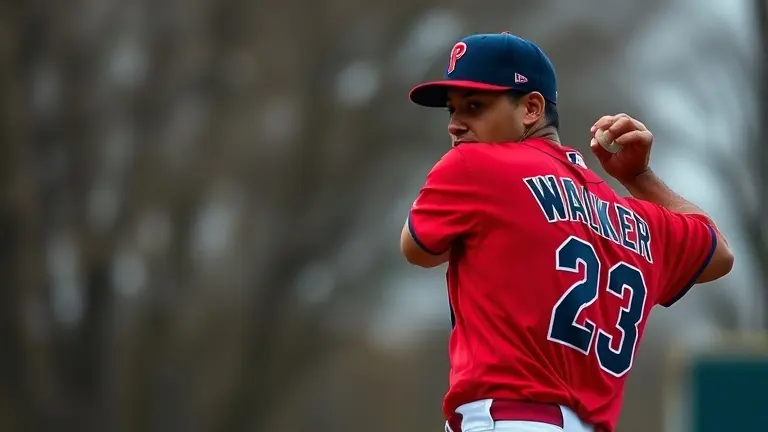
The Philadelphia Phillies’ decision to release veteran right-handed pitcher Taijuan Walker on April 23, 2026, serves as a stark acknowledgment of a failed gamble. Mired in an 8-16 slump and struggling through an eight-game losing streak, the organization finally chose to cut ties with the 33-year-old, effectively swallowing the remainder of his $72 million contract. With a disastrous 9.13 ERA and a particular vulnerability in the opening frames, Walker had become a liability that the team could no longer afford to carry as they desperately scramble to stabilize their rotation.
This move is more than just a roster change; it is a desperate search for accountability in a season currently defined by phillies news that continues to focus on missed expectations. As management pivots to open a spot for the returning Zack Wheeler, the spotlight now shifts from the disappointment of the past to the urgent necessity of the future. The question for fans is no longer just about why Taijuan Walker failed, but who will step up to fill the void and whether the front office possesses the structural integrity to salvage this high-stakes season.
Taijuan Walker Released: The End of a Challenging Phillies Tenure
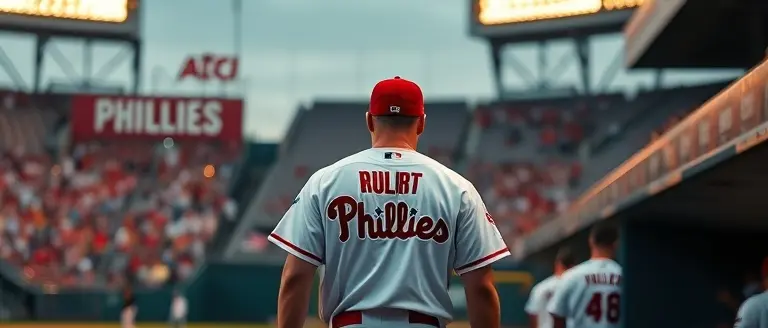
The Philadelphia Phillies officially ended the tenure of veteran right-handed pitcher Taijuan Walker on April 23, 2026, marking a significant turning point in a season that has been plagued by inconsistency. With the team languishing at an 8-16 record and riding an alarming eight-game losing streak, front-office management determined that the status quo was no longer sustainable. Walker, 33, was in the final year of his four-year, $72 million contract, yet his performance had deteriorated to a level that made his presence in the starting rotation untenable for a team with championship aspirations.
A Statistical Collapse
Walker’s 2026 campaign was defined by an inability to navigate early innings, forcing the bullpen into premature and heavy workloads. His metrics highlight the severity of the decline:
- ERA: A staggering 9.13 ERA accumulated over 22 2/3 innings across five appearances.
- Opening Frame Struggles: A disastrous 24.75 ERA in the first inning of games, which effectively doomed the team before they could find an offensive rhythm.
- Financial Sacrifice: The organization made the difficult decision to “swallow” the remaining salary—estimated in the $15–18 million range—rather than continue to absorb his declining production.
Strategic Rotation Adjustments
This roster move was fundamentally driven by the urgent need to stabilize the rotation. By releasing Walker, the Phillies immediately cleared a spot for the return of Zack Wheeler, who is slated to take the mound this Saturday. While the decision to walk away from a significant financial commitment is a harsh indictment of the initial signing, it signals a shift in the Phillies news cycle from personnel evaluation to immediate competitive recovery. By cutting ties with an underperforming veteran, the team has signaled that they are willing to prioritize current performance over sunk costs, hoping to stop the bleeding during their current losing skid and reset their trajectory for the remainder of the 2026 MLB season.
Filling the Void: What’s Next for the Phillies’ Starting Rotation
The official release of Taijuan Walker marks a pivotal shift for the Phillies news cycle, moving the conversation from a disappointing $72 million tenure to the immediate structural needs of the starting rotation. With the team currently mired in a grueling eight-game losing streak and an 8-16 record, the front office faces immense pressure to stabilize the staff. The return of Zack Wheeler provides a necessary anchor, but the vacancy left by Walker requires a more sustainable solution than a temporary fill-in. Management must now look toward internal depth and the Triple-A system to prevent further erosion of their standings in the NL East.
Evaluating Internal Rotation Candidates
As the organization pivots, the focus shifts to internal arms capable of providing length and consistent strikes. The following candidates are viewed as the most viable options to fill the void:
- Nolan Hoffman: Having recently received a call-up, Hoffman is the immediate frontrunner to absorb innings. His recent trajectory in the minors suggests he is prepared to handle major league hitters, providing the high-leverage stability the team desperately lacks.
- Triple-A Depth Starters: The organization is closely monitoring performances in Lehigh Valley. Scouts are emphasizing command over velocity, as the current rotation cannot afford the high walk rates that plagued Walker’s 9.13 ERA outings.
- Bullpen Games: Given the urgency, the team may temporarily utilize “opener” strategies to bridge the gap until a prospect earns a permanent spot or a trade deadline target becomes available.
The financial decision to eat the remainder of Walker’s salary provides a clean slate, though it limits immediate spending power. By promoting high-upside prospects, the Phillies are opting for a “youth movement” to jumpstart their momentum. This strategy serves as a litmus test for the scouting department: if these younger arms can provide reliable production, the Phillies may avoid an aggressive, costly search in the trade market, allowing them to redirect resources toward offensive upgrades if the current slump continues.
The $72M Question: How the Walker Bust Impacts Trade Deadline Strategy
The decision by the Philadelphia Phillies to release Taijuan Walker and absorb the remainder of his $72 million contract marks a significant pivot in the team’s 2026 fiscal strategy. By choosing to “swallow” the remaining salary—estimated between $15 million and $18 million—the front office has effectively signaled that preserving a rotation spot for high-caliber production is more valuable than sunk-cost considerations. While this maneuver clears the roster for immediate help like the return of Zack Wheeler, it creates a complex financial landscape as the organization approaches the mid-summer trade deadline.
Balancing Financial Constraints and Competitive Urgency
The “dead money” associated with the Walker contract inevitably complicates the front office’s maneuverability. With the Phillies news cycle now focused on stabilizing an 8-16 start, management must determine whether this move necessitates a more frugal approach or if ownership will authorize additional spending to salvage the season. Key considerations for the coming months include:
- Trade Deadline Flexibility: By fully absorbing the contract, the Phillies have essentially capped their immediate payroll flexibility, potentially limiting their ability to take on significant salary in mid-season trades without triggering further luxury tax implications.
- Targeting Value over Stars: Expect the team to shift focus toward “buy-low” pitching candidates or pre-arbitration players who provide high-floor innings without demanding massive financial outlays.
- The “Win Now” Mandate: Despite the financial hit, the current eight-game losing streak suggests that ownership may prioritize the team’s championship window. If the club remains in contention, external pressure may force a shift toward acquiring premium arms regardless of the lingering fiscal impact of the Walker bust.
Ultimately, the failure of the Walker signing serves as a cautionary tale for front-office resource allocation. As the Phillies look to replace his lost innings, the strategy will likely pivot toward scouting internal prospects or utilizing creative trade packages that leverage depth rather than pure financial power. How the club balances this “post-mortem” of the Walker era with their 2026 competitive goals will likely define the success of their upcoming trade deadline operations.
Front-Office Accountability: Analyzing the Evaluation Failures

The release of Taijuan Walker serves as a stark turning point for the Philadelphia Phillies, forcing a transparent look at the front-office evaluation process that sanctioned a $72 million investment. While the organization is lauded for its aggressive pursuit of talent, the Walker signing stands as a cautionary tale in modern player acquisition. Evidence suggests that the front office failed to account for the velocity dips and mechanical regressions that became apparent shortly after he joined the club. By ignoring the peripheral warning signs during his tenure, the team allowed a “poster child for bad contracts” to clog the rotation during a critical 8-16 stretch.
Missed Metrics and Red Flags
The analytics department and scouting staff are now under intense scrutiny for their role in this failure. Key indicators that were largely overlooked include:
- Inconsistent Pitch Velocity: A noticeable decline in average fastball velocity over the life of his contract.
- Opening Frame Vulnerability: A recurring inability to secure early outs, culminating in a disastrous 24.75 ERA in opening frames during 2026.
- Sustainability Concerns: Over-reliance on situational luck rather than elite command or strikeout rates, which failed to materialize as his stuff diminished.
To pivot effectively and prevent further roster mismanagement, the Phillies must refine their internal player acquisition strategy. Moving forward, accountability must be prioritized by shifting toward high-upside, short-term commitments rather than long-term deals for veteran arms showing physical regression. By learning from the Walker situation, the Phillies can ensure that the current Phillies news surrounding rotation changes marks a transition toward a more data-driven, agile front-office culture that protects the organization’s long-term financial flexibility and competitive championship window.
Building a Better Future Beyond the Phillies’ Missteps
The release of Taijuan Walker marks a sobering turning point for the Phillies’ 2026 season. While the financial implications are significant, the real story lies in the urgent need to restructure a rotation that has been severely compromised by poor planning. Much like the Phillies’ current front office struggle, many of our own personal projects falter due to poor planning and unreliable blueprints. When your foundation is flawed, no amount of effort can compensate for the initial lack of structure, leading to costly busts rather than championship-caliber results.
You don’t have to settle for the same amateur trial-and-error that plagued the Phillies’ front office. Whether you are tackling a home renovation or seeking a reliable system to achieve your goals, success requires a professional-grade framework. By moving away from guesswork and adopting a proven, comprehensive plan, you can eliminate the risks that come with half-baked strategies and ensure your hard work pays off with precision and efficiency.
It is time to stop accepting sub-par results in your projects and start building with the absolute certainty of a professional. Eliminate the frustration and costly errors by accessing a repository of plans designed for total success. Stop settling for half-baked strategies; build your next project with the same precision the Phillies wish they had—check out our library of 16,000 foolproof plans here.
 Stop settling for half-baked strategies; build your next project with the same precision the Phillies wish they had—check out our library of 16,000 foolproof plans here.Get My Foolproof Plans Now!