
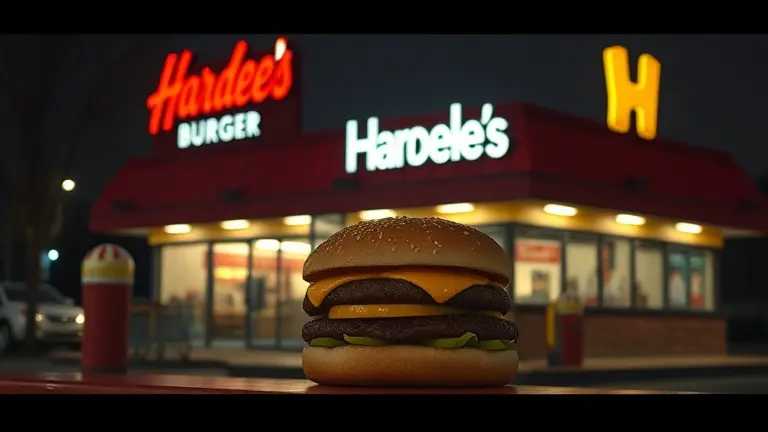
When headlines broke regarding the Chapter 7 bankruptcy filing of ARC Burger LLC—a massive franchisee operating 77 Hardee’s locations—it sent ripples of confusion across nine states. For many loyal customers, the sudden closure of a neighborhood staple without clear notice felt like a loss of local stability. It is critical, however, to clarify the situation: this filing is limited to a specific franchisee and does not signal the downfall of the broader Hardee’s brand. Understanding the distinction between corporate-owned stores and franchisee-operated units is the first step toward navigating the current landscape of fast-food availability.
In the wake of this financial fallout, reliable information has been hard to come by, often scattered across fragmented local news reports. To help you navigate this transition, we have compiled a centralized tracker to identify which locations are impacted and which remain open for business. By cutting through the noise, we aim to provide clarity for consumers and stakeholders concerned about the durability of franchise-reliant business models in our current, unpredictable economic climate.
Understanding the ARC Burger LLC Bankruptcy Filing

On April 20, 2026, the fast-food landscape saw significant movement when ARC Burger LLC, a major franchisee operating 77 Hardee’s locations, officially filed for Chapter 7 bankruptcy in the U.S. Bankruptcy Court for the Northern District of Georgia (Case No. 26-55202). Unlike reorganization efforts under Chapter 11, this Chapter 7 filing represents a total liquidation of the entity’s assets. The move followed a period of financial instability for the franchisee, which reportedly carried over $29 million in debt and had been locked in recurring legal disputes with the parent company, Hardee’s Restaurants, regarding delinquent royalty payments and operational contract breaches.
Why This Is Not a Systemic Brand Failure
It is crucial for consumers and stakeholders to distinguish between the financial struggles of a singular franchisee and the health of the broader brand. This bankruptcy is an isolated event specific to the management and debt load of ARC Burger LLC. The Hardee’s brand itself remains a robust national entity; the stores affected were strictly those under the ownership of this specific group. To understand the scope of the impact, consider the following distinctions:
- Franchisee Autonomy: Hardee’s operates on a franchise model, meaning individual owners—like ARC Burger LLC—are responsible for their own payroll, debt, and operational expenses.
- Localized Closures: The immediate cessation of operations at 77 locations across nine states was a direct result of this specific bankruptcy, not a corporate-wide shutdown.
- Operational Liability: The $29 million debt burden was tied directly to the franchisee’s specific business practices and regional performance, rather than the global profitability of the Hardee’s chain.
The situation has created understandable confusion, particularly for loyal patrons in affected regions. However, market evidence suggests that the closure of these specific units is a corrective measure to remove an underperforming franchisee, rather than an indication of brand insolvency. As the court processes the liquidation, the future of these physical locations remains in flux, with potential for other franchisees or the parent company to reassess site viability or explore rebranding opportunities.
Hardee’s Store Status Tracker: Is Your Local Spot Open?

If you are wondering whether your favorite neighborhood restaurant remains operational following the recent ARC Burger LLC bankruptcy filing, it is important to understand that the impact is localized rather than chain-wide. On April 20, 2026, the franchisee—which managed 77 locations across nine U.S. states—filed for Chapter 7 bankruptcy in the Northern District of Georgia. Because this entity was responsible for a specific portfolio of stores, many other Hardee’s locations operated by different franchisees or the corporate parent remain unaffected and fully functional.
States Affected by ARC Burger LLC Closures
The closures primarily impacted regions where ARC Burger LLC held franchise rights. While the parent company is working to assess transition plans for these assets, consumers in the following states should verify their local store status:
- Florida
- Georgia
- Alabama
- Mississippi
- South Carolina
- North Carolina
- Kentucky
- Tennessee
- Virginia
How to Verify Your Local Hardee’s Status
To confirm whether a specific location has ceased operations, do not rely solely on third-party aggregators, as information regarding lease liquidations can change rapidly. Instead, follow these steps to ensure accuracy:
- Use the Official Locator: Visit the official Hardee’s website and utilize their store locator tool. Corporate teams generally update this database in near real-time when a location permanently closes its doors.
- Check Local News Outlets: Because the $29 million debt crisis involves specific regional assets, local news outlets in your city—such as The Dispatch or regional digital news hubs—often provide the most granular updates regarding potential reopening timelines or permanent closures.
- Google Maps Indicators: While not always instantaneous, Google Maps entries often reflect “Permanently Closed” status once a location is confirmed shuttered by franchise management.
By distinguishing between franchisee-operated units and the broader corporate brand, customers can navigate this period of transition with greater clarity. If your local store does not appear on the official website, it is likely part of the group currently undergoing liquidation proceedings.
The Franchise Model: Corporate vs. Franchisee-Owned Stores

To understand why some Hardee’s locations close while others continue business as usual, it is essential to distinguish between corporate-owned stores and those managed by independent franchisees. The vast majority of fast-food restaurants operate under a franchise model, where an independent entity pays a licensing fee and royalties to the parent brand to operate under its name. In the case of the recent bankruptcy filing involving ARC Burger LLC, the financial distress was isolated to that specific operator, which oversaw 77 locations across nine states. This organizational structure creates a firewall between the franchisee’s private debt and the broader financial health of the Hardee’s brand.
Understanding Independent Franchise Operations
When a franchisee like ARC Burger LLC encounters insolvency—resulting in over $29 million in debt and eventual liquidation—the impact is confined to the locations within their specific portfolio. This means that if a neighboring Hardee’s is owned by a different franchisee or the corporate entity itself, the closure of an ARC Burger site does not signal an impending shutdown for the entire chain. Consumers often fear a “domino effect,” but in reality, franchise agreements are unique contracts, and the operational viability of one store is rarely tied to the balance sheet of a separate franchisee.
Key factors that distinguish these operations include:
- Operational Autonomy: Franchisees handle their own staffing, local supply chains, and day-to-day management costs.
- Liability Isolation: Legal and financial disputes, such as those related to missed payments or Chapter 7 filings, are generally restricted to the specific legal entity holding the franchise agreement.
- Brand Consistency: While all locations must adhere to brand standards, the underlying business entity operating the store varies significantly from region to region.
Consequently, while the loss of 77 stores creates localized disruptions and supply gaps, it is not an indicator of the systemic health of the national brand. Understanding this distinction helps stakeholders and consumers alike clarify that regional closures are often the result of an individual operator’s financial mismanagement rather than a failure of the Hardee’s franchise model on a national scale.
What This Means for the Future of Franchise-Dependent Chains

The recent Chapter 7 bankruptcy filing of ARC Burger LLC serves as a stark reminder of the inherent volatility within the franchise-reliant business model. While many consumers perceive Hardee’s as a monolithic entity, the reality is that the brand’s footprint is largely built upon the financial health of independent operators. When a major franchisee faces over $29 million in debt, the resulting localized closures highlight a systemic risk: operational dependency. Unlike corporate-owned chains that can absorb regional losses, franchise-dependent models shift the burden of debt servicing, labor costs, and supply chain fluctuations entirely onto the operator. If that operator fails, the brand is left with immediate, localized service vacuums that can erode consumer trust and market share.
Risks in the Modern Franchise Landscape
For stakeholders and industry analysts, the ARC Burger LLC insolvency underscores the importance of monitoring the stability of large-scale franchise operators in the current economic climate. Factors that contribute to these failures include:
- Excessive Leverage: Rapid expansion often relies on high levels of debt, which becomes unsustainable when interest rates rise or consumer spending softens.
- Operational Strain: Missed payments and legal disputes with parent companies often act as early warning signs of terminal financial distress.
- Market Saturation: Large operators often manage dozens of stores across multiple states, meaning a single operational failure can cause widespread closures that appear as a larger crisis for the national brand.
Moving forward, the industry is likely to see a trend toward stricter financial oversight by parent companies to prevent localized bankruptcies from escalating into broader brand degradation. Investors should look for operators with more conservative capital structures and a clear focus on unit-level profitability rather than aggressive, debt-fueled expansion. As the fast-food industry continues to navigate inflationary pressures, the financial viability of these regional franchise giants remains a critical component of national brand stability.
Navigating Uncertainty Through Strategic Precision
The closure of these Hardee’s locations serves as a stark reminder of how quickly business landscapes can shift. While these closures represent a localized economic challenge, they also highlight the importance of adaptability and the value of relying on verified information over speculation. Just as we have organized the chaotic status of these franchise closures, many of our readers are now taking a closer look at their own domestic stability, finding new, rewarding ways to invest their time in high-impact home projects.
As you reassess your local environment, consider the power of self-reliance. Ted’s Woodworking offers the ultimate toolkit for those who prefer to take control of their surroundings with professional, verified blueprints. Whether you are looking to improve your home or simply master a new craft, this comprehensive library of foolproof project plans transforms uncertain times into productive, tangible results, mirroring the precision we used to map these restaurant closures.
Take the next step in organizing your personal environment by building with the same expert guidance we demand from our business reporting. It is time to stop waiting for external stability and start creating it yourself, project by project, with professional-grade plans that never fail.
 Take control of your home projects today with the same precision we used to map these restaurant closures—start building with professional-grade plans.Transform My Home Today!