
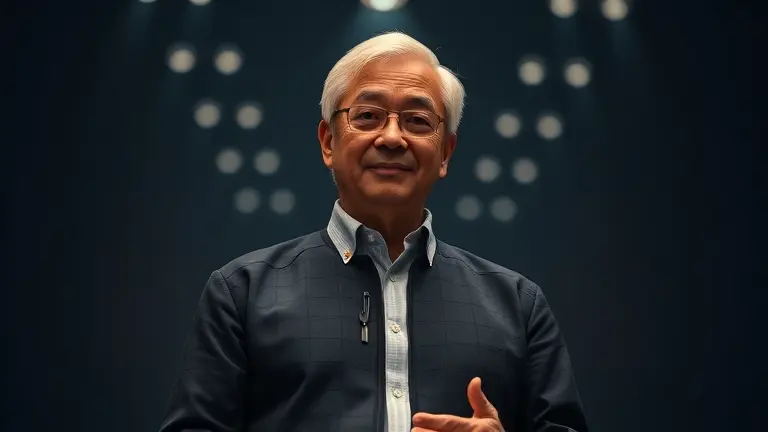
When Apple officially announced that Tim Cook would transition to Executive Chairman, the tech world did not just witness a routine leadership succession; it marked the end of the supply-chain-focused dynasty that defined the post-Steve Jobs era. As of September 1, 2026, the mantle passes to John Ternus, a leader whose roots are deeply embedded in the very silicon and structural integrity of Apple’s most iconic hardware. Unlike his predecessor, whose brilliance lay in optimizing global logistics and corporate operations, Ternus represents a decisive pivot back toward a ‘product-first’ philosophy.
For investors, employees, and analysts, this transition signals a profound shift. The burning question is no longer about the stability of Apple’s margins, but about the innovation roadmap for AI, spatial computing, and the next decade of hardware evolution. Understanding the contrast between Cook’s operational excellence and the emerging vision under Ternus is essential for anyone navigating the future of the world’s most valuable technology ecosystem.
The Succession: Apple’s Leadership Transition to John Ternus

On April 20, 2026, Apple Inc. sent shockwaves through the global technology sector by announcing a seismic shift in its executive hierarchy. After a transformative tenure defined by unprecedented growth and operational mastery, Tim Cook will officially step down as the Apple CEO on September 1, 2026. While Cook is not departing the company entirely—transitioning instead to the role of Executive Chairman of the Board—his move marks the end of an era that began after the passing of Steve Jobs. Replacing him at the helm is John Ternus, the company’s long-standing Senior Vice President of Hardware Engineering, a leader whose technical pedigree has been central to the success of the iPhone and iPad product lines.
The strategic restructuring extends beyond the C-suite vacancy, signaling a renewed emphasis on internal engineering prowess. As part of this transition, Johny Srouji has been appointed to the newly created role of Chief Hardware Officer. This realignment is designed to consolidate Apple’s hardware-software ecosystem under leaders who have spent decades inside the company’s design labs. Analysts suggest that while the Tim Cook net worth and his legacy of supply-chain optimization provided the fiscal foundation Apple needed for the last fifteen years, the promotion of Ternus indicates a pivot toward a product-first philosophy.
Key elements of this historic leadership transition include:
- Effective Date: The official handover occurs on September 1, 2026, providing a buffer period for operational continuity.
- Strategic Pivot: The company is moving away from purely operational focus toward an innovation-heavy roadmap, potentially accelerating work in AR/VR and generative AI.
- Executive Stability: By keeping Cook on the Board, Apple aims to mitigate investor anxiety regarding the John Ternus net worth and his relative public profile compared to his predecessor.
- Organizational Synergy: The elevation of Srouji ensures that hardware development remains closely tethered to the CEO’s vision, maintaining the tight integration that has historically defined Apple’s competitive advantage.
This transition positions Apple to tackle the next frontier of computing, where the intersection of hardware design and artificial intelligence will dictate market dominance. For investors and enthusiasts alike, the shift from Cook’s operational brilliance to Ternus’s technical vision represents a calculated bet on the next generation of Apple’s product DNA.
Meet the New CEO: John Ternus’s Technical Legacy

As Apple transitions into what analysts are calling “Apple 3.0,” the appointment of John Ternus as the incoming Apple CEO marks a decisive departure from the operational mastery of Tim Cook. Unlike Cook, whose background was rooted in supply chain logistics and operational efficiency, or the visionary design-led legacy of Steve Jobs, Ternus represents the rise of the “Product Engineer.” Having served as the Senior Vice President of Hardware Engineering since 2021, Ternus has been the silent architect behind many of Apple’s most successful hardware cycles. His technical pedigree is not merely a resume bullet point; it is the foundation upon which he has built his reputation as a hands-on leader who deeply understands the integration of silicon, chassis, and software.
A Track Record of Hardware Excellence
Ternus’s tenure at Apple is defined by his oversight of the hardware teams responsible for the company’s most essential product lines. His leadership style is characterized by a “deep-dive” technical methodology, ensuring that every internal component serves the final user experience. His key contributions include:
- iPhone and iPad Evolution: Ternus played a pivotal role in the transition to Apple Silicon, overseeing the hardware architecture that allowed the M-series chips to redefine mobile and desktop performance.
- AirPods Innovation: He was instrumental in steering the development of the AirPods lineup, transforming them from a controversial accessory into a multi-billion dollar category.
- The Apple Vision Pro: Ternus served as a central figure in the engineering efforts behind Apple’s entry into spatial computing, bridging the gap between high-fidelity hardware and complex software integration.
By prioritizing internal technical development, Ternus is expected to steer Apple back toward a “product-first” culture. While his predecessors focused on scaling the business and refining the ecosystem, Ternus enters the role with a mandate to accelerate hardware innovation. Investors and industry analysts are closely monitoring how this engineering-heavy perspective will influence the company’s long-term roadmap, particularly regarding AI-integrated devices. Unlike the financial focus often associated with corporate leadership, Ternus’s approach suggests that Apple will continue to lean heavily into its technical DNA to maintain its competitive moat in an increasingly crowded global market.
The Apple 3.0 Roadmap: Product-First vs. Operational Excellence

The transition from Tim Cook to John Ternus represents more than a change in personnel; it signals a fundamental pivot in Apple’s corporate DNA. Under Cook, whose tenure defined the company’s “operational excellence” era, Apple mastered the art of supply chain optimization and service-based revenue scaling. While investors largely applaud the financial heights reached during the Cook era—reflected in the massive growth of Tim Cook net worth and shareholder value—the market now anticipates a shift toward the “Apple 3.0” roadmap. Ternus, characterized by his tenure as the SVP of Hardware Engineering, is widely viewed as a product-first executive who prioritizes radical hardware innovation over incremental efficiency.
From Supply Chain to Silicon-Led Innovation
Evidence suggests that Ternus will shift Apple’s internal focus toward tighter vertical integration, particularly in the realm of custom silicon and proprietary hardware components. Unlike the operational mastery that allowed Apple to survive global manufacturing constraints, the Ternus era is expected to lean heavily into:
- Aggressive AI Hardware Integration: Moving beyond software-based AI, expect Ternus to oversee the development of specialized hardware silicon designed specifically to handle complex on-device AI workloads.
- Next-Gen Hardware Form Factors: With a background rooted in iPhone and iPad engineering, Ternus is positioned to prioritize the hardware evolution of AR/VR and wearable ecosystems, moving away from purely iterative updates.
- Accelerated R&D Cycles: The strategy likely pivots from maintaining high-margin inventory flows to shortening the innovation window, potentially challenging the cautious release schedules seen in recent years.
While discussions surrounding John Ternus net worth remain speculative compared to his predecessor’s long-standing public portfolio, his value to Apple lies in his technical pedigree. By re-centering the organization around hardware engineering prowess, Apple intends to move closer to the product-centric philosophy championed by Steve Jobs, while maintaining the scalable infrastructure required for a modern global tech giant. This shift leaves Apple well-positioned to navigate the competitive AI landscape, provided the transition maintains the operational stability that remains the foundation of its market dominance.
Investor Implications: The Future of the Apple Ecosystem

The transition from Tim Cook, a master of supply-chain optimization, to John Ternus, a veteran of hardware engineering, marks a structural pivot in Apple’s corporate strategy. For shareholders, this shift signifies a move away from the hyper-efficient operational scaling that defined the post-Steve Jobs era toward a “product-first” philosophy. As John Ternus assumes the CEO mantle, the market is closely analyzing whether his deep technical background will accelerate the integration of proprietary silicon with generative AI, a sector where Apple has faced criticism for moving too slowly compared to its Silicon Valley peers.
Strategic Shifts in Hardware and AI
The market reaction to the transition suggests cautious optimism, as investors pivot their focus toward the long-term value of the Apple ecosystem. Under the new leadership, the synergy between hardware and software is expected to deepen, likely prioritizing:
- Accelerated Silicon Innovation: Leveraging Ternus’s background in hardware engineering to create more specialized chips that natively handle complex AI workloads.
- Post-Cook Strategy: A transition from logistics-led growth to innovation-led growth, potentially reducing dependency on legacy supply chain metrics in favor of high-margin, next-generation product breakthroughs.
- AI Integration: A potential restructuring of R&D budgets to prioritize AI-driven hardware features, essential for maintaining market share against aggressive competitors.
While Tim Cook’s net worth and his legacy of doubling Apple’s market cap through service growth and operational discipline remain a bedrock of the company’s current value, the “Ternus Era” promises a different investment profile. The challenge for John Ternus—whose own net worth is a subject of increasing public curiosity—will be to demonstrate that a product-centric vision can yield the same consistent financial returns as the operational excellence of his predecessor. For long-term investors, the coming quarters will be critical in determining if this leadership shift effectively secures Apple’s dominance in the next wave of computing, specifically within AR/VR and AI-integrated hardware.
Mastering the New Frontier of Innovation
The transition to John Ternus as CEO is not merely a change in the corner office; it is a fundamental recalibration of Apple’s corporate DNA. As the company steers toward increasingly complex AI integration and advanced AR hardware, the stakes for maintaining intense, high-level cognitive focus have never been higher. Just as the next era of Apple demands a product-centric sharpness to cut through market noise, today’s leaders and high-performers must prioritize their own mental clarity to excel in an environment characterized by rapid change and intense strategic pressure.
Achieving this level of elite cognitive performance is not a matter of chance, but of deliberate optimization. By sharpening your mental acuity, you mirror the very precision that Apple now requires to redefine its future. This is where high-level focus becomes your most valuable competitive advantage, allowing you to synthesize information, manage high-stakes transitions, and maintain the mental stamina required for visionary decision-making.
Equip yourself with the tools designed for the modern executive who refuses to compromise on cognitive output. Whether you are navigating professional pivots or leading your own teams through disruptive change, sustained mental clarity is the bedrock of success in the new digital economy.
 Optimize your cognitive performance for the new era of innovation—discover how The Brain Song supports sustained focus and mental clarity.Transform My Cognitive Clarity Today!