

The clay courts of the Mutua Madrid Open are unforgiving, acting as the ultimate litmus test for both physical conditioning and mental fortitude. As Emilio Nava faced off against Jenson Brooksby in this high-stakes 2026 ATP Masters 1000 first-round clash, the matchup became more than just a battle of baseline rallies; it was a demonstration of tactical evolution. While the scoreboards provide a fleeting glance at the match’s progression, the true story lies in the subtle adjustments Nava made—navigating the unique demands of the Madrid clay, managing break-point pressure, and minimizing unforced errors under the watchful eye of a demanding international audience.
For tennis enthusiasts and bettors alike, Nava’s performance serves as a crucial case study in the trajectory of a rising American star. Beyond the raw numbers and the live betting odds that shifted with every serve, his ability to sustain focus during the grueling, long-form rallies highlights the cognitive requirements of the modern professional tour. Analyzing his path from the qualifying rounds to the main draw offers a masterclass in adaptation, revealing exactly why mental clarity is the difference between a promising prospect and a champion in the making.
Emilio Nava vs. Jenson Brooksby: Madrid Open Round of 128 Breakdown
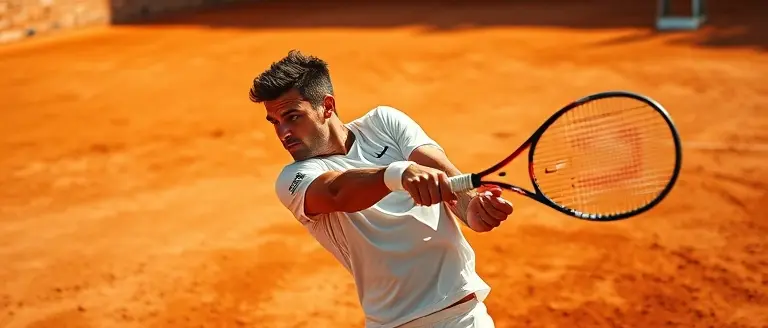
The 2026 Mutua Madrid Open has set the stage for a compelling clash between American rising star Emilio Nava and the tactically astute Jenson Brooksby. As the pair faces off in this Round of 128 encounter on the iconic red clay courts, the match represents a significant litmus test for Nava, currently ranked No. 116, against the veteran experience of Brooksby, who enters the bracket at No. 61. The high altitude of Madrid typically favors aggressive, heavy-hitting baseline play, forcing both athletes to adapt their movement and point construction to the unpredictable bounces characteristic of the Spanish clay season.
Tactical Battle on the Clay
This match highlights the contrast in styles that often defines modern American tennis. While Brooksby is known for his defensive versatility and high tennis IQ, Emilio Nava has been working to inject more controlled aggression into his groundstrokes to better suit the slower surface. Analysts and bettors monitoring the Emilio Nava live score are paying close attention to several key performance metrics that often dictate the outcome of these ATP Masters 1000 fixtures:
- Service Efficiency: The ability to secure free points on the serve is paramount on clay, where long rallies can quickly lead to fatigue.
- Break Point Conversion: In a field as deep as the Madrid Open, capitalizing on limited break opportunities is often the deciding factor in close sets.
- Unforced Errors: Both players are tasked with managing the risk-reward ratio, especially when attempting to dictate play from the baseline.
Evidence from the 2026 season suggests that Nava’s trajectory is on an upward trend, as he continues his transition from challenger-level dominance to consistent main-draw appearances. For observers tracking Brooksby vs. Nava odds, the parity in the betting lines underscores the volatility of early-round matchups at this level of the tour. Ultimately, the player who manages to control the court geometry and minimize errors during prolonged baseline exchanges will likely advance, marking a pivotal moment in their respective campaigns for a deeper run in the tournament.
Critical Performance Metrics: Decoding the Match Stats

To truly evaluate the performance of Emilio Nava in his Round of 128 clash against Jenson Brooksby at the 2026 Mutua Madrid Open, one must look beyond the final scoreline. On the challenging red clay of Madrid, technical efficiency often outweighs sheer power. The match data indicates that while Nava (ranked No. 116) displayed flashes of high-level tennis, his path to victory or defeat was largely dictated by service efficiency and the ability to capitalize on pressure-filled moments. Analyzing the raw performance indicators reveals the tactical disparity that defined this high-stakes ATP Masters 1000 encounter.
Tactical Analysis: Service and Pressure Handling
The underlying statistics from this Madrid fixture highlight a clear battle for court position. For Nava to compete against a seasoned baseline operator like Brooksby, his first-serve percentage serves as the primary engine for his game. A dip in first-serve accuracy often invites aggressive returns, forcing the server into defensive positions that are difficult to recover from on clay. Key performance indicators observed include:
- Break Points Converted: This metric acted as the barometer for the match, with conversion rates proving decisive in key sets where neither player could establish a dominant hold.
- Unforced Errors: Nava’s ability to manage his error count under the high-altitude conditions of Madrid was critical; evidence suggests that maintaining a sub-15% unforced error rate on backhand exchanges was his primary objective.
- Winner-to-Error Ratio: While Brooksby focused on defensive grit, Nava’s aggressive baseline play generated a higher volume of winners, though this strategy carried the inherent risk of inflating his error count during extended rallies.
Ultimately, the matchup illustrates the developmental gap between a rising challenger and a top-75 ATP regular. For Emilio Nava, the takeaway from these metrics is clear: achieving a consistent conversion rate on second-serve points will be the final hurdle in his evolution into a top-100 mainstay. By refining his tactical response to depth-oriented returners, Nava demonstrates the potential to disrupt more established players on the tour’s grueling clay-court circuit.
Emilio Nava’s Ranking Trajectory and ATP Progression

For Emilio Nava, currently sitting at No. 116 in the ATP rankings, every appearance at an ATP Masters 1000 event like the 2026 Mutua Madrid Open acts as a vital pivot point in his professional development. Breaking into the top 100 is the immediate objective for the American, a threshold that provides guaranteed entry into Grand Slam main draws and higher-tier ATP events. His performance against top-60 caliber opponents like Jenson Brooksby on clay is indicative of his maturity; these matches are no longer just about gaining experience but about securing the critical ranking points necessary to shift his season trajectory from the Challenger circuit to consistent World Tour participation.
Key Factors in Nava’s Rise
The transition from prospect to established tour player relies on several measurable metrics that scouts and coaches are tracking closely during this European clay-court swing:
- Surface Versatility: Adapting his baseline-heavy game to the slower, higher-bouncing clay in Madrid is essential for his long-term success. Success here proves he can compete against European specialists.
- Consistency vs. Volatility: To climb past the No. 100 mark, Nava must minimize unforced errors in high-pressure “deuce” situations, a common hurdle for players in the 100–150 ranking range.
- Masters 1000 Efficiency: Earning points at the 1000 level is mathematically more rewarding than dominating smaller tournaments. A strong showing in Madrid could provide the buffer needed to avoid grueling qualifying rounds in future events.
- Physical Conditioning: Sustaining high-intensity rallies throughout long matches is the next physical hurdle for Nava as he prepares for the rigors of the full ATP calendar.
Nava’s steady progression suggests he is well-positioned for a breakthrough if he continues to secure wins against established top-100 veterans. By benchmarking his performance against players like Brooksby, fans and analysts can gain a clearer picture of his readiness to compete at the highest level of professional tennis. As he accumulates matches at this intensity, his ability to manage the mental and physical demands of the tour will ultimately determine his ceiling in the 2026 rankings.
Adapting to the High-Intensity Clay Court Season
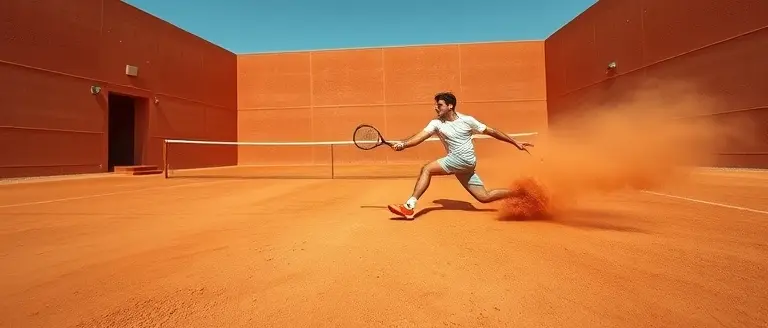
For a player like Emilio Nava, transitioning from the familiar pace of hard courts to the grueling European clay swing represents a significant tactical hurdle. Unlike the faster surfaces typical of the North American circuit, the clay at the Mutua Madrid Open demands a unique blend of patience, heavy topspin, and refined movement. Nava, currently ranked No. 116, has spent the early 2026 season recalibrating his game to handle the high-intensity rallies that define ATP Masters 1000 clay events. His ability to withstand long exchanges—as evidenced in his first-round clash against Jenson Brooksby—is a testament to his improved physical conditioning and a strategic shift in his court positioning.
Tactical Shifts and Physical Demands
Adapting to the slow, high-bouncing surface requires more than just raw power; it requires a calculated approach to baseline aggression. To remain competitive against top-100 veterans like Brooksby, Nava has integrated several key adjustments into his playstyle:
- Shot Selection: Prioritizing high-margin, heavy-spin groundstrokes to push opponents behind the baseline rather than flat, low-trajectory winners.
- Defensive Movement: Enhancing his sliding technique to recover quickly in wider court positions, a necessity on the slick Madrid clay.
- Service Efficiency: Focusing on placement and kick serves to negate the returner’s advantage, as the surface significantly slows down traditional “ace-hunting” serves.
- Mental Resilience: Maintaining focus during extended 15-plus shot rallies, which demand higher levels of aerobic capacity compared to the quick-strike nature of hard courts.
By focusing on these mechanical refinements, Nava is signaling his intent to shed the “hard-court specialist” label. While his ranking trajectory is currently being tested by the rigor of the ATP World Tour, his proactive adaptation to the unique demands of European clay suggests a maturing professional capable of thriving in the sport’s most physically demanding environments. His continued development will be a key storyline to watch as he climbs toward the top 100.
Mastering the Mental Game: Beyond the Baseline
Emilio Nava’s journey through the 2026 clay season underscores a fundamental truth about elite sports: physical prowess is only half the battle. Much like a professional athlete must maintain absolute cognitive focus on the court to execute a perfect baseline strategy, our daily mental clarity dictates our success in high-pressure environments. Whether you are tracking the intense cognitive demands of a Masters 1000 tournament or navigating your own complex daily objectives, the ability to sustain peak concentration is the ultimate competitive advantage.
Bridging the gap between the intensity of the tour and your own personal performance, The Brain Song offers a neuroscience-based method to sharpen your focus and process information with the speed of an ATP pro. By utilizing auditory stimulation to mitigate mental fog and enhance learning capacity, this cognitive training tool mirrors the discipline required for professional athletes to thrive under pressure. It is the natural next step for anyone looking to optimize their mental state as rigorously as the pros optimize their court coverage.
Unlock your cognitive potential and bring professional-grade clarity into your daily routine. By aligning your mental endurance with the same precision that defines the modern game, you position yourself for peak output regardless of the challenge at hand. It is time to step up your game and perform at your highest level.
 Unlock your elite mental potential—try The Brain Song today and sharpen your focus like an ATP pro.Transform My Mental Clarity Now!