
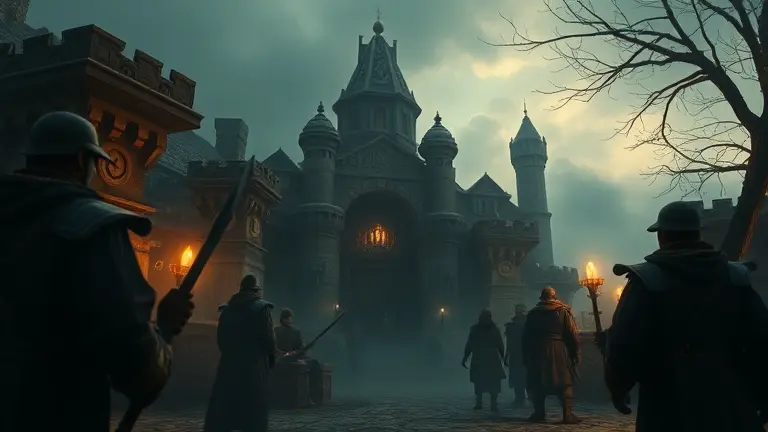
The landscape of modern RPGs is defined by a single, colossal presence: Baldur’s Gate 3. Since its release, it has not only redefined the standards of player agency and reactive storytelling but has also cultivated a dedicated player base that treats the game as a permanent digital home. With many veterans clocking over 1,000 hours in the Forgotten Realms, it is clear that Larian Studios has achieved a level of engagement that industry peers are struggling to match.
As we navigate April 2026, the discourse surrounding the game is more vibrant than ever. The anticipation for the Dungeons Masters actual-play series, featuring the iconic reunion of Neil Newbon and Devora Wilde, underscores the profound emotional bond fans share with the characters and the world of Faerûn. This is no longer just about playing a game; it is about participating in an evolving, high-stakes narrative culture that keeps players coming back for more.
Beyond the screen, Larian’s radical transparency regarding engine development and future tech has invited players into the very architecture of their favorite genre. As we look at the legacy of this title, it becomes evident that the future of RPGs lies in the intersection of deep mechanical complexity and human-centric storytelling. Join us as we explore why Baldur’s Gate 3 remains the undisputed gold standard and what that means for the future of your next, most immersive adventure.
The Lasting Shadow of Baldur’s Gate 3: Why It Remains the RPG Gold Standard

As of April 2026, Baldur’s Gate 3 continues to serve as the definitive benchmark for the role-playing game genre. Despite the passage of time, the game’s hold on the industry remains unshakable, driven by a player base that routinely logs 1,000+ hours of engagement. This longevity is not merely a product of its massive, branching narrative, but a testament to how Larian Studios successfully bridged the gap between complex Dungeons & Dragons mechanics and accessible, character-driven storytelling. The current excitement surrounding the April 22, 2026, debut of the Dungeons Masters actual-play series—which features the highly anticipated reunion of BG3 favorites like Neil Newbon and Devora Wilde—highlights a critical industry truth: fans are not moving on from the world of Faerûn; they are seeking to expand their interaction with its core creative DNA.
Why BG3 Still Defines the Genre
The sustained relevance of Baldur’s Gate 3 is rooted in three distinct pillars that future RPG developers are now struggling to replicate:
- Unrivaled Narrative Agency: The game’s ability to weave player choice into the fabric of the story remains unmatched, forcing competitors to justify their own limitations.
- Deep Mechanical Integration: By gamifying the 5th Edition ruleset without sacrificing narrative flow, Larian set a high bar for mechanical transparency.
- Cast Connectivity: The enduring popularity of the voice cast, now transitioning into the Dungeons Masters series, proves that players have developed an emotional investment in these specific performances that transcends the game client itself.
Furthermore, technical discussions regarding Larian’s upcoming engine improvements reveal a clear trajectory for the genre. As the industry moves toward removing legacy engine limitations, developers are increasingly looking at BG3 as the “gold standard” for scale and reactivity. Whether it is the granular detail of the Act structure or the sheer volume of player-driven outcomes, the shadow cast by this title acts as both a roadmap and a hurdle for every high-budget RPG currently in development.
Cast Reunions and the Narrative Hunger of the Modern RPG Player

The upcoming launch of Wizards of the Coast’s Dungeons Masters series on April 22, 2026, represents more than just another actual-play show; it serves as a critical cultural touchstone for the massive audience captivated by Baldur’s Gate 3. By reuniting fan-favorite performers like Neil Newbon and Devora Wilde, the production taps into the parasocial intimacy and narrative depth that made BG3 an industry standard. Players who have logged over 1,000 hours in the Forgotten Realms are not merely seeking new content; they are hunting for the same high-caliber, character-driven storytelling that defined their experience with Larian Studios’ masterpiece.
The Chemistry of Immersive Roleplay
This reunion highlights a clear shift in player expectations within the RPG genre. Modern audiences are increasingly prioritizing emotional resonance and agency over simple mechanical loops. The significance of this cast reunion lies in several key factors that bridge the gap between digital RPGs and live, collaborative storytelling:
- Established Character Rapport: Fans possess an ingrained emotional investment in the voices and performance styles of Newbon and Wilde, creating an instant, familiar baseline for engagement.
- Narrative Continuity: The desire to see these actors navigate new challenges mimics the “branching path” discovery that defined the core appeal of Baldur’s Gate 3.
- The Gold Standard Effect: Because BG3 set an impossibly high benchmark for reactive, agency-driven writing, fans are now using the Dungeons Masters series as a litmus test to see if other media can replicate that specific brand of “living” storytelling.
Ultimately, the enthusiasm surrounding this project proves that the Baldur’s Gate 3 legacy is not just about the game engine or combat mechanics—it is about the hunger for human-centric narratives. As the industry evolves, creators must recognize that the modern RPG player values the intersection of professional-grade performance and sandbox freedom, a dynamic this reunion is poised to satisfy.
Beyond the Engine: Larian’s Transparency and the Future of RPG Mechanics

Larian Studios has fundamentally rewritten the rules of engagement between developers and players. By offering unprecedented transparency regarding the technical constraints that limited Baldur’s Gate 3, the studio has invited its massive, dedicated player base into the conversation about the future of RPG development. For many of the veteran players who have invested 1,000+ hours into the Forgotten Realms, this candid approach to discussing engine evolution is more than just behind-the-scenes trivia—it is a roadmap for how the next generation of games can avoid the “legacy bottlenecks” that previously hampered narrative scope and mechanical depth.
Setting the Gold Standard for Technical Flexibility
The industry-wide shift triggered by the success of Baldur’s Gate 3 has forced other developers to prioritize long-term technical flexibility over short-term optimization. Larian’s focus on retiring old engine limitations in their upcoming projects highlights a critical evolution in the genre:
- Dynamic Narrative Scaling: By shedding legacy constraints, developers can now implement more reactive world-states that do not buckle under the complexity of player choice.
- Performance Optimization: Future RPGs are shifting toward architectures that prioritize modularity, allowing for larger, more dense environments without the performance trade-offs seen in previous titles.
- Developer-Player Feedback Loops: Larian’s transparency serves as a template, proving that an informed player base is more forgiving of development hurdles when they understand the technical roadmap.
This openness stands in stark contrast to the traditional “black box” model of the AAA gaming industry, where technical roadmaps are often hidden until the final product launch. Evidence suggests that by sharing their struggles with engine limitations, Larian has successfully shifted the benchmark for what audiences expect from a major RPG. Players are no longer satisfied with aesthetic updates; they now demand structural, engine-level improvements that grant them true agency within the narrative. As the studio looks toward its next endeavor, the legacy of this transparent communication remains a pillar of their identity, ensuring that the “BG3 experience” is treated not as a one-time phenomenon, but as a sustainable model for the future of interactive storytelling.
The 1,000-Hour Benchmark: Why BG3 Players Aren’t Moving On

For a significant portion of the gaming community, Baldur’s Gate 3 has ceased to be merely a game and has instead become a permanent fixture in their digital lives. Reaching the 1,000-hour milestone is not an anomaly among the dedicated player base; it is a testament to the game’s unparalleled branching narrative and reactive world design. Unlike traditional RPGs that offer a curated, linear experience, Larian Studios engineered a system where player agency dictates the fundamental trajectory of the plot. This density creates a “complexity ceiling” that forces players to return repeatedly to uncover the permutations they missed, effectively insulating them from the lure of newer, less interactive titles.
Why the Complexity Ceiling Matters
The industry is currently facing a dilemma: players who have cut their teeth on the depth of the Forgotten Realms find “standard” RPG experiences lacking. The difficulty in transitioning to other titles stems from the following design pillars that BG3 mastered:
- Emergent Gameplay: The synergy between environmental hazards, character classes, and combat mechanics ensures that no two encounters feel identical.
- Narrative Consequences: Minor dialogue choices made in the first act can ripple into monumental shifts in the final act, providing a level of meaningful agency rarely seen in the genre.
- Persistent Relevance: The characters, brought to life by legendary performances, remain compelling even after dozens of playthroughs, fostering a level of emotional attachment that keeps retention rates high.
As enthusiasts look toward the future—and analyze the forthcoming engine advancements promised by Larian—the standard set by Baldur’s Gate 3 remains the definitive benchmark. For new titles to compete, they cannot rely solely on graphical fidelity or open-world scale; they must match the, now expected, integration of deep, reactive storytelling that respects player intelligence. If the industry fails to bridge this gap, they risk alienating the core RPG audience that has been permanently spoiled by a generation-defining masterpiece.
Leveling Up Your Cognitive Edge
Baldur’s Gate 3 has proven that modern gaming is no longer just a passive pastime; it is a high-stakes, intellectual marathon. Whether you are navigating the intricate branching paths of Faerûn for your fifth run or dissecting the technical promises of Larian’s upcoming engine, you are engaging in a form of mental sport that requires immense focus and analytical endurance. To truly master the complexity of these worlds, your character build is only half the battle—the other half is the sharpness of the mind behind the controller.
Mastering the mechanical depth and intricate storytelling of a game like Baldur’s Gate 3 is a cognitive marathon; if you want to stay sharp for your next 1,000-hour playthrough, you need to optimize your mental recovery just as much as your character build. Mental fog and analytical fatigue are the true enemies of the hardcore gamer, often preventing you from seeing the subtle narrative cues or tactical advantages that separate a novice from a master.
This is where The Brain Song becomes your essential ‘cognitive leveling’ tool. By cutting through the haze of long-form gameplay, it provides the mental clarity required to truly appreciate Larian’s sophisticated design and complex engine improvements. Don’t let mental exhaustion hold you back from conquering your next campaign; treat your brain like your most valuable piece of gear and unlock the peak performance necessary to dominate every challenge you face.

Unlock your brain’s full analytical potential for your next campaign with The Brain Song.
Unlock My Potential Now!