
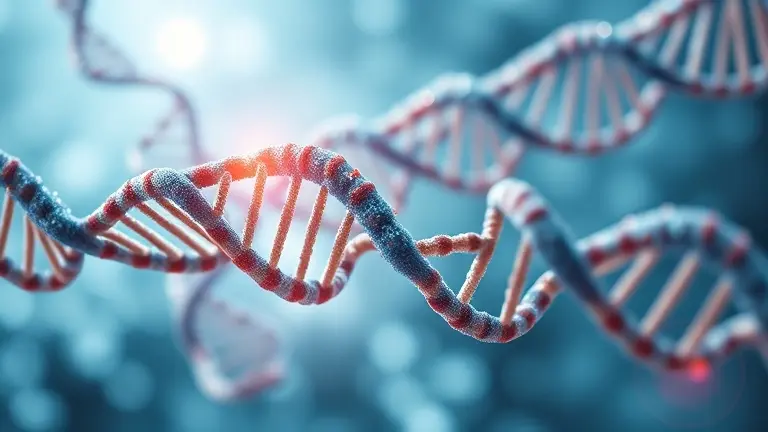
The landscape of modern medicine is currently experiencing a seismic shift, one that fundamentally challenges our definition of therapeutic intervention. As of April 2026, the biotech sector is abuzz with the launch of Serif Biomedicines, an ambitious firm backed by Flagship Pioneering that is commercializing ‘modified DNA’ as a new, programmable therapeutic platform. This innovation marks a move away from the high-stakes, permanent nature of gene editing toward a more modular, software-like approach to treating disease.
But what does it actually mean to have ‘modified DNA’ as a medicine? As mainstream curiosity peaks, there remains a critical gap in understanding how this differs from traditional CRISPR-based therapies, as well as the safety implications of introducing synthetic genetic sequences into the body. This confusion is compounded by the rapid rise of AI-integrated genomic screening, which now uses complex methylation patterns to identify cancers of unknown primary origin with remarkable precision.
This article serves as your guide to this evolving frontier. By cutting through the hype of corporate press releases, we will investigate the science of ‘programmable medicines,’ weigh the safety profiles of synthetic versus native genetic material, and explain how the current pivot in the biotech industry is poised to change the future of patient care forever.
The Serif Biomedicines Pivot: Defining the Era of ‘Modified DNA’ Therapeutics

The recent launch of Serif Biomedicines, backed by the venture studio Flagship Pioneering, marks a significant shift in how the pharmaceutical industry approaches the human genome. Rather than relying on traditional gene editing tools that attempt to modify or excise segments of endogenous genetic material, Serif is pioneering the commercialization of modified DNA as an autonomous, programmable therapeutic platform. By synthesizing sequences that are structurally optimized for therapeutic function, the firm aims to move beyond the limitations of current viral-vector gene therapies, which often struggle with delivery efficiency and long-term durability. Industry leaders view this as the next evolutionary step in drug discovery, moving from “reading” or “repairing” the code of life to “writing” new, synthetic instructions directly into the cellular environment.
Why ‘Modified DNA’ Represents a New Therapeutic Modality
The medical community is closely monitoring this pivot because it bridges the gap between the rapid, transient nature of mRNA and the high-stakes, permanent nature of CRISPR-based gene editing. Modified DNA offers a modular solution, functioning as a synthetic delivery vehicle that can be updated or “reprogrammed” to treat complex diseases, including those with polygenic origins. This strategy leverages the strengths of existing modalities while minimizing off-target risks:
- Programmable Precision: Unlike traditional gene therapy, these synthetic sequences are engineered for specific cellular uptake and expression levels, allowing for granular control over the drug’s duration in the body.
- Enhanced Stability: By utilizing modified nucleotides, these synthetic strands exhibit increased resistance to enzymatic degradation, potentially leading to more enduring therapeutic outcomes for chronic conditions.
- Scalability: As the global market for DNA synthesis approaches an $8.6B valuation, Serif Biomedicines is positioned to capitalize on the plummeting costs and increasing speed of high-fidelity synthetic manufacturing.
By framing DNA as a programmable medicine rather than a static template, Serif is challenging the current paradigm of genetic medicine. For researchers and investors alike, this signifies a move toward a platform-based ecosystem where therapies can be iteratively designed and rapidly deployed, fundamentally altering the drug development timeline for patients with previously untreatable genetic disorders.
Modified DNA vs. CRISPR: Understanding the Therapeutic Distinctions

The biotechnology sector is currently experiencing a profound shift in how we approach genetic intervention. For years, CRISPR-Cas9 has served as the industry standard, acting essentially as “molecular scissors” that physically cut and alter the host’s native genome. While groundbreaking, this method introduces permanent, irreversible changes, raising significant concerns regarding off-target effects and long-term genomic instability. In contrast, the emergence of modified DNA—spearheaded by platforms like Serif Biomedicines—represents a pivot toward “programmable medicine.” Instead of editing the body’s existing code, this approach delivers synthetic, optimized sequences that function as transient instructions, allowing for high-precision therapy without permanent genomic breakage.
Key Functional Differences
To understand why researchers and investors are pivoting, it is essential to distinguish between these two modalities:
- Permanence vs. Transience: CRISPR requires permanent double-strand breaks in the host DNA, whereas modified DNA therapies provide the cell with transient blueprints, which naturally degrade once the therapeutic goal is achieved.
- Precision and Safety: By avoiding permanent genomic disruption, modified DNA sequences minimize the risk of “genomic scarring” or unintended mutations that have historically hindered the clinical safety profile of traditional gene therapies.
- Target Control: These new programmable medicines act like software updates for the cell, offering a modular framework that can be easily adjusted for different disease targets, whereas CRISPR-based interventions often require complex re-engineering for each specific mutation.
This shift toward modified DNA signifies a maturation of the biotech industry, moving away from risky, high-stakes gene editing toward controlled, scalable therapeutics. By leveraging the strengths of both mRNA-like transient expression and the structural stability of synthetic sequences, this new modality is poised to tackle complex conditions that were previously considered “undruggable” under the rigid constraints of traditional gene editing. As clinical trials evolve, the ability to “program” biological outcomes without altering the human blueprint may represent the most significant advancement in precision medicine to date.
AI-Integrated Genomic Screening: Decoding Methylation Patterns for Early Detection

Recent presentations at the American Association for Cancer Research (AACR) annual meeting have signaled a paradigm shift in oncology, centering on the intersection of AI-integrated genomic screening and DNA methylation analysis. For years, identifying the origin of metastatic tumors has been a clinical challenge, particularly in cases of Cancers of Unknown Primary (CUP). Researchers are now leveraging sophisticated machine learning models to analyze DNA-based methylation patterns—chemical modifications that act as epigenetic switches—to trace tumors back to their tissue of origin with unprecedented accuracy. By interpreting these unique epigenetic signatures, AI platforms can bypass the limitations of traditional biopsy methods, offering a non-invasive, blood-based diagnostic alternative.
The Role of Epigenetics in Precision Diagnostics
The power of this approach lies in the stability of methylation markers. Unlike gene expression, which fluctuates rapidly in response to environmental stressors, methylation signatures are highly conserved throughout the lifecycle of a cancer cell. Current breakthroughs include:
- Pattern Recognition: AI algorithms trained on massive datasets identify distinct “fingerprints” of hyper-methylation and hypo-methylation that correlate with specific tissue types.
- Sensitivity Gains: By focusing on cell-free DNA (cfDNA), these models detect minimal residual disease long before physical masses become visible on medical imaging.
- Clinical Utility: The integration of these tools into standard practice promises to personalize oncology, allowing clinicians to select targeted therapies based on the biological identity of the tumor rather than its anatomical location.
This data-driven evolution underscores a broader transition toward proactive, rather than reactive, medicine. As AI models become increasingly adept at decoding the complexities of DNA, the medical community can identify hidden malignancies early, significantly improving patient outcomes. This shift toward diagnostic intelligence is a critical pillar of the emerging personalized medicine ecosystem, bridging the gap between raw genomic data and actionable clinical insights.
Evaluating Safety and Durability: The Clinical Reality of Synthetic Sequences

As modified DNA enters the clinical landscape, the scientific community is shifting its focus toward the longevity and biological stability of these synthetic sequences. Unlike traditional gene therapy that relies on viral vectors for permanent genomic integration, these new programmable modalities aim for transient or controlled expression. The primary safety challenge lies in ensuring that the cell recognizes these sequences as intended while preventing unintended immune activation. Because synthetic structures do not always mirror the protective epigenetic markers found in natural human genetic material, researchers are focusing on optimizing the metabolic clearance rates to ensure these sequences are degraded safely once their therapeutic task is complete.
Key Considerations for Clinical Integration
The transition from lab-scale innovation to human application necessitates rigorous evaluation of how these molecules interact with host defenses. When discussing the clinical reality of these synthetic platforms, the following factors remain at the forefront of regulatory scrutiny:
- Immunogenicity Risks: Synthetic sequences can potentially trigger an innate immune response, often interpreted by the body as a pathogen. Engineers are currently refining the chemical backbone of these sequences to minimize “danger signal” recognition.
- Durability Profiles: While natural DNA is protected by complex chromatin structures, modified variants must be engineered to resist premature degradation by intracellular nucleases while avoiding the dangers of excessive persistence.
- Off-Target Interactions: Similar to AI-integrated genomic screening used to map cancer origins, these therapies require precise localization to ensure the synthetic material does not inadvertently disrupt healthy cellular processes.
Evidence suggests that by fine-tuning the chemical modifications, developers can modulate the “half-life” of these medicines, providing a safer alternative to permanent genomic editing tools like CRISPR. The goal is to provide a precise, tunable therapeutic effect that limits long-term exposure to exogenous material, balancing potency with a controlled safety profile that satisfies both clinical demand and patient safety standards. As this technology matures, ongoing longitudinal studies will be critical to confirming these theoretical benefits in diverse patient populations.
Elevate Your Own Biological Potential
The dawn of ‘modified DNA’ and AI-driven diagnostics signals a profound shift toward a future where biology is no longer a static blueprint but a dynamic, programmable frontier. While these breakthrough biotech innovations are revolutionizing medicine, they also highlight a universal truth: our performance and health are deeply tied to our ability to interface with biological systems. Just as these emerging therapies utilize precise, optimized inputs to elicit a specific, high-value outcome in the body, we can adopt a similar mindset to optimize our own cognitive architecture.
While the medical industry is pioneering ways to re-engineer DNA for long-term health, we can leverage the existing principles of neuroplasticity and auditory stimulation today to sharpen our immediate cognitive edge. By aligning our daily habits with the same precision-based logic that defines cutting-edge biotech, we move from being passive participants in our health to active architects of our cognitive capacity. It is about bridging the gap between high-level laboratory discovery and the tangible, everyday focus you need to excel in a demanding, high-information environment.
This is where The Brain Song becomes your essential daily tool. By utilizing scientifically backed, non-invasive auditory stimulation, it helps you harness Gamma brainwaves and naturally stimulate BDNF production. This isn’t just about relaxation; it is about combatting the mental fog that often accompanies complex scientific study and high-stress professional environments, providing you with the clarity to perform at your peak every single day.

Experience the same precision-based logic of modern medicine by optimizing your own cognitive function—start your 12-minute daily brain-training routine today.