

The landscape for UNH stock has shifted dramatically following the release of UnitedHealth Group’s Q1 2026 earnings report on April 21, 2026. After a turbulent 2025 that saw the company’s valuation plummet by over 45% amidst heightened volatility and operational headwinds, the market is finally seeing a resurgence of investor confidence. A 7-8% pre-market jump in the UNH stock price marks a significant inflection point, driven by a decisive beat on Wall Street’s expectations.
UnitedHealth reported impressive Q1 2026 revenues of $111.7 billion and adjusted earnings of $7.23 per share, comfortably surpassing the Zacks Consensus Estimate of $6.46. This performance has been fueled by improved medical cost ratios and a notable recovery in the company’s Medicare Advantage segment, leading management to raise their full-year outlook. For investors, the question is no longer just about the earnings beat, but whether this represents the beginning of a sustainable corporate turnaround or a fleeting relief rally in a still-challenging environment.
As we navigate this period of renewed optimism, it is vital to peel back the layers of this financial success. This analysis goes beyond the headlines to examine the specific role of AI-driven operational improvements and the persistent regulatory risks that remain on the horizon. By understanding the core drivers behind these metrics, investors can better determine the long-term viability of their holdings in UnitedHealth Group.
UnitedHealth Group’s Q1 2026 Rebound: Breaking Down the Earnings Beat

The UNH stock landscape witnessed a dramatic pivot on April 21, 2026, as UnitedHealth Group reported stellar Q1 results that effectively silenced the bearish narrative surrounding the firm. Following a grueling 2025 where shares suffered a staggering 45% decline due to operational headwinds and rising medical costs, the company delivered a decisive beat, sending the stock price climbing 7-8% in pre-market trading. UnitedHealth reported quarterly revenues of $111.7 billion and an adjusted EPS of $7.23, handily surpassing the Zacks Consensus Estimate of $6.46. This performance serves as a critical inflection point, suggesting that the structural challenges that plagued the company throughout the previous year—specifically within the Medicare Advantage segment—are finally beginning to stabilize.
Analyzing the Shift in Market Sentiment
The sharp jump in the UNH stock price is widely interpreted by analysts as a “relief rally,” reflecting investor optimism that the worst of the volatility is in the rearview mirror. Unlike the speculative trading that characterized the previous twelve months, this surge is anchored in fundamental improvements:
- Improved Medical Cost Ratios: The company’s ability to better manage its core insurance costs has led to increased margins, providing a clearer path to sustained profitability.
- Revenue Growth: A 2% year-over-year revenue increase signals that despite regulatory pressure, the company maintains strong top-line momentum.
- Revised Full-Year Guidance: By raising its 2026 outlook, management has signaled high confidence in its operational efficiency, a move that is essential for restoring long-term institutional trust.
While the market is celebrating this earnings beat, investors should remain cognizant that the recovery is still in its nascent stages. The 2025 valuation compression was driven by deep-seated concerns regarding regulatory compliance and market-wide healthcare shifts. While the Q1 2026 report demonstrates a robust operational turnaround, the sustainability of this growth depends on whether the firm can maintain these tightened medical cost ratios as the year progresses. For those evaluating UNH today, the narrative has shifted from damage control to a focus on whether the company can maintain this momentum in a tightening regulatory environment.
The AI Edge: Quantifying the $1.5 Billion Investment in Medical Cost Ratios

A cornerstone of the current UNH stock rebound is the strategic deployment of a $1.5 billion investment into artificial intelligence and machine learning infrastructure. While the headline Q1 2026 earnings beat of $7.23 per share captured market attention, the underlying driver for this performance lies in the optimization of the Medical Loss Ratio (MLR). Evidence suggests that UnitedHealth is transitioning from manual, labor-intensive claims processing to a high-velocity, AI-automated ecosystem. By leveraging predictive analytics, the company has managed to streamline administrative workflows, effectively reducing overhead and tightening the gap between premium collection and medical expenditures.
Operational Efficiency and Margin Compression
The integration of AI-driven tools is not merely a technological upgrade but a structural shift in how UnitedHealth Group manages its risk pools. Automated administrative processes are currently providing the following quantifiable benefits:
- Claims Adjudication: AI algorithms have significantly accelerated the processing speed for routine medical claims, allowing for real-time cost transparency and reducing the reliance on manual review.
- Predictive Cost Modeling: By analyzing vast datasets, the company is better equipped to predict high-cost interventions in its Medicare Advantage segment, allowing for proactive care management rather than reactive expense coverage.
- Administrative Cost Reduction: Automated verification systems have curtailed front-office burnout and error rates, which directly bolsters the operating margin.
These efficiencies are a primary reason why analysts are revisiting the UNH stock price projections with renewed optimism. As these AI systems mature, the company is positioned to lower its overall cost structure while maintaining competitive service levels. If the trend of improved medical cost ratios holds steady through the remainder of 2026, it would validate the argument that the Q1 earnings surprise is not a fleeting fluke, but a byproduct of a more lean, technology-forward operational strategy. Investors should continue to monitor how these efficiency gains scale against the potential regulatory headwinds that have historically pressured the healthcare sector.
Beyond the Hype: Assessing Regulatory Risks for the Remainder of 2026

While the recent surge in the UNH stock price following the Q1 2026 earnings report has sparked optimism, prudent investors must distinguish between a cyclical recovery and the resolution of structural pressures. Despite the impressive $7.23 adjusted EPS, the UnitedHealth Group (UNH) remains tethered to a complex and increasingly restrictive regulatory landscape. The relief rally ignores the reality that government scrutiny—particularly concerning Medicare Advantage reimbursement rates—remains a potent headwind that could dampen profitability throughout the second half of 2026.
Navigating Medicare Advantage and Reimbursement Pressures
The primary concern for long-term stakeholders is the sustainability of margins within the Medicare Advantage (MA) segment. Federal regulators continue to tighten oversight on risk-adjustment models, which directly impacts how insurers like UNH are compensated for chronic conditions. Investors should monitor the following areas for potential volatility:
- Reimbursement Rate Sensitivity: As the government faces pressure to control federal health spending, future cuts to benchmark rates could undermine the improvements in the medical cost ratio observed this quarter.
- Legislative Oversight: Ongoing investigations into prior authorization practices and billing transparency continue to gain traction in Congress. Any aggressive legislative action could force operational changes that increase administrative overhead.
- Anti-Trust and Market Concentration: With UNH’s expansive vertical integration, the company remains a primary target for regulators wary of anti-competitive practices. Persistent litigation risks could create long-term valuation overhangs despite short-term earnings beats.
Ultimately, while the Q1 performance suggests that UnitedHealth is successfully navigating current operational hurdles, the UNH stock remains susceptible to sudden policy pivots. Investors should avoid viewing the recent positive sentiment as a permanent floor, as the regulatory environment in the U.S. remains fluid and inherently hostile toward rising healthcare costs. A sober assessment suggests that while the turnaround is off to a strong start, the legislative and regulatory risks of 2026 are far from fully mitigated.
Investor Guide: Distinguishing a Value Trap from a True Turnaround

After a bruising 2025 where UNH stock faced a valuation decline exceeding 45%, the impressive Q1 2026 earnings beat—featuring adjusted EPS of $7.23—has ignited a fierce debate among market participants. For investors attempting to determine if this movement represents a fundamental pivot or a temporary relief rally, the distinction lies in separating short-term operational noise from long-term structural health. A value trap often masks underlying decay with one-time expense reductions, whereas a true turnaround exhibits consistent, scalable improvements in core business segments. To validate the recent recovery in UNH stock price, investors must look beyond top-line revenue and scrutinize the quality of earnings derived from the company’s massive $1.5 billion AI-driven infrastructure investments.
Key Performance Indicators for Long-Term Viability
When assessing the sustainability of UnitedHealth’s trajectory, focus your due diligence on these critical metrics:
- Medical Cost Ratio (MCR) Stability: Monitor whether the improvement in MCR is driven by genuine clinical efficiency gains from AI integration or merely temporary adjustments in care utilization patterns.
- Medicare Advantage Membership Growth: This segment was a primary source of volatility throughout 2025. Consistent, high-margin membership growth here is the clearest signal that the company has regained its competitive footing.
- Operating Cash Flow vs. Net Income: A true recovery should show operating cash flow tracking closely with or exceeding net income. If income is propped up by accounting adjustments rather than core insurance and Optum services cash, caution is advised.
- Regulatory Resilience: Assess the company’s exposure to ongoing government reimbursement pressure. While the current sentiment is optimistic, the long-term viability of UNH depends on its ability to navigate the complex regulatory environment that depressed its valuation last year.
By tracking these KPIs against quarterly benchmarks, investors can shift their strategy from reactive trading to data-driven allocation. While the recent 7-9% jump in UNH stock signals renewed confidence, the prudent investor should wait for consecutive quarters of margin expansion before labeling the turnaround fully solidified. If the company maintains its current earnings momentum while reducing its medical loss volatility, it may signal an end to the 2025 downturn and the beginning of a stable growth cycle.
Charting a Path to Proactive Long-Term Success
The recent earnings surprise from UnitedHealth Group has undeniably sparked a wave of optimism, but the core lesson for investors remains clear: long-term success is predicated on the ability to manage and reduce systemic medical cost ratios. While artificial intelligence and operational efficiencies are providing the immediate boost, the broader industry trend is leaning heavily toward proactive, consumer-driven wellness as the ultimate solution to rising healthcare expenditures. Insurance giants are increasingly incentivizing health behaviors that mitigate chronic risks before they become high-cost clinical interventions.
This shift toward prevention mirrors the proactive philosophy found in tools designed to support cardiovascular health. Just as UnitedHealth is investing in technology to lower future care costs, individuals are finding that taking control of their own cardiovascular markers—such as blood pressure and metabolic balance—is the most effective way to ensure long-term vitality. By managing these fundamental risk factors, consumers align themselves with the same principles of efficiency and risk reduction that institutional leaders are now prioritizing to stabilize their portfolios.
Cardio Slim Tea serves as a practical, health-conscious ally in this proactive journey. By promoting cardiovascular health and supporting natural blood pressure management, it fits perfectly into a lifestyle focused on lowering long-term health risks, effectively embodying the shift toward proactive wellness that insurers are increasingly rewarding. Don’t just watch the trends—adopt the principles of long-term health optimization today for a better, more stable future.
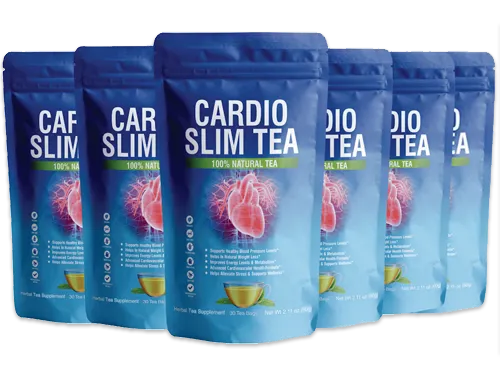
Explore how proactive health management supports better long-term wellness, just as strategic investments support long-term stock growth.