
The basketball world is reeling following a stunning Game 1 result in the 2026 Western Conference Playoffs. In a masterclass of grit and tactical discipline, the injury-riddled Los Angeles Lakers dismantled the favored Houston Rockets with a 107-98 victory. With superstar Luka Doncic and key playmaker Austin Reaves sidelined, the odds were firmly against the purple and gold. Yet, inside the high-pressure environment of Crypto.com Arena, a new narrative emerged that has left analysts and fans scrambling to re-evaluate the series.
At the center of this seismic shift is the unexpected brilliance of Luke Kennard. Delivering a historic 27-point performance—anchored by a flawless 5-for-5 shooting display from beyond the arc—Kennard didn’t just step up; he redefined the Lakers’ offensive ceiling. This was a night where precision mattered more than star power, and where coach JJ Redick’s sophisticated, gravity-based scheme turned a perceived weakness into a lethal tactical advantage.
But what really happened on the court? Beyond the shock value, this game serves as a brilliant case study in exploiting structural defensive failures. As we look ahead to Game 2 on April 21, 2026, the question is no longer just about who can score, but who can process the game at a higher, faster, and more analytical level. To understand how the Lakers outmaneuvered the Rockets, we must look deeper into the game’s mechanics—and sharpen our own analytical focus to keep up with the changing tides of this intense postseason series.
The Miracle at Crypto.com Arena: How the Short-Handed Lakers Stunned the Rockets
The lakers vs rockets showdown on April 18, 2026, delivered a result few analysts predicted. Entering the postseason as heavy underdogs, the injury-riddled Los Angeles Lakers pulled off a resilient 107-98 upset at Crypto.com Arena. The victory was defined by collective grit, as the team navigated the high-stakes atmosphere without franchise pillars Luka Doncic and Austin Reaves. While the Houston Rockets vs lakers match player stats initially leaned toward a comfortable Houston win—particularly given their deep roster—the Lakers utilized a suffocating defensive scheme and high-efficiency offensive sets to neutralize their opponent. It is worth noting that the Rockets played without Kevin Durant, creating a unique context where both teams were forced to lean on their secondary rotations and coaching adjustments.
A Historic Offensive Spark
The narrative of the lakers game was stolen by an unlikely hero: Luke Kennard. In a performance that sent shockwaves through the NBA community, Kennard posted a career-best 27 points, shooting an impeccable 9-of-13 from the field. Most impressively, his perfect 5-for-5 shooting from three-point range marked a historic milestone, representing a level of playoff precision not seen from a Lakers player in nearly 30 years.
Key takeaways from this unexpected victory include:
- Tactical Flexibility: Coach JJ Redick successfully recalibrated the Lakers’ offense to maximize floor spacing, forcing the Rockets into defensive rotations they weren’t prepared to execute.
- Resilience Over Star Power: With Doncic and Reaves sidelined, the bench stepped into elevated roles, proving that the team’s depth is more than capable of managing heavy usage rates.
- Defensive Intensity: The Lakers maintained a disciplined perimeter defense, preventing the Rockets from establishing a rhythm despite the absence of their marquee star.
As the series heads toward Game 2, the question remains whether the Lakers can sustain this momentum or if the Rockets will successfully adjust their defensive coverages to contain Kennard’s perimeter threat.
Tactical Breakdown: Exposing the Rockets’ Defensive Blunders
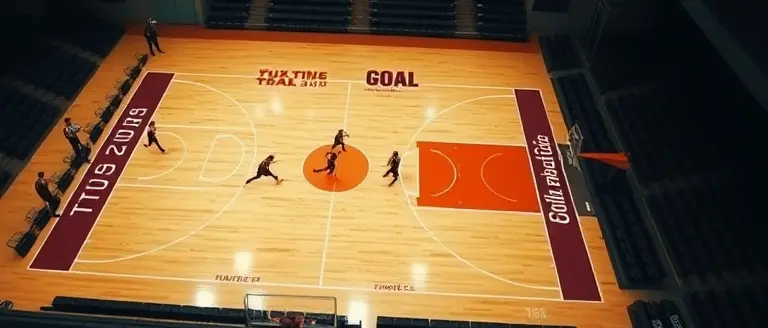
The Lakers vs Rockets Game 1 outcome was not merely a case of individual brilliance from Luke Kennard; it was a masterclass in exploiting structural defensive failures. Under coach JJ Redick, the Los Angeles Lakers utilized a sophisticated “gravity-based” offensive scheme that forced the Houston Rockets into uncomfortable rotation decisions. By frequently utilizing off-ball screens and complex hand-off actions, Redick created situations where the Rockets’ perimeter defenders were forced to choose between sagging off shooters or overcommitting to the paint. Houston’s failure to adapt to these sets proved fatal, as their defensive coverage lacked the necessary discipline to track movement away from the ball.
Exploiting Perimeter Gravity and Rotation Errors
The Houston Rockets vs Lakers match player stats highlight a glaring issue in Houston’s defensive scheme: an inability to manage perimeter gravity. Throughout the second half, the Rockets repeatedly employed a “drop” coverage that left the corners vacated whenever Kennard or his teammates set high-screen actions. Key tactical failures included:
- Lack of Communication on Switches: Rockets defenders often hesitated during high-screen cycles, leading to open lanes for the Lakers to find the “short roll” or kick out to the corners.
- Over-Rotation to the Interior: Houston defenders prioritized clogging the paint, failing to account for the spacing requirements mandated by Redick’s floor-spacing philosophy.
- Failure to Pressure the Primary Initiator: By allowing the Lakers’ ball handlers to dictate the pace, Houston’s defense remained reactive rather than proactive.
This defensive fragility allowed Kennard to capitalize on perfect positioning, finishing 5-for-5 from deep. Without a secondary adjustment for Game 2, the Rockets risk repeating these same rotation errors, which may allow the short-handed Lakers to continue dictating the series tempo despite missing stars like Luka Doncic and Austin Reaves. The pressure now rests on Houston to tighten their defensive rotations and decide whether to stick with a conservative drop or risk a more aggressive high-hedge strategy.
The Rise of Luke Kennard: Beyond the 5-for-5 Shooting Masterclass

While the lakers vs rockets series opener will be remembered for the shock upset, the true story lies in the calculated evolution of Luke Kennard under coach JJ Redick. Kennard’s 27-point explosion—anchored by a flawless 5-for-5 performance from beyond the arc—was not merely a hot shooting night; it was the culmination of a deliberate season-long transformation. Throughout the regular season, Redick’s offensive system prioritized off-ball movement and screen navigation, effectively molding Kennard into a high-leverage floor spacer. This disciplined approach allowed the short-handed Lakers, forced to play without stars Luka Doncic and Austin Reaves, to maintain offensive fluidity against a top-tier defensive unit.
A Historic Milestone in Lakers Lore
The historical weight of this performance cannot be overstated. Analysts note that Kennard’s efficiency in a playoff setting mirrors feats not witnessed by a Lakers player in nearly 30 years. His ability to hit contested shots while maintaining perfect accuracy from three-point range provided the psychological edge needed to overcome the Houston Rockets. To understand the gravity of his impact, consider the following metrics:
- Efficiency: Kennard posted a 9-for-13 overall field goal percentage, proving he is more than a perimeter specialist.
- Usage Rate: With primary creators sidelined, Kennard’s increased usage rate translated directly into high-value transition points.
- Tactical Maturity: His off-ball gravity drew defenders away from the paint, opening lanes for his teammates and disrupting the Rockets’ defensive integrity.
Evidence suggests that Kennard’s growth is anchored in his improved conditioning, which allows him to maintain elite shooting mechanics even during high-pressure, late-game sequences. As the Houston Rockets vs lakers match player stats indicate, his presence on the floor transformed the Lakers from an underdog unit into a calculated offensive threat. Whether this production remains sustainable for Game 2 will likely dictate the outcome of the remainder of this series.
Game 2 Outlook: Adjustments, Predictions, and the Kennard Factor
As the series shifts toward the April 21, 2026, showdown, the Houston Rockets vs. Lakers narrative has pivoted from a lopsided expectation to a tactical chess match. Following the stunning 107-98 Lakers game victory, the primary question surrounding Game 2 is whether the Rockets can effectively neutralize Luke Kennard without sacrificing their interior integrity. Kennard’s historic 27-point, 5-for-5 three-point performance exposed a critical lack of perimeter urgency in Houston’s defensive scheme. Expect the Rockets to pivot toward a more aggressive “top-lock” strategy, denying Kennard the catch-and-shoot opportunities he exploited so efficiently under coach JJ Redick’s spacing-heavy system.
Defensive Adjustments and Tactical Shifts
For the Rockets to force a split before the series leaves Houston, they must address the Houston Rockets vs. Lakers match player stats that highlighted their inability to recover on screens. Potential adjustments include:
- Aggressive Trapping: Houston may look to trap the ball-handler in pick-and-roll sets, forcing secondary playmakers to beat them rather than allowing Kennard clean looks.
- Switching Everything: By switching across all positions, the Rockets hope to eliminate the fractional advantages that allowed Kennard to find rhythm.
- Personnel Changes: With the status of key stars still looming, coaching staff may opt for a “defense-first” lineup to mirror the intensity required to stop the short-handed Lakers.
The Sustainability of the Kennard Surge
The central uncertainty for bettors and analysts remains whether Kennard’s performance is an outlier or a permanent tactical evolution. While his efficiency is unlikely to remain perfect, his role in the current rotation provides the Lakers with a reliable floor spacer that the Rockets failed to account for in their initial game plan. Predictions for Game 2 lean toward a tighter, lower-scoring affair. If the Rockets fail to contain Kennard early, they risk letting a demoralized, injury-plagued opponent take a commanding 2-0 lead. The pressure is squarely on Houston to adapt, as the current evidence suggests that failing to prioritize perimeter containment will be fatal to their playoff ambitions.
## Sharpen Your Focus for Game 2
The Lakers’ Game 1 victory was more than a fluke; it was a testament to elite decision-making under fire. Just as Luke Kennard needed split-second processing to exploit defensive gaps, decoding the complex tactical layers of this playoff series requires a mind that is sharp, clear, and free from the mental fog that plagues most casual observers. To truly appreciate the game-within-the-game, your brain needs to be operating at its peak capacity.
This is where ‘The Brain Song’ becomes your ultimate courtside advantage. Designed specifically to enhance cognitive focus and stimulate Gamma brainwaves, this neuroscience-backed tool is the perfect training aid for fans and analysts who want to view the sport with professional-level intensity. Whether you are tracking defensive rotations or anticipating the next play-call, mastering the nuances of the game requires mental clarity that allows you to see the court with complete focus.
Don’t just watch the next matchup; experience it with the heightened awareness of a seasoned tactician. By incorporating this routine, you bridge the gap between being a passive fan and an expert-level analyst. It’s time to elevate your basketball IQ.

Unlock your peak analytical focus: Try the 12-minute audio routine before watching Game 2.
Unlock My Results!