
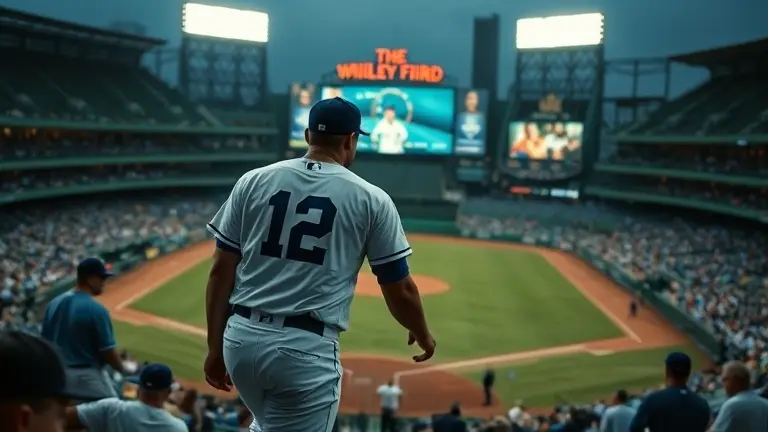
The recent dodgers vs cubs series at Wrigley Field was supposed to be the coronation of a new era for Los Angeles. With the acquisition of ace Tarik Skubal, the Dodgers signaled a desperate, all-in bid to stabilize their rotation for a deep postseason run. Instead, the narrative took a sharp, sobering turn. Following a 5-1 loss on August 4th, the “spoiled debut” of Skubal has become a focal point of anxiety, casting a shadow over the team’s broader performance slumps and the catastrophic news of prospect Dalton Rushing’s season-ending injury. For a fanbase accustomed to dominance, the current reality check is as jarring as it is unexpected.
Beyond the box scores and the immediate frustration of a lost series, this moment serves as a critical junction for the Dodgers’ front office. The intersection of a high-payroll strategy, emerging injury crises, and the pressure of a shifting competitive landscape demands a deeper investigation. This is no longer just about the cubs vs dodgers; it is about whether the franchise can navigate the psychological and tactical fallout of a high-stakes trade deadline. As we analyze the road ahead, we must look at how the organization—and the analytical fans who follow them—can cut through the fog of disappointment to find a clearer path toward recovery and performance.
The Wrigley Reality Check: A Spoiled Debut and a Slumping Giant
The dodgers vs cubs series at Wrigley Field was supposed to serve as a coronation for the Los Angeles Dodgers’ aggressive trade deadline strategy. Instead, the 5-1 loss on August 4, 2026, became a stark reality check for a franchise currently mired in a frustrating slump. While the arrival of ace pitcher Tarik Skubal was intended to solidify the rotation for a deep postseason run, his debut fell flat against a disciplined Chicago lineup. Skubal’s performance, characterized by uncharacteristic command issues and early exits, underscored the growing disconnect between the Dodgers’ high-payroll expectations and their on-field production.
Analyzing the Narrative Shift
The “spoiled debut” narrative has rapidly evolved into broader skepticism among fans and analysts. Where once the conversation centered on the Dodgers’ dominance, it has now shifted toward questions of chemistry and tactical fit. The cubs vs dodgers matchups frequently highlight the volatility of “all-in” rosters, as Chicago’s scrappy approach successfully dismantled the Dodgers’ rhythm.
Key factors contributing to the current skepticism include:
- Offensive Stagnation: The team is struggling to provide run support, placing immense pressure on pitchers like Skubal to perform flawlessly.
- Rotational Fragility: Following the injury to prospect Dalton Rushing, the front office faces intensified scrutiny regarding depth and long-term sustainability.
- Execution Gaps: Despite the talent influx, the dodgers game output has been inconsistent, with fundamental errors proving costly against teams like the cubs.
The transition for Skubal remains the primary point of concern. While a single outing is rarely indicative of a full-season trajectory, the immediate pressure of the cubs game results has magnified every pitch. If the Dodgers hope to reclaim their status as the National League favorites, they must move past the trade deadline aftermath and address the underlying fatigue—both physical and mental—that has clearly hampered their performance during this critical road stretch.
Metrics Under the Microscope: Parsing Skubal’s First Outing
When analyzing the dodgers vs chicago cubs series, the debut of Tarik Skubal serves as the primary focal point for fans and analysts alike. While the 5-1 final score suggests a complete failure, a granular examination of Skubal’s metrics during this cubs game reveals a more nuanced narrative. His fastball velocity remained consistent with his season average—hovering in the 97-98 mph range—suggesting that the “spoiled debut” was not a result of physical degradation or a sudden drop in arm strength. Instead, the data points toward issues with pitch tunneling and location, specifically in high-leverage counts where the Cubs displayed elite discipline.
Mechanical Anomalies and Tactical Adjustments
Evidence from the outing suggests that Skubal struggled to locate his slider effectively against the Cubs’ lineup. While his season-long spin rates remained within expected norms, the horizontal break on his secondary offerings was slightly diminished, likely a byproduct of adjusting to a new catcher’s framing and organizational pitch-calling philosophy. Key observations from the dodgers game performance include:
- Pitch Sequencing: Skubal relied heavily on his fastball early, allowing the Cubs to sit on the heater rather than adjusting to off-speed pitches.
- Vertical Movement: The vertical drop on his changeup was approximately 1.5 inches less than his 2026 average, leading to balls staying in the heart of the zone.
- Release Points: Minor inconsistencies in release point extension—typically a sign of nerves during a high-profile debut—contributed to elevated pitches that the Cubs were able to punish.
Rather than signifying long-term decline, these metrics point to an adjustment period. For the Dodgers, the priority is integrating their new ace into the rotation rhythm before the postseason. The cubs vs dodgers rivalry has reignited, but Skubal’s ability to refine his pitch location in his next start will be the ultimate litmus test for whether this outing was merely a situational anomaly or a lingering mechanical concern.
The Cost of Ambition: How the Dalton Rushing Injury Compounds the Crisis
The Los Angeles Dodgers’ aggressive “all-in” strategy has hit a significant organizational snag following the news of top prospect Dalton Rushing suffering a season-ending UCL tear. While the front office prioritized immediate championship windows by pursuing frontline pitching like Tarik Skubal, the loss of a foundational piece like Rushing highlights the fragility of a high-payroll, win-now model. As the Dodgers vs Cubs series has underscored, depth is not merely a luxury but a necessity when star-studded rotations encounter unforeseen friction. Rushing was viewed as the heir apparent to provide cost-controlled production; his absence forces the organization to recalibrate its long-term roster construction, potentially creating a talent void that cannot be filled by free-agent acquisitions alone.
Tactical Implications for the Farm System
The injury creates a ripple effect across the Dodgers internal depth chart, forcing management to pivot during a critical stretch of the season. The primary concerns include:
- Diminished Trade Capital: With Rushing sidelined, the team’s ability to pivot or acquire supplementary pieces in the coming weeks is severely hampered.
- Development Stagnation: Missing a full year of development at a high-leverage position like catcher or first base puts Rushing’s progression timeline behind schedule, complicating 2027 roster projections.
- Internal Pressure: The current “slumping” performance of the big-league club increases the burden on remaining prospects to overperform, a recipe that rarely yields sustainable success in high-pressure scenarios like the recent series against the Chicago Cubs.
By prioritizing immediate upgrades to address the dodgers game struggles, the front office has effectively doubled down on the current roster. However, when the “all-in” approach coincides with significant injury setbacks, it invites scrutiny regarding whether the long-term farm system stability is being sacrificed too rapidly. If the cubs vs dodgers momentum continues to tilt toward the opposition, the Dodgers must reconcile their high-payroll ambitions with the harsh reality that their future depth is currently thinning exactly when they need it most.
Post-Trade Deadline Strategy: Is the Dodgers’ Gamble Reversible?
The dodgers vs cubs series at Wrigley Field has served as a sobering reality check for an organization that went “all-in” during the trade deadline. While the acquisition of Tarik Skubal was intended to solidify the rotation for a deep postseason run, his debut loss—highlighted by a 5-1 defeat to Chicago—has underscored the fragility of the Dodgers’ current blueprint. The team is currently battling a noticeable slump, and the pressure on the coaching staff to stabilize the pitching staff is reaching an inflection point. With the season-ending injury to prospect Dalton Rushing, the front office’s tactical flexibility has been significantly diminished, leaving little room for error as they look to correct course.
Evaluating the Competitive Horizon
The Dodgers’ remaining schedule strength suggests that they cannot afford an extended period of adjustment for their new rotation acquisitions. To regain their dominant form, the leadership must address several critical variables:
- Rotation Stability: The reliance on pitchers like Eric Lauer following injury complications indicates that the rotation lacks the depth necessary to survive long-term attrition.
- Tactical Pivot: If Skubal’s metrics do not align with his season averages in his next three starts, the Dodgers must determine if they can rely on internal utility options or if the current roster structure is too rigid to pivot.
- Pressure Management: The frustration surrounding the cubs vs dodgers matchups reflects broader fan anxiety; the team must now convert this “all-in” strategy into consistent wins to justify the depletion of their farm system.
Whether this gamble is reversible depends on the team’s ability to integrate high-profile talent while managing a battered roster. While the cubs successfully exploited the current volatility, the Dodgers’ path forward requires a swift return to the fundamentals, as the margin for error has evaporated entirely.
Clearing the Fog: The Path Beyond the Trade Deadline
The Dodgers’ recent performance against the Cubs reflects a team in transition, struggling to balance high-stakes expectations with the reality of an evolving roster. While the “spoiled debut” of Tarik Skubal and the devastating news regarding Dalton Rushing dominate the headlines, the real test for the organization is mental resilience. Whether it is a front office recalibrating their strategy or a team fighting to shake off a late-season slump, success requires absolute cognitive clarity and the ability to cut through the noise of constant analytical pressure.
Just as the Dodgers’ front office must clear the mental fog of recent setbacks to execute their postseason vision, you need that same level of sharpness to dissect the complex trade statistics and shifting narratives of the MLB landscape. The Brain Song is designed for the analytical fan who understands that elite performance—on the field or in the office—begins with the mind. Our science-backed, 12-minute neuroscience routine provides the focus and cognitive clarity you need to stay ahead of the game, transforming how you process high-stakes information.
Stop letting the mental fatigue of the sports cycle distract you from the bigger picture. Whether you are analyzing prospect pipelines or managing your own daily goals, it is time to optimize your cognitive game-day readiness. Elevate your focus and step into your own peak performance state today with a tool built for those who refuse to settle for mental cloudiness.
 Optimize your own cognitive game-day readiness with The Brain Song’s 12-minute neuroscience routine.Yes, I Want This Now!