
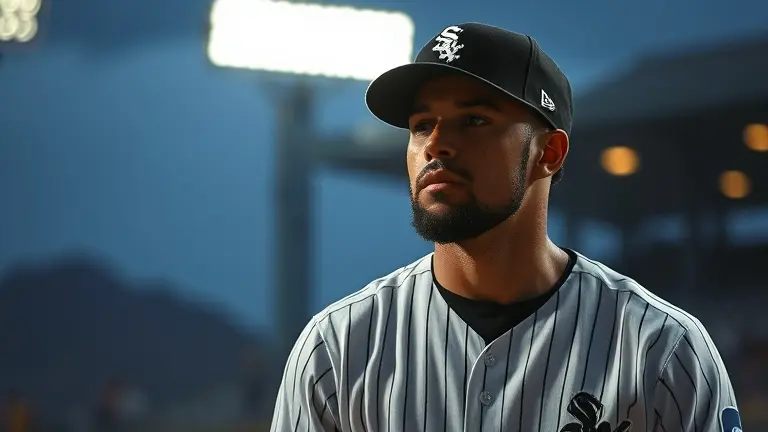
The baseball world was set ablaze on August 3, 2026, when the Chicago White Sox pulled the trigger on a blockbuster trade for two-time Gold Glove center fielder Brenton Doyle. Moving from the thin air of Coors Field to the fundamentally different atmosphere of Guaranteed Rate Field, Doyle brings his elite defensive pedigree to a Chicago roster hungry for stability. For fantasy managers and analysts alike, this move represents more than just a change of scenery; it is a complex statistical puzzle that forces us to re-evaluate outfield production and expected output under a new set of environmental variables.
As the trade deadline dust settles, the immediate question remains: will Doyle’s offensive metrics hold up outside of Denver, or should fantasy owners look to pivot? We are breaking down the defensive efficiency, the prospect cost, and the projected stat lines to give you the clarity needed to navigate this mid-season shakeup with confidence.
The Trade: Brenton Doyle Moves to Chicago

In a major roster shakeup just hours before the 2026 MLB trade deadline on August 3, the Chicago White Sox successfully acquired Brenton Doyle from the Colorado Rockies. This high-profile transaction marks a significant shift for both franchises, as the White Sox look to bolster their defensive stability in center field. At 28 years old, Doyle enters this transition in the absolute prime of his career, bringing a proven track record as a two-time Gold Glove winner. His elite defensive metrics are expected to provide immediate stability to the Chicago outfield, addressing a position that had lacked consistent defensive production throughout the early months of the 2026 season.
The move has generated intense speculation among fantasy baseball managers and analysts regarding Doyle’s long-term offensive ceiling. While his defensive prowess is undeniable, the focus has shifted toward how his hitting profile will translate after leaving the hitter-friendly, high-altitude environment of Coors Field. Analysts are closely monitoring his swing mechanics and spray charts to see if he can maintain his power numbers in the more balanced, standard air density of Guaranteed Rate Field.
Key implications of the Brenton Doyle trade include:
- Defensive Upgrade: The White Sox gain an elite defender whose range and arm strength rank among the top tier of American League center fielders.
- Prospect Capital: Sports Illustrated and other outlets have questioned the heavy price tag, as the White Sox surrendered significant young talent to secure a player who is currently in his peak performance window.
- Fantasy Impact: Fantasy owners are evaluating his “buy” potential, weighing the risk of a potential Coors Field “hangover” against the stability of his everyday role in the Chicago lineup.
This trade reinforces the White Sox’s “all-in” strategy for the final stretch of the 2026 season, betting that Doyle’s glove will be the catalyst needed to stabilize their defensive metrics and secure high-leverage outs during critical games.
Prospect Breakdown: What the Rockies Gained

The trade sending Brenton Doyle to the Chicago White Sox represents a calculated pivot for the Colorado Rockies, who prioritized replenishing their farm system over maintaining a marquee defensive presence in center field. By parting ways with a two-time Gold Glove winner, the Rockies secured a package of high-upside prospects designed to accelerate their long-term rebuilding strategy. The return focuses heavily on projectable pitching talent and middle-infield depth, areas where the Rockies have historically struggled to develop internal assets capable of thriving in the thin air of Coors Field.
Key Additions to the Rockies System
The deal centers on the acquisition of three high-ceiling prospects who are expected to impact the Rockies’ major league roster within the next 24 months:
- Top-Tier Starting Pitcher: A right-handed arm with an elite fastball-slider combination, scouting reports suggest he possesses the durability to become a mid-rotation anchor. His ability to induce ground balls is seen as a critical asset for neutralizing hitters in Colorado.
- High-A Middle Infielder: A versatile defensive prospect known for high baseball IQ and plate discipline. His scouting grade suggests an above-average hit tool that could eventually transition into a permanent role at second base or shortstop.
- Power-Hitting Outfield Prospect: A developmental project with immense raw power. While his strikeout rates remain a point of concern for scouts, his defensive range and natural arm strength make him a logical candidate to replace some of the production lost by the Brenton Doyle trade.
From a structural perspective, this trade provides the Rockies with the necessary flexibility to address systemic weaknesses. By diversifying their prospect pool, the front office is betting that the cumulative value of these younger, team-controlled players will outweigh the immediate, elite defensive output provided by Doyle. For the Rockies, this represents a shift toward a more sustainable model, leveraging their current depth to cultivate a roster capable of competing beyond the short-term window. While fans may lament the loss of a defensive star, the front office views this as a vital infusion of talent that aligns with their broader goal of organizational revitalization.
Defensive Impact: Upgrading the White Sox Outfield

The acquisition of Brenton Doyle represents a seismic shift for the Chicago White Sox’s defensive posture. Throughout the first half of the 2026 season, the White Sox struggled with inconsistency in center field, where a rotating cast of players yielded below-average range metrics and frequent lapses in defensive run prevention. By securing a two-time Gold Glove winner, the front office has effectively plugged a critical hole in the middle of their outfield grass. Doyle’s elite track record, characterized by exceptional Defensive Runs Saved (DRS) and high-tier Ultimate Zone Rating (UZR), provides the Chicago pitching staff with immediate reliability.
Measuring the Defensive Upgrade
To understand the impact of this trade, one must look at the statistical chasm between Doyle and his predecessors. While the previous White Sox center fielders often struggled to track down balls in the gap, Doyle thrives on closing space and executing high-difficulty plays with high frequency.
- Range Factor Enhancement: Doyle’s ability to cover expansive territory significantly lowers the team’s BABIP (Batting Average on Balls In Play) against, directly benefiting the White Sox rotation.
- Arm Strength: Beyond his glove work, Doyle’s throwing arm serves as a deterrent for opposing baserunners, reducing the frequency of runners taking the extra base.
- Consistency Metrics: Evidence suggests that Doyle’s transition to Guaranteed Rate Field will stabilize the defensive anchor of the team, allowing corner outfielders to play less aggressively.
As the White Sox push for a late-season playoff berth, the defensive upgrade provided by Brenton Doyle cannot be overstated. In an environment where every run saved matters, having a premier fielder patrolling center creates a margin for error that the team previously lacked. For fantasy managers, this defensive consistency often translates into improved morale and extended innings for pitchers, potentially boosting the overall fantasy value of the entire staff.
Fantasy Baseball Outlook: Projecting the Second Half

For fantasy baseball managers, the transition of Brenton Doyle from the thin air of Coors Field to the more neutral environment of Guaranteed Rate Field presents a classic “Coors Hangover” evaluation. While Doyle’s counting stats—particularly his home run totals—may see a slight dip due to the loss of Colorado’s altitude-aided park factor, his everyday playing time in Chicago is expected to remain rock solid. As a premier Gold Glove center fielder, Doyle is locked into the White Sox lineup, providing the type of volume that fantasy managers crave during the high-stakes final two months of the season.
Projected Performance Shifts
When analyzing the post-trade landscape, fantasy owners should adjust their expectations based on several key environmental and situational factors:
- Park Factor Adjustment: Transitioning to Chicago likely stabilizes Doyle’s road-home splits, potentially reducing his extreme home-road volatility. Expect a slight decrease in raw power numbers but an improved consistency in his batting average and on-base percentage.
- Lineup Protection: While the White Sox lineup lacks the sheer offensive depth of some league leaders, Doyle is expected to slot into a primary role, ensuring consistent plate appearances. His stolen base upside remains his most bankable asset for rotisserie formats.
- Run Production: Managers should monitor the White Sox’s ability to drive him in. Doyle’s value as a dual-threat weapon—mixing power and speed—remains elite, even if his run-scored projection flattens compared to his Rockies tenure.
Ultimately, Brenton Doyle remains a “must-start” player in all formats. While his power ceiling may be slightly lowered by the move to a neutral park, his defensive security guarantees him the plate appearances needed to rack up counting stats. Fantasy managers should view this trade as a transition from high-volatility home run production to more stable, multi-category contribution. Expect him to remain a top-tier outfield option who justifies his draft-day capital through a combination of speed and defensive-driven job security.
Sharpen Your Strategic Edge for the Home Stretch
The acquisition of Brenton Doyle is undoubtedly a defensive upgrade for the White Sox, but for the fantasy manager, the real challenge lies in parsing the shifting data to maximize your roster’s potential. Just as the White Sox need their new center fielder to be sharp and focused on the field, your fantasy management requires that same level of elite mental clarity to turn raw stats into a winning championship strategy.
We know that tracking complex trade impacts in real-time can lead to information overload and the dreaded ‘brain fog’ that hinders sound decision-making. This is where The Brain Song becomes your ultimate competitive advantage. By utilizing neuroscience-based auditory stimulation, it helps you cut through the noise of dense statistical breakdowns, ensuring you maintain the focus needed to dominate your league. It is the perfect tool for the data-driven manager who approaches roster research with the discipline of a professional athlete, providing enhanced focus and improved learning capacity when you need it most.
Align your cognitive preparation with your analytical goals and ensure you aren’t leaving points on the table.  Optimize your analytical edge and clear the mental fog before your next trade deadline move by trying The Brain Song today. Yes, I Want to Sharpen My Focus Now!