
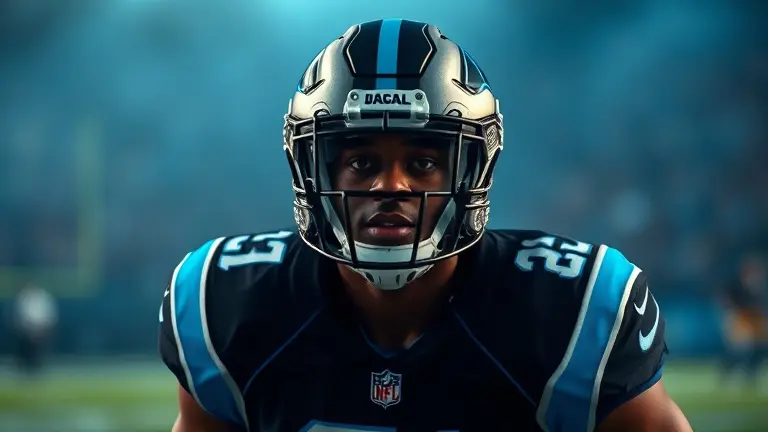
The training camp optimism surrounding Carolina Panthers rookie wide receiver Chris Brazzell II has been abruptly silenced. What began as a routine 7-on-7 drill ended in a season-ending LCL tear, sending shockwaves through the organization and leaving fans searching for answers. The loss of such a promising playmaker not only alters the trajectory of a rookie’s debut season but forces the Panthers’ coaching staff back to the drawing board to reshape an offensive strategy that was counting on his explosive potential.
Beyond the initial medical diagnosis, the true gravity of this situation lies in the ripple effect across the Panthers’ depth chart and the long-term recovery journey that awaits Brazzell. Navigating a significant knee injury is as much a test of mental fortitude as it is physical resilience. As we analyze the team’s contingency plans and the mechanics of this injury, it becomes clear that elite performance—at any level—demands a level of cognitive sharpness and sustained focus that is just as vital as physical conditioning.
Chris Brazzell II: The Medical Reality of a Season-Ending LCL Injury
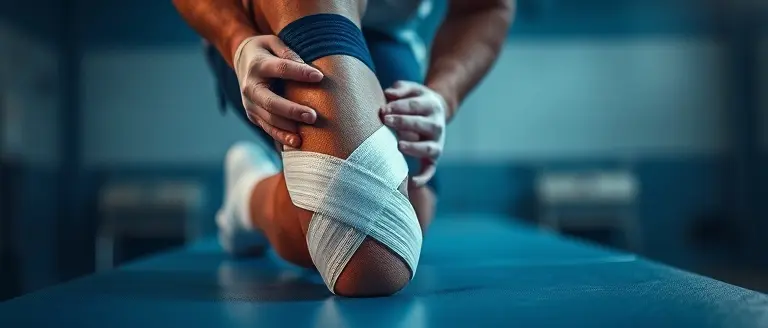
The journey for Chris Brazzell II in his rookie NFL season took a heartbreaking turn during a routine 7-on-7 training camp drill on July 29, 2026. Initially, there was a glimmer of hope that the wide receiver might avoid surgery, with early reports suggesting a conservative rehabilitation path. However, subsequent medical evaluations confirmed that the injury is a significant torn LCL (Lateral Collateral Ligament), necessitating a season-ending recovery process. This shift from optimistic prognosis to a total loss of the 2026 season highlights the unpredictable and grueling nature of professional football.
The Role of the LCL in Wide Receiver Mechanics
For an explosive wide receiver, the knee is the engine of athletic performance. The LCL, located on the outside of the knee joint, serves as a critical stabilizer that prevents the knee from shifting outward (varus stress). While less commonly discussed than ACL injuries, an LCL tear is devastating for players who rely on elite agility. The anatomical function of the LCL is vital for:
- Planting and Cutting: The ligament provides the necessary tension to stabilize the joint when a receiver makes sharp, sudden breaks in their route running.
- Lateral Agility: Maintaining stability during rapid change-of-direction movements is impossible without a fully functional lateral ligament complex.
- Explosive Acceleration: The LCL works in concert with other ligaments to transfer force from the lower leg to the upper body, directly impacting a player’s ability to explode off the line of scrimmage.
By ruling out a quick return, the Carolina Panthers’ medical staff is prioritizing the long-term career outlook of Chris Brazzell II. Recovering from a significant knee injury requires a methodical approach to ensure that the structural integrity of the joint is fully restored. For a rookie, the focus now shifts entirely to comprehensive rehabilitation, emphasizing strength training and mobility to ensure he can return to the field with his signature explosive speed intact for the following season.
Analyzing the Impact on the Panthers’ 2026 Wide Receiver Corps
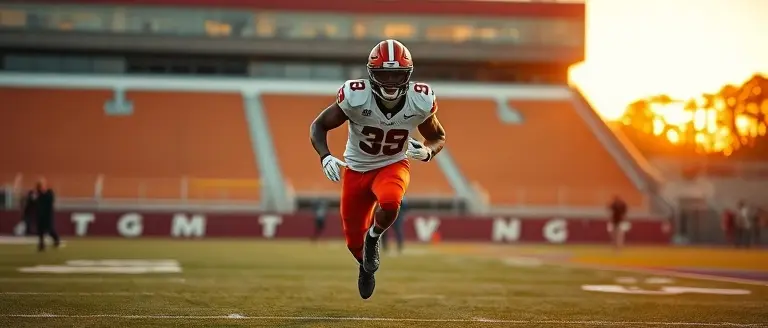
The season-ending LCL injury suffered by Chris Brazzell II creates a significant void in the Carolina Panthers’ offensive schematic planning. Heading into the 2026 campaign, the coaching staff viewed the former University of Tennessee standout as a dynamic “X” receiver capable of stretching the field. His projected role was to capitalize on his elite top-end speed and refined route-running to command defensive safety help, thereby opening up the middle of the field for tight ends and slot receivers. Without his ability to demand vertical respect, the Panthers must now re-evaluate how they deploy their remaining personnel packages to maintain offensive rhythm.
Strategic Adjustments and Depth Chart Shifts
To mitigate the loss of Chris Brazzell, the Panthers are forced to pivot toward a more conservative, ball-control approach or seek immediate reinforcements. The team’s current depth chart lacks an obvious like-for-like replacement with Brazzell’s specific blend of size and agility. Potential tactical shifts include:
- Increased Utilization of Multi-Tight End Sets: Expect the team to lean heavily into 12-personnel packages to compensate for the lost speed at receiver, prioritizing physical mismatches over vertical threats.
- Veteran Free Agent Signings: With the waiver wire thinning, the front office may look toward veteran wide receivers who can provide reliable, if not explosive, production to stabilize the rotation.
- Increased Slot Focus: The offensive coordinator may shift the target share toward experienced slot receivers who can exploit underneath coverage, relying on YAC (yards after catch) rather than deep-ball efficiency.
From a medical perspective, the recovery timeline for a torn LCL is rigorous, particularly for a wide receiver whose game is built upon explosive cutting and lateral agility. While the focus remains on his long-term health, the immediate impact on the Panthers’ 2026 offense is profound. The team must now identify which depth players can step into expanded roles, as the lack of vertical pressure could simplify defensive coverages against Carolina’s passing attack if not addressed by early-season roster maneuvers.
Depth Chart Adjustments and Waiver Wire Strategy
The unfortunate season-ending knee injury sustained by Chris Brazzell II creates an immediate void in the Carolina Panthers’ receiving corps, forcing the coaching staff to re-evaluate their roster construction during training camp. With Brazzell expected to provide dynamic depth and vertical threat capabilities, his absence disrupts the planned rotations for the preseason. In response, the Panthers will likely look to elevate players currently on the roster bubble who have demonstrated consistency in specialized roles. Candidates such as deep-threat specialists and slot-focused receivers will now compete for the additional reps previously earmarked for the rookie, providing them with a pivotal opportunity to secure a spot on the 53-man roster.
Strategic Roster Moves and Free Agency
The Carolina front office must now weigh the benefit of internal development against the volatility of the waiver wire. As teams across the NFL begin trimming their rosters, the Panthers are positioned to act as aggressive evaluators of talent released by other franchises.
Key considerations for the front office include:
- Veteran Free Agent Signings: The team may pursue experienced veterans who remain unsigned, prioritizing players with high football IQ and route-running reliability to provide stability for the quarterback.
- Waiver Wire Priority: Carolina’s position on the waiver wire will dictate their ability to secure emerging talent. They will likely target young wide receivers who have been squeezed out of crowded depth charts elsewhere.
- Rep Allocation: Expect the coaching staff to increase target shares for established mid-tier receivers to ensure the passing offense remains cohesive despite the loss of Brazzell.
While the loss of a promising rookie is a significant setback, the Panthers’ depth chart adjustments are critical to maintaining offensive production. The coaching staff will prioritize versatility, looking for players who can contribute immediately on special teams while learning the offensive scheme to fill the void left by Chris Brazzell. Strategic patience in the free-agent market, coupled with an objective analysis of preseason performances, remains the most viable path forward to fortify the wide receiver room before the regular season kickoff.
Long-Term Recovery and the Path Back to the Field
The journey back to the gridiron for Chris Brazzell following a season-ending LCL injury is a process defined by patience, precision, and rigorous physical therapy. For an NFL-caliber wide receiver, the lateral collateral ligament (LCL) is a critical stabilizer for the knee, providing the necessary tension for the explosive cutting and sharp route-running that defines the position. Unlike minor sprains, a surgical-grade tear requires a methodical approach to regain the trust of the joint. Medical experts emphasize that the initial recovery phase focuses on reducing inflammation and restoring full range of motion, which is foundational before any sport-specific agility training can commence.
The Rehabilitation Roadmap
The path toward a full return for the Carolina Panthers rookie involves several distinct developmental phases:
- Acute Phase (Weeks 1-6): Protection of the surgical site through immobilization and early-range motion exercises to prevent atrophy in the quadriceps.
- Strength Restoration (Months 3-6): Progressive loading of the lower extremity. This stage is vital for a wide receiver, as it targets the muscle imbalances often created by protecting an injured limb.
- Neuromuscular Re-education: Incorporating movement patterns that mimic the demands of NFL gameplay, specifically focusing on deceleration and reactionary cutting.
While the loss of his rookie campaign is a significant setback, modern sports medicine offers an optimistic outlook for athletes with this injury profile. Evidence suggests that with a comprehensive rehabilitation program, players can return to their pre-injury level of athleticism. The focus for Brazzell will remain on total tissue healing and foundational strength, ensuring that when he returns to the Panthers’ roster for the following season, he is physically prepared to handle the intense speed and physical demands of professional football. By prioritizing long-term stability over short-term gains, both the team and the player are positioning his career for a successful, sustainable future.
Maintaining Peak Performance Amidst Adversity
While the Panthers work to adjust their roster, the reality for athletes like Chris Brazzell is that the road to recovery is paved with mental challenges. The resilience required to remain focused during a season-ending setback is the defining trait of a professional. Just as high-stakes NFL environments require constant mental adaptation, you too can bridge the gap between physical health and cognitive mastery to navigate your own personal and professional obstacles.
Mental conditioning is the invisible edge that separates good performers from great ones. The Brain Song offers a breakthrough approach to cognitive resilience, utilizing neuroscience-based auditory stimulation to help you sharpen your focus and maintain clarity, even when life presents unexpected hurdles. By integrating this daily habit, you align your mental state with the rigorous demands of elite performance, ensuring that you stay sharp when it matters most.
Just as the Panthers use advanced data to optimize their roster, you can optimize your own cognitive performance and recovery focus with The Brain Song—start your 12-minute daily mental conditioning routine today.
 Just as the Panthers use advanced data to optimize their roster, you can optimize your own cognitive performance and recovery focus with The Brain Song—start your 12-minute daily mental conditioning routine today.Transform My Mental Performance Today!