
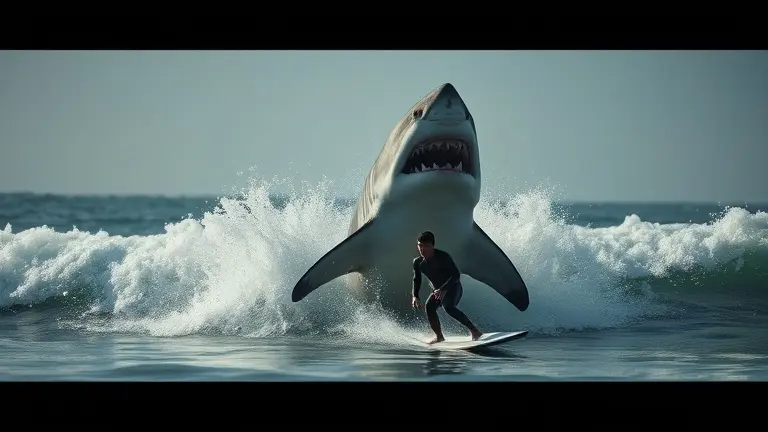
The internet was sent into a frenzy yesterday following the release of a chilling newport beach shark breach video. In the footage, a great white shark is seen launching itself out of the water mere yards behind a boogie boarder who, incredibly, remained completely oblivious to the massive predator sharing the waves. It wasn’t until family members reviewed the footage back on the shore that the individual realized how close they had come to a brush with one of the ocean’s most formidable apex predators.
While the video has understandably sparked a wave of alarm across social media, it offers a crucial opportunity to shift the narrative from fear-mongering to actionable safety. This incident, occurring during a period of heightened seasonal interest in great white sharks, provides a perfect case study for understanding how humans and marine life can navigate the same waters. Rather than relying on panic, we need to dive into the reality of shark behavior and the essential safety protocols that every swimmer and surfer in Southern California should master before paddling out.
The Viral Newport Beach Shark Breach: What Really Happened

The internet was set ablaze approximately 24 hours ago when a chilling clip of a newport beach shark breach video surfaced, capturing a moment of extreme proximity between a marine predator and a human. The footage, which has since gained significant traction across social media and major news outlets like FOX News and MSN, shows a great white shark launching itself out of the water just yards behind an oblivious boogie boarder. What has captured the public’s imagination—and heightened concerns regarding ocean safety—is the sheer serendipity of the event; the person on the board remained completely unaware of the massive predator behind them, only learning of the terrifying encounter hours later when family members reviewed the high-definition footage.
Anatomy of a Viral Near-Miss
The viral nature of this incident is rooted in the “shock factor,” as it highlights how frequently wildlife and humans share the same space without incident. Key takeaways from the event include:
- Unintentional Proximity: The water user was actively engaged in recreation, illustrating that interactions can occur even in shallow, popular swimming zones.
- Delayed Realization: The fact that the boogie boarder did not notice the great white shark underscores how quickly these breaches happen—often in a matter of seconds.
- Media Amplification: The timing of the video release coincides with heightened seasonal interest in shark behavior, further amplified by mainstream “Shark Week” programming.
While the imagery is undoubtedly startling, experts emphasize that such occurrences are rare and often misunderstood by the general public. This video serves as a critical reminder that while Southern California waters are vital habitats for juvenile and adult sharks, the majority of their behavior is focused on foraging rather than human interaction. Understanding these events is the first step toward promoting responsible coexistence and maintaining water safety during peak seasonal activity.
Expert Analysis: Why Great Whites Breach in Southern California

The viral newport beach shark breach video has ignited widespread public concern, yet marine biologists emphasize that these displays are typically natural behavioral patterns rather than targeted aggression toward humans. In the waters off Southern California, great white sharks—particularly juveniles—frequently utilize the coastline as a nursery and foraging ground. Experts note that the region’s topography, combined with the abundance of stingrays and small schooling fish, makes it an ideal habitat for these apex predators to refine their hunting techniques.
Understanding Breach Mechanics and Hunting
When a great white shark launches itself out of the water, it is often executing a high-speed strike. Marine biologists clarify that this “breaching” behavior is most commonly associated with hunting surface-level prey, such as pinnipeds or large fish.
- Natural Instincts: Breaching is an energy-intensive maneuver used to surprise agile prey.
- Juvenile Development: Younger sharks are often seen practicing these maneuvers, which are vital for developing the coordination needed to hunt effectively as they mature.
- Lack of Predatory Intent: Encounters involving humans, such as the recent Newport Beach incident, are largely considered cases of mistaken identity or incidental proximity. The shark’s focus remains strictly on its marine food source.
Evidence suggests that Southern California serves as a critical aggregation point for the species. As humans and sharks share these coastal corridors, it is essential to view these sightings through the lens of coexistence. While the “shock” factor of the Newport Beach footage is understandable, it serves as a stark reminder that we are visitors in a wild, dynamic marine environment. By understanding the natural biological drivers—such as prey availability and seasonal migration patterns—the public can shift from fear to a more informed, safety-conscious perspective when recreating in these great white shark hotspots.
Understanding Local Hotspots: Shark Activity in Newport Beach

The viral newport beach shark breach video has ignited a public conversation regarding the frequency of marine apex predator activity along the Orange County coastline. While the footage of a great white shark appearing near an unsuspecting boogie boarder is undeniably startling, marine biologists emphasize that such encounters are increasingly common as the region serves as a nursery for juvenile sharks. Southern California waters, particularly the coastal stretches from Huntington Beach to Dana Point, provide optimal conditions for younger sharks due to temperate water fluctuations and abundant prey species. During summer months, rising ocean temperatures often draw these animals closer to the shore, where they feed on smaller fish and rays, occasionally exhibiting high-energy behaviors like breaching that capture public attention.
Contextualizing Risk vs. Media Sensitivity
The surge in search volume and concern surrounding this incident is often magnified by seasonal programming like ‘Shark Week.’ This media saturation heightens public sensitivity, leading many to perceive an increase in danger where there may simply be an increase in reporting and surveillance. To maintain a balanced perspective on safety, it is essential to distinguish between the presence of sharks and active threats to human safety:
- Natural Habitats: Juveniles frequent the shallow surf zone; their presence is a indicator of a healthy, functioning marine ecosystem.
- Behavioral Patterns: Most breaching behaviors observed in this area are not acts of predation on humans but are likely related to hunting smaller prey or social communication.
- Data-Driven Reality: While the great white shark population in Southern California has shown signs of recovery, the number of negative interactions with water users remains statistically low.
Understanding these patterns is the first step toward effective coexistence. While the “shock factor” of a viral video is high, the actual risk to swimmers and surfers remains manageable when individuals remain aware of their surroundings and follow local guidance from lifeguards and coastal authorities. By focusing on scientific evidence rather than anecdotal fear, beachgoers can continue to enjoy the water with a heightened, yet rational, sense of awareness regarding the diverse marine life sharing our coastal hotspots.
Safety First: Best Practices for Swimmers and Surfers

While the viral newport beach shark breach video serves as a stark reminder of the wild nature of our oceans, it is essential to approach beach safety through the lens of awareness rather than alarmism. Southern California is a natural habitat for the great white shark, and the key to peaceful coexistence is adopting proactive habits that minimize risk. By understanding shark behavior and environmental cues, water enthusiasts can significantly reduce the likelihood of a negative encounter.
Proactive Water Safety Protocols
To ensure your time in the water remains safe, experts recommend adhering to several fundamental guidelines. Sharks are most active during specific times and in certain environmental conditions. Consider these actionable safety measures:
- Avoid Dawn and Dusk: Sharks are often more active during low-light periods. Avoid surfing or swimming during these twilight hours when visibility is reduced.
- Steer Clear of Marine Life: Great white sharks are frequently found near seal and sea lion haul-out spots. If you see birds diving, bait balls, or active marine mammal behavior, stay clear of that area.
- Understand Local Advisories: Pay close attention to lifeguard towers and local shark warning flags. Many Southern California beaches utilize drone surveillance and tracking data to issue real-time alerts.
- Group Activity: Always try to swim or surf in groups. Sharks are less likely to approach a larger cluster of people, and having a buddy increases your ability to monitor your surroundings.
- Observe Your Surroundings: As seen in the recent footage, even an oblivious boogie boarder can be in close proximity to a great white shark without realizing it. Maintain a 360-degree awareness of the water around you, and if you observe unusual splashing or fleeing fish, leave the water calmly and immediately.
If you believe a shark is in the vicinity, do not panic. Maintain eye contact with the animal if possible, avoid erratic movements, and retreat slowly toward the shore or a nearby vessel. Education remains your best tool; by respecting the ocean’s ecosystem, you can continue to enjoy the waves while keeping your safety as the top priority.
Staying Sharp in the Shifting Tide
The viral Newport Beach shark breach serves as a stark reminder of our place in the ocean—not as controllers of the environment, but as guests within it. While the footage of a great white shark breaching behind an unsuspecting boogie boarder is undeniably shocking, it is also a vital educational moment. By understanding that these behaviors are often natural migratory or social cues rather than predatory attacks, we can move from a state of paralyzing fear toward a mindset of informed, respectful coexistence.
Ultimately, your safety in the water hinges on your ability to remain present and responsive to the environment around you. Vigilance is your first line of defense, but keeping your senses sharp is the foundation of that awareness; this is where supporting your body’s natural sensory clarity becomes a vital part of your ocean safety routine. Audifort is designed to help you maintain that peak cognitive clarity, ensuring that you aren’t just skimming the surface, but fully attuned to the subtle auditory and environmental cues that keep you safe.
By prioritizing your sensory optimization, you ensure that you are fully present during every session, allowing you to react with precision when it matters most. Don’t leave your situational awareness to chance—give your mind the support it needs to stay sharp, focused, and alert against the backdrop of the unpredictable sea.
 Support your sensory clarity and stay alert during your next session; learn how Audifort helps keep you focused.Sharpen My Senses Today!