

The Premier League season often hinges on moments of sheer willpower, and the April 19, 2026, encounter between Nottm Forest vs Burnley at the City Ground will be etched into history as one of the most defining. What began as a nerve-wracking afternoon for the home faithful—with the club trailing at halftime and the ghost of a 29-year home comeback drought looming—transformed into a display of pure tactical dominance. This match was not merely a victory; it was a psychological exorcism that propelled Forest five points clear of the relegation trapdoor.
At the center of this resurgence was a clinical 15-minute hat-trick from Morgan Gibbs-White, a performance that has ignited a legitimate national debate regarding his place in the England squad. However, the story behind the scoreline is far more complex than a single player’s brilliance. It was a masterclass in mid-game adjustment, where managerial foresight successfully exploited the structural vulnerabilities of a desperate Burnley side.
In this deep-dive analysis, we strip away the surface-level highlights to explore the tactical pivots that allowed Nottingham Forest to flip the script. From the historical improbability of their second-half dominance to an evaluation of Gibbs-White’s national credentials, we dissect the elements that made this a pivotal survival milestone. For those who want to analyze the game with the same intensity that coaches use to manage it, understanding the mechanics of such a turnaround is essential.
The City Ground Turning Point: Nottingham Forest 4-1 Burnley

The April 19, 2026, clash between Nottm Forest vs Burnley at the City Ground represents far more than just three points; it serves as the definitive psychological turning point in the Premier League survival race. By securing a dominant 4-1 victory, Nottingham Forest effectively dismantled the immediate pressure of the relegation zone, establishing a critical five-point buffer. This victory is statistically monumental, as it marks the club’s first Premier League comeback win at home after trailing at halftime since 1997, shattering a 29-year streak of futility in similar scenarios.
Strategic Impact and Relegation Implications
The impact of this result on the league table cannot be overstated. With Burnley struggling to maintain their top-flight status, this direct-six-pointer loss leaves them in a precarious position, facing mounting pressure as the season nears its conclusion. For Forest, the victory provides:
- Crucial Breathing Room: A five-point cushion offers the squad breathing space to implement a more composed tactical approach in the final run-in.
- Momentum Shift: Recovering from an early deficit to score four unanswered goals demonstrates a level of resilience that was previously questioned by pundits and fans alike.
- Confidence Catalyst: The performance serves as a morale booster, proving that the team can execute high-pressure comebacks when their Premier League tenure is on the line.
The psychological weight of this win is profound. By overturning a halftime deficit, the team has signaled to both their supporters and their rivals that they possess the grit necessary for survival. The synergy between the tactical adjustments made by the coaching staff and the individual brilliance of the squad—highlighted by Morgan Gibbs-White’s pivotal performance—has fundamentally altered the relegation narrative. As the season enters its final phase, this specific victory will likely be remembered as the moment where Nottingham Forest solidified their identity and proved their commitment to remaining in the top tier of English football.
Breaking the 29-Year Curse: A Historical Perspective
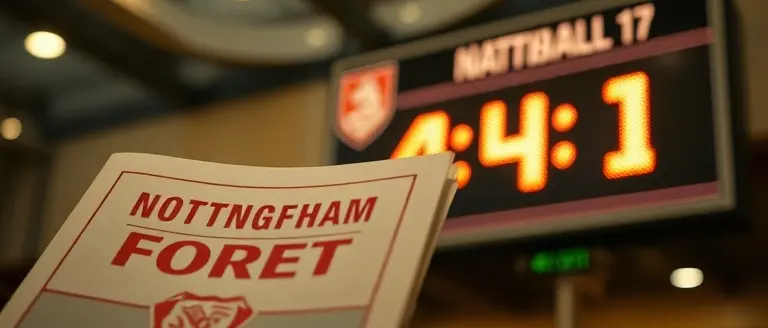
The 4-1 victory for Nottingham Forest vs Burnley on April 19, 2026, serves as more than just a vital result in the race for Premier League survival; it represents a psychological watershed moment for the club. For nearly three decades, the City Ground faithful have endured a painful statistical anomaly: a failure to secure a home comeback win after trailing at halftime in the top flight. Since 1997, the club’s inability to flip the script when entering the dressing room behind on the scoreboard had become a point of frustration, often cited by analysts as evidence of a \”mental block\” during high-stakes relegation battles.
To understand the magnitude of this achievement, consider these historical factors:
- The 1997 Precedent: The last time Nottingham Forest overcame a halftime deficit to win at home in the Premier League, the footballing landscape looked vastly different. This 29-year drought spanned various managerial eras and multiple league tier transitions.
- Psychological Barriers: Trailing at home often forced the squad into high-risk, uncoordinated attacking maneuvers. Historically, this desperation led to conceding second-half counters rather than orchestrating a comeback, making the clinical nature of this win even more anomalous.
- Tactical Evolution: The Nottingham Forest – Burnley clash saw a distinct move away from the traditional, hesitant approach. By abandoning the cautious defensive posture that defined their 29-year \”curse,\” the team demonstrated a new level of tactical maturity.
This victory is significant because it shatters the prevailing narrative that the current squad lacks the resilience to recover from adversity. By dismantling Burnley in a prolific 15-minute second-half flurry, the team proved that they are no longer shackled by historical baggage. Instead, they have signaled a shift in identity—one capable of adjusting to in-game setbacks—which provides a much-needed morale boost as they distance themselves from the relegation zone.
Tactical Pivot: Anatomy of a 15-Minute Hat-Trick
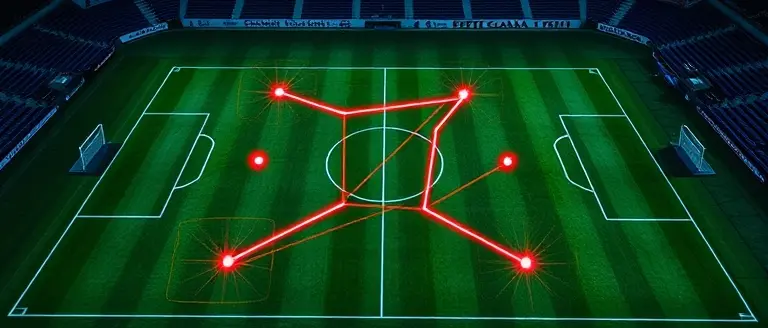
The dramatic 4-1 comeback for Nottingham Forest against Burnley at the City Ground was not merely a stroke of individual brilliance; it was a masterclass in halftime tactical reconfiguration. Trailing at the break, the Forest coaching staff identified a critical flaw in Burnley’s defensive shape: the lack of vertical compactness between their central defensive pairing and the holding midfield screen. To exploit this, Forest shifted to a more fluid, high-pressing transition structure, tasking Morgan Gibbs-White with operating in the \”half-spaces\”—the dangerous pockets of territory between Burnley’s full-backs and center-backs.
Adjustments That Sparked the Resurgence
The tactical shift focused on three primary adjustments that dismantled the visitors’ organization:
- Vertical Stretching: By instructing the wingers to remain wider, Forest forced the Burnley backline to expand horizontally, creating the essential gaps in the middle of the pitch.
- Aggressive Pressing Triggers: Instead of a passive block, the team implemented a man-oriented press immediately upon losing possession, forcing Burnley into hurried clearances.
- The Gibbs-White Pivot: The central playmaker was given a \”free role\” behind the striker, allowing him to drift laterally to overload areas where Burnley’s midfield lacked defensive cover.
This strategic recalibration directly fueled the 15-minute hat-trick that stunned the opposition. By dragging the Burnley defenders out of their disciplined line, Gibbs-White utilized his superior spatial awareness to receive possession in transition. His movement patterns—specifically his darting runs behind the midfield pivot—rendered Burnley’s defensive shell obsolete. This clinical display of exploitation not only turned the tide of the nottm forest vs burnley fixture but also served as a blueprint for how a well-timed tactical pivot can disrupt a relegation-threatened side that relies on static defensive structures. The efficiency of this adjustment remains a focal point for analysts evaluating the tactical evolution of the squad throughout the season.
The Three Lions Case: Morgan Gibbs-White’s England Credentials

Following his clinical 15-minute hat-trick during the pivotal nottm forest vs burnley clash, the debate surrounding Morgan Gibbs-White’s inclusion in the England national team has reached a fever pitch. In a season defined by high-stakes survival pressure, Gibbs-White has emerged as a rare creative spark capable of single-handedly altering a match’s trajectory. His performance at the City Ground demonstrated not only elite finishing ability but also the psychological fortitude required to excel when the weight of relegation looms. Unlike many contemporaries who thrive in comfortable, dominant systems, Gibbs-White consistently delivers under the extreme stress of a Nottingham Forest side fighting for its Premier League life.
Assessing the Midfield Competition
When comparing Gibbs-White’s output to current members of the England setup, his versatility as a roaming playmaker distinguishes him from more rigid, box-to-box competitors. Analysts often prioritize players from \”Big Six\” clubs, yet the raw efficiency of the Nottingham Forest star suggests he offers a different, perhaps more resilient, profile:
- Game-Changing Impact: Gibbs-White possesses an uncanny ability to transition from playmaker to primary goal threat in seconds, a trait that proved decisive against Burnley.
- Tactical Flexibility: He operates effectively across the front three or as a traditional number 10, allowing for late-game tactical pivots that international managers often require.
- High-Pressure Reliability: By stepping up during a critical relegation battle, he has proven he can handle the intensity of \”must-win\” fixtures—a skill that translates directly to the high-pressure environment of tournament football.
While international selection criteria remain subjective, the current evidence suggests that Gibbs-White’s technical prowess and momentum-shifting capabilities are undervalued. If the goal for the England squad is to maintain a deep bench of players who can influence the game when the primary plan falters, then his ability to turn a deficit into a commanding 4-1 victory makes him an increasingly undeniable candidate for a national team recall.
The 4-1 victory for Nottingham Forest over Burnley is a case study in how tactical discipline, coupled with individual brilliance, can redefine a season. By dismantling their opponents in a second-half surge, Forest didn’t just win a match; they shattered a 29-year psychological hurdle and proved their grit in the face of relegation. For the devoted fan, deciphering these complex narratives—from the intricate tactical shifts to the high-stakes debate over international call-ups—demands more than just casual observation; it requires sharp, sustained cognitive engagement.
Just as Nottingham Forest’s manager needed extreme tactical clarity to pivot the game and secure that decisive comeback, you need a high-level focus to process the granular data that separates a casual spectator from a true sports aficionado. That is where The Brain Song becomes your essential secret weapon. By optimizing your cognitive function, it helps you process complex sports analytics, recognize patterns in real-time, and deepen your appreciation for the fine margins that define modern football.
If you are ready to stop just watching the game and start seeing the underlying structure like a professional scout, it is time to optimize your focus. Experience a new level of mental sharpness that keeps you locked into every crucial detail.  Sharpen your analytical edge and focus on the fine details of the game with The Brain Song. Unlock My Analytical Edge Now!