
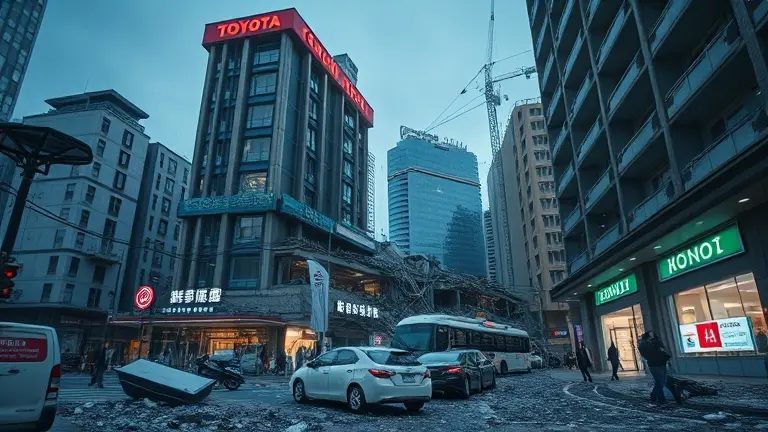
On July 28, 2026, the Kumamoto region of Japan was rocked by a devastating 7.1 magnitude earthquake, sending shockwaves through the island of Kyushu and leaving a trail of destruction in its wake. As emergency responders and government officials navigate the aftermath, the human toll is heart-wrenching, with at least 18 lives lost and countless individuals displaced. The collapse of commercial infrastructure, including a prominent shopping mall, has reignited urgent conversations about structural resilience in one of the world’s most seismically active regions, while the forced shutdown of Toyota’s regional assembly plants signals a deepening ripple effect across the global automotive and semiconductor supply chains.
This seismic event is more than a news cycle; it is a profound test of engineering and preparedness. While initial concerns regarding a tsunami have been mitigated, the structural failures witnessed throughout Kyushu highlight critical gaps in urban design and construction durability. In this analysis, we move beyond the immediate headlines to examine the specific engineering failures observed, provide a comparative retrospective on the 2016 Kumamoto earthquakes, and dissect the economic implications of industrial supply chain disruptions. Understanding why these structures failed is the first step toward building a more resilient future.
,slug:
7.1 Magnitude Earthquake Strikes Kumamoto: Current Situation Overview
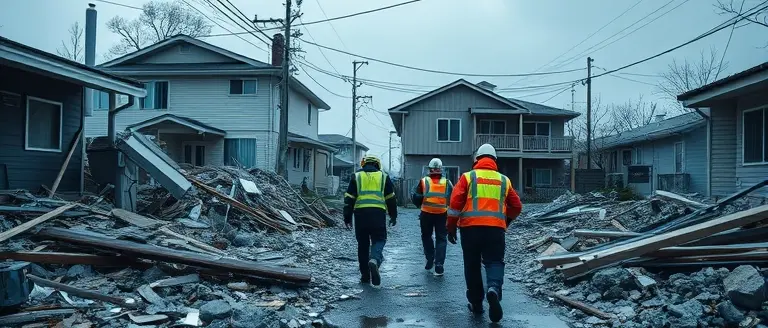
On July 28, 2026, a powerful 7.1 magnitude earthquake struck the Kumamoto region on the southern island of Kyushu, triggering a significant emergency response across Japan. As of July 29, 2026, authorities have confirmed at least 18 fatalities, with search and rescue operations currently ongoing. The seismic event caused widespread destruction throughout the region, most notably the structural failure and collapse of a major shopping mall. While initial reports of damage raised fears of a widespread disaster, the Japan Meteorological Agency (JMA) quickly assessed the situation and confirmed that there was no immediate major tsunami threat to the coastlines, allowing emergency teams to focus resources on urban search and rescue.
Government Response and Infrastructure Damage
Prime Minister Sanae Takaichi is actively leading the government’s disaster response, coordinating with regional authorities and the Japan Self-Defense Forces to navigate the humanitarian crisis. The primary focus remains on locating survivors trapped within debris and restoring critical services to affected districts. Key impacts from the earthquake japan event include:
- Humanitarian Toll: At least 18 confirmed deaths, with medical teams treating dozens of injuries sustained from falling debris and structural collapses.
- Infrastructure Failure: The collapse of a local shopping mall serves as a focal point for investigators examining building safety and seismic code compliance in the region.
- Regional Instability: Significant damage to regional transportation and electrical grids has hindered initial recovery efforts in more rural sectors of the Kumamoto prefecture.
The scale of this japan earthquake has drawn comparisons to historical seismic activity in the region, prompting an immediate re-evaluation of industrial safety protocols. Beyond the tragic loss of life, the economic ripple effects are already being felt, as major manufacturers—most notably Toyota—have been forced to halt operations at three southern Japan plants to conduct safety assessments. As the situation remains fluid, officials warn that secondary tremors continue to pose risks to rescue personnel working near unstable, damaged infrastructure.
Industrial Impact: Toyota Production Halts and Supply Chain Disruption

The Japan earthquake that struck the Kumamoto region on July 28, 2026, has triggered significant logistical tremors far beyond the immediate humanitarian crisis. As rescue teams continue to navigate the debris, major industrial players have been forced to prioritize safety over output. Toyota, a cornerstone of the regional economy, confirmed it has halted operations at three of its key manufacturing plants in southern Japan. This proactive measure is designed to allow for thorough facility inspections and to ensure the safety of employees following the 7.1 magnitude seismic event. Preliminary reports indicate that while the physical plants may have escaped catastrophic structural failure, the complexity of modern “just-in-time” manufacturing makes even short-term shutdowns costly.
Supply Chain Vulnerabilities in Kyushu
The concentration of automotive and semiconductor manufacturing in Kyushu has heightened concerns regarding a potential ripple effect on global supply chains. Because earthquake Japan risks are inherent to the geography, many firms have diversified their logistics, yet this specific event highlights persistent vulnerabilities. The suspension of production is likely to impact:
- Tier 1 and Tier 2 Suppliers: Smaller firms within the Kumamoto industrial cluster may face longer delays than primary assembly plants due to localized utility outages and road damage.
- Semiconductor Bottlenecks: With Kyushu serving as a significant hub for chip manufacturing, any disruption to power or precise climate-controlled environments could delay shipments for the broader automotive sector.
- Inventory Management: The shift away from continuous production will inevitably test the resilience of global inventory stocks, potentially leading to delivery delays for consumers worldwide.
As industrial assessments continue, the focus remains on the structural integrity of supply routes and energy infrastructure. Experts suggest that while these Japan earthquakes are managed with high precision, the compounding nature of these shocks necessitates a deeper look at the resilience of the southern industrial corridor. Manufacturers are currently working to determine the timeline for a full return to operations, though supply chain experts warn that the true scope of the impact may not be fully understood until logistical assessments in the Kumamoto region are concluded later this week.
Government Response and Humanitarian Aid Efforts

In the immediate aftermath of the July 28, 2026, japan earthquake, the national government has mobilized a massive, centralized relief operation to address the crisis in the Kumamoto region. Prime Minister Sanae Takaichi has taken personal charge of the emergency task force, coordinating between the Japan Meteorological Agency, local prefectural authorities, and national infrastructure agencies. The primary strategic objective is the rapid stabilization of critical infrastructure to facilitate search and rescue teams navigating the debris left by this 7.1 magnitude earthquake japan event.
Deployment of Self-Defense Forces and Emergency Services
The Japan Self-Defense Forces (JSDF) have been deployed in full force to the hardest-hit zones, utilizing heavy machinery to clear arterial roads blocked by landslides and structural collapses. As of July 29, 2026, the focus remains on locating survivors trapped beneath the rubble of major commercial hubs, such as the collapsed shopping mall. The humanitarian strategy prioritizes three core areas:
- Search and Rescue Operations: JSDF personnel are working alongside local firefighters to conduct systematic grid searches of high-density urban areas.
- Emergency Medical Support: Field hospitals and mobile medical units are being established to alleviate the burden on local healthcare facilities, ensuring that the injured receive immediate triage.
- Displaced Citizen Support: The government has opened multiple evacuation centers in Kyushu, providing temporary housing, clean water, and food supplies for those whose homes were rendered uninhabitable by the japan earthquakes.
Prime Minister Takaichi has emphasized that the state’s priority is the safety of the survivors and the rapid restoration of essential services. Despite initial concerns regarding secondary hazards, the Japan Meteorological Agency has confirmed that there is no imminent tsunami threat, allowing relief efforts to focus exclusively on seismic damage recovery. Officials continue to monitor the area for aftershocks, which remain a significant risk for both the affected population and the rescue teams operating in the field.
Seismic Stability and Future Preparedness in the Kyushu Region

The Kumamoto region sits atop a complex network of active fault lines, making it one of the most seismically active zones in Japan. This recent 7.1 magnitude earthquake serves as a stark reminder of the geological volatility inherent to the Kyushu island arc. While the destruction of specific infrastructure, such as the local shopping mall, has prompted urgent questions regarding structural integrity, the broader landscape of Japan earthquakes reveals a sophisticated, multi-layered approach to disaster mitigation. Engineering experts note that Japan’s current seismic building codes, which were significantly overhauled following the 1995 Kobe earthquake and refined after the 2016 Kumamoto earthquakes, are designed to prioritize human safety by preventing total structural collapse even when the ground undergoes intense acceleration.
Engineering Resilience and Modern Standards
The resilience of the built environment in Japan is a product of rigorous, research-backed evolution. Even when an earthquake of this magnitude strikes, the high casualty count remains significantly lower than what would be expected in regions with less stringent construction regulations. Key components of this infrastructure include:
- Base Isolation Systems: Many modern commercial structures utilize lead-rubber bearings to decouple buildings from the shaking earth.
- Seismic Damping: Hydraulic and mechanical dampers absorb energy, preventing the resonance that often leads to catastrophic failure.
- JMA Warning Systems: The Japan Meteorological Agency’s (JMA) rapid alert network provides critical seconds for individuals to seek cover, which remains the single most effective tool for minimizing life loss.
Looking ahead, urban planners are tasked with retrofitting older structures that predate current standards, as these facilities represent the greatest risk during seismic events. While the Japan earthquake on July 28, 2026, has caused tragic loss and economic strain, the widespread survival of residential and critical transit infrastructure underscores the efficacy of Japan’s proactive investment in disaster readiness. Continuous evaluation of these engineering failures—particularly regarding non-structural elements like facades and partitions—will be essential to future-proofing the Kumamoto region against recurring seismic threats.
Building for a Resilient Future
The tragedy in Kyushu is a stark reminder that while we cannot prevent seismic activity, we can fundamentally alter the outcomes through superior engineering and rigorous construction standards. The collapse of major infrastructure in the Kumamoto region underscores a critical vulnerability: when structural integrity is compromised or inadequately planned, the results are catastrophic. Moving forward, the global industry must pivot toward the high-precision methodologies that differentiate a structure that collapses from one that stands firm under extreme duress.
Understanding the difference between catastrophe and resilience often comes down to the precision of the initial blueprints. By mastering the engineering foundations required for durable construction, professionals and dedicated builders can contribute to a safer, more robust built environment. Our extensive library of professional-grade plans serves as a vital educational resource, offering the technical accuracy and workshop-tested specifications necessary to master structural integrity.
By studying these standards, you are not just building; you are internalizing the principles of resilience that define modern, high-integrity architecture. Equip yourself with the knowledge to create structures that hold up under pressure and ensure long-term stability.
 Explore our comprehensive library of professional-grade construction plans to better understand the standards required for resilient, high-integrity structural development.Master Structural Integrity Today!