
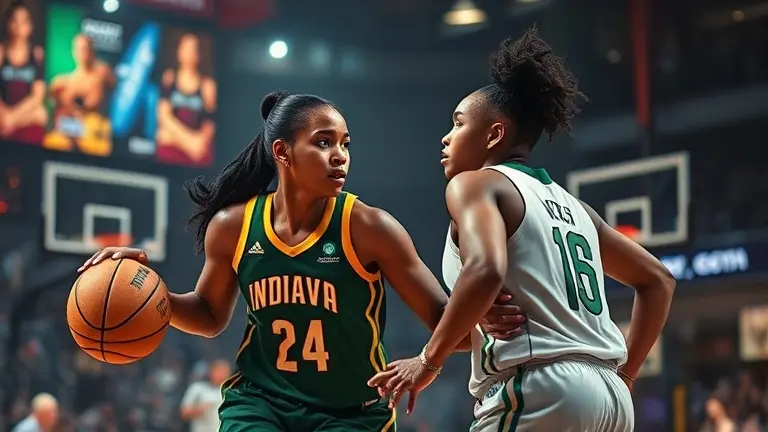
When the buzzer sounded on July 28, 2026, the 105-95 scoreline in the Indiana Fever vs Seattle Storm matchup told only half the story. While the national headlines rightfully gravitated toward the electric synergy between Caitlin Clark and Kelsey Mitchell—who combined for a staggering 60 points—the true drama unfolded mid-game. The sudden injury departure of Aliyah Boston sent shockwaves through the arena, testing the depth and mental fortitude of a Fever squad currently riding a blistering four-game winning streak. Rather than folding under the pressure of losing their interior anchor, the team executed a masterclass in rapid tactical adjustment, proving that their current rise in the WNBA standings is built on far more than just individual brilliance.
For fans and analysts alike, this game was a clinic in high-speed, high-stakes decision-making. To understand how the Fever sustained a 100-point pace without their defensive backbone, we must look beyond the stat sheet and into the mental processing speed required to operate at this elite level. As we dissect the viral highlights and the specific plays that shattered the Storm’s defensive rotations, it becomes clear that elite basketball is as much a game of cognitive acceleration as it is physical capability. Keeping pace with such complex tactical evolution demands the same level of focus from those who analyze the game as it does from the athletes competing on the floor.
Fever vs Storm: The Post-All-Star Break Statement Game
The July 28, 2026, matchup between the Indiana Fever and the Seattle Storm served as a definitive turning point for the WNBA season. Returning from the All-Star break, the Fever entered the contest with questions regarding their ability to sustain momentum, but they answered with a historic 105-95 victory. This win was not merely a singular success; it established a WNBA record as the Fever secured their fourth consecutive 100-point game, signaling a potent offensive shift that has forced the rest of the league to recalibrate their defensive strategies.
Synergy and Scoring Dominance
The offensive brilliance of Caitlin Clark, who finished with 32 points, combined with Kelsey Mitchell‘s explosive 28-point performance, proved to be the ultimate catalyst. Their synergy, often referred to by the AWA fam as the engine of the Fever’s new-look offense, allowed Indiana to dictate the pace of the game despite the high intensity of the Seattle defense. The team’s ability to maintain this scoring efficiency—even amidst the high-pressure environment of a nationally significant post-All-Star return—highlights a newfound maturity and chemistry within the roster.
Tactical Resilience After Injury
The significance of the Indiana Fever vs Seattle Storm contest was further amplified by the second-half injury scare involving Aliyah Boston. The team’s ability to close out the game with a 10-point margin despite losing a core interior presence showcased remarkable tactical depth. Key takeaways from this performance include:
- Adaptive Perimeter Play: With Boston off the floor, the Fever leaned into a faster, perimeter-heavy transition game that overwhelmed the Storm’s interior defenders.
- Momentum Maintenance: The team demonstrated that their four-game winning streak was not dependent on a single player, but rather a robust system that maximizes scoring opportunities.
- Efficiency Standards: The 105-point output remains a hallmark of their post-All-Star break identity, cementing their position as a high-octane offensive force in the playoff race.
As the Fever score and statistics continue to dominate headlines, this victory stands as the ultimate statement that Indiana is not just competing—they are setting the pace for the remainder of the season.
Tactical Pivot: Maintaining Offensive Flow Without Aliyah Boston

When Aliyah Boston exited the court during the Indiana Fever vs Seattle Storm matchup, the team faced an immediate crisis: how to sustain a high-tempo offense without their primary interior anchor. The Fever’s ability to clear 100 points for the fourth consecutive game—a historic WNBA record—was not merely a result of individual scoring bursts, but a calculated tactical shift. Coach Christie Sides pivoted toward a “positionless” perimeter-heavy scheme, opting to pull the Seattle defense away from the paint to create driving lanes. By spacing the floor with shooters, the Fever forced the Storm to abandon their traditional interior coverage, effectively mitigating the loss of Boston’s post presence.
Synergy Between Clark and Mitchell
The heavy lifting in the absence of Boston fell squarely on the shoulders of Caitlin Clark and Kelsey Mitchell. Their synergy became the primary engine of the offense. Clark’s elite court vision allowed her to manipulate defenders, while Mitchell utilized high-screen action to exploit mismatches. Key adjustments included:
- Increased Pace: The team pushed the ball in transition to prevent Seattle from setting up a zone defense.
- Five-Out Spacing: By playing small ball, the Fever ensured that the paint remained clear for drives, neutralizing the rim protection normally offered by Seattle’s bigs.
- Pick-and-Roll Optimization: Clark and Mitchell frequently rotated as primary ball-handlers, forcing the defense to commit to the perimeter and opening up backdoor cuts.
This tactical flexibility allowed the Fever to maintain their scoring pace even when the interior rotation was compromised. While the Fever injury report remains a focal point for fans concerned about the playoffs, the July 28 victory proved that the team’s offensive ceiling is elevated by their adaptability. By relying on individual playmaking brilliance and a fluid motion offense, the Fever demonstrated they can overcome personnel setbacks while maintaining the momentum of their four-game winning streak.
Caitlin Clark and Kelsey Mitchell: A Record-Breaking Offensive Display
The Indiana Fever vs Seattle Storm matchup on July 28, 2026, served as a definitive masterclass in modern basketball pacing, highlighting an unprecedented offensive ceiling for Indiana. By securing a 105-95 victory, the Fever achieved a historic WNBA record, marking their fourth consecutive game scoring at least 100 points. This sustained output is largely attributed to the dual-threat synergy between Caitlin Clark and Kelsey Mitchell, who combined for 60 points and dismantled the Storm’s defensive rotations with relentless efficiency.
Tactical Synergy: The Clark-Mitchell Dynamic
The offensive success observed during this fever score outburst was not merely a result of individual talent but of calculated tactical alignment. Clark served as the primary facilitator, utilizing her deep-range gravity to stretch the floor, which created high-percentage lanes for Mitchell to exploit. Key takeaways from their performance include:
- Elite Spacing: Clark’s presence beyond the arc forced the Storm to commit help-side defenders, clearing the paint for Mitchell’s mid-range excellence.
- Transition Efficiency: The duo maximized opportunities off defensive stops, fueling the Fever’s league-leading transition pace.
- Situational Shot Selection: Mitchell’s ability to score under pressure complemented Clark’s playmaking, allowing the team to maintain momentum even when the half-court sets tightened up.
Establishing a New Offensive Standard
This performance signals that the Fever have reached a new tier of offensive production. With Mitchell effectively operating as a scoring anchor and Clark orchestrating the tempo, the team has proven capable of sustaining high-volume scoring despite shifting lineup dynamics. As fans analyze the Caitlin Clark performance vs Storm, it becomes clear that their offensive rhythm is now the benchmark for the league. This consistency is critical for their playoff trajectory, suggesting that even with roster adjustments necessitated by injury concerns, the Fever’s backcourt tandem provides a reliable foundation to continue their current winning streak.
Aliyah Boston Injury Report: Status and Impact on the Playoff Push

The Aliyah Boston injury scare during the Indiana Fever vs Seattle Storm matchup has become the central focus of the team’s medical staff as they manage a high-stakes stretch of the season. After exiting the game in the second half, Boston underwent preliminary evaluations to determine the severity of her condition. While official reports remain cautious, the team’s medical personnel are monitoring for any lingering complications that could necessitate a short-term recovery period. For a Fever squad currently riding a four-game winning streak and historic offensive momentum, Boston’s presence in the paint is essential for defensive anchoring and interior spacing.
Strategic Adjustments Amid Health Concerns
Should the Fever injury report dictate a period of absence for Boston, the coaching staff faces the daunting challenge of maintaining their record-setting offensive pace. In the immediate aftermath of her exit during the win against the Seattle Storm, the team successfully pivoted to a small-ball lineup that prioritized perimeter shooting. Key tactical takeaways from this transition include:
- Increased Usage Rates: Caitlin Clark and Kelsey Mitchell successfully absorbed the bulk of the scoring load, proving the offense can remain explosive even without its primary post presence.
- Rotational Versatility: Bench players were forced into high-leverage minutes, testing the depth of the roster during a critical playoff push.
- Defensive Rebounding Focus: Without Boston, the team relied on collective rebounding efforts to limit second-chance opportunities for opposing offenses.
The long-term impact on the WNBA standings hinges heavily on Boston’s availability. As the team aims to build upon their recent 105-95 Fever score and maintain their 100-point streak, any extended time on the sidelines for Boston would force a permanent shift in tactical identity. While the AWA fam and the broader fanbase remain concerned, early indications suggest the team is prepared to adjust rotations to ensure they remain competitive as they head into the next series of games.
Sharpen Your Analytical Edge
The Indiana Fever’s victory against the Storm serves as a powerful reminder that elite performance is rarely just about raw talent; it is about the ability to adapt instantly when the game plan changes. Whether you are tracking the complex defensive rotations that allowed Indiana to thrive after Aliyah Boston’s injury, or you are deep-diving into the advanced metrics that define the modern WNBA, the speed at which you process information determines your vantage point. Just as Caitlin Clark relies on razor-sharp court vision to navigate tight defenses, sports analysts and dedicated fans need a heightened state of mental clarity to decode the rapid-fire strategy unfolding on every possession.
Maintaining this level of deep, analytical focus in an era of 100-point streaks and evolving team dynamics is a challenge for any enthusiast. This is where The Brain Song becomes your ultimate cognitive accelerator. Designed to support the mental clarity and rapid processing speed necessary to track fast-paced statistics and strategic gameplay, this solution allows you to stay ahead of the narrative, not just watch it. By optimizing your focus, you can better interpret the intricate nuances of coaching decisions and player synergy, ensuring you never miss a beat in the fast-paced WNBA season.
Elevate your own game analysis and mental sharpness with the same precision the Fever use on the court; learn more about optimizing your focus here.
 Elevate your own game analysis and mental sharpness with the same precision the Fever use on the court; learn more about optimizing your focus here.Yes, I Want This Now!