
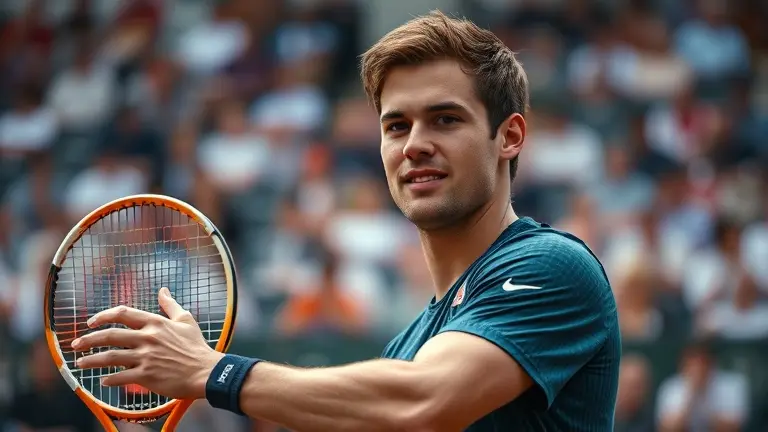
On April 19, 2026, the tennis world witnessed a pivotal transformation. Ben Shelton, the explosive American talent known for his hard-court dominance, officially announced his arrival as a multi-surface threat by claiming the Munich Open title. Defeating Flavio Cobolli with a display of poise and tactical depth, Shelton did more than just secure his fifth ATP trophy; he shattered the long-standing stigma surrounding American performance on European red clay.
While the statistics of his 6-2, 7-5 victory capture the physical reality of his win, the narrative extends far deeper. Fans and analysts have been quick to point out how this performance echoes the legendary grit once displayed by Andre Agassi. Yet, there is a quieter, equally compelling force at play: the stability and psychological momentum fueled by his high-profile support system, including his partner, soccer icon Trinity Rodman.
As Shelton navigates the pressures of superstardom, the synergy between his professional evolution and his personal stability has become a subject of intense intrigue. This article explores the tactical shifts that allowed Shelton to master the red dirt and looks at the intangible components—like the power of deep, supportive partnerships—that allow world-class athletes to sustain their peak performance under the global spotlight.
A Historic Breakthrough: Ben Shelton’s Munich Masterclass
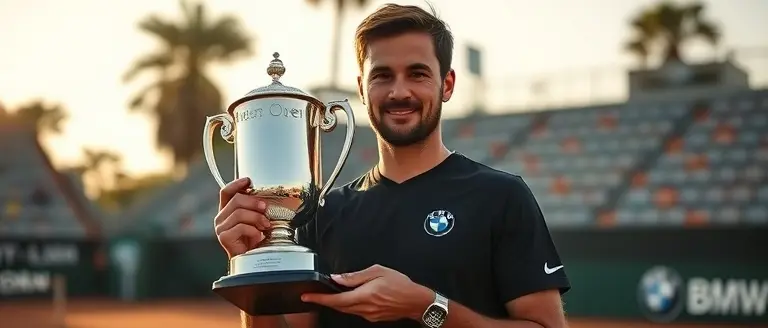
On April 19, 2026, Ben Shelton cemented his status as a versatile global force by securing the Munich Open title. In a commanding performance, the American defeated Flavio Cobolli 6-2, 7-5, showcasing a level of composure and tactical discipline that silenced critics who previously labeled him a hard-court specialist. This victory marks his fifth career ATP singles title, a significant milestone that highlights his rapid professional evolution and his increasing comfort on European clay courts. By dominating the match in straight sets, Shelton demonstrated an refined ability to manage rallies, shift defensive patterns, and dictate play despite the slower surface conditions that have historically challenged players from the United States.
A Legacy Reclaimed
The magnitude of this win extends beyond the tournament trophy. Shelton’s triumph represents a major breakthrough in American tennis history, as he became the first American to win the Munich Open since Andre Agassi. This comparison underscores the weight of the achievement, placing Shelton in rare company and signaling a potential shift in how American prospects approach the European clay swing. His road to the title was characterized by:
- Tactical Maturity: An increased emphasis on topspin and patience rather than relying solely on raw power.
- Court Coverage: Improved sliding mechanics and movement, which allowed him to neutralize Cobolli’s aggressive baseline pressure.
- Consistency: A high first-serve percentage that kept his service games secure throughout the final.
This victory at the BMW Open does more than add hardware to his collection; it provides essential momentum for his upcoming season. As the spotlight intensifies—fueled by both his athletic rise and his high-profile relationship with soccer star Trinity Rodman—Shelton is proving that his game is built for longevity and success on all surfaces. For fans and analysts alike, Shelton is no longer just an explosive prospect; he is a tactical, title-contending professional capable of conquering the most challenging stages in the sport.
Tactical Evolution: Mastering the Red Clay
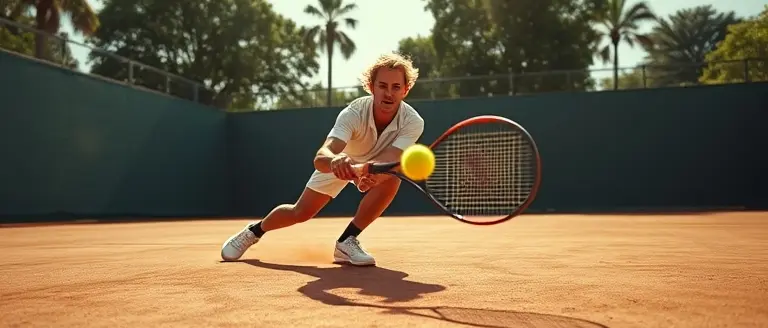
The victory at the Munich Open signifies a transformative chapter in the career of Ben Shelton. Historically, the American’s explosive game—built on a foundation of massive serving and blistering flat forehands—was optimized for the lightning-quick surfaces of the hard-court circuit. However, his dominant 6-2, 7-5 performance against Flavio Cobolli highlights a sophisticated technical recalibration tailored specifically for the nuances of European red clay. By trading his “all-or-nothing” approach for measured aggression, Shelton has proven that he can dismantle opponents by blending raw power with the tactical patience required to survive long, grinding baseline rallies.
Key Tactical Adjustments on Clay
To secure his fifth career ATP title, Shelton implemented several critical adjustments that distinguish his 2026 clay-court campaign from his previous seasons:
- Refined Movement: Rather than relying solely on speed, Shelton utilized improved sliding mechanics, allowing him to maintain balance on the slippery red dirt while transitioning from defense to offense.
- Heavy Topspin Integration: To neutralize his opponents’ rhythm, Shelton shifted his contact point, opting for more heavy topspin rather than purely flat strikes. This high-arcing ball trajectory forced opponents like Cobolli to take the ball at uncomfortable heights, effectively stalling their momentum.
- Calculated Patience: Evidence from the Munich Open suggests a newfound discipline in baseline construction. Shelton resisted the urge to end points prematurely, choosing instead to build pressure over 5-to-8 shot exchanges before pulling the trigger on a winner.
- Serve Placement over Speed: Recognizing that clay slows the ball, Shelton prioritized precision and spin on his serve, utilizing wider angles to open the court for his follow-up groundstrokes rather than chasing raw aces.
This evolution indicates that the young star is no longer merely an “American power hitter” but a versatile tactician capable of adapting his game to the most grueling surface in professional tennis. By mastering the clay, Shelton has successfully bridged the gap between his natural offensive instincts and the strategic defensive requirements of the European tour.
The Shelton-Rodman Factor: Public Interest and Professional Growth
Beyond his tactical evolution on the red dirt, Ben Shelton has increasingly become a focal point of mainstream sports culture, largely due to his high-profile relationship with NWSL and USWNT soccer star Trinity Rodman. This “power couple” dynamic has amplified the visibility of his matches, drawing a broader demographic of fans to the Munich Open and elevating his status from a tennis prodigy to a crossover celebrity. While media narratives often lean toward the personal aspects of such relationships, the reality for Shelton is one of disciplined compartmentalization. The public support provided by Rodman serves as a stable backdrop for his rigorous professional schedule, allowing him to maintain the intense focus required to dismantle opponents like Flavio Cobolli on the challenging clay surface.
Balancing Celebrity with Competitive Drive
The convergence of elite athleticism between Shelton and Rodman creates a unique narrative that resonates with a modern audience, yet it is the professional synergy that defines their impact. Evidence suggests that having a partner who understands the mental and physical demands of top-tier professional sports provides a structural advantage for an athlete navigating the global tour. Rather than serving as a distraction, this support system seems to correlate with his recent consistency.
Key aspects of how this dynamic influences his career trajectory include:
- Media Amplification: Increased mainstream coverage, which brings more eyes to his technical advancements on the court.
- Mental Resilience: A stable off-court environment that complements his rigorous training regimen and tactical adjustments.
- Brand Synergy: Both athletes represent a new generation of American sports icons, positioning them as influential figures who bridge traditional sports boundaries.
Ultimately, while the social buzz surrounding Shelton and Rodman continues to grow, his recent victory at the Munich Open proves that his professional trajectory remains firmly on an upward, focused path. By successfully leveraging this newfound platform, he is not only raising his profile but also proving that he can handle the weight of increased scrutiny while continuing to develop his game for the world’s most difficult surfaces.
Player Profile: An Upward Trajectory toward Grand Slam Potential

The recent triumph of Ben Shelton at the Munich Open serves as a definitive turning point in his professional career, signaling a departure from the “all-or-nothing” power-hitting style that characterized his early years on the tour. Historically, American players have often struggled to translate hard-court dominance to the sluggish, grinding nature of European red clay. However, Shelton’s 6-2, 7-5 victory over Flavio Cobolli demonstrates a maturation in his tactical approach, proving he can dictate points through patience and calculated point construction rather than relying solely on high-velocity serves. By becoming the first American to secure the title in Munich since Andre Agassi, Shelton has validated his evolution into a well-rounded, tour-level competitor capable of outmaneuvering specialists on their preferred surfaces.
Tactical Versatility and Grand Slam Ambitions
Evidence suggests that Shelton is actively refining his baseline game to support deeper runs in Grand Slam tournaments, where match formats require sustained tactical discipline. His performance in Munich highlights several key adjustments that have transformed him into a formidable contender:
- Improved Court Positioning: He is now taking the ball earlier, minimizing the time opponents have to recover on the slower clay surface.
- Enhanced Defensive Resilience: By increasing his spin rate and depth, he is forcing errors rather than simply attempting to blast winners from neutral positions.
- Strategic Serve Placement: While still possessing one of the most dangerous serves in the game, he is now prioritizing placement over raw speed to set up shorter, easier put-away shots.
- Adaptability: The ability to pivot between aggressive offense and measured defense proves he is no longer a one-dimensional threat.
As the tour moves toward the height of the clay-court season, this breakthrough at the Munich Open establishes a new baseline for his expectations. By balancing his explosive athleticism with the technical patience required for clay, Shelton is signaling to the rest of the ATP field that he is a legitimate threat to reach the second week of any major. His trajectory suggests that the tactical gaps in his game are closing, providing the necessary foundation to compete for the sport’s biggest titles.
The Secret to Sustainable Peak Performance
Ben Shelton’s victory at the Munich Open is much more than a tactical milestone; it is a testament to the power of focus, adaptation, and the steady emotional support that fuels elite performance. By evolving his game to conquer the red clay, Shelton has shown us that true mastery in any field requires both technical rigor and a balanced, high-functioning personal life. His journey from a raw, power-reliant prospect to a disciplined, title-winning professional highlights the vital importance of psychological stability when chasing greatness.
Many fans observing the strong, devoted bond between Shelton and Trinity Rodman often wonder how such high-achieving individuals maintain deep, unbreakable connections despite the relentless pressures of their respective careers. The answer often lies in understanding the hidden psychological triggers that foster true devotion and commitment. If you are looking to cultivate that same level of deep, unwavering support and “heroic” connection in your own relationship, you don’t need a tennis court to start your training.
Just as Shelton has mastered the specific tactics required to win on clay, you can master the psychological tools to build lasting, passionate relationships. Our recommended guide, His Secret Obsession, provides the framework to tap into the ‘Hero Instinct’—a proven psychological approach that mirrors the dedication needed for peak success. This resource is designed to help you foster the kind of professional-grade, loyal devotion that sustains high-achievers. Unlock the secrets to a deeper, more intentional connection today.

Discover the ‘Secret Signals’ that foster professional-grade devotion in your own relationship.
Unlock My Results