
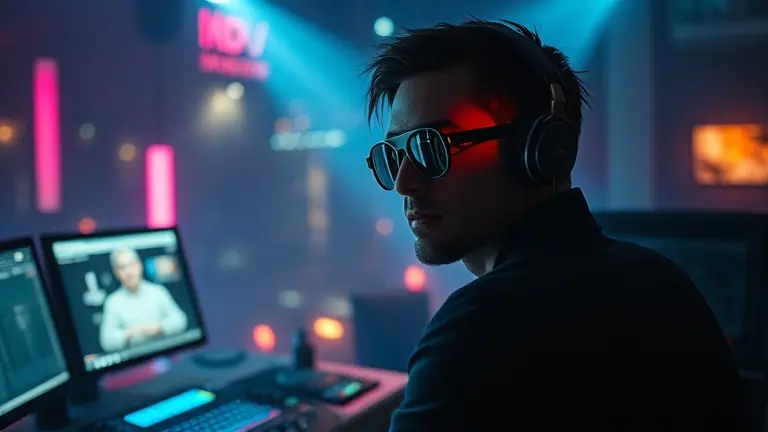
The electronic music world is in mourning today following the tragic news of the passing of Vincent Belorgey, the visionary artist globally known as Kavinsky. At 50 years old, the French DJ and producer leaves behind a monumental legacy, having single-handedly redefined the synthwave genre and shaped the auditory backdrop of an entire generation. From his enigmatic ‘zombie’ persona to the haunting, cinematic textures of his production, Kavinsky was never just a musician—he was a master of immersive sound design whose influence transcended the dance floor and permeated the very fabric of modern pop culture.
For millions, his 2010 masterpiece, Nightcall, remains the definitive anthem of the 2010s, forever etched into public consciousness by its unforgettable role in the film Drive. As we reflect on his career, it becomes clear that his genius lay in his ability to engineer soundscapes that were as intellectually stimulating as they were emotionally resonant. In this tribute, we explore the depth of his discography, the cultural impact of his synthwave revival, and why his unique approach to auditory immersion continues to set a gold standard for producers and listeners alike.
Remembering Vincent Belorgey: The Life and Legacy of Kavinsky
The global electronic music community is in mourning following the confirmed passing of Vincent Belorgey, the visionary artist known to the world as Kavinsky. At the age of 50, the French musician and producer was found dead in his Paris home, an event that has sent shockwaves through the industry. As a central pillar of the French electronic scene, Belorgey did more than just produce music; he crafted an entire cinematic universe through his sonic aesthetic, blending nostalgic synthwave elements with a dark, modern edge that helped define the sound of the 2010s. His sudden departure leaves an undeniable void in the evolution of modern electronica.
A Career Defined by Innovation
Belorgey’s trajectory as DJ Kavinsky was marked by a unique commitment to his alter-ego—a character he developed as a zombie who crashed his Testarossa in 1986 and returned from the dead to create music. This commitment to world-building distinguished him from his contemporaries in the “French Touch” house scene. Beyond his iconic production work, his influence is best encapsulated by several key contributions to modern culture:
- The “Nightcall” Phenomenon: Perhaps his most recognizable achievement, the 2010 track “Nightcall” became a cultural touchstone after its prominent placement in the 2011 film Drive, forever linking his sound to neon-drenched, high-stakes noir aesthetics.
- Synthwave Revival: He was instrumental in popularizing the synthwave genre, influencing a generation of producers who sought to recapture the moody, analog-heavy atmosphere of 1980s cinema.
- Artistic Vision: Belorgey maintained a consistent, mysterious narrative across his EPs and debut studio album, OutRun, proving that electronic music could be as much about storytelling as it is about rhythm.
The outpouring of tributes from fellow artists and fans highlights how deeply his sound resonated globally. While official investigations into the circumstances of his passing continue, the legacy of Kavinsky remains secure. He leaves behind a discography that continues to serve as a masterclass in atmosphere, tension, and electronic composition, ensuring that his influence will be felt by creators and listeners for many years to come.
The Nightcall Phenomenon: Analyzing an Iconic Soundtrack

Few electronic tracks have transcended their genre to become universal cultural touchstones, but Kavinsky’s 2010 masterpiece, “Nightcall,” achieved exactly that. Released as part of his EP Nightcall, the song served as the definitive anthem for the early 2010s synthwave revival. The track is defined by its haunting, vocoder-drenched vocals—provided by Lovefoxxx of CSS—and its pulsating, mid-tempo basslines that evoke a sense of nocturnal isolation and cinematic longing. By blending cold, retro-futuristic synthesizers with an deeply emotive melody, the dj Kavinsky persona—a undead character obsessed with vintage Ferraris and 80s aesthetics—created a sonic atmosphere that felt both nostalgic and entirely original.
The song’s trajectory changed forever when director Nicolas Winding Refn selected it for the opening credits of the 2011 film Drive. The synergy between the neon-soaked visuals of Los Angeles and the track’s melancholic rhythm became iconic. This perfect pairing solidified “Nightcall” as more than just a dance floor favorite; it became a piece of modern cinema history. The track’s impact on popular culture is evident through its widespread use in fashion shows, video games, and subsequent film soundtracks, cementing its legacy as a masterclass in mood-setting.
Why “Nightcall” Remains a Defining Anthem
- Atmospheric Storytelling: The song masterfully conveys a sense of narrative urgency, mirroring the protagonist’s journey in Drive.
- Synthwave Evolution: It provided a blueprint for the modern synthwave scene, influencing a generation of producers to explore the intersection of 80s pop aesthetics and electronic production.
- Timeless Production: Even over a decade later, the stark, minimalist arrangement sounds as fresh as it did at its release, proving that emotional resonance outweighs high-intensity drops.
As the music community mourns the loss of Kavinsky, the enduring power of “Nightcall” serves as a testament to his unique vision. It remains the most recognizable artifact of his career, capturing a specific moment in time where electronic music successfully bridged the gap between underground club culture and mainstream cinematic prestige.
Pioneer of Synthwave: How Kavinsky Shaped the Modern Sound

Long before the current revival of retro-futuristic music reached the mainstream, Kavinsky—the alias of the late Vincent Belorgey—was meticulously crafting the blueprint for what would become the global synthwave phenomenon. By blending the gritty, neon-soaked nostalgia of 1980s action cinema with the pulsating rhythms of the French electronic house scene, he moved beyond mere imitation. Instead, he created a cinematic soundscape that felt both eerily familiar and aggressively modern. As a DJ, Kavinsky understood the power of narrative; he famously adopted a “zombie” persona, claiming his character returned from the dead after a tragic 1986 Ferrari Testarossa crash to produce music. This high-concept mythology provided a vessel for his obsession with arcade aesthetics, synthesizers, and vintage horror, effectively branding the genre for a new generation of listeners.
The Architect of Retro-Futurism
His influence on contemporary production is immeasurable, as he paved the way for artists to embrace the analog warmth of hardware synthesizers. His contribution to the evolution of electronic music can be summarized through several key aesthetic and technical pillars:
- Cinematic Storytelling: He treated every EP and album as a film script, ensuring his sound design felt like a “lost” movie soundtrack.
- The “Drive” Effect: By anchoring his production in the cultural zeitgeist via the film Drive, he legitimized the marriage of synth-pop and modern cinema.
- Analog Texture: He championed the use of classic synthesizers, helping to shift the industry’s focus away from digital-only production back toward rich, oscillating oscillators.
- Narrative Continuity: His commitment to the ‘Kavinsky’ character transformed a simple music project into an immersive multimedia experience that influenced countless bedroom producers to develop their own lore.
By bridging the gap between underground French house and global pop culture, he transformed niche nostalgia into a dominant auditory movement. His legacy remains etched in every dark, driving bassline that continues to define the modern retrowave landscape.
Essential Kavinsky Tracks: Beyond the ‘Drive’ Soundtrack

While the haunting synthesizers of “Nightcall” cemented Kavinsky as a cultural icon, his discography offers a profound look into the evolution of the French electronic music scene. To truly understand the artistic depth of Vincent Belorgey, listeners must explore the aggressive, high-octane soundscapes that defined his career. His production style often utilized a “zombie” persona—a narrative character he adopted to blur the lines between horror-movie aesthetics and retro-futuristic dance music. This unique approach allowed him to bridge the gap between gritty cinematic tension and the vibrant energy of dj Kavinsky sets.
For those looking to deepen their appreciation of his legacy, these tracks serve as the pillars of his sonic evolution:
- Testarossa Autodrive: Perhaps the definitive example of his early work, this track encapsulates the 80s-inspired, high-speed aesthetic that Kavinsky championed. It features heavy, distorted basslines and a pulsating rhythm that perfectly mirrors the intensity of a midnight chase.
- Pacific Coast Highway: This composition highlights the more atmospheric side of his production. It is a masterclass in building tension, utilizing layered synths to evoke a sense of nostalgic longing and cinematic mystery that rivals his most famous works.
- Odd Look: A collaboration that bridges the gap between classic electro and modern pop sensibilities. The track’s polished production and infectious hooks demonstrate Kavinsky’s versatility, proving his influence stretched far beyond the underground synthwave revival.
Each of these tracks reinforces why Kavinsky remains a pivotal figure in modern electronica. By weaving together elements of house, techno, and cinematic scoring, he created a signature sound that feels simultaneously timeless and ahead of its time. Whether through his sharp, aggressive percussion or his lush, sweeping melodies, his work continues to serve as a blueprint for contemporary electronic artists worldwide.
The Sonic Legacy and Your Cognitive Journey
The sudden passing of Kavinsky has left a void in the electronic music landscape, marking the end of an era for the synthwave revival he championed. More than just a musician, Vincent Belorgey was an architect of atmosphere, using complex sonic layers to transport listeners into a cinematic, neon-drenched reality. His work reminds us that sound is not merely background noise; it is a powerful vehicle for altering our internal states, grounding us in focus, and driving our creative pursuits.
Kavinsky’s legendary tracks, particularly those defined by their deep, immersive synthwave soundscapes, were meticulously engineered to pull the listener into a hypnotic, productive flow. This profound ability to influence a listener’s mental state through auditory stimulation is precisely what modern neuroscience now seeks to replicate. Just as Kavinsky mastered the ‘night-drive’ aesthetic to sharpen focus, you can harness the science of sound to combat mental fog and elevate your own cognitive performance.
By integrating the same principles of auditory immersion that defined Kavinsky’s iconic career, you can unlock a new level of deep-focus that carries you through your most challenging tasks. It is time to treat your auditory environment with the same precision he brought to the studio.
 Experience the power of precise sound engineering for yourself and sharpen your focus with The Brain Song.Transform My Focus Today