
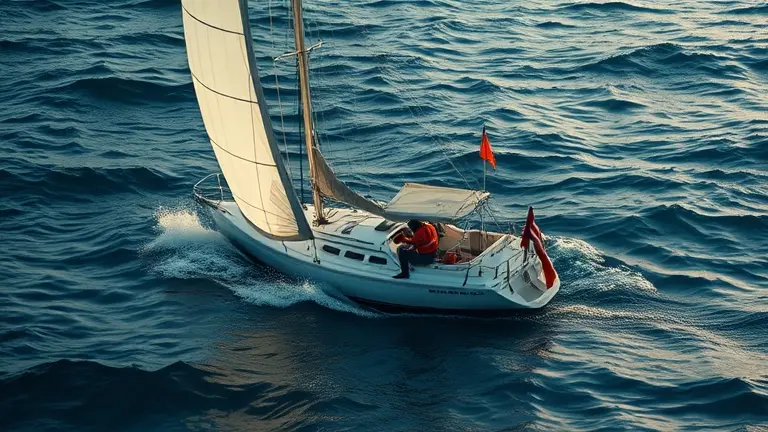
The news of Kai Sato adrift at sea for 30 days in the unforgiving Pacific Ocean has sent shockwaves through the global sailing community. After departing Catalina Island with his sights set on Hawaii, a sudden mast failure turned a solo dream into a desperate struggle for survival. As the maritime world celebrates the miraculous rescue by a Pasha Hawaii cargo ship, a much more critical conversation is beginning to surface: how did a skilled sailor find himself at the mercy of the currents, and what can his experience teach us about the true realities of offshore emergency maintenance?
While mainstream media focuses on the emotional triumph of his survival, the technical reality is far more sobering. Sato’s reliance on plastic bags for water condensation and makeshift repairs using PVC pipes highlights a significant gap in modern solo sailing: the line between clever improvisation and structural preparation. In this deep-dive analysis, we move beyond the headlines to examine the safety protocols that could prevent similar drift scenarios and why mastering the technical fundamentals of construction is no longer optional for the serious oceanic traveler.
The Miracle of Kai Sato: 30 Days Adrift in the Pacific

The harrowing ordeal of Kai Sato, a solo sailor who embarked on an ambitious journey from Catalina Island, California, toward Hawaii, has captivated the maritime community and the public alike. What began as a routine solo crossing quickly devolved into a life-or-death struggle when a catastrophic structural failure left his vessel incapacitated. Reports confirm that the primary catalyst for the incident was the sudden snapping of the sailboat’s mast, which effectively stripped the craft of its primary propulsion and left Sato drifting helplessly in the vast expanse of the Pacific Ocean.
A Timeline of Survival
For approximately 30 days, Kai Sato adrift at sea faced the unforgiving elements of the open ocean. Without functional communication equipment or a means of navigation, his survival became a masterclass in improvisational endurance. Key aspects of his 30-day experience included:
- Hydration Management: Sato utilized plastic bags to harvest precious water through condensation, a vital technique that likely prevented severe dehydration during his month-long isolation.
- Improvised Repairs: To stabilize his position and attempt steering, Sato utilized a combination of PVC piping and kayak paddles, showcasing a desperate but calculated approach to maritime damage control.
- The Rescue: The situation reached its conclusion on July 26-27, 2026, when the crew of a Pasha Hawaii cargo ship spotted the distressed sailor.
This kai sato sailing survival story highlights the profound risks inherent in solo oceanic crossings. While the “miracle” narrative focuses on his successful recovery, experts are now looking closer at the technical realities of his ordeal. The fact that he was spotted by a commercial vessel underscores both the difficulty of being located in the Pacific and the critical role that vigilance by merchant marines plays in saving lives. This incident serves as a sobering reminder of the volatility of the sea and the necessity of robust redundant safety systems for those attempting long-distance sailing.
Survival Toolkit: Ingenuity Under Pressure
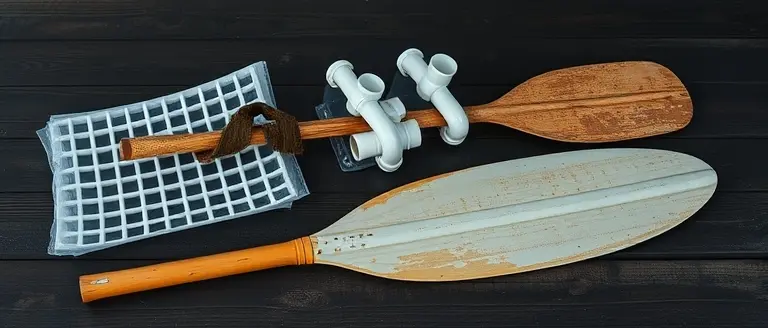
When Kai Sato found himself adrift at sea following the catastrophic structural failure of his sailboat’s mast, his survival became a masterclass in improvised engineering. Stranded between California and Hawaii, Sato lacked the luxury of modern communication or backup propulsion, forcing him to rely on basic physics to sustain his life. The most critical challenge for any solo sailor in the Pacific is dehydration; Sato successfully mitigated this by implementing a rudimentary solar still technique. By harvesting condensation using plastic bags, he was able to capture fresh water throughout the day, a testament to the effectiveness of simple material science in extreme maritime survival scenarios.
Beyond water collection, Sato’s attempt to maintain control over his drifting vessel highlighted his resourcefulness. Using PVC pipes and kayak paddles, he attempted to construct makeshift rudder systems and propulsion aids. While these tools were not sufficient for long-distance navigation, they were pivotal in keeping his vessel stable and maximizing his visibility to rescue craft.
Why Improvised Tools Matter
In survival situations, the effectiveness of makeshift gear often depends on its versatility. The following elements were vital to Kai Sato sailing survival strategy:
- Plastic Membrane Condensation: Utilizing available plastic sheeting allowed for a closed-loop system, extracting potable water from trapped atmospheric moisture—a life-saving necessity when stranded for 30 days.
- Structural Reinforcement: The use of PVC piping provided a lightweight but rigid frame to support his makeshift sail or steering adjustments, preventing the vessel from capsizing in unpredictable ocean currents.
- Tactical Visibility: His reliance on kayak paddles served a dual purpose: manual steering and, more importantly, a tool to create surface disturbance to attract the attention of passing cargo ships like the one eventually operated by Pasha Hawaii.
Sato’s story serves as a reminder that when high-tech equipment fails, fundamental knowledge of mechanical advantage and biological needs becomes the primary determinant of survival. His ability to synthesize these simple tools under immense psychological pressure significantly contributed to his rescue.
The Psychology of Isolation: The Mental Toll of 30 Days Alone
The ordeal of Kai Sato adrift at sea serves as a harrowing case study in human endurance, extending far beyond the physical challenges of dehydration and exposure. When a sailor faces 30 days of absolute isolation, the mind becomes the most volatile piece of equipment on the vessel. Psychologists specializing in high-stress environments suggest that the primary threat in such scenarios is sensory deprivation combined with “the third-quarter phenomenon”—a period of extreme lethargy and disillusionment that often occurs after the initial adrenaline of the emergency subsides but before the realization of potential rescue takes hold. In the case of Kai Sato, maintaining a rigorous daily routine was likely the critical factor that prevented a total psychological collapse.
Cognitive Strategies for Survival
To ward off the onset of hallucinations and the despair associated with prolonged solitude, survivors often employ structured cognitive behavioral techniques. Sato’s attempt to use makeshift tools like PVC pipes and kayak paddles was not merely a physical necessity; it served as a vital cognitive anchor. By focusing on technical tasks, a sailor can shift their brain from a state of emotional panic to a state of analytical problem-solving. Experts highlight several key strategies that keep the will to survive intact:
- Establishing Micro-Goals: Breaking the day into small, achievable tasks (such as cleaning a water-collection site) provides a sense of agency in an uncontrollable environment.
- Structured Routine: Maintaining a consistent internal “clock” for wake times, prayer or meditation, and maintenance checks helps prevent the disorientation common in sensory-deprived maritime environments.
- Cognitive Reframing: Consciously choosing to view the situation as a series of manageable challenges rather than a death sentence prevents the “learned helplessness” response.
While the story of Kai Sato sailing survival focuses heavily on his technical ingenuity, the underlying mental resilience displayed is equally significant. When communication with the outside world is severed, the internal dialogue of the sailor becomes the primary driver of life-saving decisions. Without this psychological fortification, even the best-equipped vessels can become death traps as the mind succumbs to the crushing weight of the Pacific Ocean’s vast, empty horizon.
Safety Lessons: Critical Requirements for Solo Oceanic Crossings
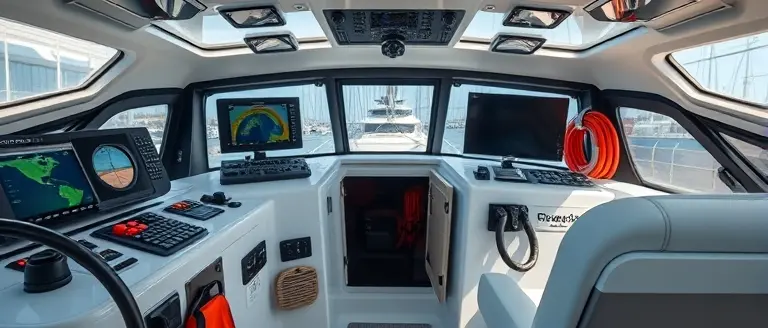
The harrowing experience of Kai Sato adrift at sea serves as a sobering reminder of the volatility inherent in solo trans-Pacific voyages. When a mast snaps mid-ocean, a vessel immediately loses its primary source of propulsion and, often, its ability to communicate effectively if electronic systems fail. To mitigate such life-threatening scenarios, sailors embarking on solo crossings—specifically the challenging route from California toward Hawaii—must implement strict redundancy protocols. Relying on makeshift repairs, while a testament to human ingenuity, is not a substitute for robust safety preparation.
Essential Communication and Emergency Redundancy
The survival of a solo sailor often hinges on the ability to signal for help long before resources vanish. The following gear is considered mandatory for any offshore transit:
- EPIRB (Emergency Position Indicating Radio Beacon): A registered 406 MHz beacon is the absolute lifeline for maritime rescue. It provides search and rescue authorities with precise GPS coordinates.
- Satellite Messengers: Devices like the Garmin inReach or Zoleo offer two-way communication, allowing for weather updates and emergency check-ins independent of cellular or VHF radio ranges.
- Handheld VHF Radio: An additional, waterproof, battery-operated radio should be stored in a ditch bag, kept separate from the main mast-mounted unit.
- Redundant Power Sources: Solar arrays and backup battery banks are vital to ensure that navigation and communication tools do not lose power during long, windless drifts.
Structural Maintenance and Risk Mitigation
The primary failure point in the Kai Sato sailing survival ordeal was the structural integrity of the rig. Before departing, sailors must conduct professional, rigorous inspections of standing rigging, chainplates, and mast steps. Fatigue in stainless steel fittings is often invisible; utilizing dye-penetrant testing or ultrasound inspections can identify microscopic cracks before they lead to catastrophic failure. Furthermore, carrying a well-stocked “ditch bag” containing a manual water desalinator, high-calorie emergency rations, and a comprehensive medical kit ensures that if the vessel becomes a liferaft, the sailor remains viable until help arrives. Prioritizing these systems transforms a potential disaster into a manageable emergency.
Fortify Your Future at Sea
The harrowing experience of Kai Sato adrift at sea serves as a stark reminder that even the most prepared sailors can find themselves at the mercy of the Pacific. While his ingenuity in using plastic bags and improvised materials kept him alive, the core issue was a structural failure that no sailor should ever have to face in the middle of an ocean. Survival is not just about the rescue—it is about the integrity of your vessel long before you leave the dock.
While Kai Sato’s ingenuity saved his life, the primary failure was structural; mastering the basics of professional-grade construction and blueprinting is the single best way to ensure your vessel is truly prepared for the open sea. By understanding how to build and reinforce your gear using verified technical plans, you move from passive maintenance to total mastery over your ship’s integrity. Think of this as the ultimate ‘Technical Safety Facilitator’ for your solo adventures.
Ted’s Woodworking offers an unparalleled library of 16,000+ workshop-tested plans, giving you the power to construct or reinforce essential emergency repair kits with the precision that separates a successful voyage from a life-threatening crisis. Don’t leave your vessel’s integrity to chance—explore 16,000+ workshop-tested plans to build or reinforce your emergency repair kits today.
 Don’t leave your vessel’s integrity to chance—explore 16,000+ workshop-tested plans to build or reinforce your emergency repair kits today.Secure My Vessel Integrity Now!